
Fiordland crested penguin
Eudyptes pachyrhynchus
A yellow-crested penguin on a rocky shore. Tawaki keep to their own timetable, and no sighting is ever a promise.
Near Threatened (IUCN, 2020) means it is close to qualifying as threatened with extinction.
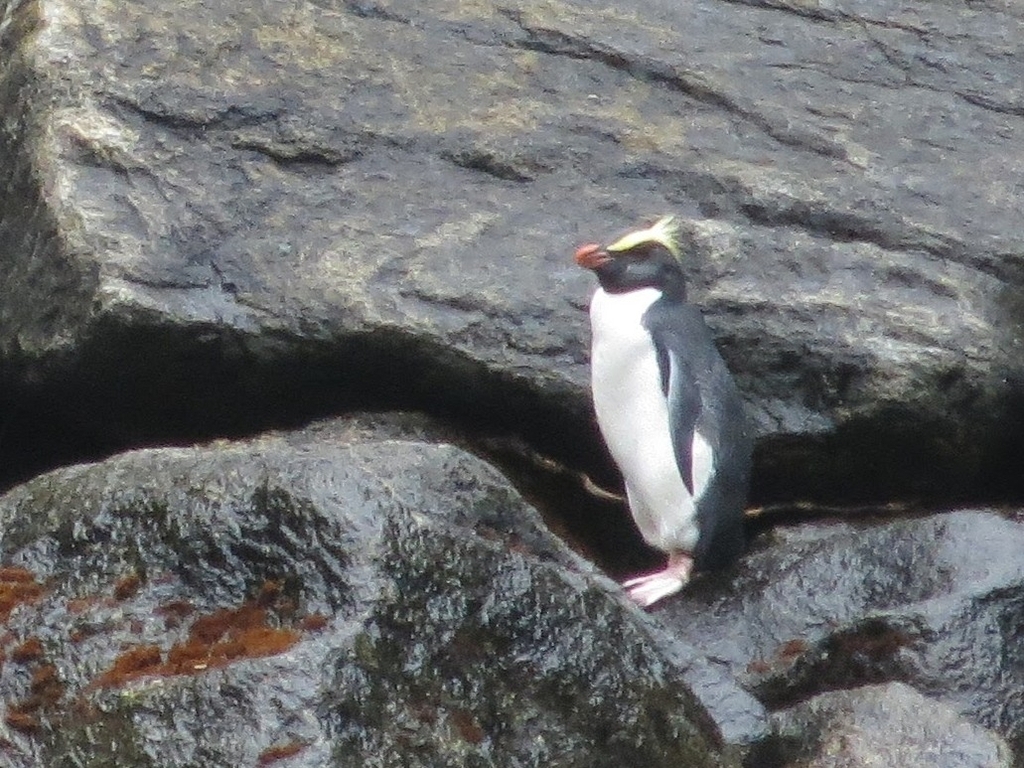
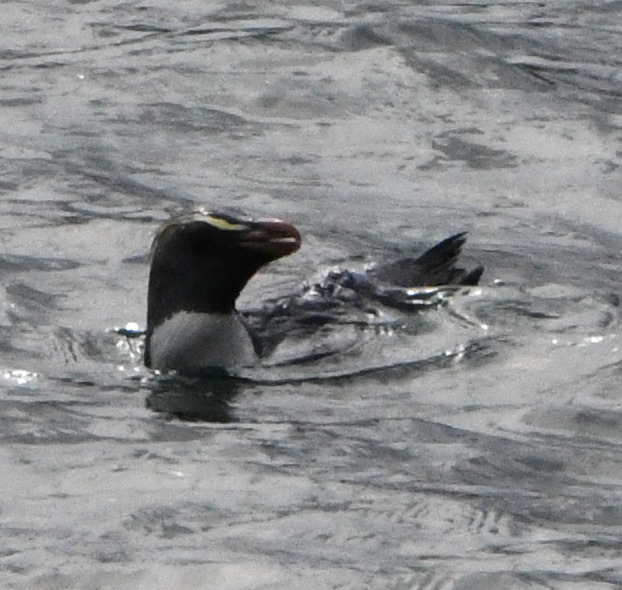
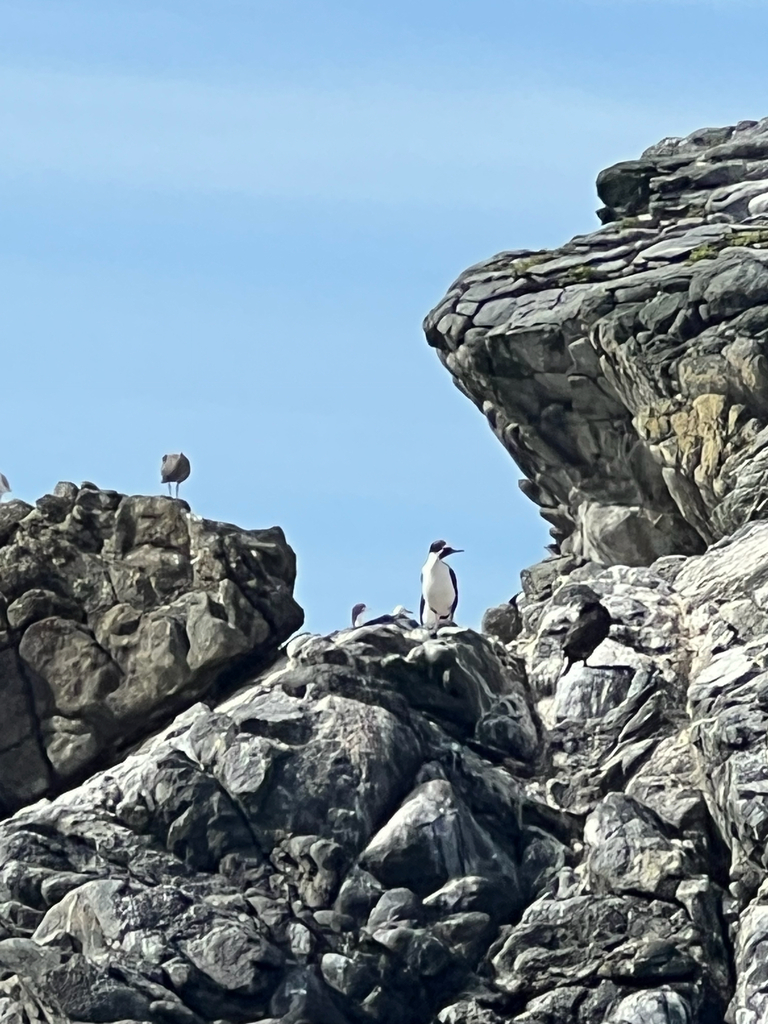
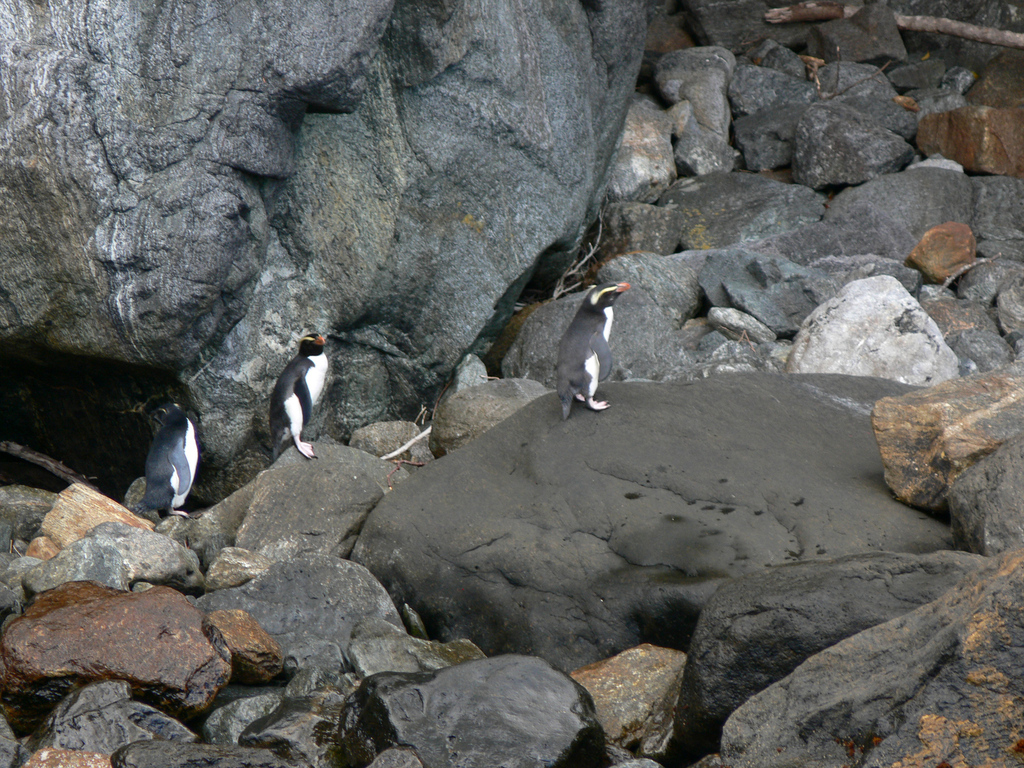
Photos show the species, not always the places on this page.
Length
About 55 to 60 cm (22 to 24 in) tall; sources differ slightly
Weight
About 2 to 5 kg (4.4 to 11 lb), average about 3.5 kg (7.7 lb); one source gives about 4 kg (8.8 lb)
Next to a person
About a third of an adult's height, and on average about as heavy as a newborn baby
What it eats
Mostly squid. One study of diet found about 85% cephalopods, 13% crustaceans (mainly krill) and 2% fish. Little research exists on their marine ecology, so the mix is likely to vary from place to place.
Around people
Quiet, keep far back
How it lives
Fiordland crested penguins nest in small loose colonies on inaccessible headlands and islets. Males arrive at the nest sites in July and females follow about two weeks later. They lay two eggs but usually raise only one chick, which goes to sea at about 75 days old, in late November or early December. After breeding, adults return ashore to moult.
Where it goes
Fiordland crested penguins breed in loose colonies along the south-west coast of New Zealand's South Island and on Stewart Island and nearby islets, mostly from July to December. After breeding they come ashore again to moult, mid-January to early March. Where they feed at sea is not well known. One source notes that little is known of their marine ecology.
We only draw a journey on the map when scientists have tracked it or clearly documented it. For this animal we have not found one yet.
Populations
New Zealand only. The 1990s surveys counted about 2,260 nests, which is probably an undercount. The Department of Conservation gives 2,500 to 3,000 breeding pairs and says numbers have fallen since the 1950s. The trend is probably still downward. The IUCN lists it as Near Threatened (2020). Threats include introduced predators such as stoats and dogs, fishing bycatch in set nets and inshore trawls, and disturbance.
Meet it respectfully
Watch from a distance and keep quiet. Never approach birds, nests or beach areas where penguin tracks are common, and never chase, touch, feed or lure them. New Zealand's Department of Conservation asks visitors to keep dogs on a lead near penguin areas, because a single dog can wipe out a colony. Stay away from nests, especially in the breeding season from July to November. Penguins ashore are often moulting or caring for chicks, and no sighting is guaranteed.
Fun fact
Tap the bulb to light it up.
It lays two eggs but normally raises only one chick.
Its broad yellow eyebrow stripe runs back past the eye.
Squid made up about 85% of the food in one diet study.
Fiordland crested penguin in the Ocean Atlas
Places we have researched where this animal is recorded. It is never guaranteed, and some places are for watching from the boat only.
Travel with usComing soonTrusted referralExploringOn pause, story onlyEthics pass
Country colour: pink where we travel, blue where we are exploring or refer, grey for story only.
 Australia
 New Zealand
Sources for this page
- GBIF (IUCN Red List category), 2026
- Wikipedia, 2026
- NZ Department of Conservation, 2026
- New Zealand Birds Online, 2026
- Animal Diversity Web, 2026
Facts checked 5 October 2026. Photos: Unsplash licence, or Creative Commons as shown on each photo.
Work in ocean travel?
We are always happy to hear from exceptional local operators, accommodation, conservation organisations and destination experts. If your work fits responsible, small-group ocean travel, we would love to learn more.
Partner with Ocean Calling5-day freediving course in Bali
CHF 1,180