
Flightless cormorant
Nannopterum harrisi
No sighting is a promise, and the animal decides what you see, so stay open to whatever the day brings.
Vulnerable (IUCN, 2018) means it faces a high risk of extinction in the wild. It lives on only two islands and has a small population.
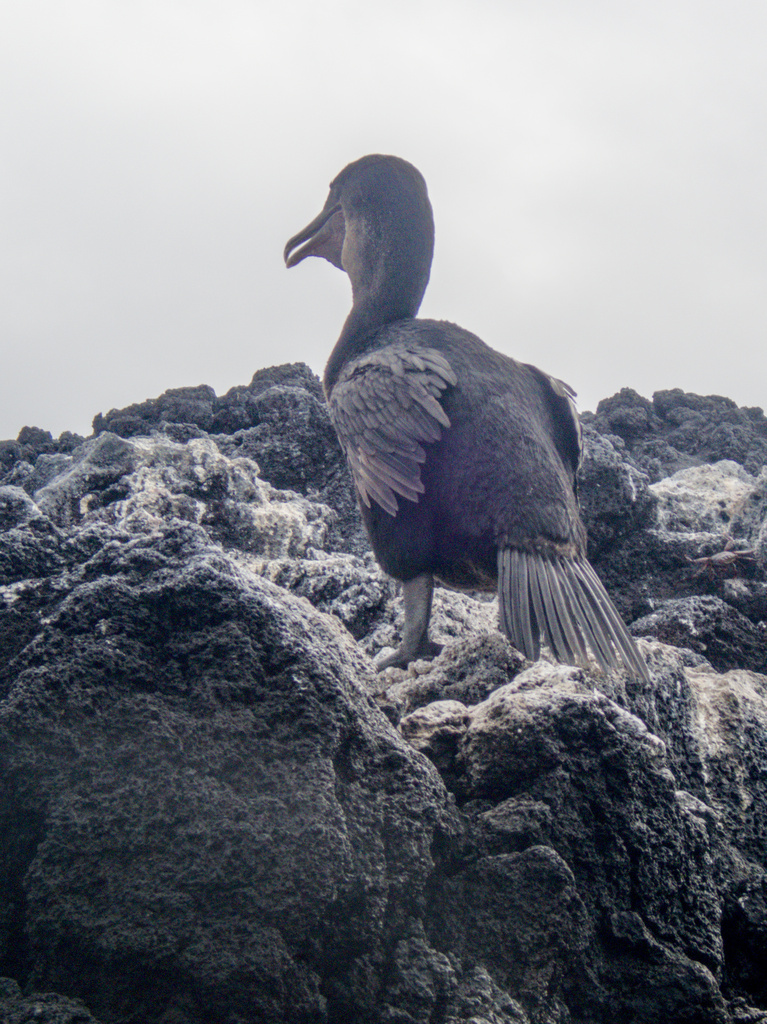
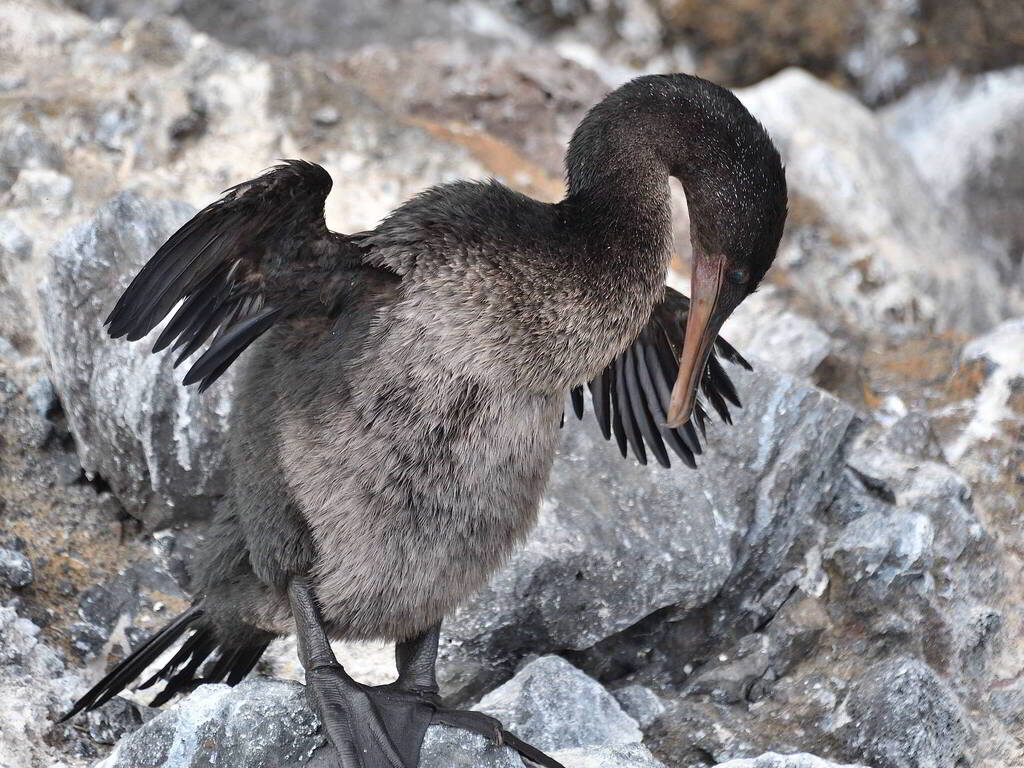
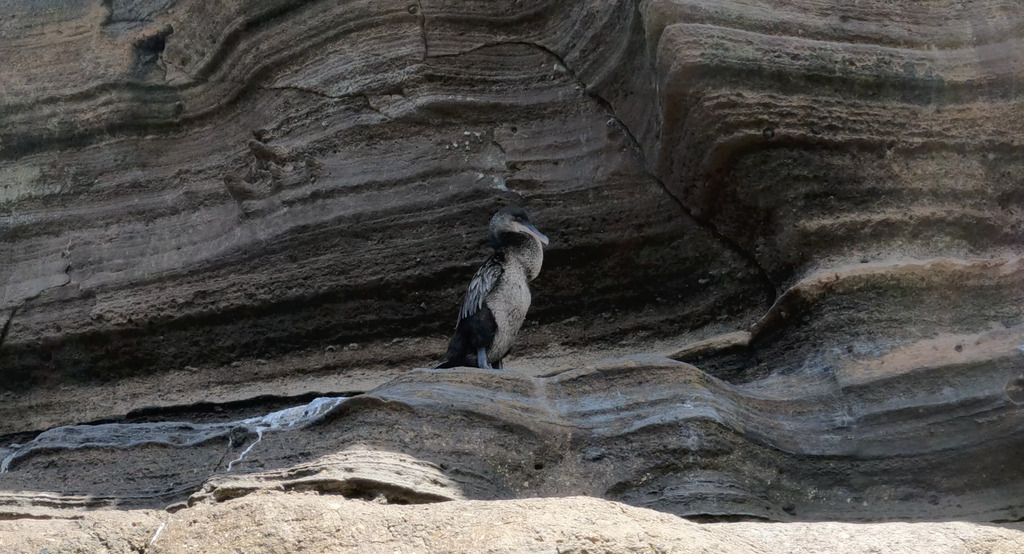
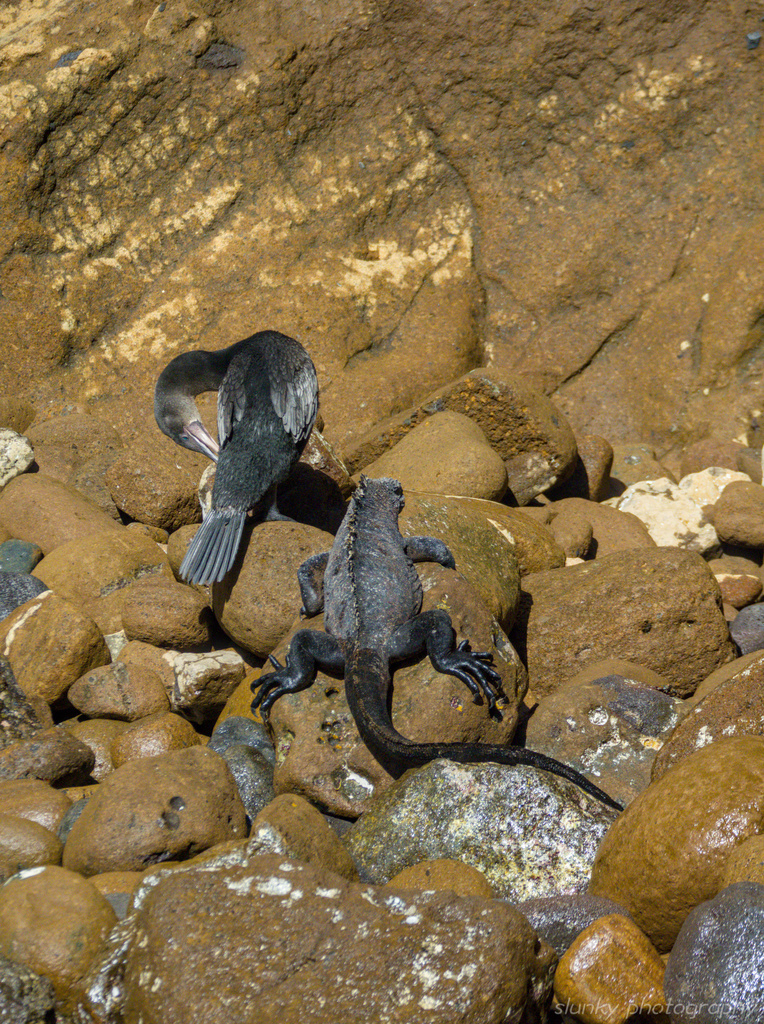
Photos show the species, not always the places on this page.
Length
About 89 to 100 cm (35 to 39 in) long.
Weight
About 2.5 to 5.0 kg (5.5 to 11 lb). Males are about 35% heavier than females.
Next to a person
Close to a metre long, so about as long as an adult's leg, and as heavy as a newborn baby or somewhat more.
What it eats
Fish, eels, octopus and other small sea animals, caught near the bottom close to shore. It can spear octopus and fish out of small hiding places using its flexible neck.
Around people
Calm, give space
How it lives
It is the only cormorant that cannot fly, with wings about a third of the size needed for flight, so it is tied to the coast. It nests on or near the shore in loose groups, building nests of seaweed above the high-tide line. Females often lay three eggs, though usually only one chick survives. The timing of breeding is given as mostly the cooler months, April or May to October, in two sources, and as year-round in another. Average adult survival is about 90% a year.
Where it goes
Very sedentary. It lives only on Fernandina and the north and west coasts of Isabela, stays within short stretches of coast and feeds within about 200 m of shore.
We only draw a journey on the map when scientists have tracked it or clearly documented it. For this animal we have not found one yet.
Populations
Vulnerable on the IUCN Red List (2018 assessment, downlisted from Endangered in 2011). It is found only on Fernandina and Isabela. The Galápagos National Park counted 1,914 in 2019 and 2,220 in 2020, a record since counts began in 1977. A 2024 census by the park, the Charles Darwin Foundation and partners counted 762 cormorants in the main colonies, with 86% adults and 13% juveniles. The 1983 El Niño cut the population by about half to around 400 birds. Counts depend on survey coverage, so numbers are not directly comparable.
Meet it respectfully
Watch quietly from a distance. Never chase, touch, feed or bait it, and keep well back from nests on the shore, since flushed birds can leave eggs and chicks exposed. Do not walk between a bird and the water. Boats near shore should go slowly and avoid fishing gear near colonies. I did not read the park's own visitor rules for this card, so follow your guide and the Galápagos National Park rules. Sightings are never guaranteed, and this bird lives on remote western coasts.
Fun fact
Tap the bulb to light it up.
It is the only cormorant in the world that has lost the ability to fly.
Its wings are about a third of the size needed for flight, and it uses them for balance.
Adults have bright turquoise eyes.
Flightless cormorant in the Ocean Atlas
Places we have researched where this animal is recorded. It is never guaranteed, and some places are for watching from the boat only.
Travel with usComing soonTrusted referralExploringOn pause, story onlyEthics pass
Country colour: pink where we travel, blue where we are exploring or refer, grey for story only.
 Ecuador
Sources for this page
- Wikipedia, 2026
- Galapagos Conservation Trust, 2026
- Birds of the World, Cornell Lab
- Phys.org, 2020, census
- Latin American Post, 2024, census
- Charles Darwin Foundation, 2026
- Wikipedia, list of Suliformes by population
- GBIF, IUCN category, 2026
Facts checked 5 October 2026. Photos: Unsplash licence, or Creative Commons as shown on each photo.
Work in ocean travel?
We are always happy to hear from exceptional local operators, accommodation, conservation organisations and destination experts. If your work fits responsible, small-group ocean travel, we would love to learn more.
Partner with Ocean Calling5-day freediving course in Bali
CHF 1,180