
Galápagos penguin
Spheniscus mendiculus
No sighting is a promise, and the animal decides what you see, so stay open to whatever the day brings.
Endangered (IUCN, 2020) means it faces a very high risk of extinction in the wild, with a tiny population that swings sharply with El Niño.
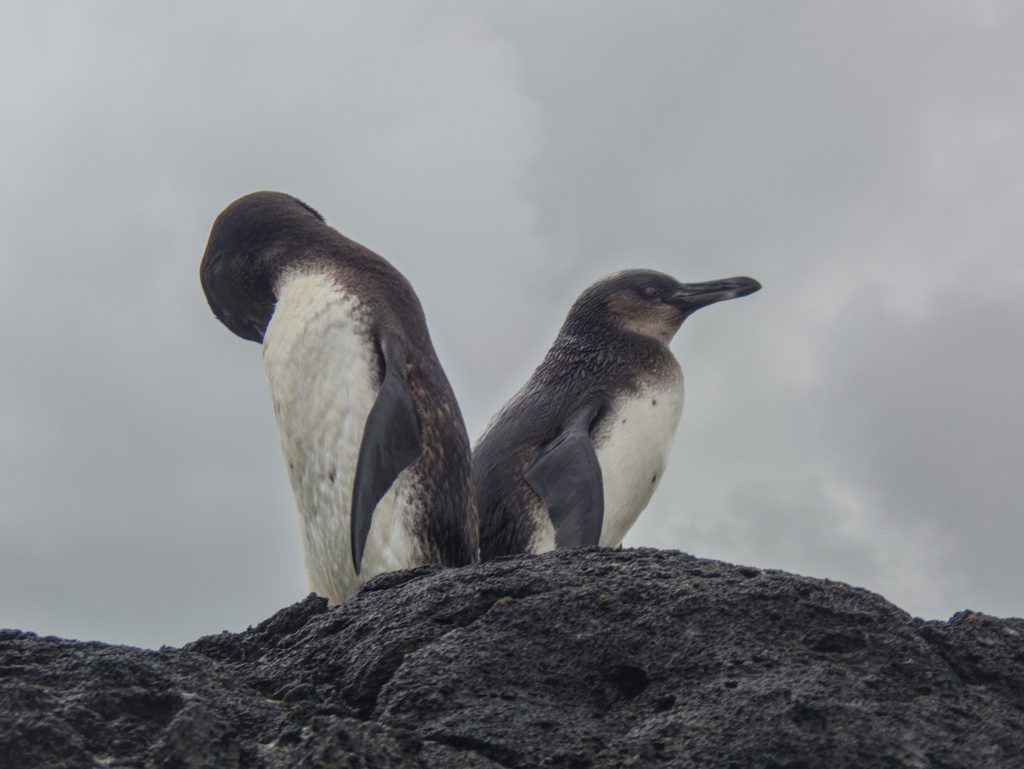
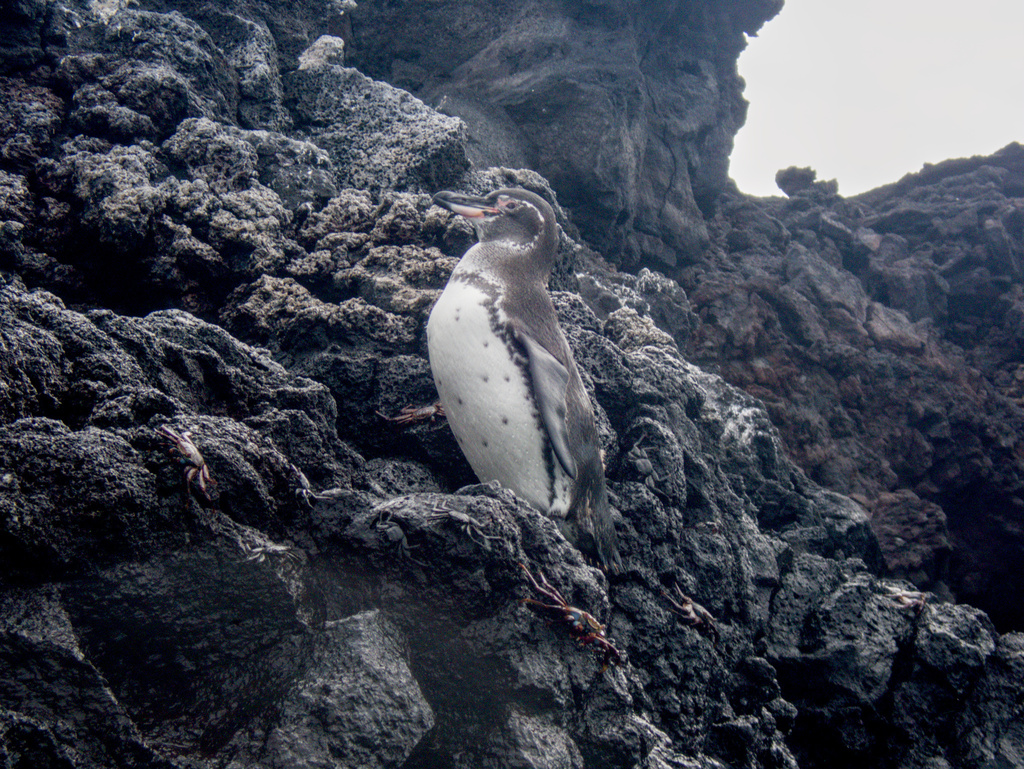
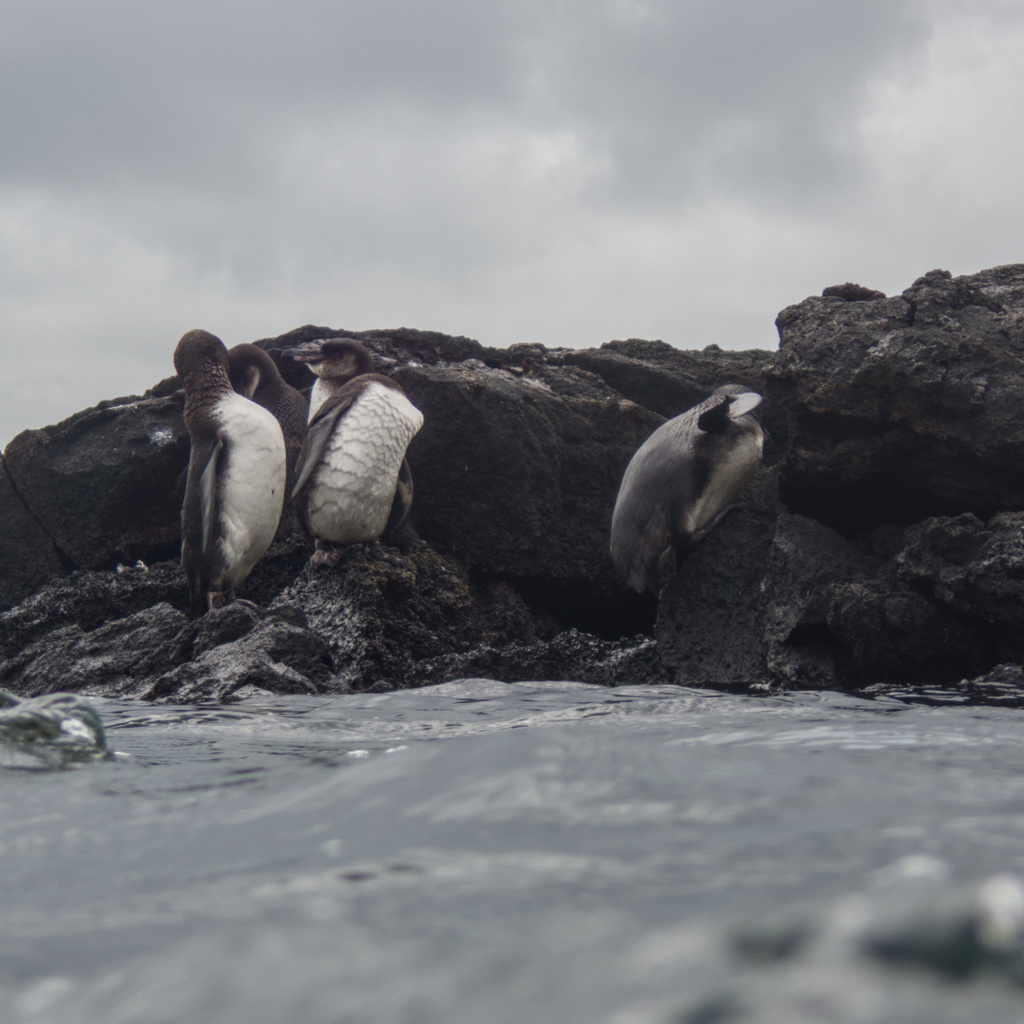
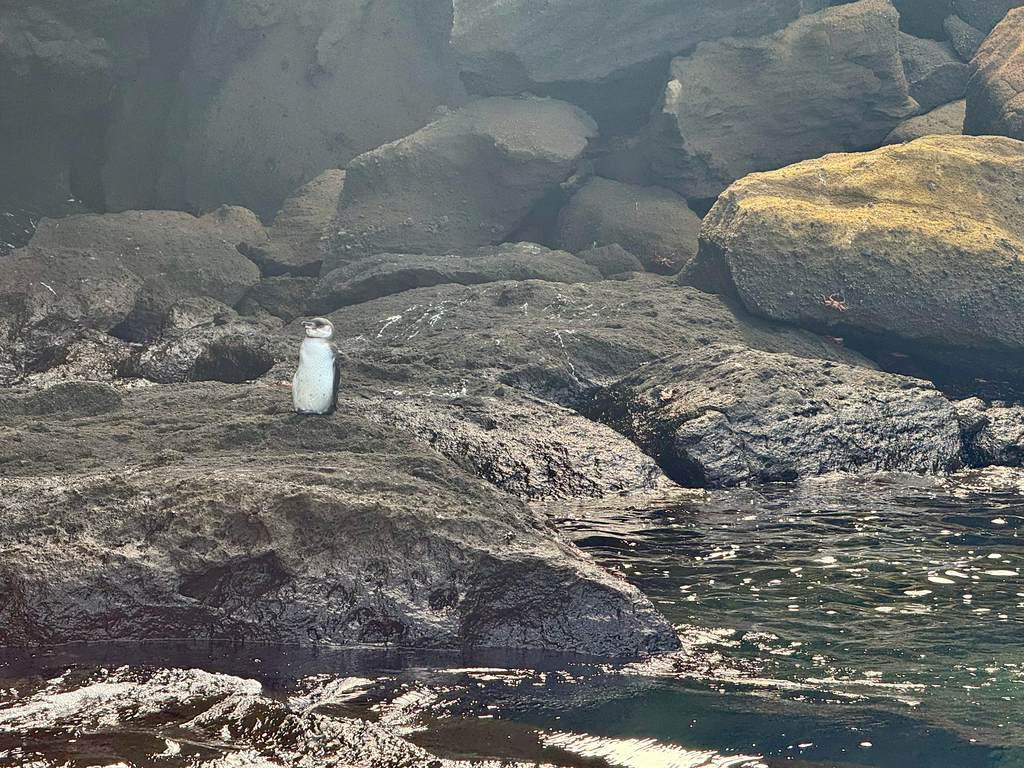
Photos show the species, not always the places on this page.
Length
About 48 to 53 cm (19 to 21 in) tall. One source gives a maximum of about 55 cm (22 in).
Weight
About 1.7 to 2.6 kg (3.7 to 5.7 lb) in one source and 2 to 4 kg (4.4 to 8.8 lb) in another, so sources differ.
Next to a person
About knee height on an adult, and about as heavy as a couple of bags of sugar.
What it eats
Small schooling fish such as mullet, sardines, pilchards and anchovies, plus the occasional crustacean. It hunts in the cool currents during daylight and returns to land at night.
Around people
Calm, give space
How it lives
It is the only penguin that lives and breeds mostly north of the equator. It nests in lava caves and rock crevices, lays one or two eggs, and pairs are monogamous. Incubation is about 35 to 42 days depending on the source, and chicks fledge at around 60 days. It can breed more than once a year when food is plentiful. Wild lifespan can reach 15 to 20 years, but many birds die younger.
Where it goes
Mostly stays close to its colonies. It feeds at sea in cool, food-rich water during the day and comes ashore to rest and nest. About 90% of birds live on Fernandina and the west coast of Isabela, with small numbers on other islands such as Floreana, Santiago and Bartolomé.
We only draw a journey on the map when scientists have tracked it or clearly documented it. For this animal we have not found one yet.
Populations
Endangered on the IUCN Red List (2020 assessment). Counts swing with ocean conditions. The Galápagos National Park counted 1,451 in 2019 and 1,940 in 2020, the highest since 2006, helped by La Niña and fewer visitors. A 2024 census by the park, the Charles Darwin Foundation and partners counted 413 penguins in the main colonies, with 96% adults and only 1% juveniles, which suggests poor breeding, probably from low food. The 1982 to 1983 El Niño cut the population by about 77%. Counts depend on survey coverage, so numbers are not directly comparable between years.
Meet it respectfully
Watch from a distance and keep your voice down. Never chase, touch, feed or bait a penguin, and keep clear of nests and caves, where chicks and eggs can be lost if the parent is frightened off. Do not stand between a penguin and the sea. Boats should keep low speeds and well off breeding rocks. I did not read the park's own visitor rules for this card, so follow your guide and the Galápagos National Park rules. Sightings are never guaranteed, and the bird is rare.
Fun fact
Tap the bulb to light it up.
It is the northernmost penguin, with some colonies just north of the equator.
Pairs stay together for life and nest in lava caves and crevices.
The 1982 to 1983 El Niño killed about 77% of the population, because warm water cut off its food.
Galápagos penguin in the Ocean Atlas
Places we have researched where this animal is recorded. It is never guaranteed, and some places are for watching from the boat only.
Travel with usComing soonTrusted referralExploringOn pause, story onlyEthics pass
Country colour: pink where we travel, blue where we are exploring or refer, grey for story only.
 Ecuador
Sources for this page
- Wikipedia, 2026
- Galapagos Conservation Trust, 2026
- Animal Diversity Web, University of Michigan
- Phys.org, 2020, census
- Latin American Post, 2024, census
- Charles Darwin Foundation, 2026
- GBIF, IUCN category, 2026
Facts checked 5 October 2026. Photos: Unsplash licence, or Creative Commons as shown on each photo.
Work in ocean travel?
We are always happy to hear from exceptional local operators, accommodation, conservation organisations and destination experts. If your work fits responsible, small-group ocean travel, we would love to learn more.
Partner with Ocean CallingGili Trawangan in 5 days
from CHF 790