
Halavi guitarfish
Glaucostegus halavi
No sighting is a promise, and the animal decides what you see, so stay open to whatever the day brings.
Critically Endangered (IUCN, 2019) means it faces an extremely high risk of extinction in the wild, mainly because of fishing.
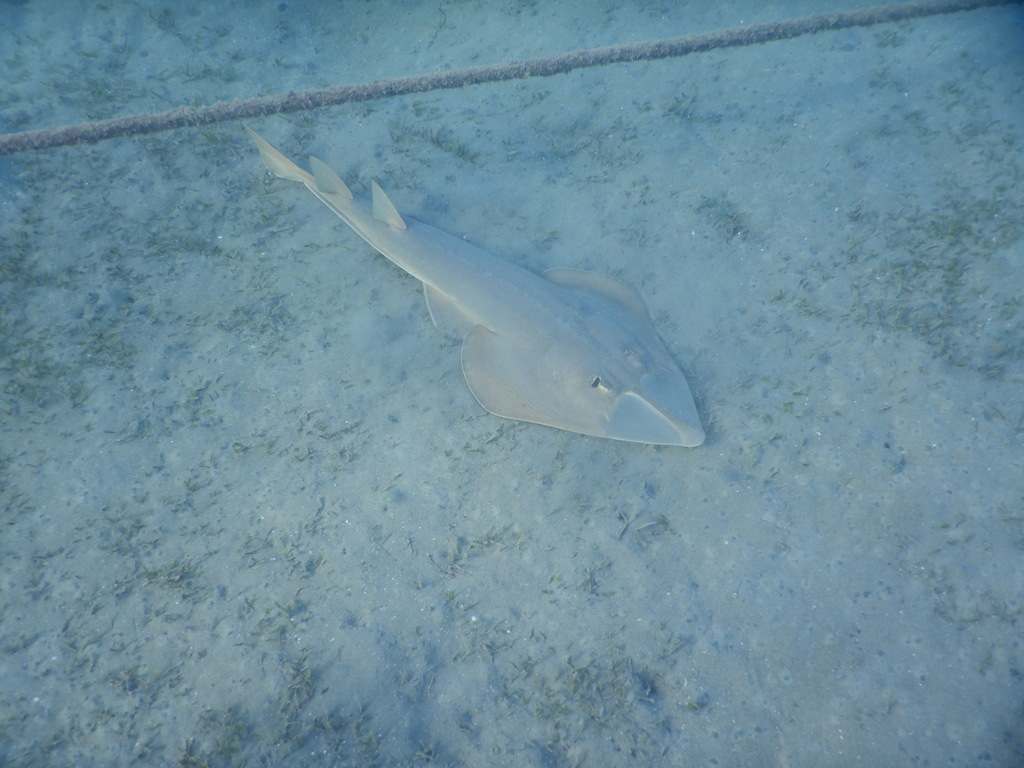
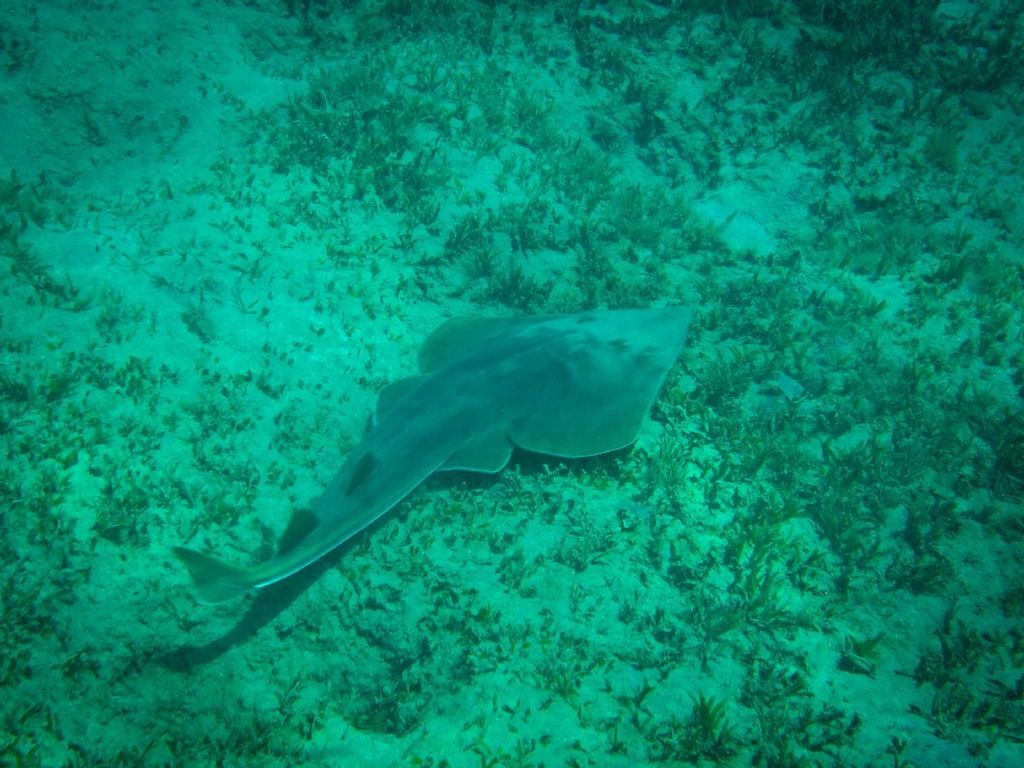
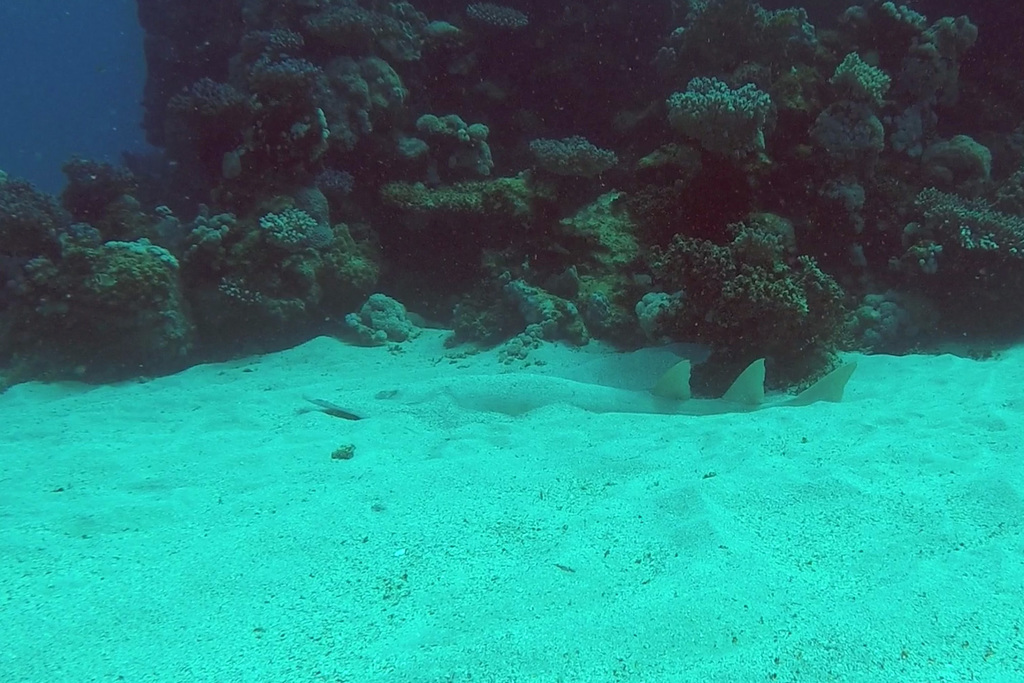
Photos show the species, not always the places on this page.
Length
Up to about 120 cm (3.9 ft) in FishBase; another guide gives up to 171 cm (5.6 ft). Newborns are about 29 cm (11 in). The sources differ, so treat the maximum as uncertain.
Weight
No weight is given in the sources I read.
Next to a person
A full-grown one can be about as long as an adult is tall, with a flat body only a few centimetres thick.
What it eats
Small molluscs, bony fish and crustaceans, mostly found on or near the seabed (FishBase). Another guide describes the diet as mainly bottom-living invertebrates.
Around people
Calm, give space
How it lives
A bottom-living ray of very shallow sandy and seagrass areas, recorded from the water's edge to about 100 m. It is described as skittish around divers and as entering very shallow water to feed. Litters are up to about 10 pups, and in the Red Sea pupping is mostly May to October. Its population grows slowly, with a minimum doubling time of about 4.5 to 14 years, which is why it recovers badly from fishing.
Where it goes
Little is known about how far adults travel. In Al Wajh Lagoon in Saudi Arabia, acoustic tags suggest young fish stay in the lagoon, which is why it is treated as a likely nursery. Sources describe adults entering very shallow water to feed.
We only draw a journey on the map when scientists have tracked it or clearly documented it. For this animal we have not found one yet.
Populations
Critically Endangered on the IUCN Red List (2019 assessment). Its range runs from the Red Sea to the Gulf of Oman and possibly the Arabian Sea, and records elsewhere are unconfirmed. In the United Arab Emirates, landings have fallen sharply, with an 80% decline over 30 years reported. In Saudi Arabia, Al Wajh Lagoon is listed as an Important Shark and Ray Area, with 339 sightings of individuals in 2022, including 25 newborns. A survey of the NEOM region found it in seagrass beds north of Duba, with particularly high numbers at Al-Muwayleh, but only five sightings in total. Total population size is not known.
Meet it respectfully
Watch from a distance and let it settle or move off on its own. Never chase, touch, feed or bait it, and do not corner it in shallow water, where it feeds and where young fish rest. In very shallow seagrass, avoid stepping on the bottom or stirring up sand. I did not read local viewing rules for this species, so follow your guide and local regulations. Sightings are never guaranteed, since it is rare and well camouflaged.
Fun fact
Tap the bulb to light it up.
It is a ray, not a shark, with a flat front half and a tail that looks like a shark's.
In the Red Sea, pups are born mostly between May and October, in litters of up to about 10.
Al Wajh Lagoon in Saudi Arabia is listed as an Important Shark and Ray Area because of this species, with 25 newborns (28 to 32 cm) recorded there in 2022.
Halavi guitarfish in the Ocean Atlas
Places we have researched where this animal is recorded. It is never guaranteed, and some places are for watching from the boat only.
Travel with usComing soonTrusted referralExploringOn pause, story onlyEthics pass
Country colour: pink where we travel, blue where we are exploring or refer, grey for story only.
 Egypt
Egypt Saudi Arabia
Sources for this page
- Wikipedia, 2026
- FishBase, 2026
- Sharks and Rays species guide, 2026
- Important Shark and Ray Areas, Al Wajh Lagoon
- Discover Wildlife, 2026
- Garzon et al., 2022
- GBIF, IUCN category, 2026
Facts checked 5 October 2026. Photos: Unsplash licence, or Creative Commons as shown on each photo.
Work in ocean travel?
We are always happy to hear from exceptional local operators, accommodation, conservation organisations and destination experts. If your work fits responsible, small-group ocean travel, we would love to learn more.
Partner with Ocean CallingNew: mobula rays in La Ventana, May 2027
CHF 2,720