
Heaviside's dolphin
Cephalorhynchus heavisidii
A small dark dolphin in cold green water, often shy and sometimes curious. It comes and goes on its own terms, so no sighting is ever a promise.
Near Threatened (IUCN, 2017) means it is close to qualifying as threatened. The main concern is accidental capture in fishing nets, and there is no estimate for the whole population.
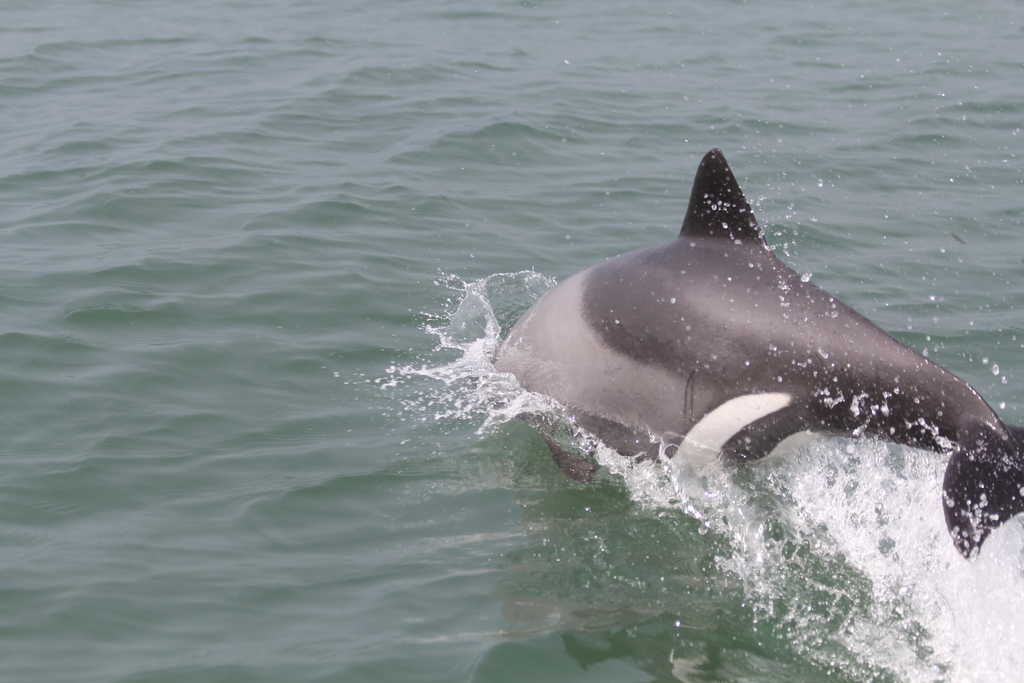
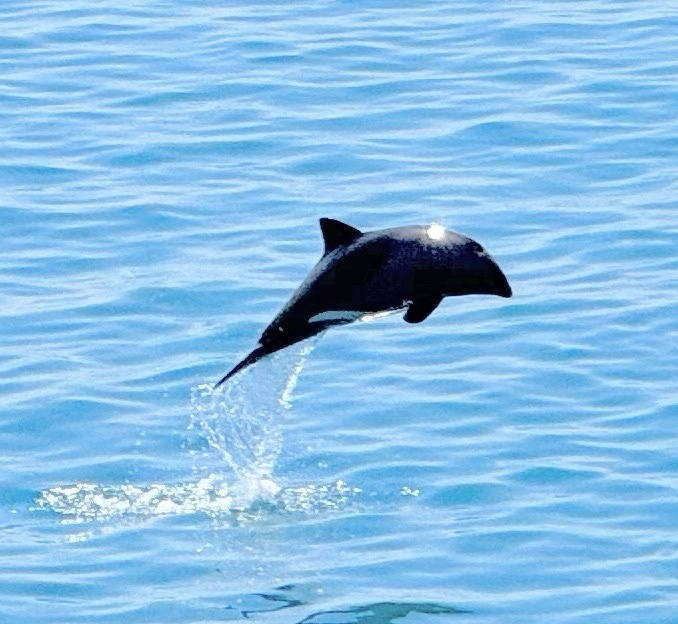
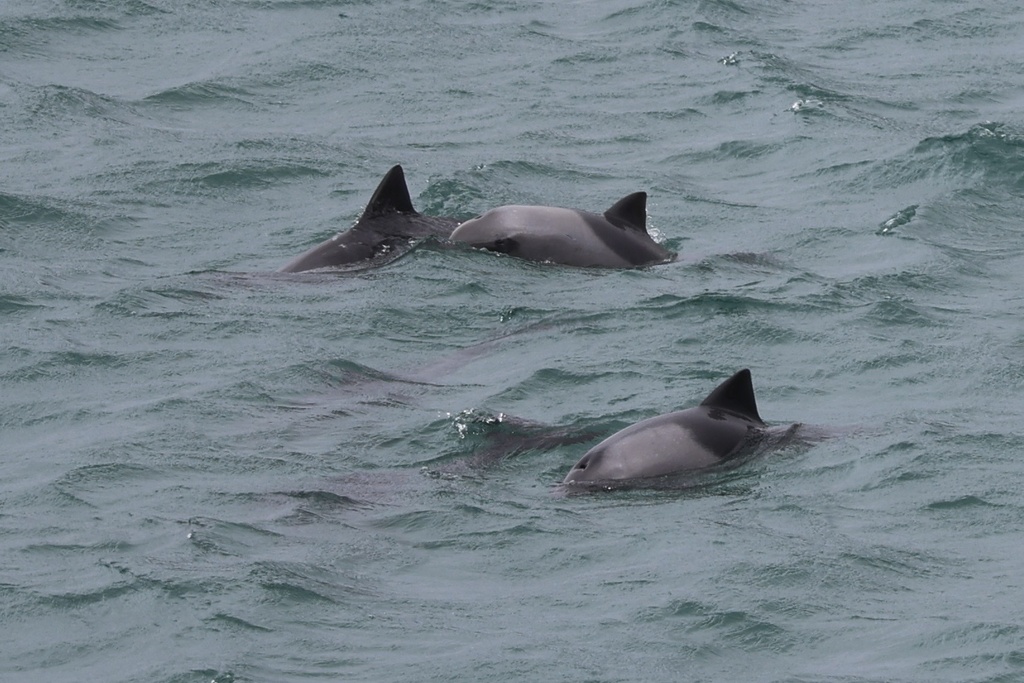
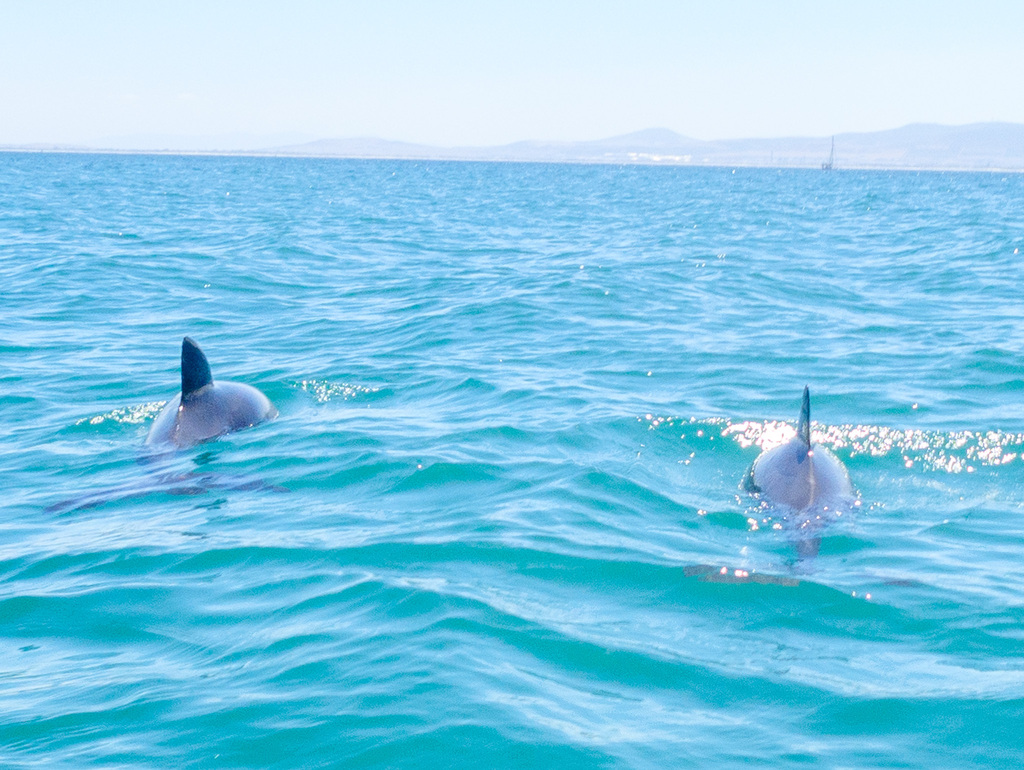
Photos show the species, not always the places on this page.
Length
Up to about 1.7 m (5.6 ft)
Weight
Up to about 75 kg (165 lb)
Next to a person
About as long as a tall adult, and about as heavy as an adult
What it eats
Mostly bottom-living fish and cephalopods. Juvenile Cape hake and octopus are important prey. Dolphins in Namibia also take open-water fish such as gobies and horse mackerel.
Around people
Calm, give space
How it lives
Heaviside's dolphins are social but live in small groups. Pairs and groups of three are most common, and groups of up to about ten are seen. They can breed all year. Females have a calf every 2 to 4 years, and both sexes mature at about 5 to 9 years. The oldest recorded age is 26 years. They sometimes approach boats and ride the bow wave.
Where it goes
Heaviside's dolphin lives in a narrow band of cool coastal water along south-western Africa, mostly close to shore. Dolphins studied in South Africa move offshore in the afternoon to feed and return inshore in the morning to rest and socialise. Home ranges look smaller in Namibia, around Lüderitz and Walvis Bay. The northern edge of its range in Angola is not well defined.
We only draw a journey on the map when scientists have tracked it or clearly documented it. For this animal we have not found one yet.
Populations
No estimate exists for the whole species. Local estimates are 6,345 dolphins between Table Bay and Lamberts Bay in South Africa, 508 at Walvis Bay and 494 at Lüderitz in Namibia. A survey of the Namibian Islands Marine Protected Area and nearby water gave about 1,594 dolphins. The IUCN listed the species as Near Threatened in 2017, after earlier listing it as Data Deficient. It is on CMS Appendix II (since 1991) and CITES Appendix II.
Meet it respectfully
Watch from a distance and let the dolphins decide whether to come closer. Keep a steady course and a slow speed, and never chase, surround, touch or feed them. Fishing nets are a main danger for this species, so choose operators who keep to calm, low-impact boat handling. I did not read any local viewing rules for Namibia, so follow those your guide gives you.
Fun fact
Tap the bulb to light it up.
It is found only along south-western Africa, in the cool Benguela Current, over a coast of roughly 2,500 km from southern South Africa to Angola.
Pairs or groups of three are the most common groups, although up to about ten may travel together.
A study of the stomachs of 17 dolphins found more than 4,900 prey items, mostly fish such as hake and gobies, plus octopus and squid.
Heaviside's dolphin in the Ocean Atlas
Places we have researched where this animal is recorded. It is never guaranteed, and some places are for watching from the boat only.
Travel with usComing soonTrusted referralExploringOn pause, story onlyEthics pass
Country colour: pink where we travel, blue where we are exploring or refer, grey for story only.
 Namibia
 South Africa
Sources for this page
- Wikipedia, Heaviside's dolphin
- GBIF, IUCN Red List category (Near Threatened)
- SeaLifeBase, Cephalorhynchus heavisidii
- CMS, Cephalorhynchus heavisidii
- MarineBio Conservation Society, Heaviside's dolphins
Facts checked 5 October 2026. Photos: Unsplash licence, or Creative Commons as shown on each photo.
Work in ocean travel?
We are always happy to hear from exceptional local operators, accommodation, conservation organisations and destination experts. If your work fits responsible, small-group ocean travel, we would love to learn more.
Partner with Ocean Calling7-day freediving course in Coron, Palawan
CHF 1,480