
Hooded seal
Cystophora cristata
A deep diver of the northern pack ice, rarely seen for long. Hooded seals appear when the ice allows, and no sighting is a promise.
Endangered (IUCN, assessed 2025) means it faces a very high risk of extinction in the wild, and NAMMCO reports that the Greenland Sea stock has kept falling even without hunting.
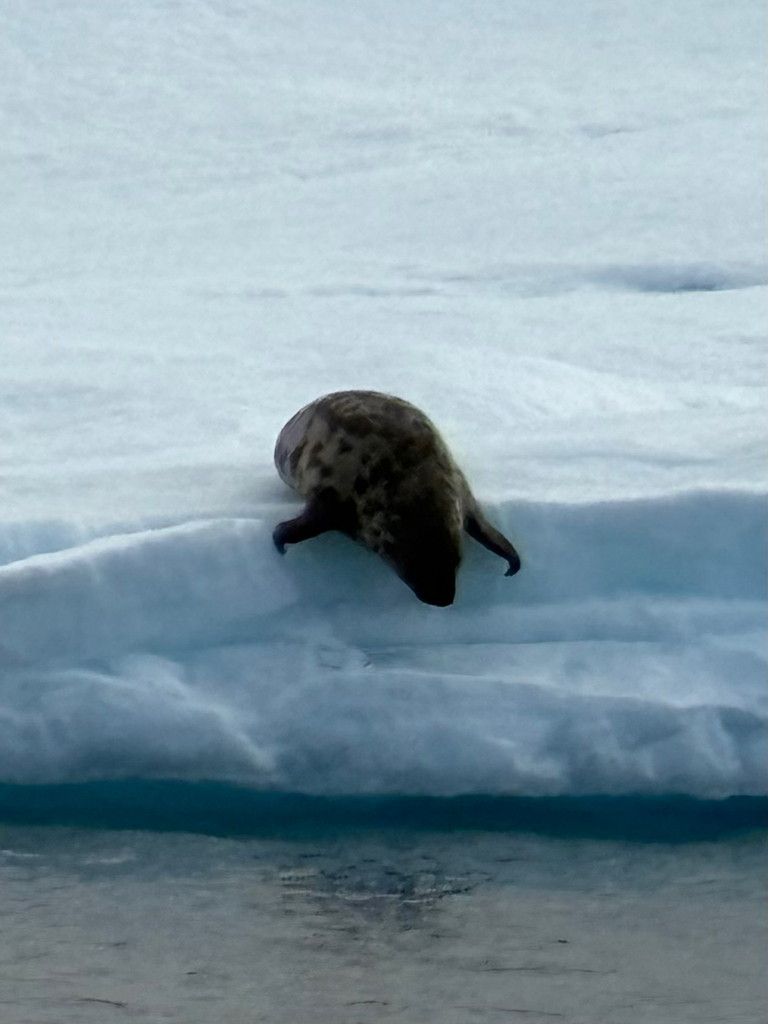
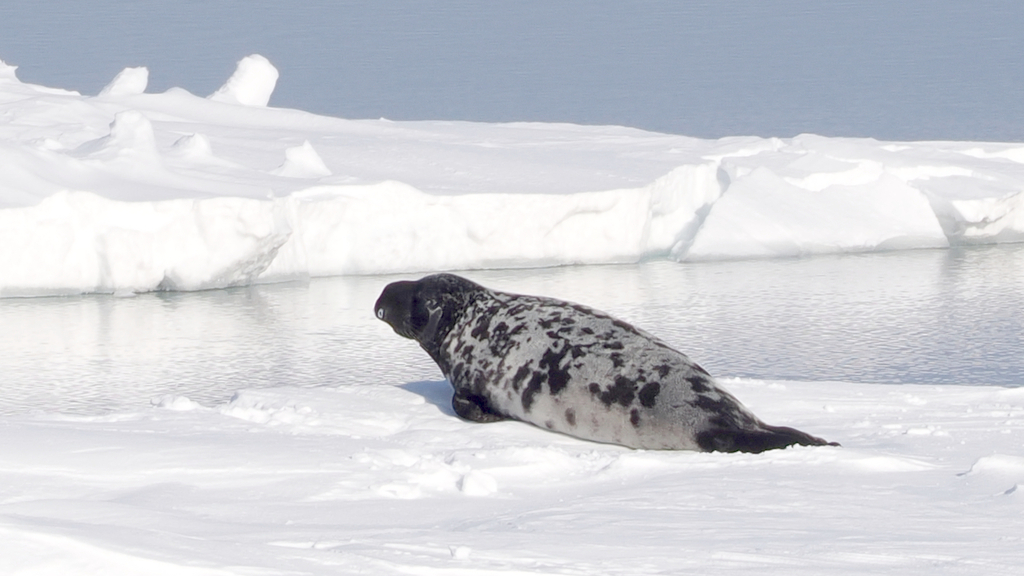
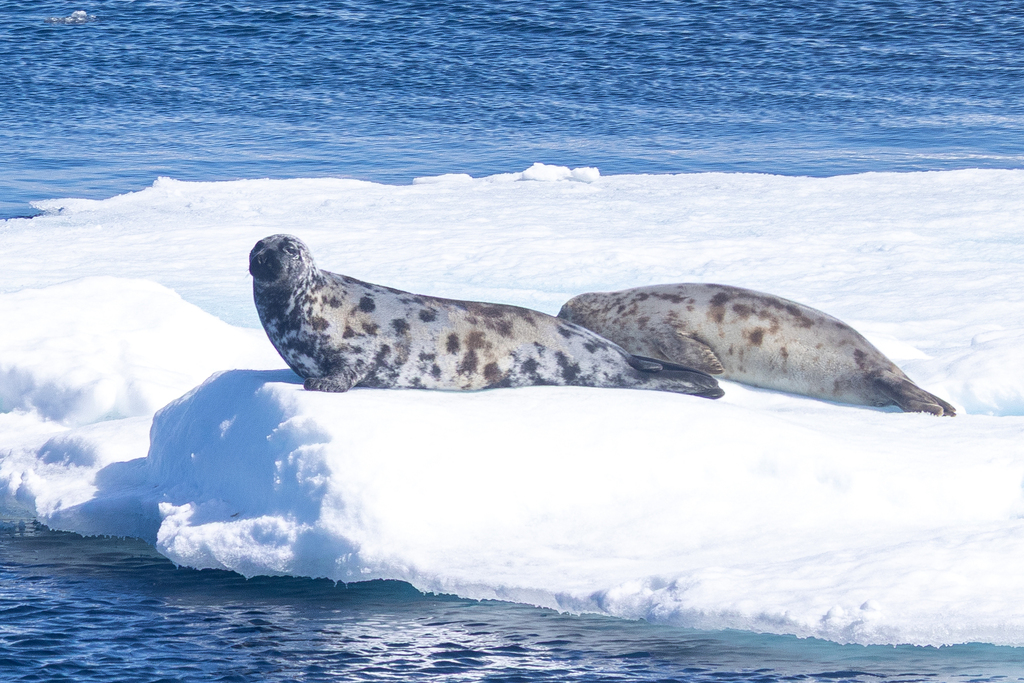
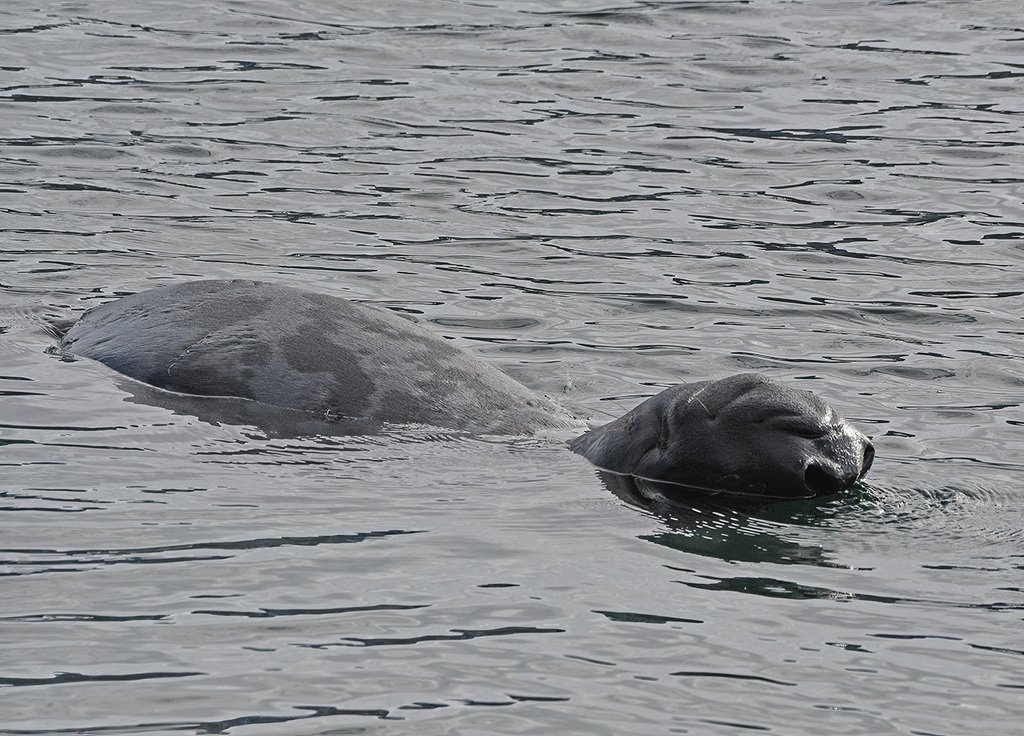
Photos show the species, not always the places on this page.
Length
Males about 2.5 to 2.6 m (8.2 to 8.5 ft); females about 2.0 to 2.2 m (6.6 to 7.2 ft)
Weight
Males about 190 to 350 kg (420 to 780 lb), averaging about 300 kg; females about 145 to 300 kg (320 to 660 lb), averaging about 160 kg. Pups weigh about 20 to 24 kg (44 to 53 lb) at birth
Next to a person
A male is longer than any adult is tall and as heavy as about four adults. A female is about as long as a tall adult and as heavy as two.
What it eats
Squid and fish. In the Greenland Sea they eat squid (Gonatus fabricii), polar cod, capelin and sand eels; in the northwest Atlantic Greenland halibut, cod and redfish. They usually dive to about 100 to 600 m, and some dives pass 1,000 m and last close to an hour.
Around people
Calm, give space
How it lives
Hooded seals live mostly at sea and come together on the ice to breed. Males grow a stretchy hood on the nose from about age four and can inflate a pink balloon from one nostril to attract a mate. The pup, called a blue-back for its grey-blue coat, nurses for only about 3 to 5 days, the shortest nursing period of any mammal, on milk that is about 60 percent fat. Hooded seals live about 25 to 35 years.
Where it goes
Hooded seals live in drifting pack ice and deep water. They gather on the ice to breed in four areas, the Gulf of St Lawrence, the Front off Newfoundland, Davis Strait and the West Ice near Jan Mayen, then spread out to feed. They range roughly from 47 to 80 degrees north. I did not read tracking studies for the Greenland coast.
We only draw a journey on the map when scientists have tracked it or clearly documented it. For this animal we have not found one yet.
Populations
NAMMCO describes two groups. The northwest Atlantic stock is about 594,000 and stable or increasing, up from under 375,000 in 1984. The Greenland Sea stock is about 77,000 (2018 survey), down from 102,000 in 1997 and about 1.4 million in 1946, and NAMMCO says it keeps declining even without hunting. The IUCN lists the species as Endangered (assessed 2025). Hunting was restricted from 1971.
Meet it respectfully
Watch quietly from a distance. Hooded seal mothers leave the pup after only a few days, so never approach or handle a pup on the ice. Never chase, touch, feed or bait a seal. In US waters NOAA asks people to watch seals from at least 50 yards (about 46 m) and for no more than 30 minutes. I did not read the rules for Greenland, so follow your guide and local rules.
Fun fact
Tap the bulb to light it up.
The pup's nursing period of about 4 days is the shortest of any mammal.
Males can inflate a pink balloon from one nostril as a display.
Some dives go deeper than 1,000 m and can last close to an hour.
Hooded seal in the Ocean Atlas
Places we have researched where this animal is recorded. It is never guaranteed, and some places are for watching from the boat only.
Travel with usComing soonTrusted referralExploringOn pause, story onlyEthics pass
Country colour: pink where we travel, blue where we are exploring or refer, grey for story only.
 Canada
 Denmark
 France
 Greenland
 Iceland
 Netherlands
 Norway
 United States
Sources for this page
- NOAA Fisheries, Hooded seal, 2026
- NAMMCO, Hooded seal, 2026
- Animal Diversity Web, University of Michigan, Hooded seal
- Wikipedia, Hooded seal, 2026
- GBIF Backbone with IUCN Red List category, 2026
Facts checked 5 October 2026. Photos: Unsplash licence, or Creative Commons as shown on each photo.
Work in ocean travel?
We are always happy to hear from exceptional local operators, accommodation, conservation organisations and destination experts. If your work fits responsible, small-group ocean travel, we would love to learn more.
Partner with Ocean Calling