
Imperial shag
Leucocarbo atriceps
A black-and-white shag with a blue ring round the eye, resting on a rock by cold water; every sighting is a gift of the day, never a promise.
Least Concern (IUCN, 2018) means the species is not considered at risk of extinction at present; most subspecies number more than 10,000 pairs.
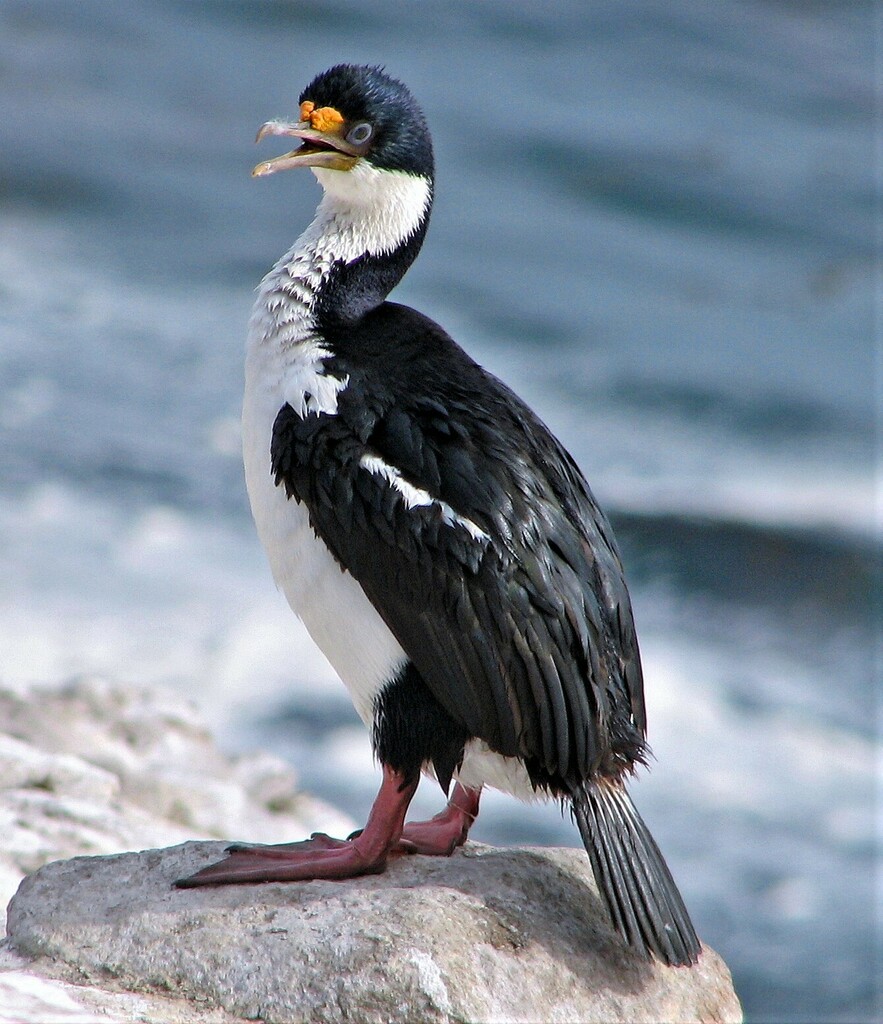
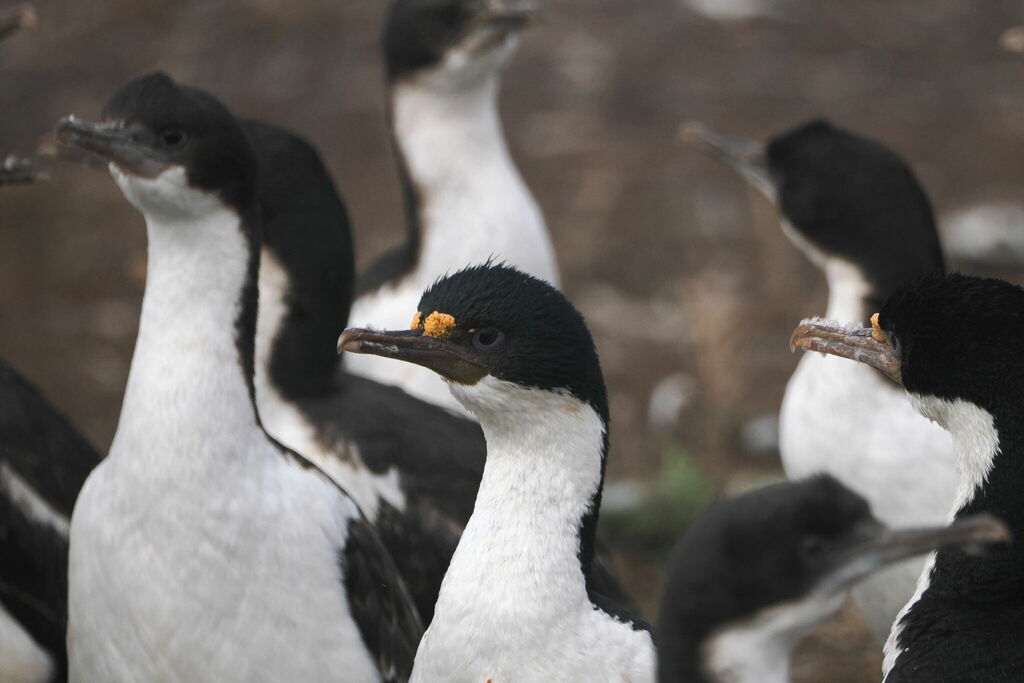
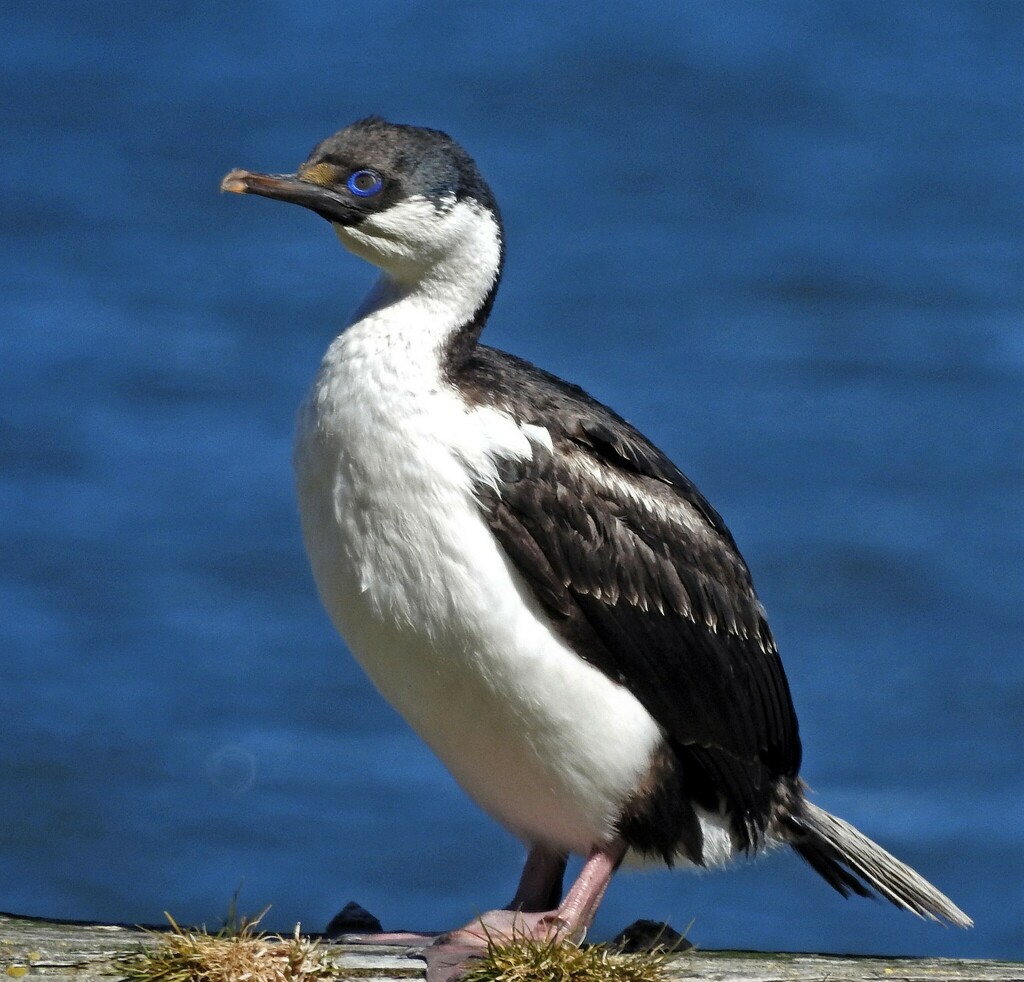
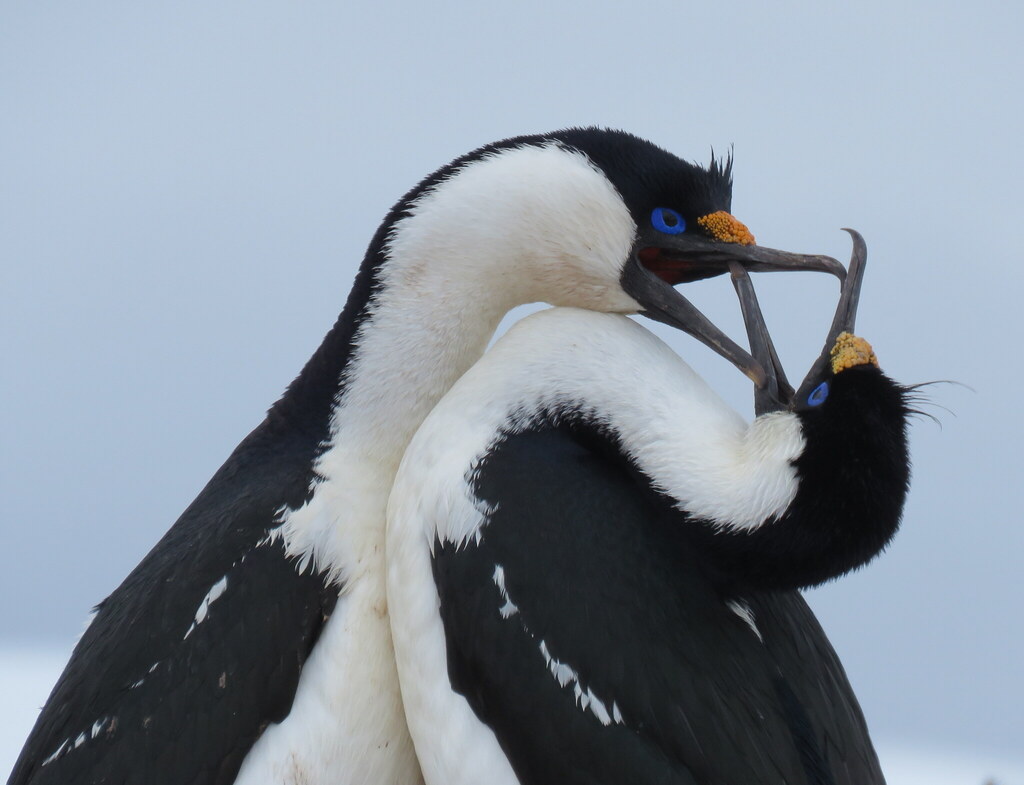
Photos show the species, not always the places on this page.
Length
About 70 to 79 cm (28 to 31 in) long in one source; another gives 68 to 76 cm (27 to 30 in), with a wingspan of about 124 cm (49 in)
Weight
About 1.8 to 3.5 kg (4.0 to 7.7 lb) in one source; another gives 2 to 4 kg (4.4 to 8.8 lb). Weights vary by subspecies, sex and season, and the sources do not break this down
Next to a person
About as long as a toddler is tall, and about as heavy as a newborn baby
What it eats
Mainly small bottom-living fish, plus crustaceans, marine worms, snails and octopuses. In the Falkland Islands the squat lobster Munida gregaria is an important prey. It feeds by diving, usually to about 25 m and sometimes to about 60 m. One source gives a maximum of about 50 m.
Around people
Calm, give space
How it lives
Imperial shags nest in colonies on rocky shores and islands, sometimes beside penguins and albatrosses. Pairs are monogamous and both parents brood the eggs. A clutch can hold up to five eggs, and three is the usual number at a colony studied on Deseada Island in Argentina. There the birds arrived in early August, laid eggs from late October, with a peak in the first two weeks of November. About 53 percent of eggs hatched and 60 percent of chicks survived. Another source gives about 28 days of incubation and 75 to 80 days from hatching to flight. Lifespan is not given in the sources I opened.
Where it goes
Mostly sedentary. One source says some birds move north along Atlantic coasts in the austral winter, sometimes as far as Uruguay. On Deseada Island the juveniles and most adults left the colony in late March. I did not find tracking data in the sources I opened.
We only draw a journey on the map when scientists have tracked it or clearly documented it. For this animal we have not found one yet.
Populations
IUCN Least Concern (assessed 2018). There is no single reliable global count. Wikipedia notes that most subspecies number more than 10,000 pairs each. A bird-information site lists roughly 340,000 to 1.4 million mature individuals worldwide and says some populations are declining; I could not check this against the Red List page, which blocked access. Eight subspecies are recognised, from the Falkland Islands to Macquarie Island. A 2022 genetic study treats the blue-eyed shag forms of the Southern Ocean as subspecies of one species.
Meet it respectfully
Watch from a distance and let the birds come and go on their own. Never approach nests, chase or flush birds off rocks, touch, feed or bait them. Move slowly and keep your voice low near a colony. Rules differ by place and many colonies are in protected areas, so follow local rules and your guide.
Fun fact
Tap the bulb to light it up.
Imperial shags dive for their food, usually to about 25 m and sometimes to about 60 m.
A 2022 genetic study treats the blue-eyed shags of the Antarctic and sub-Antarctic islands as subspecies of one species, not separate species.
Colonies are sometimes shared with penguins and albatrosses.
Imperial shag in the Ocean Atlas
Places we have researched where this animal is recorded. It is never guaranteed, and some places are for watching from the boat only.
Travel with usComing soonTrusted referralExploringOn pause, story onlyEthics pass
Country colour: pink where we travel, blue where we are exploring or refer, grey for story only.
 Antarctica
 Argentina
 Australia
 Chile
Chile Falkland Islands
 New Zealand
 Uruguay
Sources for this page
- Wikipedia, Imperial shag, 2026
- GBIF, IUCN Red List category lookup, 2026
- Oiseaux-Birds, Imperial shag
- University of Otago via Phys.org, 2022
- Arrighi et al., 1998, El Hornero
- Leonardi and Quintana, 2017, Int J Parasitol Parasites Wildl
Facts checked 5 October 2026. Photos: Unsplash licence, or Creative Commons as shown on each photo.
Work in ocean travel?
We are always happy to hear from exceptional local operators, accommodation, conservation organisations and destination experts. If your work fits responsible, small-group ocean travel, we would love to learn more.
Partner with Ocean CallingNot sure where to go? Get your Ocean Match
from CHF 19