
Little penguin
Eudyptula minor
A small blue shape at dusk, rafting offshore before it waddles in after dark. Little penguins keep their own hours, and no sighting is ever a promise.
Least Concern (IUCN, 2020) means it is not close to being threatened worldwide. In New Zealand it is listed as At Risk and Declining.
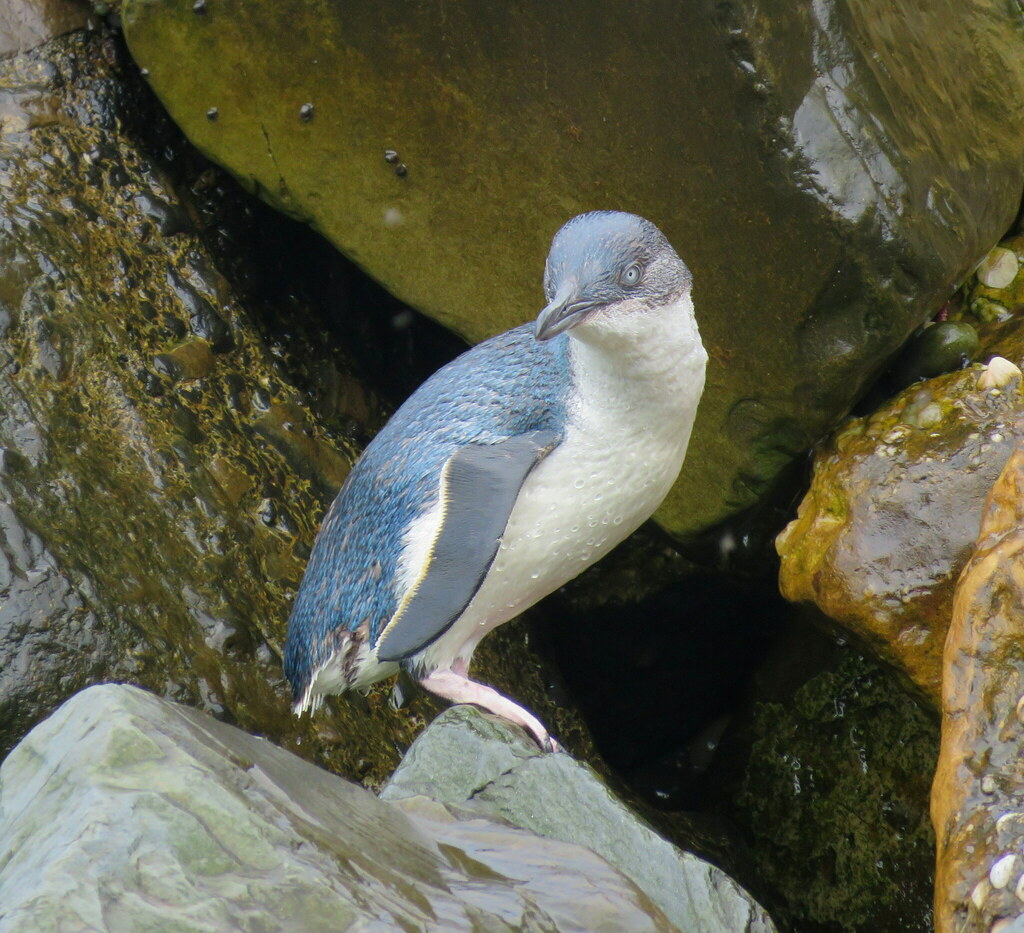
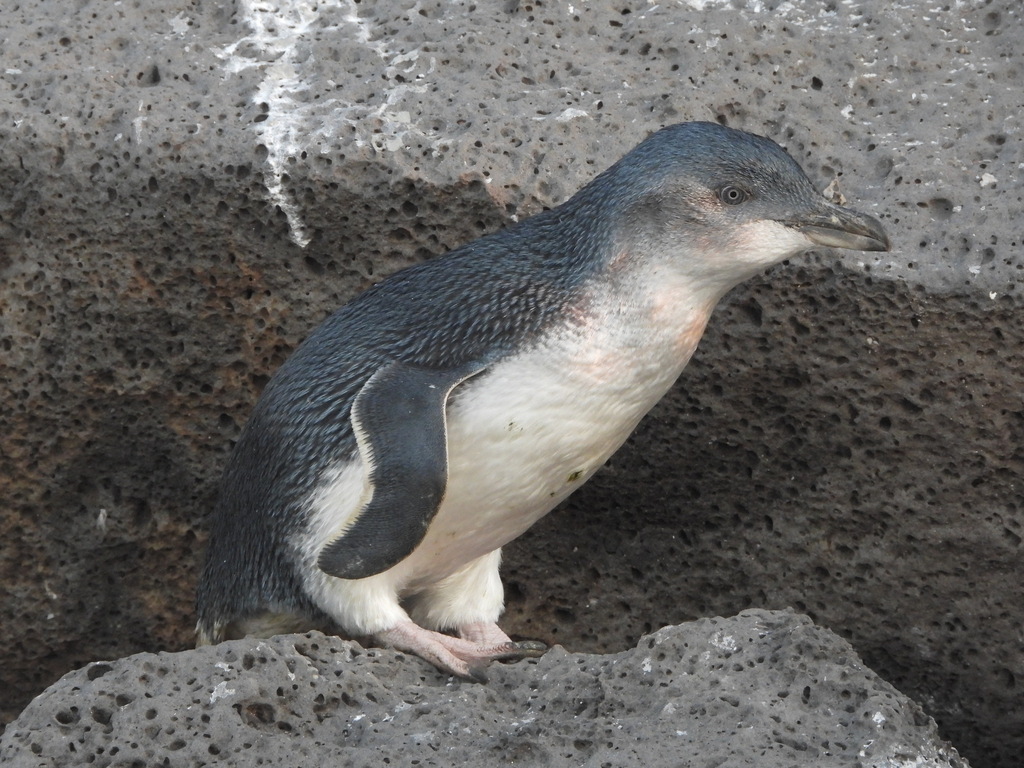
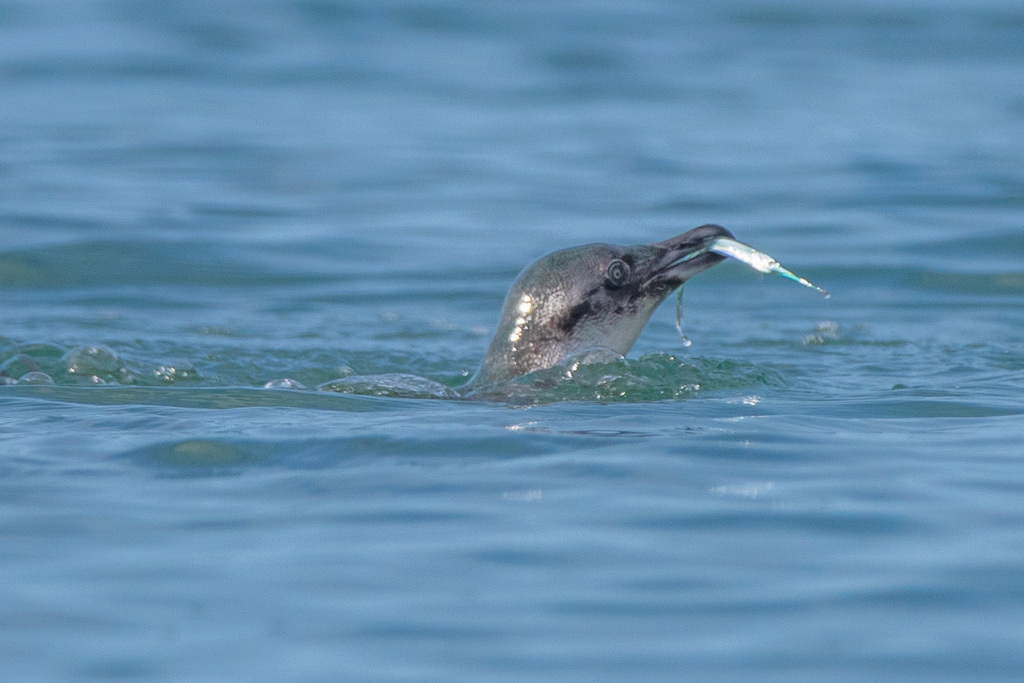
Photos show the species, not always the places on this page.
Length
About 25 to 33 cm (10 to 13 in) tall; DOC says just over 25 cm, other sources 30 to 33 cm
Weight
About 1 to 1.5 kg (2.2 to 3.3 lb); DOC says about 1 kg, while a general reference gives an average of 1.5 kg
Next to a person
About as tall as a ruler is long, and about as heavy as a bag of sugar or two
What it eats
Small shoaling fish, squid and crustaceans. In New Zealand, prey includes arrow squid, slender sprat and red cod. Birds dive after prey, usually in water less than 50 m deep.
Around people
Quiet, give space
How it lives
The smallest of all penguins. On land they are active at night, and they come ashore at dusk in small groups called rafts. Pairs are monogamous within a season and share the work of incubating the 1 to 2 eggs for up to 36 days. Chicks fledge after 7 to 8 weeks. Once a year adults stay ashore for about 2 weeks to replace all their feathers, and cannot swim during this moult. Wild birds average about 6.5 years, with up to about 25 years reported.
Where it goes
Little penguins do not migrate far. In the breeding season they mostly stay within about 25 km of the shore and feed within about 20 km of their colony. Banding in Wellington shows that birds seldom move far from home, and many young birds settle just metres from where they were raised.
We only draw a journey on the map when scientists have tracked it or clearly documented it. For this animal we have not found one yet.
Populations
The IUCN assessed the species as Least Concern in 2020, with about 469,760 mature individuals and a stable trend. Some authorities treat the Australian form as a separate species, but the IUCN assessment covers it as one. In New Zealand the Department of Conservation lists it as At Risk and Declining, mainly because of predators such as dogs, cats and ferrets, and many colonies are shrinking. Where predators are controlled, populations have held steady or grown. Estimates for Australia are about 110,000 to 190,000 breeding pairs in Tasmania and about 32,000 breeding adults on Phillip Island.
Meet it respectfully
The best way to meet little penguins is on an organised evening viewing tour at a recognised site, where staff manage the space. Birds on the shore are easily disturbed, so stay well back, stay quiet and never block their path from the water. Keep dogs on a leash and away from nests. A scruffy bird on land is usually just moulting, so leave it alone. Rules differ by place, so follow local signs and your guide.
Fun fact
Tap the bulb to light it up.
It is the only penguin that can raise more than one clutch in a season, although few populations do.
On land it is strictly nocturnal. Groups gather offshore at dusk and come ashore together.
Their scientific name Eudyptula means good little diver.
Little penguin in the Ocean Atlas
Places we have researched where this animal is recorded. It is never guaranteed, and some places are for watching from the boat only.
Travel with usComing soonTrusted referralExploringOn pause, story onlyEthics pass
Country colour: pink where we travel, blue where we are exploring or refer, grey for story only.
 Australia
 New Zealand
 United States
Sources for this page
- IUCN Red List, 2020
- NZ Birds Online, 2022
- NZ Department of Conservation, 2026
- Wikipedia, Little penguin, 2026
Facts checked 5 October 2026. Photos: Unsplash licence, or Creative Commons as shown on each photo.
Work in ocean travel?
We are always happy to hear from exceptional local operators, accommodation, conservation organisations and destination experts. If your work fits responsible, small-group ocean travel, we would love to learn more.
Partner with Ocean CallingGili Trawangan in 5 days
from CHF 790