
Macaroni penguin
Eudyptes chrysolophus
Golden crest plumes on a dark rock, and a long way from anywhere: macaroni penguins keep their own calendar, and no sighting is a promise.
Vulnerable (IUCN, 2020) means it faces a high risk of extinction in the wild. Numbers have fallen since the mid-1970s, although it is still a very numerous penguin.
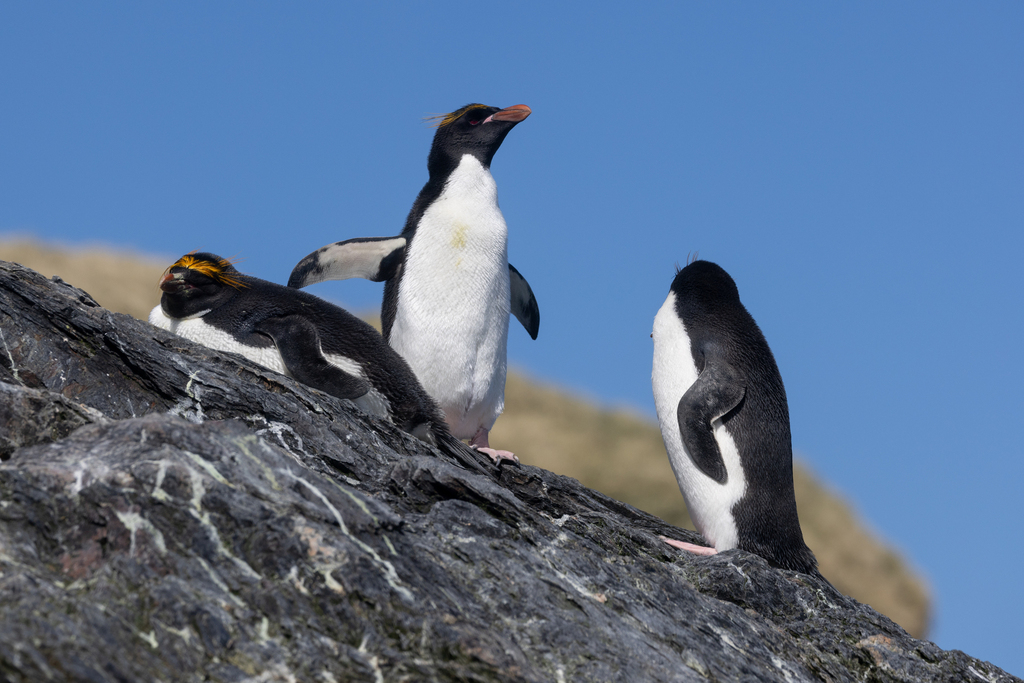
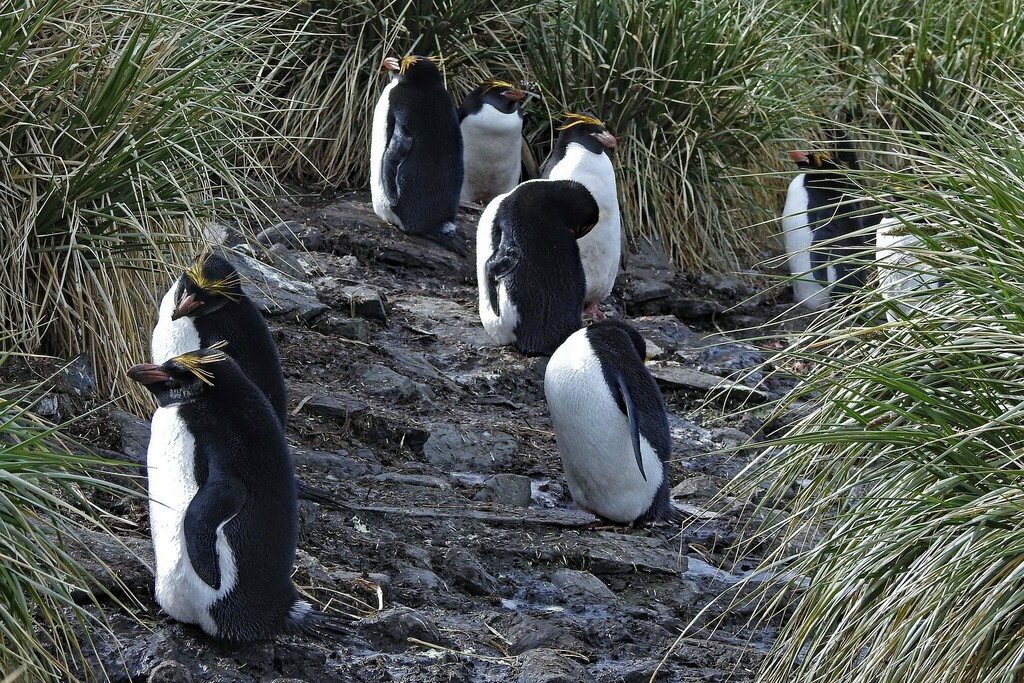
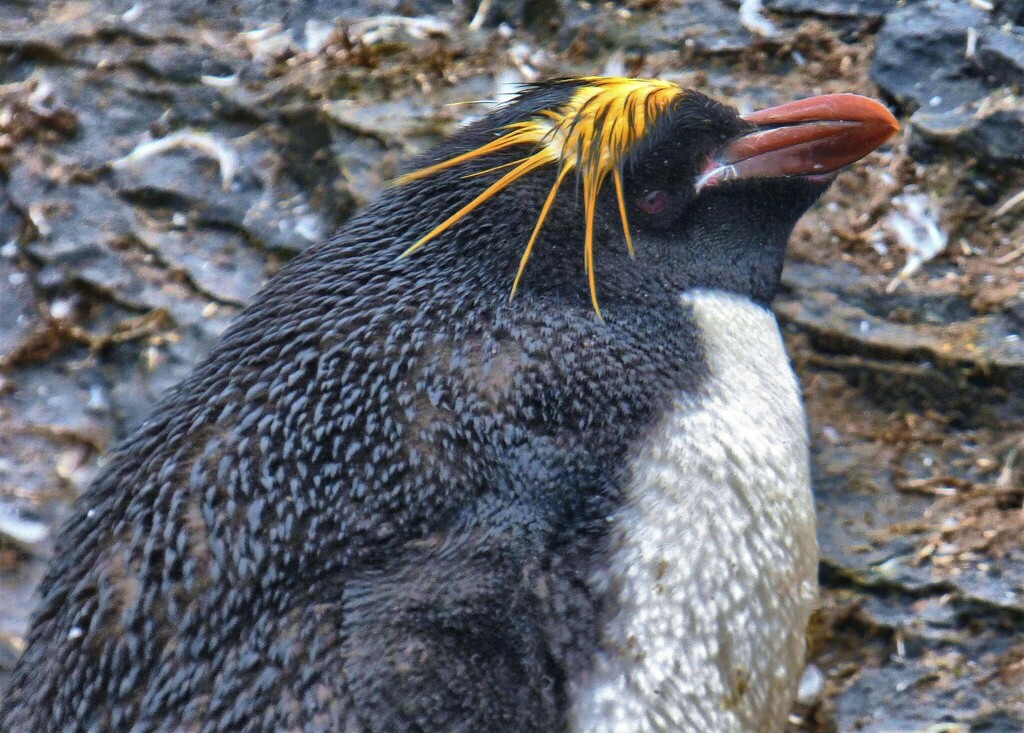
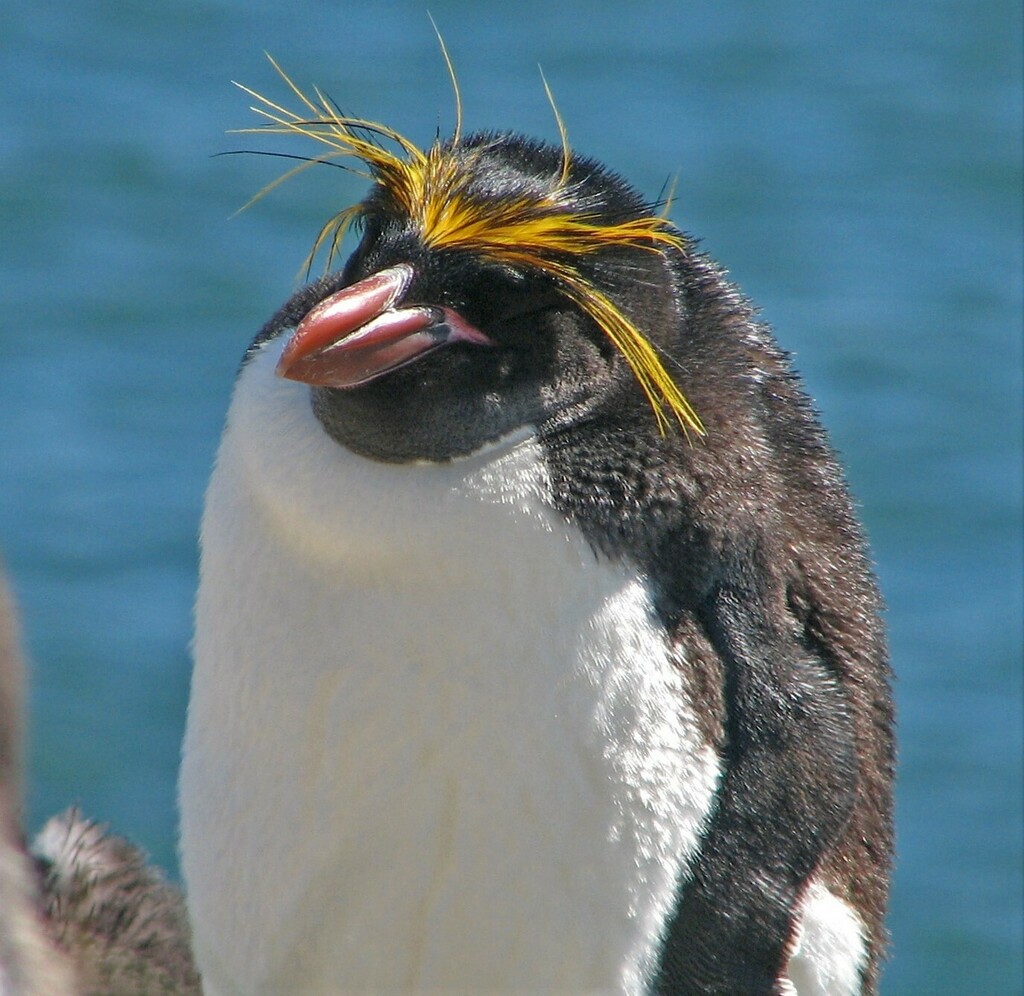
Photos show the species, not always the places on this page.
Length
About 70 cm (28 in) tall on average
Weight
About 3.3 to 6.4 kg (7.3 to 14.1 lb) for males and 3.2 to 5.7 kg (7.1 to 12.6 lb) for females, varying with the season. Another source gives 4 to 7 kg (8.8 to 15.4 lb).
Next to a person
About as tall as a toddler, and about as heavy as a large house cat
What it eats
Mostly krill. In the breeding season more than 90 percent of the food is krill, and the rest is other crustaceans, squid and fish. Dives are usually 15 to 50 m deep, and dives of more than 220 m have been recorded. The species is estimated to eat more marine food than any other seabird, about 9.2 million tonnes of krill a year.
Around people
Calm, give space
How it lives
Macaroni penguins nest in some of the largest and densest penguin colonies, up to about 100,000 birds, and one source counts more than 250 colonies. They start to breed in late October and lay in early November. A pair lays two eggs, and the first, smaller egg rarely survives. Chicks fledge after about 60 to 70 days. Females first breed at about 5 years and males at about 6 in one source. Another source says first breeding is not thought to happen until age 6 to 8. At Bird Island, South Georgia, an average of 33 percent of fledglings survived their first year, and 89 percent of older birds survived each year. Estimates of lifespan vary, from 10 to 20 years to more than 20 years.
Where it goes
Foraging trips during breeding are usually 50 to 303 km from the colony in one source, and range from 50 km to more than 2,000 km depending on the breeding stage in another. Birds tracked from Kerguelen travelled more than 10,000 km in the central Indian Ocean in a 2009 study. At Bird Island, birds spend the winter entirely at sea, away from the continental shelf. During feeding trips they can reach as far north as southern Brazil and South Africa.
We only draw a journey on the map when scientists have tracked it or clearly documented it. For this animal we have not found one yet.
Populations
IUCN Vulnerable (2020), with a decreasing population. The global breeding population was estimated at 6.3 million pairs in 2013, a large fall from earlier decades. Another source gives about 18 million individuals and says it may still be the most numerous penguin. Declines have been recorded since the mid-1970s, including about 50 percent at South Georgia between the mid-1970s and mid-1990s. The causes are not fully understood. Overfishing, a warming climate and introduced predators may all play a part. Heard Island holds a notable colony.
Meet it respectfully
Let the penguins set the pace. Watch quietly from a distance, move slowly and give them the right of way. Never chase, touch, feed or surround them, and keep clear of nests and chicks. Many of the islands where they breed are protected reserves, so follow local rules and your guide.
Fun fact
Tap the bulb to light it up.
Macaroni penguins are thought to eat more marine food than any other seabird, and more than 90 percent of it is krill in the breeding season.
A pair lays two eggs of different sizes, and the first egg rarely survives.
At Bird Island, South Georgia, tracked birds spend the winter entirely at sea, away from the continental shelf.
Macaroni penguin in the Ocean Atlas
Places we have researched where this animal is recorded. It is never guaranteed, and some places are for watching from the boat only.
Travel with usComing soonTrusted referralExploringOn pause, story onlyEthics pass
Country colour: pink where we travel, blue where we are exploring or refer, grey for story only.
 Antarctica
 Argentina
 Australia
 Chile
Chile Falkland Islands
 South Africa
 United Kingdom
Sources for this page
- Wikipedia, Macaroni penguin, 2026
- GBIF, IUCN Red List category lookup, 2026
- Antarctic and Southern Ocean Coalition, 2026
- Australian Antarctic Division, 2026
- Horswill et al., 2014, Journal of Animal Ecology
Facts checked 5 October 2026. Photos: Unsplash licence, or Creative Commons as shown on each photo.
Work in ocean travel?
We are always happy to hear from exceptional local operators, accommodation, conservation organisations and destination experts. If your work fits responsible, small-group ocean travel, we would love to learn more.
Partner with Ocean CallingShop with Ocean Calling
Visit the Ocean Calling storefront on Amazon.
As an Amazon Associate I earn from qualifying purchases. You are not only choosing products that respect the ocean, you are also helping us keep going: paying our local partners fairly and keeping our retreats ethical, sustainable and honestly priced for you. 💗