
Magellanic penguin
Spheniscus magellanicus
A banded penguin on a Patagonian shore, going about its nesting season. We watch from a respectful distance, and no sighting is ever a promise.
Least Concern (IUCN, 2020) means it is not at high risk of extinction right now, although the global population is decreasing.
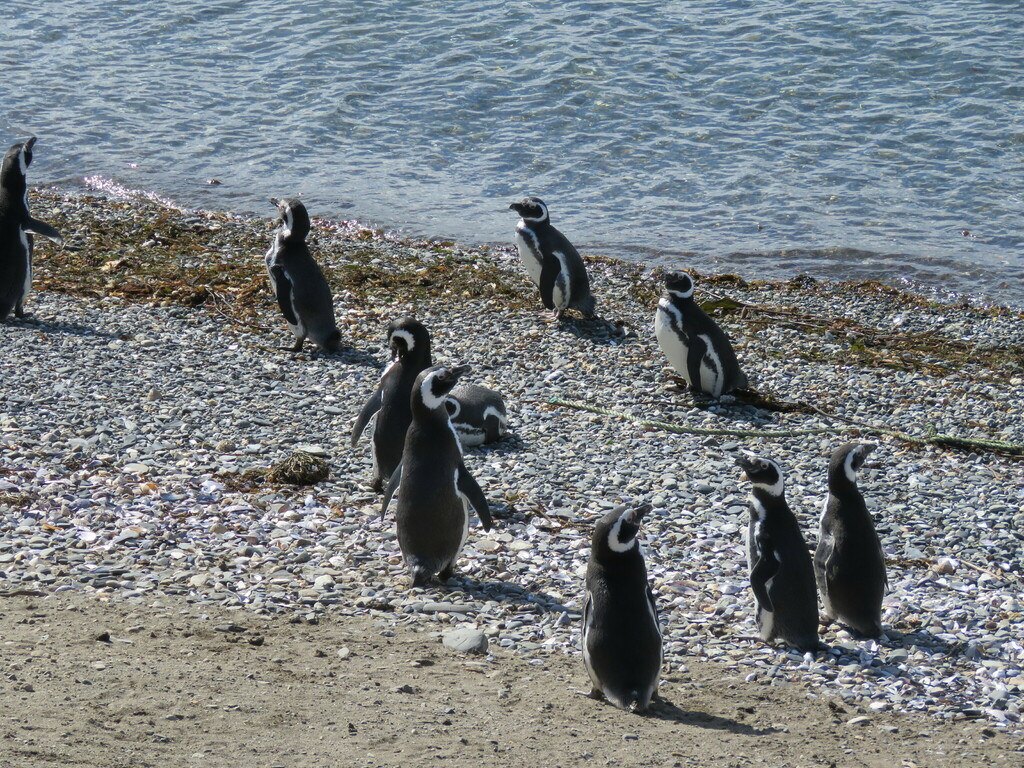
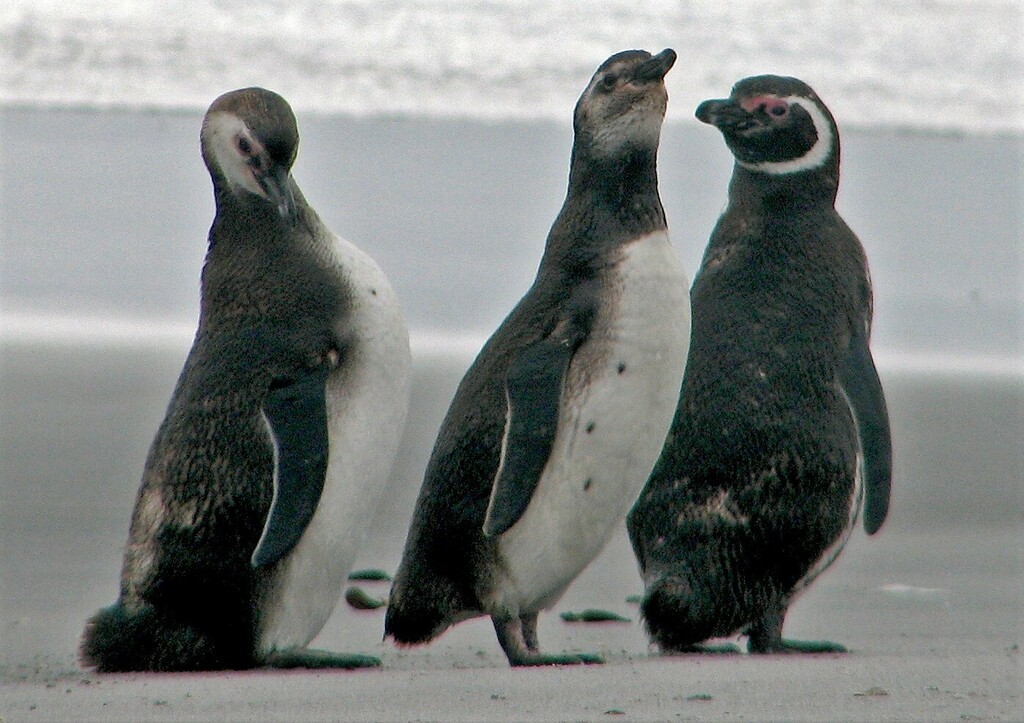
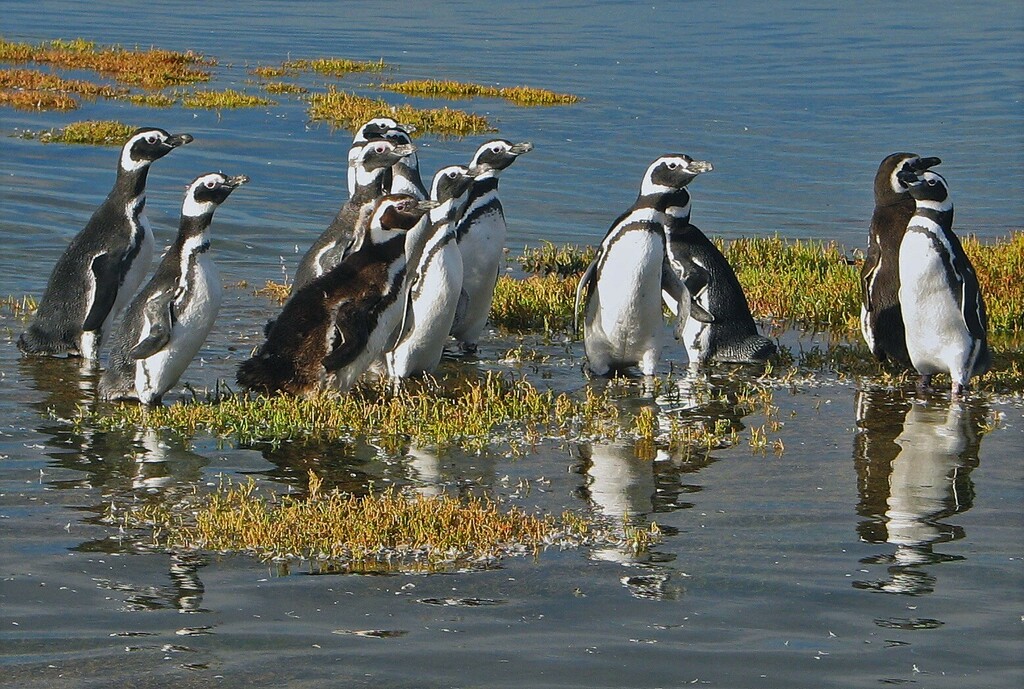
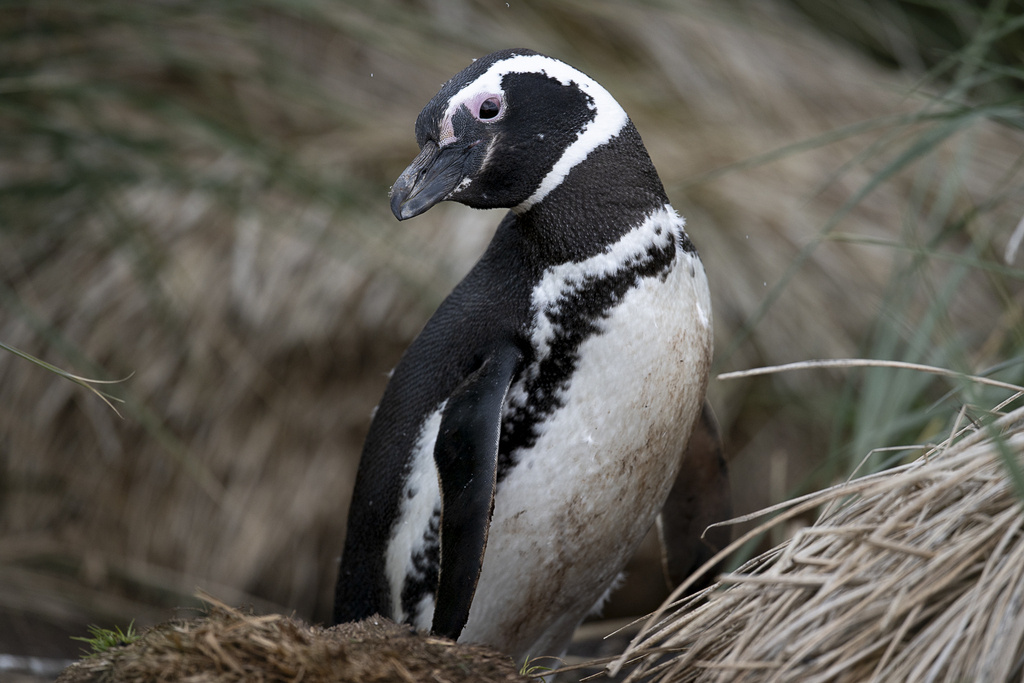
Photos show the species, not always the places on this page.
Length
Stands about 61 to 76 cm (24 to 30 in) tall
Weight
About 2.7 to 6.5 kg (6 to 14 lb); males are larger than females
Next to a person
Stands a little below an adult's hip and weighs about as much as a small dog
What it eats
Small fish such as anchovies and hake, plus squid, krill and cuttlefish. During breeding they usually feed in the top 20 to 50 m, and dives of about 100 m have been recorded.
Around people
Curious, keep back
How it lives
Females first breed at about 4 years and males at about 5. The breeding season runs from September to late February or March. Pairs lay two eggs in October, and incubation takes about 40 days. Wild birds live up to about 25 years.
Where it goes
Magellanic penguins arrive at their colonies in September and leave in April. In winter they spend their time at sea and travel north, as far as the coast of Brazil.
We only draw a journey on the map when scientists have tracked it or clearly documented it. For this animal we have not found one yet.
Populations
Global (IUCN, 2020, assessed by BirdLife International): about 1.1 to 1.6 million breeding pairs, and the trend is decreasing. Mainland Argentina and its coastal islands hold about 950,000 pairs, and the Falkland Islands about 100,000 pairs. Argentina has 67 registered colonies, 53 of them protected. Most Argentine colonies are increasing, but Punta Tombo, one of the largest, has declined: one monitored colony fell by more than 20% in 22 years and holds about 200,000 pairs. Argentina listed the bird as Near Threatened nationally in 2015.
Meet it respectfully
Keep your distance and stay on any marked path, because nests can be close to the trail. Let penguins cross in front of you and never block their way to the water. Never chase, touch, feed or pick up a penguin, and never go near nests or chicks. Move slowly and keep your voice low. I did not read the rules for a particular reserve, so follow the rangers and your guide.
Fun fact
Tap the bulb to light it up.
Punta Tombo in Argentina holds the largest colony, at around 200,000 breeding pairs.
Outside the breeding season, Magellanic penguins go on feeding trips that can cover thousands of kilometres.
A pair usually lays two eggs in October, and incubation takes about 40 days.
Magellanic penguin in the Ocean Atlas
Places we have researched where this animal is recorded. It is never guaranteed, and some places are for watching from the boat only.
Travel with usComing soonTrusted referralExploringOn pause, story onlyEthics pass
Country colour: pink where we travel, blue where we are exploring or refer, grey for story only.
 Argentina
 Brazil
 Chile
Chile Falkland Islands
 United Kingdom
 Uruguay
Sources for this page
- AMP Argentina, Magellanic penguin
- WCS Argentina, Penguins
- Wikipedia, Magellanic penguin
- MarineBio, Magellanic penguins
Facts checked 5 October 2026. Photos: Unsplash licence, or Creative Commons as shown on each photo.
Work in ocean travel?
We are always happy to hear from exceptional local operators, accommodation, conservation organisations and destination experts. If your work fits responsible, small-group ocean travel, we would love to learn more.
Partner with Ocean Calling