
New Zealand fur seal
Arctocephalus forsteri
A whiskered face on the rocks, then a quiet slip into the swell. Fur seals come and go as they please, and no sighting is ever a promise.
Least Concern (IUCN, assessed 2014) means it is not close to being threatened worldwide, and its numbers are rising after past hunting.
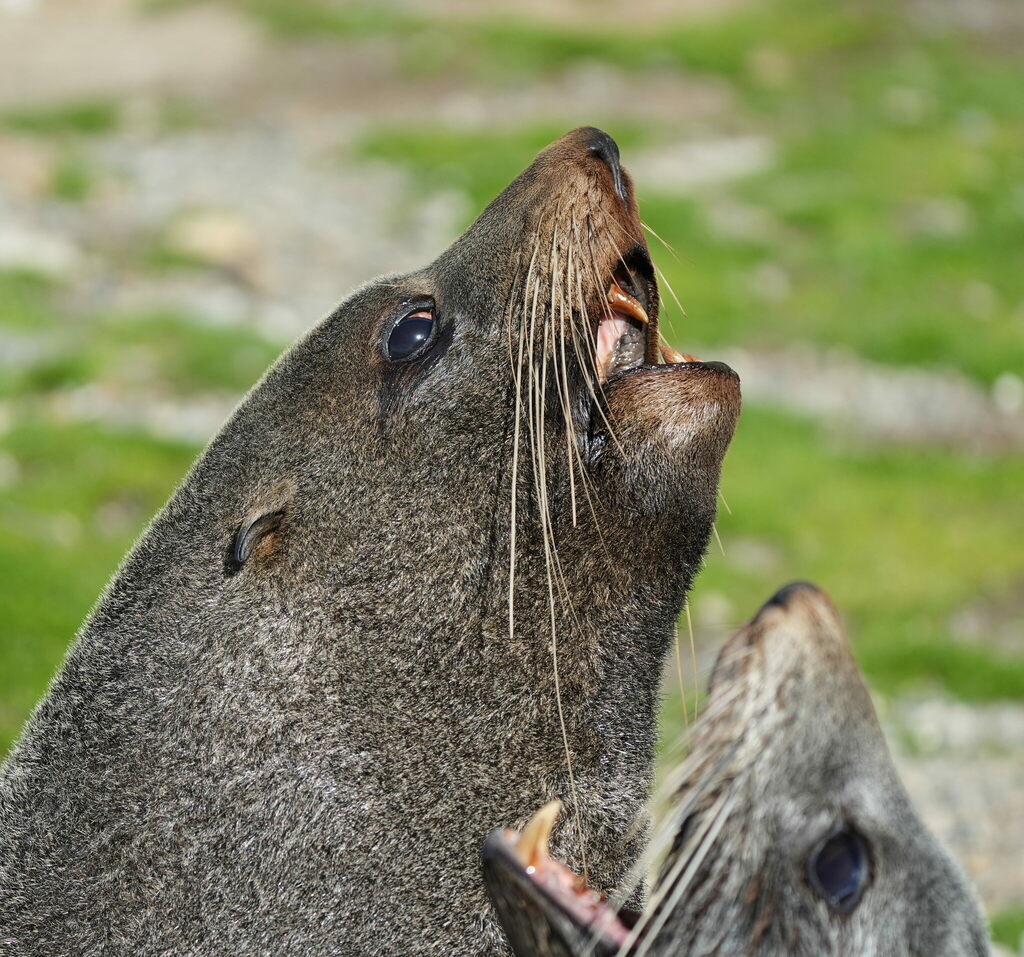
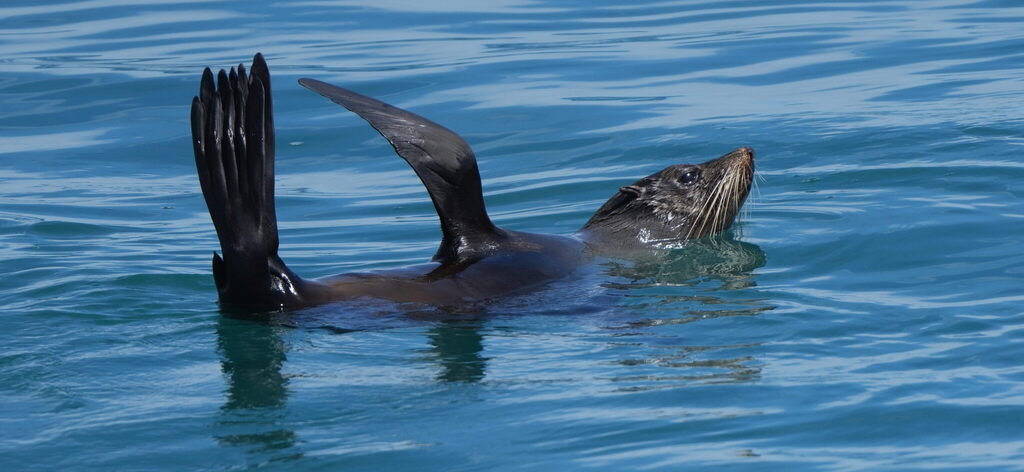
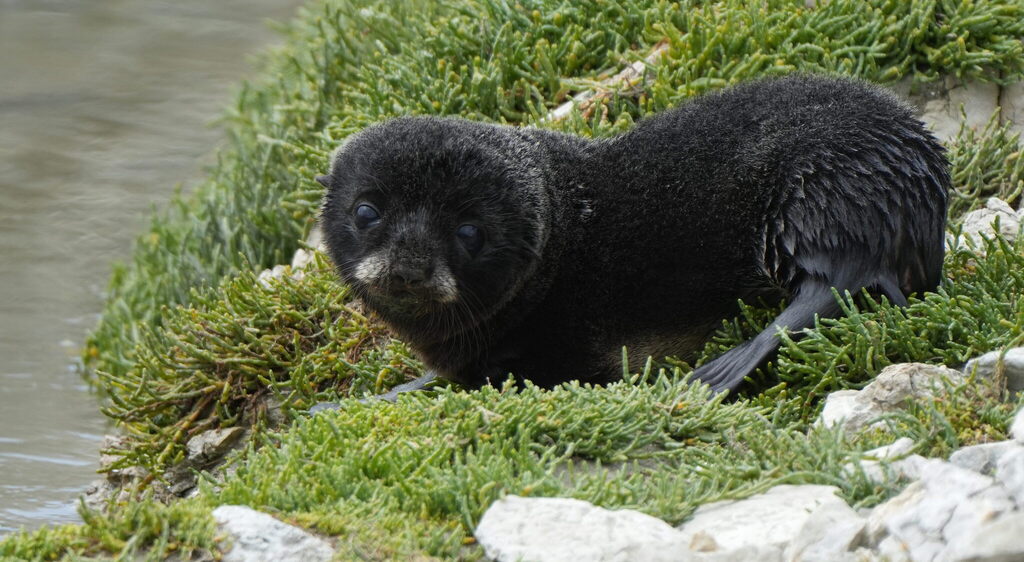
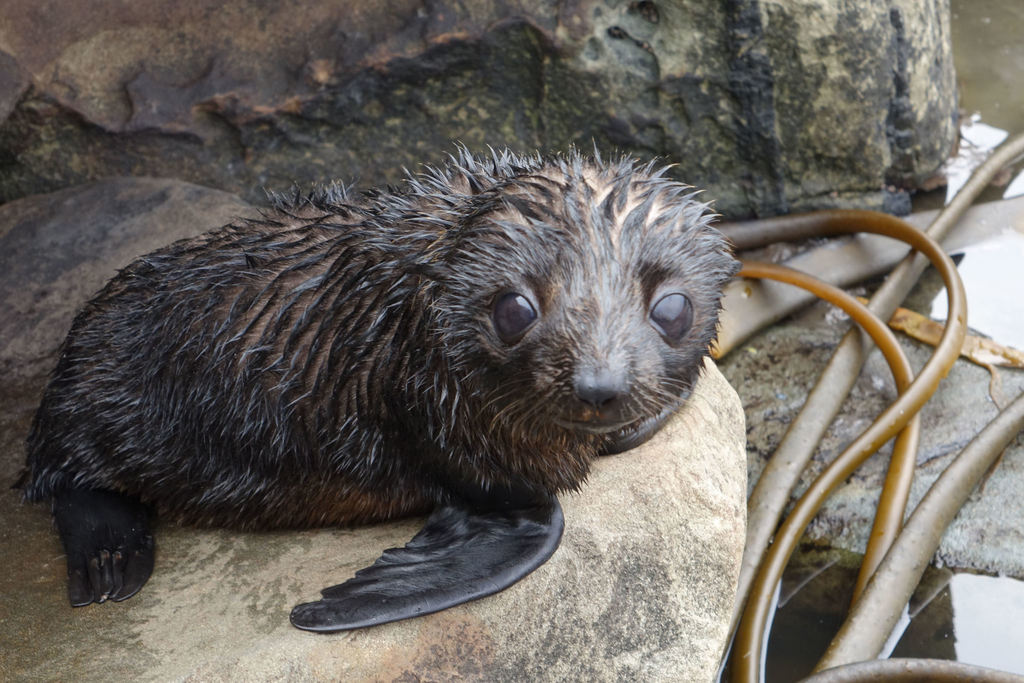
Photos show the species, not always the places on this page.
Length
Males up to about 2 m (6.6 ft); females up to about 1.5 m (4.9 ft)
Weight
Males average about 126 kg (278 lb), with up to about 160 kg (350 lb) reported; females about 30 to 50 kg (66 to 110 lb). Newborn pups weigh about 3 to 4 kg (7 to 9 lb)
Next to a person
A big male is about as long as a tall adult and weighs as much as one and a half to two adults. Females are lighter than most adults
What it eats
Squid, octopus, fish and, rarely, birds. In New Zealand, arrow squid and New Zealand octopus make up most of the cephalopods in the diet. Lanternfishes are the main fish. Seals near the southern edge of the range have been known to take penguins.
Around people
Calm, give space
How it lives
Females first breed at about 4 to 6 years and males hold territory from about 8 to 10 years. Males claim territory in late October, and females come ashore between November and January to give birth to a single pup. Pregnancy lasts about 9 months, after a delay of about 3 months before the egg implants. Pups suckle for about 300 days and are weaned around September. Wild adults average roughly 12 to 15 years, with up to about 25 years recorded.
Where it goes
IUCN lists this seal as not a migrant. Seals spread out from their colonies to feed, and males and females use different waters: males often forage in deeper water over the shelf edge, females more on the continental shelf. Mothers with young pups rarely stay away for more than about 2 days.
We only draw a journey on the map when scientists have tracked it or clearly documented it. For this animal we have not found one yet.
Populations
The IUCN estimated about 100,000 mature individuals in 2014 and said the population is increasing. Hunting brought the species close to extinction. Colonies are now established and growing around the South Island, Stewart Island and the subantarctic islands, with new colonies on the North Island. In Australia, seals live along the southern coast, in southern Tasmania and on Macquarie Island, and small groups are forming in Bass Strait, Victoria and New South Wales. Australia lists the species as Vulnerable in New South Wales and Victoria and Rare in Tasmania (2026 lists).
Meet it respectfully
Watch from a distance and let the seals choose how close to be. Never chase, touch, feed or block a seal from the water, and never get between a mother and her pup. Females are less tolerant just after giving birth, and human presence near colonies has been linked to panic and pup deaths. Keep dogs well away. Rules differ by place, so follow local signs and your guide.
Fun fact
Tap the bulb to light it up.
Fur seals have small external ear flaps and hind flippers that turn forward, which sets them apart from true seals.
Most dives last only 1 to 2 minutes, but females have been recorded diving to about 312 m and males to about 380 m.
Mothers sniff each newborn to learn its smell, and later feed only their own pup when they return from sea.
New Zealand fur seal in the Ocean Atlas
Places we have researched where this animal is recorded. It is never guaranteed, and some places are for watching from the boat only.
Travel with usComing soonTrusted referralExploringOn pause, story onlyEthics pass
Country colour: pink where we travel, blue where we are exploring or refer, grey for story only.
 Australia
 New Zealand
Sources for this page
- IUCN Red List, 2015
- Australian Government, 2026
- Animal Diversity Web, University of Michigan
- Wikipedia, Arctocephalus forsteri, 2026
Facts checked 5 October 2026. Photos: Unsplash licence, or Creative Commons as shown on each photo.
Work in ocean travel?
We are always happy to hear from exceptional local operators, accommodation, conservation organisations and destination experts. If your work fits responsible, small-group ocean travel, we would love to learn more.
Partner with Ocean Calling