
Royal penguin
Eudyptes schlegeli
A crest of gold feathers on a stony beach. The penguins keep their own timetable, and no sighting is ever a promise.
Least Concern (IUCN, 2022) means the species is not close to being threatened with extinction. All royal penguins breed on one island group, so a local problem there would matter.
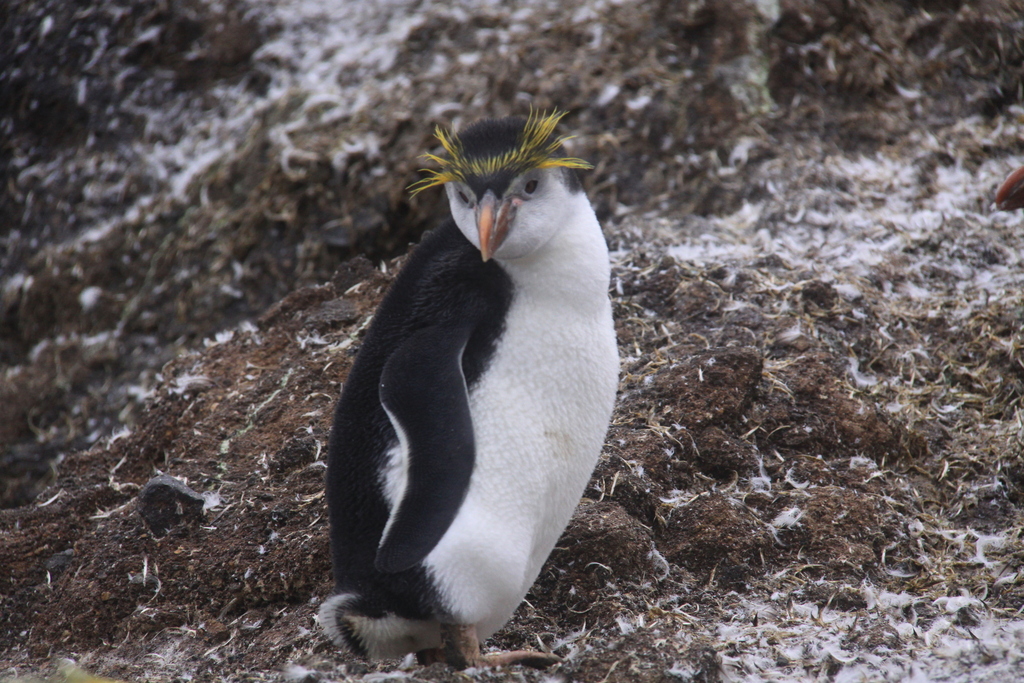
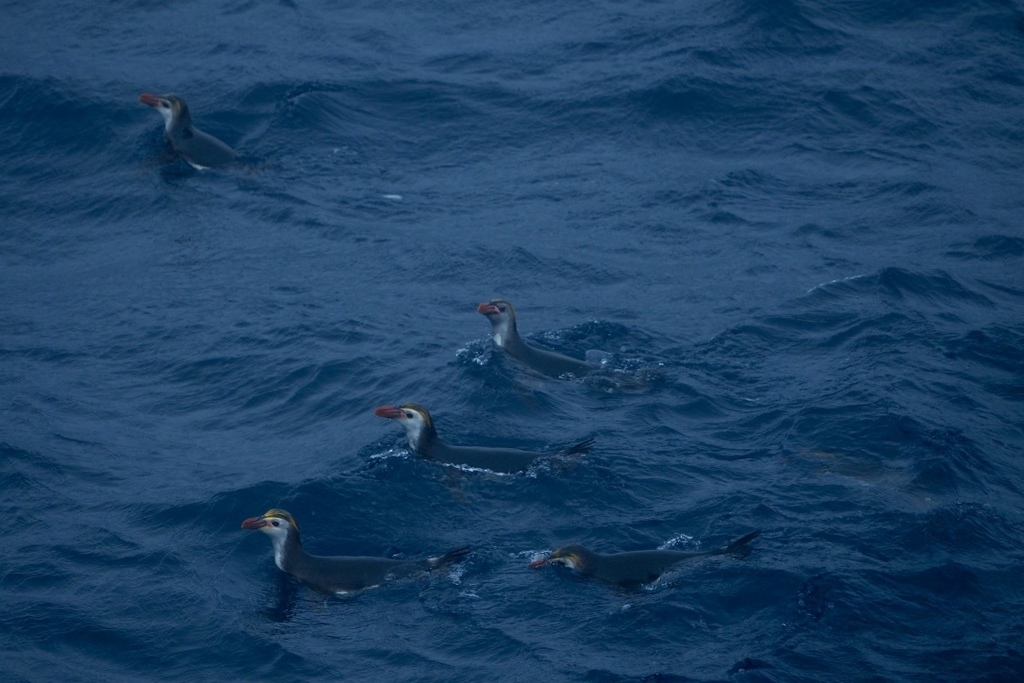
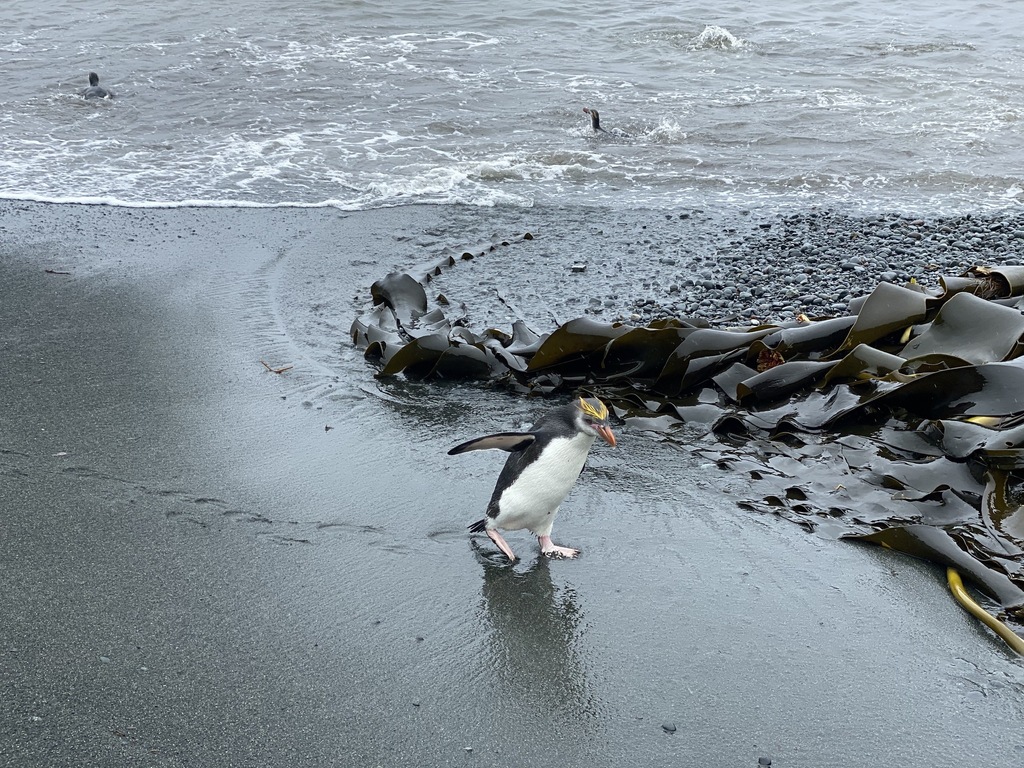
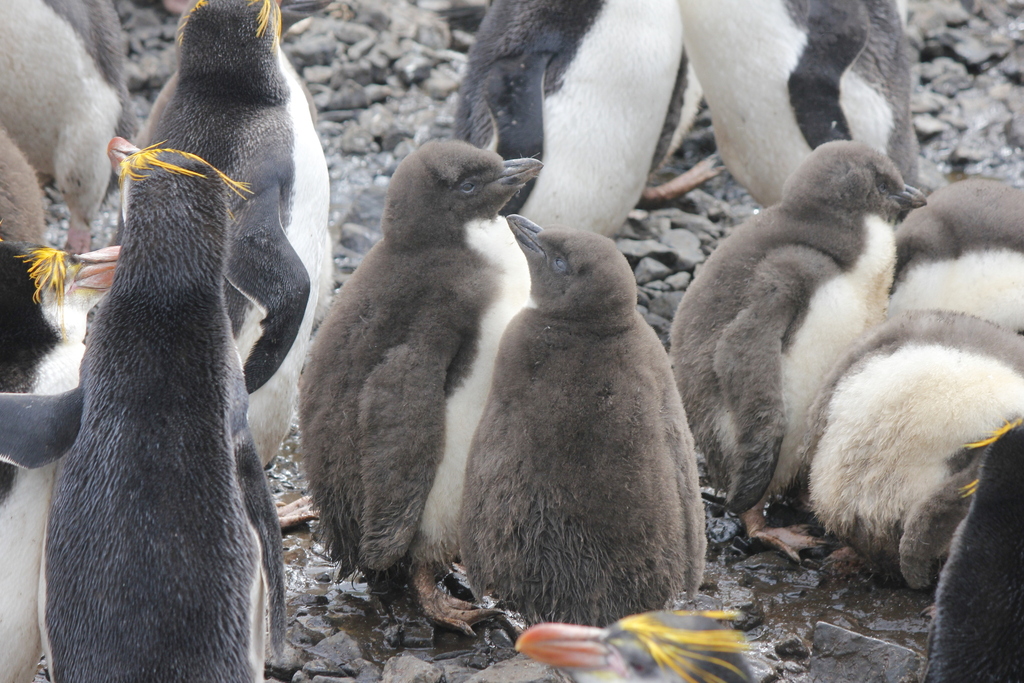
Photos show the species, not always the places on this page.
Length
About 65 to 75 cm (26 to 30 in) tall. Males average about 73 cm and females about 69 cm.
Weight
About 4 to 8 kg (9 to 18 lb). Breeders weigh about 4.2 to 6.3 kg (9 to 14 lb) at the start of the season and can reach about 8 kg (18 lb) before the moult.
Next to a person
About 40% of an adult's height, and as heavy as a young baby
What it eats
Mostly krill, with juvenile lanternfish and some squid. Around Macquarie Island, two krill species make up roughly half of what they eat by weight. They usually dive to about 6 to 32 m but can reach about 226 m.
Around people
Calm, give space
How it lives
Royal penguins nest in dense colonies. Birds arrive in September and lay two eggs in October. The first egg usually does not survive. Incubation lasts about 35 days and chicks fledge at about 65 days. A bird sitting on the nest can have a partner at sea for about 3 weeks, travelling over 600 km out and back. The sources I read do not give a lifespan for this species.
Where it goes
Royal penguins breed only on Macquarie Island and nearby Bishop and Clerk Islets. Away from the breeding season they feed at sea, and where they go is not well documented. A few stray birds have turned up in New Zealand since the 1870s.
We only draw a journey on the map when scientists have tracked it or clearly documented it. For this animal we have not found one yet.
Populations
About 850,000 breeding pairs. A survey in 1984 and 1985 counted 848,719 pairs (give or take 10.5%) in 57 colonies on Macquarie Island, and about 1,000 more pairs breed on Bishop and Clerk Islets. Before hunting for oil, from 1870 to 1919, there may have been about 3 million. Numbers have recovered and look stable, but exact figures are uncertain. IUCN lists the species as Least Concern (2022). Some older pages still show Near Threatened or Vulnerable.
Meet it respectfully
Stay low, move slowly and let the penguins pass. Never chase, touch, feed or block their path to the sea. The Australian Antarctic Program guidelines for its own staff ask for 5 m from non-breeding penguins and 15 m from breeding or moulting birds, and more if they seem disturbed. Some zones on Macquarie Island are closed to protect nesting birds, so follow the local rangers and your guide.
Fun fact
Tap the bulb to light it up.
Royal penguins breed only on Macquarie Island and two nearby islets, so the whole species lives in one small area.
They lay two eggs, but the first one usually does not survive.
The largest colony, at Hurd Point, holds roughly 500,000 pairs.
Royal penguin in the Ocean Atlas
Places we have researched where this animal is recorded. It is never guaranteed, and some places are for watching from the boat only.
Travel with usComing soonTrusted referralExploringOn pause, story onlyEthics pass
Country colour: pink where we travel, blue where we are exploring or refer, grey for story only.
 Antarctica
 Australia
 New Zealand
Sources for this page
- Wikipedia, Royal penguin
- Australian Antarctic Program, Royal penguin
- Australian Antarctic Data Centre, Royal penguins at Macquarie Island, 1984-85 survey
- New Zealand Birds Online, Royal penguin
- Animal Diversity Web, University of Michigan
- Australian Antarctic Program, Guidelines for animal approach distances
- GBIF, IUCN Red List category, 2026
Facts checked 5 October 2026. Photos: Unsplash licence, or Creative Commons as shown on each photo.
Work in ocean travel?
We are always happy to hear from exceptional local operators, accommodation, conservation organisations and destination experts. If your work fits responsible, small-group ocean travel, we would love to learn more.
Partner with Ocean CallingNot sure where to go? Get your Ocean Match
from CHF 19