
Snares penguin
Eudyptes robustus
A crested penguin from one tiny island group at the edge of the Southern Ocean. Seeing one is never a promise.
Vulnerable (IUCN, 2018) means it faces a high risk of extinction in the wild, mainly because it breeds on only one small island group.
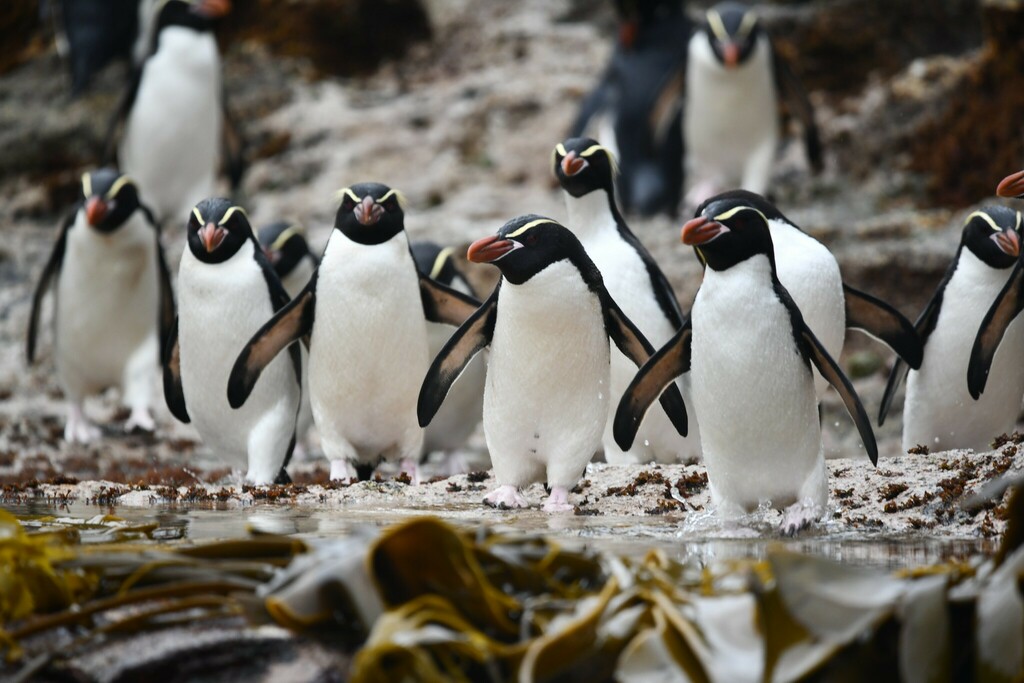
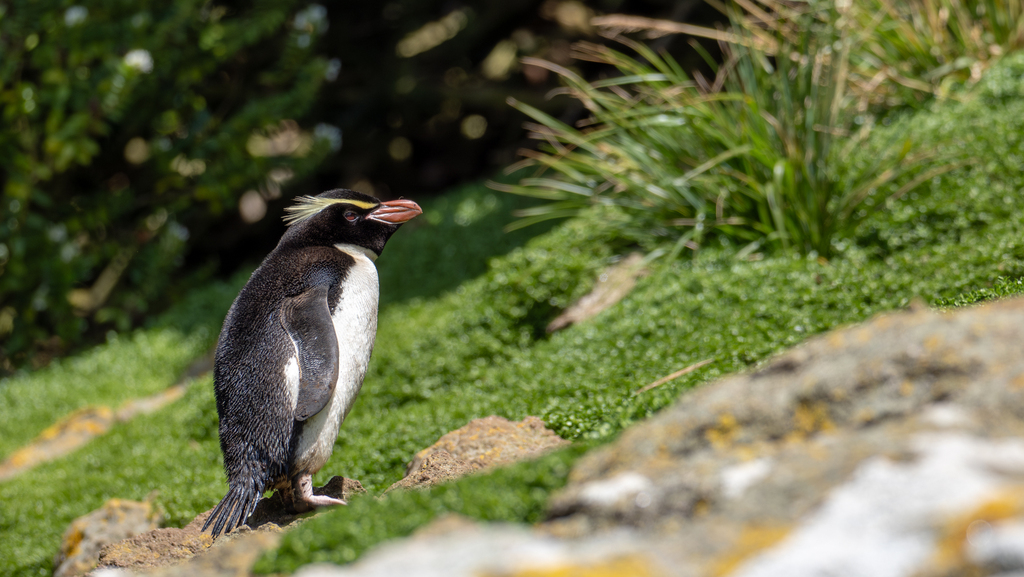
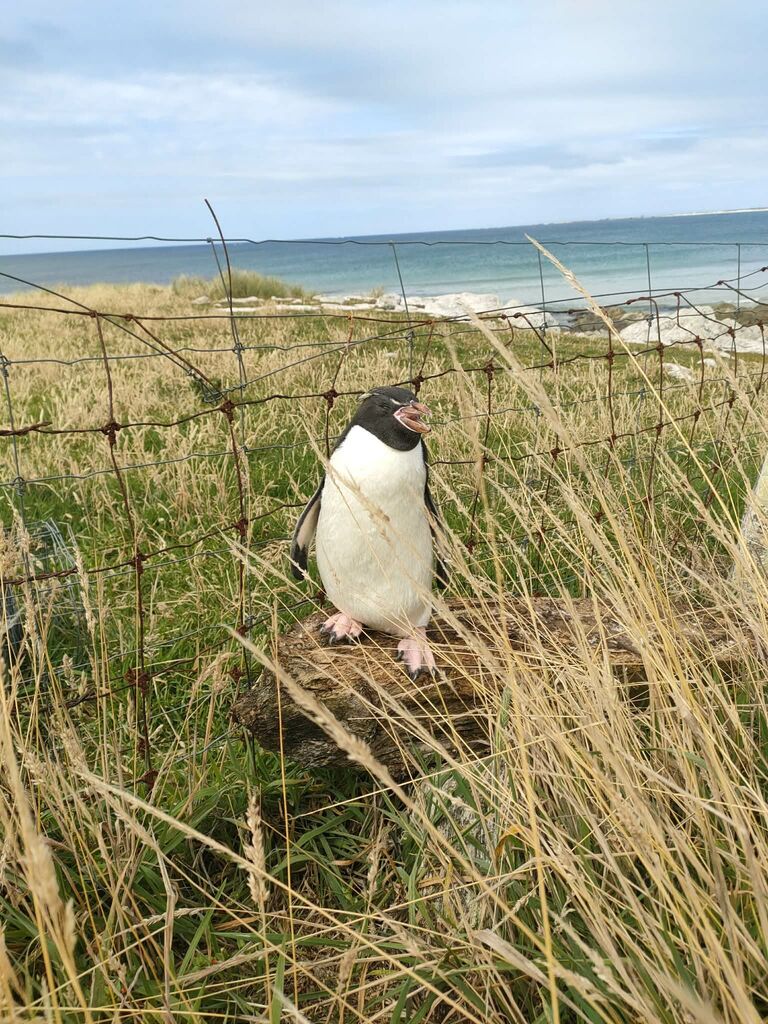
Photos show the species, not always the places on this page.
Length
About 50 to 70 cm (20 to 28 in); another source gives 50 to 60 cm (20 to 24 in)
Weight
About 2.5 to 4 kg (5.5 to 8.8 lb); another source gives about 3.4 kg (7.5 lb) for males and 2.8 kg (6.2 lb) for females
Next to a person
About a third of an adult's height, and about as heavy as a newborn baby
What it eats
Mainly krill, with some squid and small fish. In one account krill made up roughly 55 to 60% of the diet, fish 24 to 30% and squid 10 to 21%.
Around people
Rare, permits needed
How it lives
Snares penguins are monogamous and breed once a year in colonies on the Snares Islands, with breeding from about September to late January. Two eggs are usually laid, but normally only one chick survives. Chicks fledge at about 11 weeks. Wild birds live around 15 to 20 years on average, according to one source.
Where it goes
Snares penguins breed only on the Snares Islands, about 200 km south of New Zealand, with the main colonies on North East Island. They are described as non-migratory. Where they go to feed outside the breeding season is not covered in the sources read.
We only draw a journey on the map when scientists have tracked it or clearly documented it. For this animal we have not found one yet.
Populations
New Zealand only, on the Snares Islands. A census in 1985 and 1986 counted 23,250 breeding pairs (19,000 on North East Island, 3,500 on Broughton Island and 750 on the Western Chain). Wikipedia gives about 25,000 pairs. One source says there is not enough trend data. The IUCN lists it as Vulnerable (2018), mainly because it breeds on such a small area of about 3 square kilometres. Threats named include competition with squid fisheries, climate change affecting prey, and oil pollution.
Meet it respectfully
The Snares Islands are a protected area, and the Department of Conservation says you need to consult them and get permits to enter the islands and surrounding waters. Most people will see these penguins only from a distance or on a permitted trip. Keep quiet, never chase, touch, feed or lure them, and give nesting birds plenty of space. No sighting is ever guaranteed.
Fun fact
Tap the bulb to light it up.
Its whole breeding range is the Snares Islands, about 3 square kilometres in total.
There are more than 100 colonies on the islands.
Krill is its main food.
Snares penguin in the Ocean Atlas
Places we have researched where this animal is recorded. It is never guaranteed, and some places are for watching from the boat only.
Travel with usComing soonTrusted referralExploringOn pause, story onlyEthics pass
Country colour: pink where we travel, blue where we are exploring or refer, grey for story only.
 Argentina
 New Zealand
Sources for this page
- GBIF (IUCN Red List category), 2026
- Wikipedia, 2026
- Animal Diversity Web, 2026
- NZ Department of Conservation, 2026
- Center for Biological Diversity, 2026
- Penguins International, 2026
Facts checked 5 October 2026. Photos: Unsplash licence, or Creative Commons as shown on each photo.
Work in ocean travel?
We are always happy to hear from exceptional local operators, accommodation, conservation organisations and destination experts. If your work fits responsible, small-group ocean travel, we would love to learn more.
Partner with Ocean CallingSwim with humpback whales in Moʻorea, September 2027
from CHF 4,500