
Steller sea lion
Eumetopias jubatus
A heavy bark carries over the haul-out rocks. Steller sea lions come and go with the tide and the fish, and no sighting is ever a promise.
Near Threatened (IUCN, 2016) means it is close to qualifying as threatened. In the United States the western group is listed as Endangered, while the eastern group was delisted in 2013.
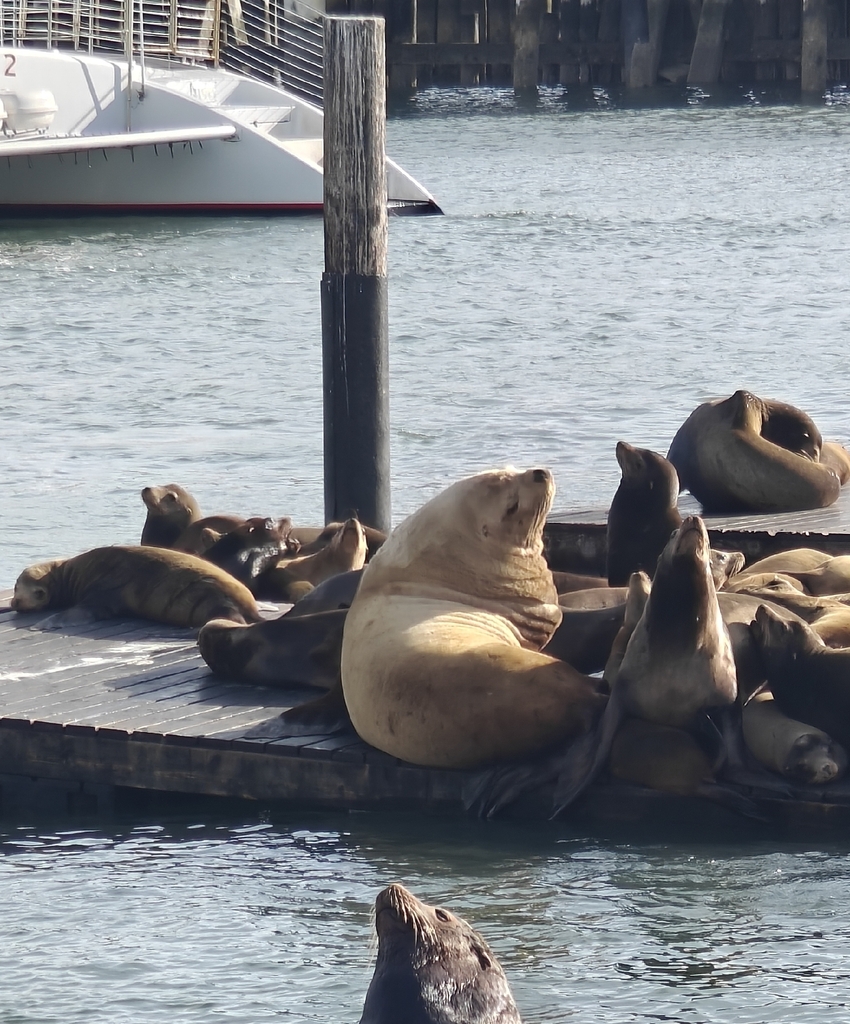
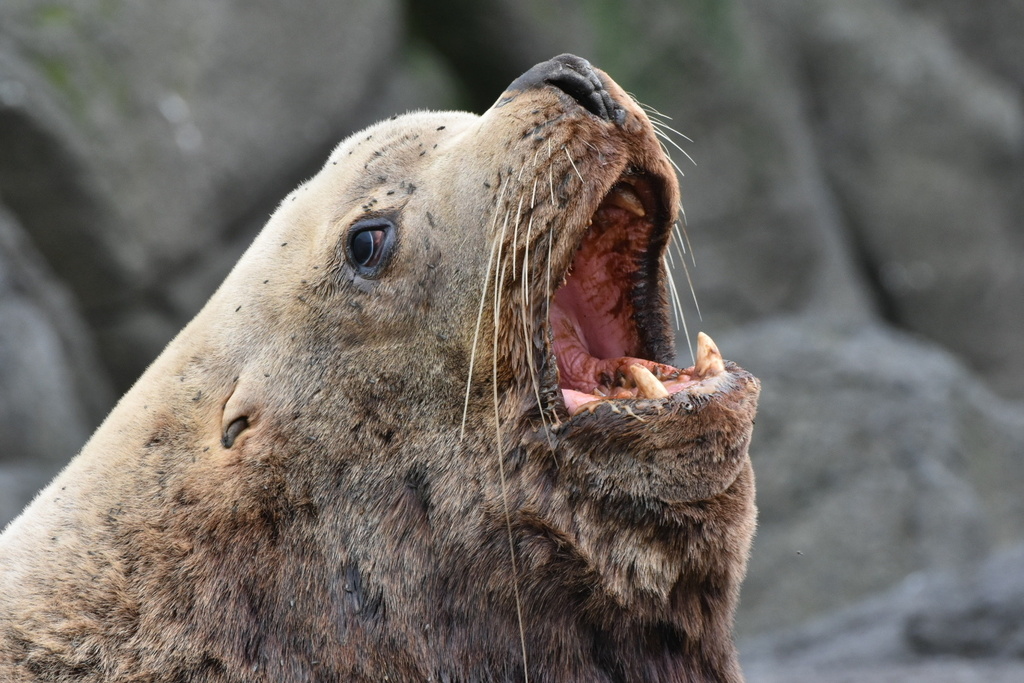
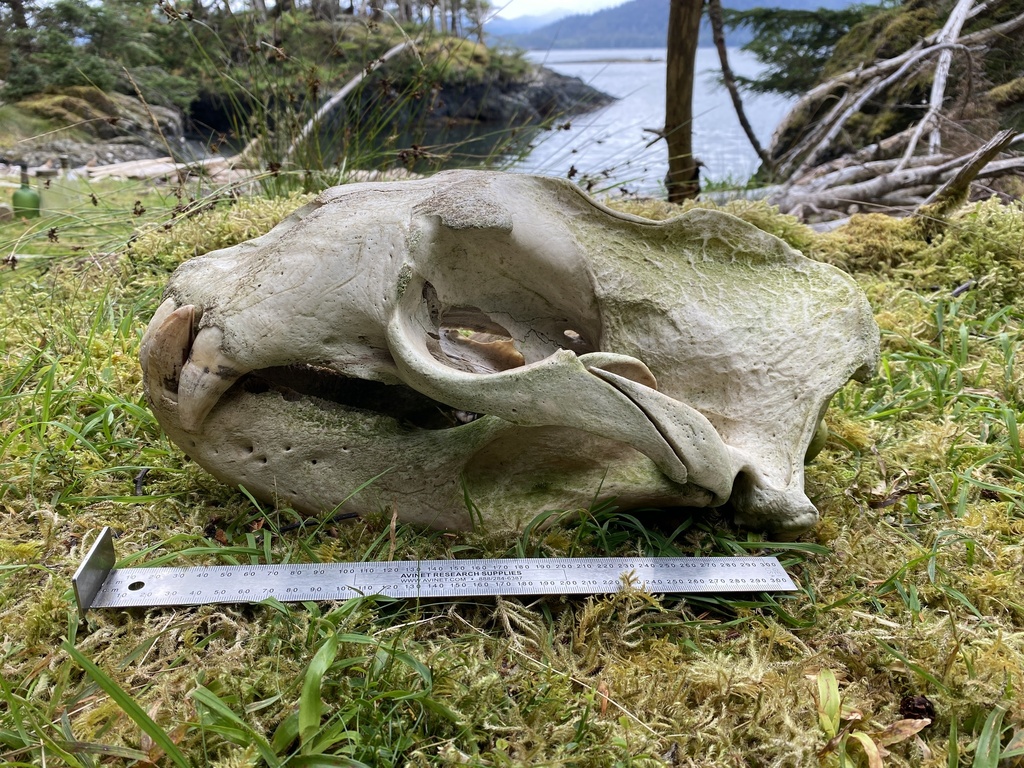
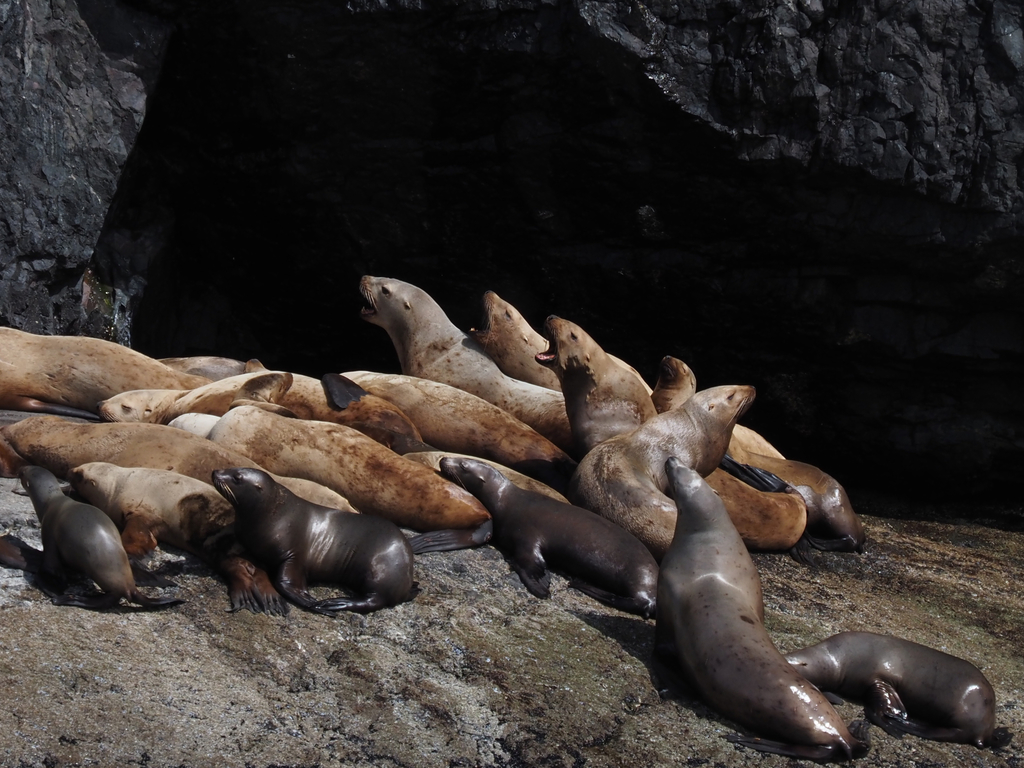
Photos show the species, not always the places on this page.
Length
Females about 2.3 to 2.9 m (7.5 to 9.5 ft); males up to about 3.3 m (11 ft)
Weight
Females about 240 to 350 kg (530 to 770 lb), up to about 360 kg (800 lb) in NOAA figures; males about 450 to 1,120 kg (990 to 2,470 lb), up to about 1,130 kg (2,500 lb) in NOAA figures
Next to a person
A male is about 1.5 to 2 times as long as an adult is tall, and can weigh as much as several adults together
What it eats
Over a hundred kinds of fish, including pollock, salmon, cod and flatfish, plus squid and octopus. They feed mostly at night. The deepest dive recorded is about 1,400 feet (about 430 m).
Around people
Calm, give space
How it lives
They gather on rocky shores called haul-outs and rookeries. Females usually have their first pup at 4 to 6 years old, and then a single pup most years. A newborn is about 3 feet (0.9 m) long and weighs 35 to 50 pounds (16 to 23 kg). Males live up to about 20 years and females up to about 30.
Where it goes
The range runs from northern Hokkaido, Japan, through the Kuril Islands, the Aleutians and southern Alaska, down to central California, with animals also found along British Columbia. The sources I read describe the range but not a fixed migration route.
We only draw a journey on the map when scientists have tracked it or clearly documented it. For this animal we have not found one yet.
Populations
There are two groups. The western group, from rookeries west of Cape Suckling in Alaska, fell by about 77 to 81 percent between the 1970s and early 2000s and has been rising slowly overall since 2003. It is listed as Endangered under the US Endangered Species Act. The eastern group grew about 4.25 percent a year from 1987 to 2017 and was taken off the US list in 2013. I did not find a current Canadian count in the sources I opened.
Meet it respectfully
Watch from a distance and keep your time short. In the United States, NOAA asks people on the water to stay at least 100 yards (about 91 m) away and to watch for 30 minutes or less. Never approach animals resting on shore, and never feed, touch or chase them. Around Alaska rookeries and haul-outs there are protected buffer zones, for example 3,000 feet (0.9 km) from shore in the east. I did not read Canadian rules, so follow local rules and your guide.
Fun fact
Tap the bulb to light it up.
It is the largest of the eared seals, the group that includes sea lions and fur seals.
The deepest recorded dive is about 1,400 feet (about 430 m).
The species is named after Georg Wilhelm Steller, the naturalist who first described it in 1741.
Steller sea lion in the Ocean Atlas
Places we have researched where this animal is recorded. It is never guaranteed, and some places are for watching from the boat only.
Travel with usComing soonTrusted referralExploringOn pause, story onlyEthics pass
Country colour: pink where we travel, blue where we are exploring or refer, grey for story only.
 Canada
 Japan
Japan Russia
 United States
Sources for this page
- NOAA Fisheries, Steller sea lion, 2026
- Wikipedia, Steller sea lion, 2026
- IUCN Red List category via GBIF, 2026
Facts checked 5 October 2026. Photos: Unsplash licence, or Creative Commons as shown on each photo.
Work in ocean travel?
We are always happy to hear from exceptional local operators, accommodation, conservation organisations and destination experts. If your work fits responsible, small-group ocean travel, we would love to learn more.
Partner with Ocean CallingNew: tiger sharks in Fuvahmulah, January or March 2027
from CHF 2,900