
Yellow-eyed penguin
Megadyptes antipodes
The hoiho comes ashore quietly at the end of the day, and its future depends on giving it room, so no sighting is ever a promise.
Endangered (IUCN) means it is at very high risk of extinction in the wild. The sources I opened did not show the year of the latest assessment, and Wikipedia says it has been listed as Endangered since 2000.
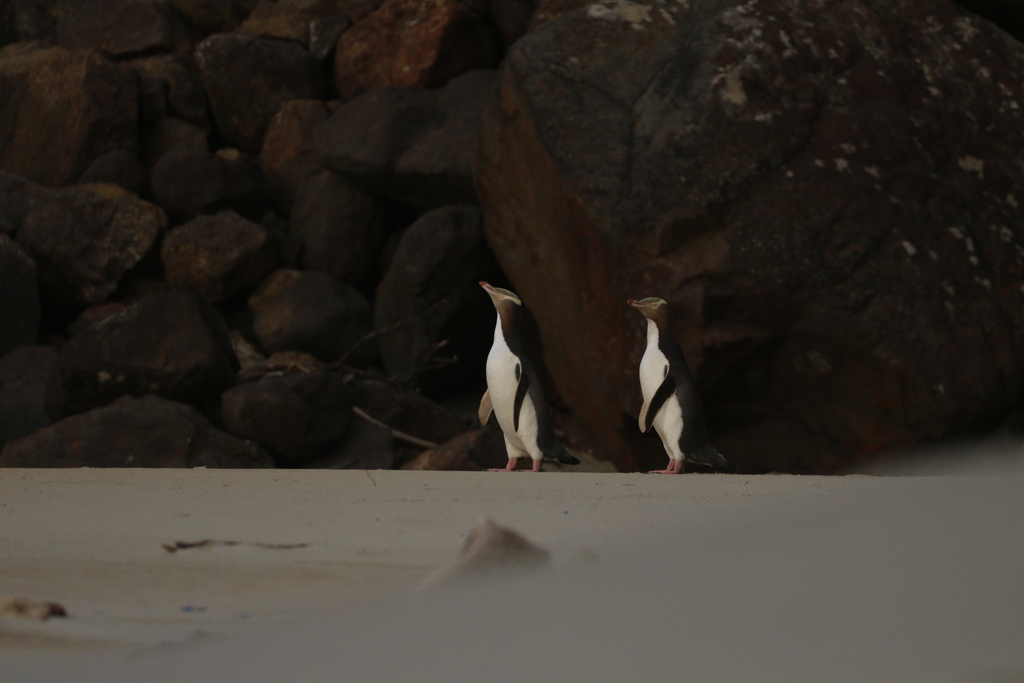
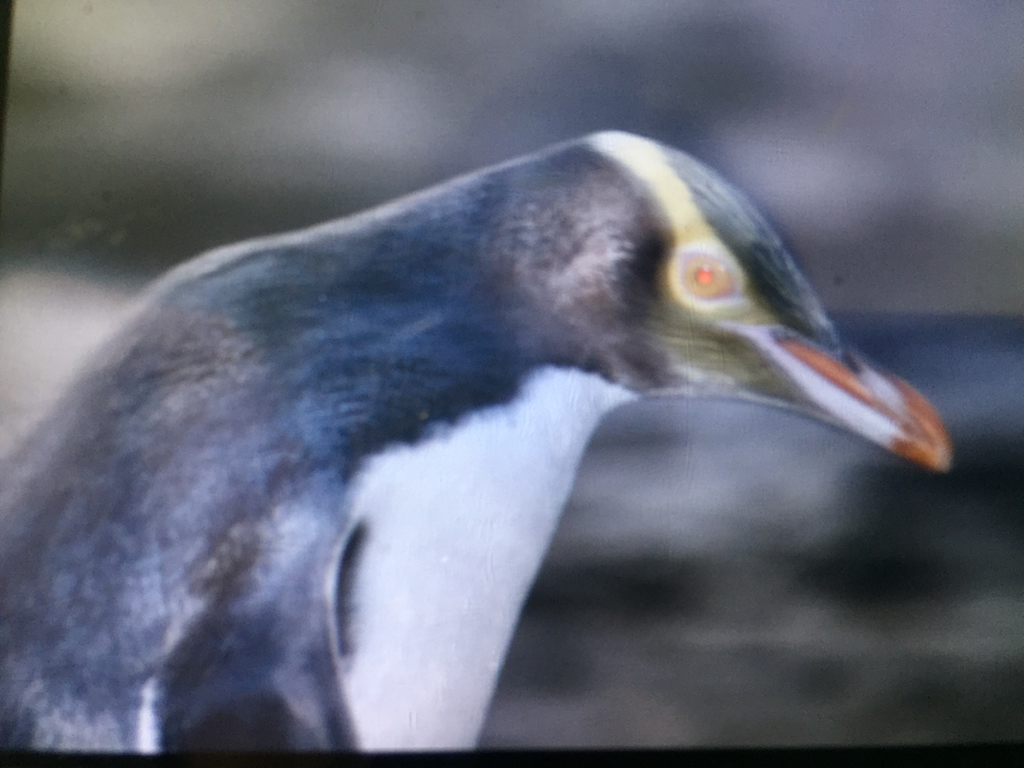
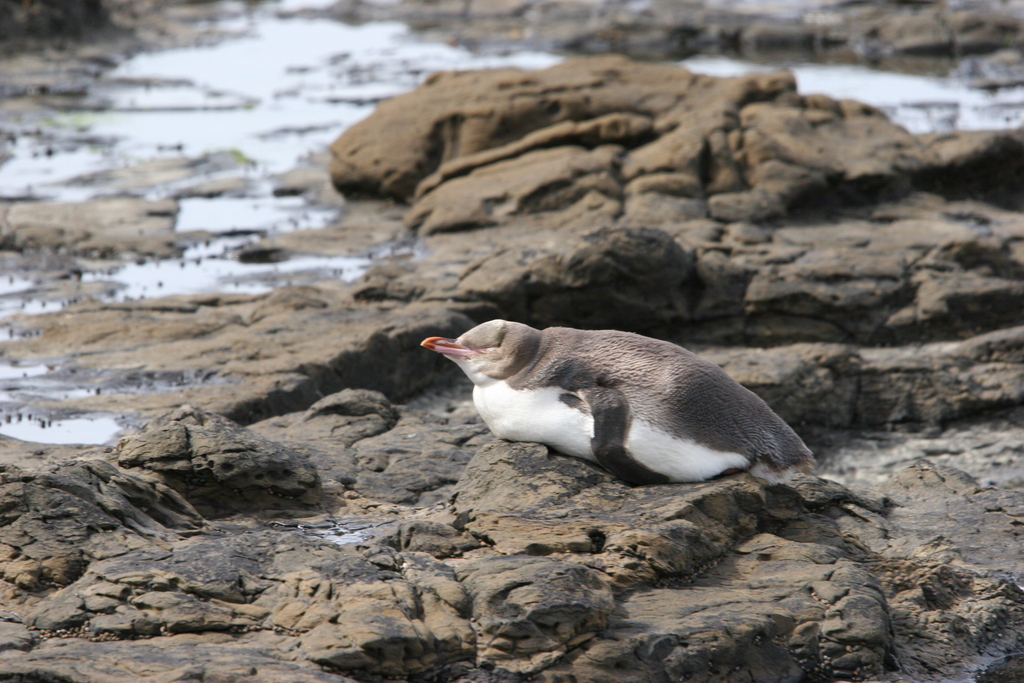
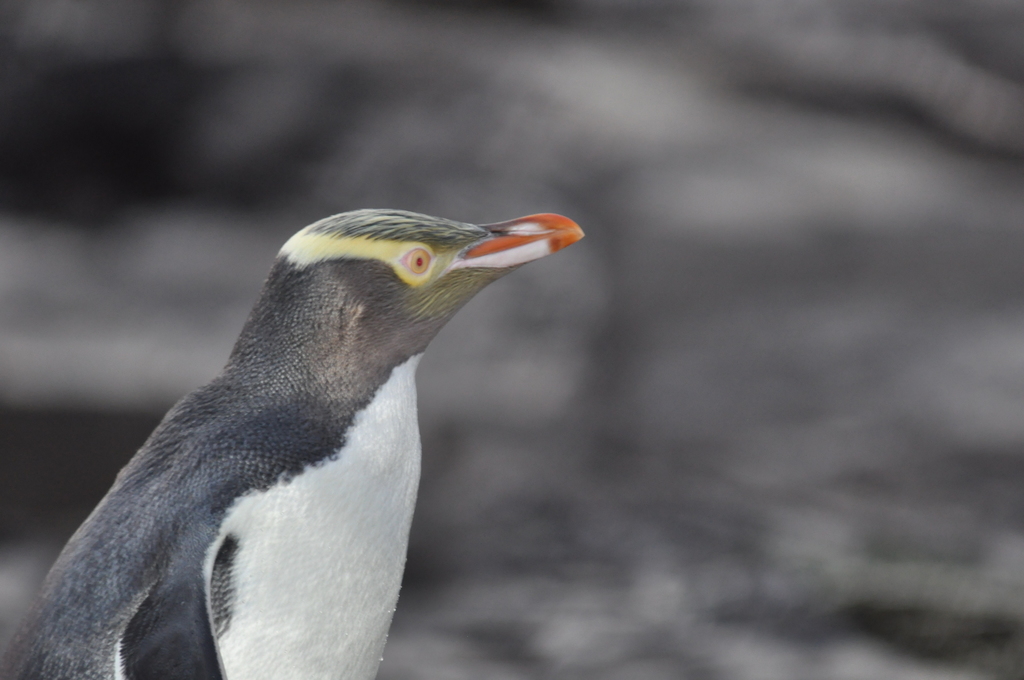
Photos show the species, not always the places on this page.
Length
About 65 cm (26 in) tall; other sources give 62 to 79 cm (24 to 31 in)
Weight
About 5 kg (11 lb); another source gives 3 to 8.5 kg (6.6 to 18.7 lb)
Next to a person
About as tall as an adult's hip, and as heavy as a large cat
What it eats
Mostly fish that live near the seabed, such as blue cod, red cod, opalfish and sprat, plus squid and crustaceans. In one source about 90% of the diet is fish.
Around people
Calm, give space
How it lives
Hoiho nest on land, in coastal forest, scrub, pasture and cliff areas, out of sight of other pairs. They lay two eggs in September. Incubation takes 39 to 51 days, the most variable among penguins, and chicks fledge after about 106 days. Birds usually leave the nest for the sea early in the morning and return in late afternoon or early evening. They mostly hunt on or near the seabed. Most dives are around 40 to 120 m, and deeper dives of 161 to 240 m are reported, depending on the source. They moult between February and April, when they are especially vulnerable to disturbance. Some live beyond 20 years.
Where it goes
Yellow-eyed penguins stay in New Zealand waters. While breeding they feed on the shelf about 2 to 25 km offshore. The Department of Conservation describes two separate populations, a northern one on the South Island, Banks Peninsula and Stewart Island and a southern one on the Auckland and Campbell Islands, with little movement between them.
We only draw a journey on the map when scientists have tracked it or clearly documented it. For this animal we have not found one yet.
Populations
Estimates for the whole species differ. The Department of Conservation gives 4,000 to 5,000 mature individuals (2019), and NZ Birds Online gives 2,600 to 3,000, mostly on the subantarctic islands. The northern mainland and Rakiura population fell from 739 nests in 2008/09 to 143 in 2024/25, about 80%, and the Department says hoiho could be locally extinct on the mainland within two decades without change. The southern population was estimated at 570 breeding pairs on the Auckland Islands in 2017 and looks more stable, but Campbell Island was last surveyed in 1992. The species is listed as Endangered by the IUCN and as Nationally Endangered in New Zealand.
Meet it respectfully
Watch from about 50 m if you can, use binoculars, and keep quiet and low. Never chase, approach, touch, feed or bait a hoiho, and do not stand between a bird and the sea. If one comes ashore while you are on the beach, stay quiet and let it pass. The Yellow-eyed Penguin Trust asks people to stay off beaches next to nesting areas from mid-afternoon until dark, to keep to formed tracks and to keep dogs away, because dogs may kill penguins. In New Zealand it is an offence to disturb or harass native wildlife. Public hides exist at places such as Bushy Beach, Curio Bay and Nugget Point, and sightings are never guaranteed.
Fun fact
Tap the bulb to light it up.
It is the largest penguin that breeds on the New Zealand mainland.
It is found only in New Zealand and is thought to be one of the rarest penguins in the world.
During the February to April moult, birds cannot go to sea for about four weeks and are very sensitive to disturbance.
Yellow-eyed penguin in the Ocean Atlas
Places we have researched where this animal is recorded. It is never guaranteed, and some places are for watching from the boat only.
Travel with usComing soonTrusted referralExploringOn pause, story onlyEthics pass
Country colour: pink where we travel, blue where we are exploring or refer, grey for story only.
 New Zealand
Sources for this page
- NZ Department of Conservation, 2026
- NZ Department of Conservation, nest numbers, 2025
- NZ Birds Online, 2026
- Wikipedia, 2026
- Forest and Bird, 2024
- Penguin Archive, Status of Penguins
- Yellow-eyed Penguin Trust, 2026
- NZ Department of Conservation, Curio Bay, 2026
Facts checked 5 October 2026. Photos: Unsplash licence, or Creative Commons as shown on each photo.
Work in ocean travel?
We are always happy to hear from exceptional local operators, accommodation, conservation organisations and destination experts. If your work fits responsible, small-group ocean travel, we would love to learn more.
Partner with Ocean CallingGili Trawangan in 5 days
from CHF 790