
Yellow stingray
Urobatis jamaicensis
A small, round stingray that lies half-buried in sand and seagrass. Its camouflage is excellent, and no sighting is ever a promise.
Least Concern (IUCN, 2019) means it is not currently close to being threatened, although it is caught by accident and collected for aquariums.
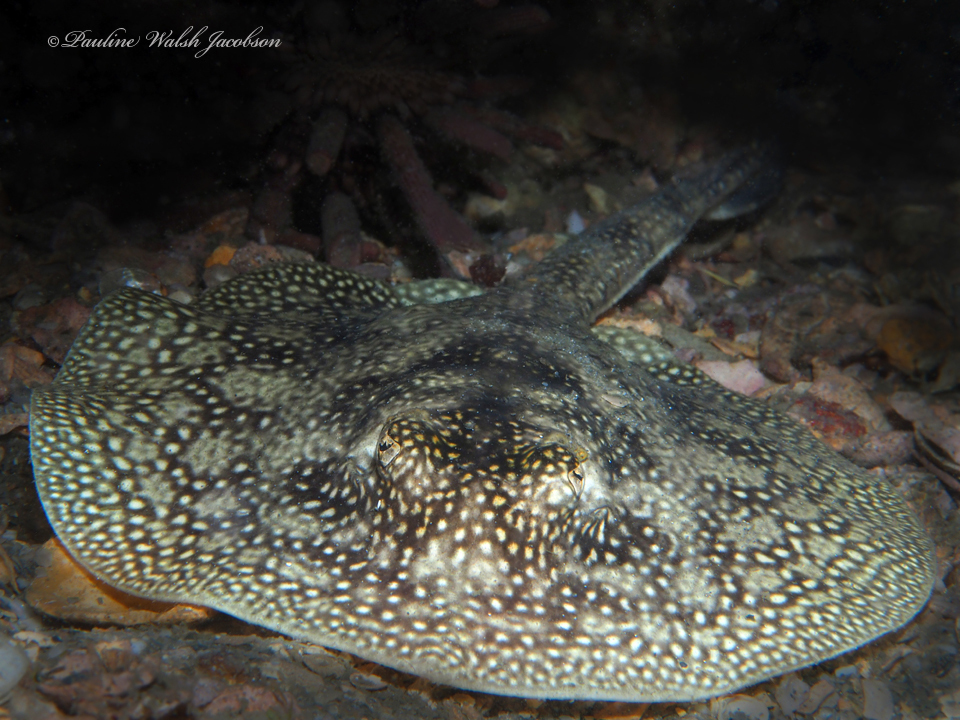
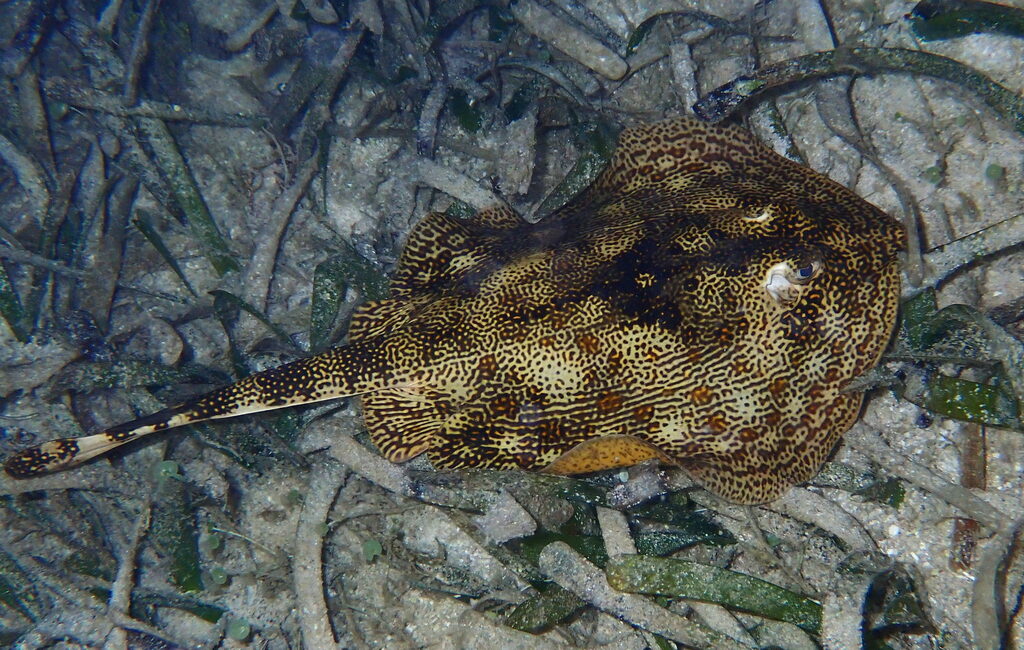
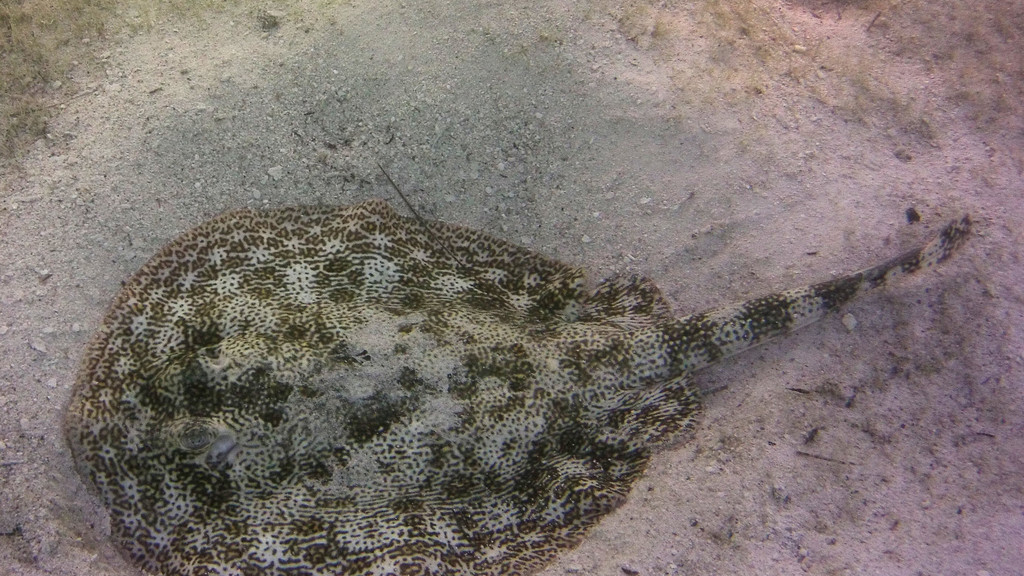
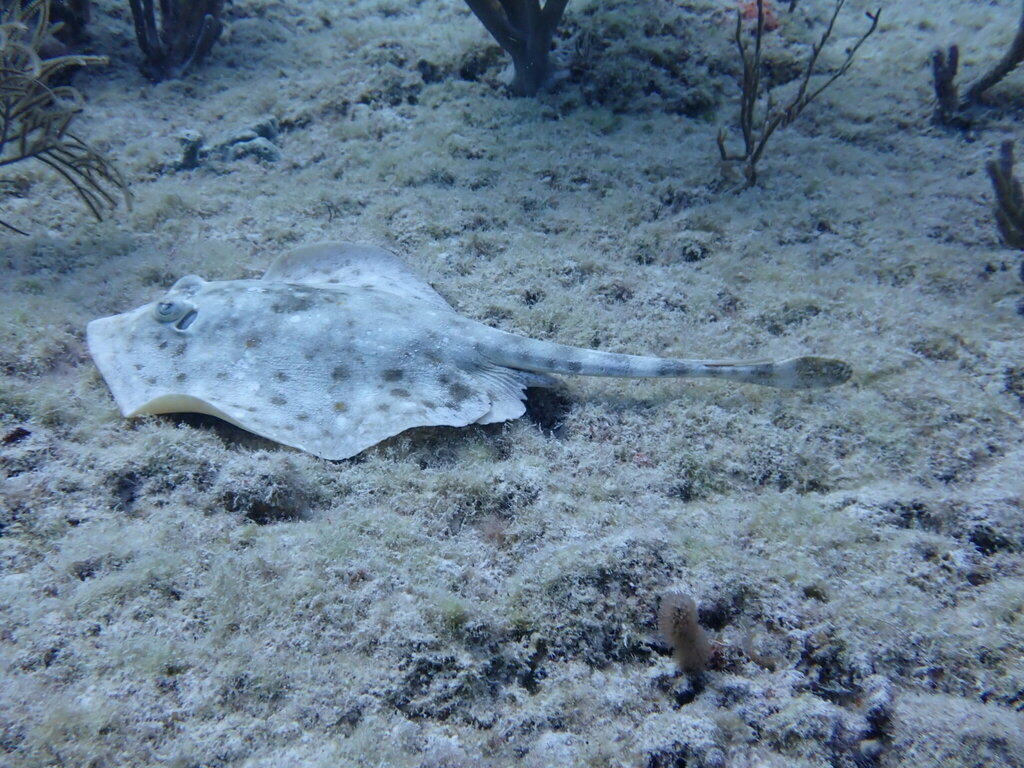
Photos show the species, not always the places on this page.
Length
Disc about 35 to 36 cm (14 in) across; total length about 66 to 76 cm (26 to 30 in) depending on the source
Weight
No maximum weight is published in the sources read
Next to a person
A disc about as wide as a large dinner plate, and with its tail about as long as an adult arm
What it eats
Shrimps, and likely worms, clams and small bony fishes. Wikipedia notes that it sometimes raises the front of its disc to make a shaded hollow that tempts shelter-seeking prey.
Around people
Calm, give space
How it lives
It lives in shallow inshore water on sand, mud, seagrass and around coral reefs, from the water's edge to about 25 m, and is often buried in the bottom. Young are born live. FishBase and the Florida Museum give litters of 3 to 4, while Wikipedia describes up to two litters of up to seven young a year after a gestation of 5 to 6 months, so figures differ. Males mature at a disc width of about 15 to 16 cm. FishBase estimates that a population would take more than 14 years to double.
Where it goes
The sources read describe it as a bottom-dwelling inshore resident and give no migration route. It is often found close to the shore and around sandy patches of reef.
We only draw a journey on the map when scientists have tracked it or clearly documented it. For this animal we have not found one yet.
Populations
Assessed as Least Concern worldwide in 2019. It lives in the western Atlantic from North Carolina to northern South America, including the Gulf of Mexico, Bahamas and Caribbean. It is caught incidentally by inshore fisheries and collected for the aquarium trade. The Florida Museum also lists bycatch and habitat loss as threats. No regional population counts were found in the sources read.
Meet it respectfully
Look before you step in sandy shallows, because these rays lie buried and unseen. Watch from a calm distance and never chase, touch, feed or bait one, or lift it for a photo. Its spine is for defence, so give it room to leave. Follow your guide, and follow local rules where they apply.
Fun fact
Tap the bulb to light it up.
It can change the tone of its colouring quickly to match the seabed.
Its venomous tail spine is used only for defence. Stepping on a stingray is the most common way people are injured by them.
It sometimes raises the front of its disc to make a shaded hollow that attracts small animals.
Yellow stingray in the Ocean Atlas
Places we have researched where this animal is recorded. It is never guaranteed, and some places are for watching from the boat only.
Travel with usComing soonTrusted referralExploringOn pause, story onlyEthics pass
Country colour: pink where we travel, blue where we are exploring or refer, grey for story only.
 The Bahamas
 Belize
 Cayman Islands
 Cuba
Cuba Dominican Republic
 Honduras
 Jamaica
 Mexico
 Panama
 United States
Sources for this page
- FishBase, Urobatis jamaicensis
- Wikipedia, Yellow stingray
- Florida Museum, Yellow stingray
- Smithsonian Tropical Research Institute, Shorefishes of the Greater Caribbean
- IUCN Red List record via GBIF
Facts checked 5 October 2026. Photos: Unsplash licence, or Creative Commons as shown on each photo.
Work in ocean travel?
We are always happy to hear from exceptional local operators, accommodation, conservation organisations and destination experts. If your work fits responsible, small-group ocean travel, we would love to learn more.
Partner with Ocean CallingNew: tiger sharks in Fuvahmulah, January or March 2027
from CHF 2,900