
Reef-Safe Packing List for Tropical Ocean Travel
It is the night before a tropical trip. You stand over an open suitcase with two sunscreens in your hands, wondering if it really matters which one goes in. A reef-safe packing list is mostly about small choices like this one: mineral sun protection, clothing that does half the work, gentler toiletries and less single-use plastic.
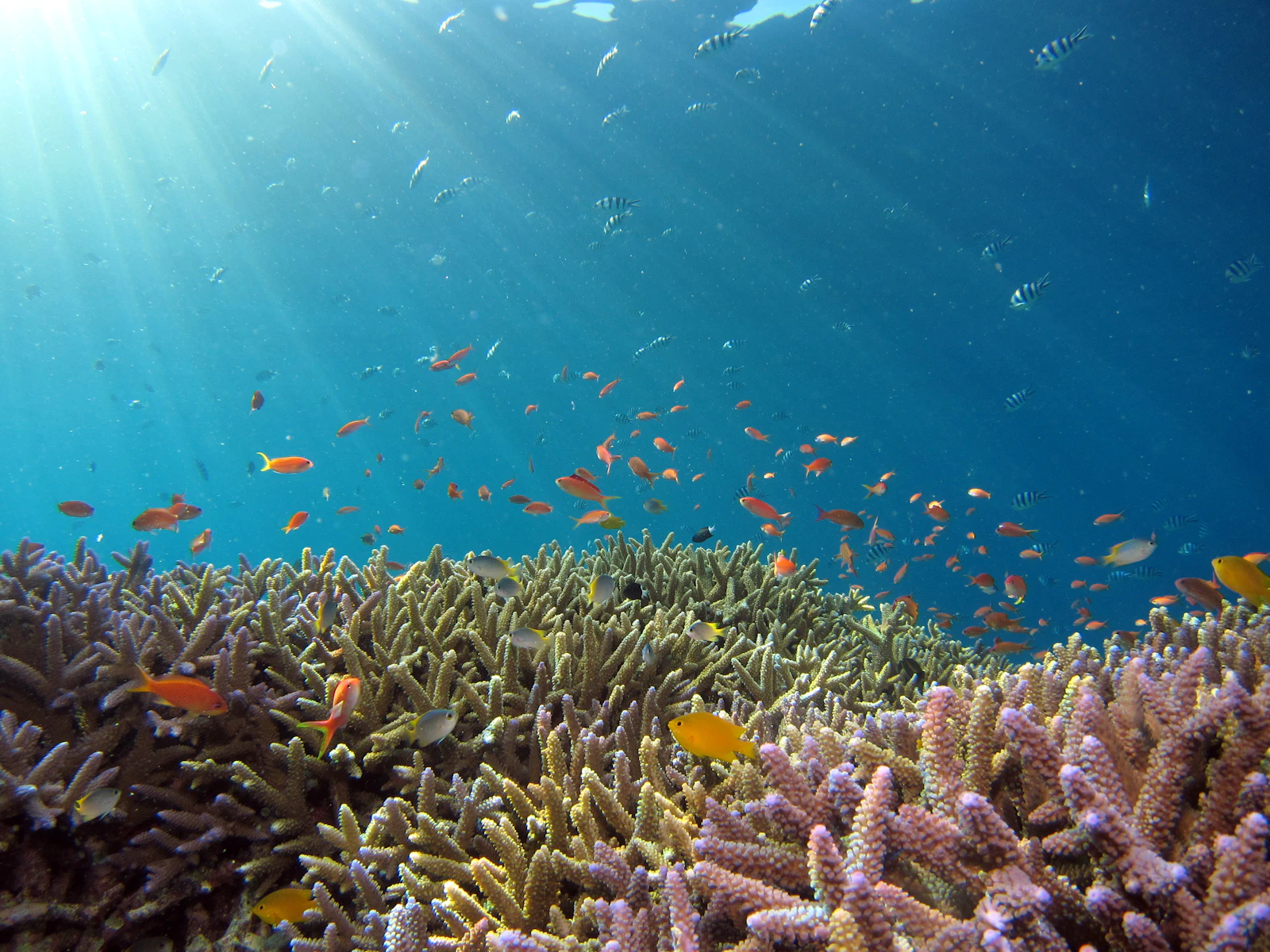
None of it is special gear. These are ordinary travel things, chosen with the reef in mind. And because the science is still moving, we will also tell you where the evidence is strong and where it is honestly unclear.
Why coral cares what is in your bag
A coral reef is built by tiny animals that live in a close partnership with algae inside their tissue. That partnership is easy to stress. Warm water is by far the biggest threat, but physical damage and chemical pollution add pressure, especially in shallow bays where many people swim every day.
Sunscreen joined this conversation because of laboratory research. A 2016 study led by Craig Downs, with NOAA scientists among the authors, exposed coral larvae to oxybenzone, a common UV filter. The researchers reported DNA damage, deformed larvae and abnormal skeleton growth, and the effects were worse in light. NOAA summed up the findings as four main harms to young coral: more vulnerability to bleaching, DNA damage, abnormal skeleton growth and gross deformities.
It is fair to give the other side too. In 2022 a committee of the US National Academies of Sciences, Engineering and Medicine reviewed the evidence on sunscreen ingredients in water. They said a proper ecological risk assessment is urgently needed. But they also found the existing evidence limited and not conclusive, and they reminded everyone that sunscreen is still important protection against skin cancer. So the honest position is this: there is real reason for caution, the full picture is not settled, and you should never skip sun protection to "save" a reef.
The reef-safe packing list, piece by piece
This is the list we would give a friend, roughly in order of how much each item helps.
- Sun clothing first. A long-sleeve rash guard, a wide-brim hat and sunglasses. Clothing does not wash off into the water.
- A mineral sunscreen with zinc oxide or titanium dioxide as the only active ingredients, for the skin your clothes do not cover.
- Toiletries in solid form where you can: soap and shampoo bars, plus a couple of refillable bottles for the rest.
- Reusables: a water bottle, a foldable shopping bag, a small cutlery set and a light food container.
- Boat-day helpers: a dry bag, a quick-dry towel, and insect repellent for evenings on land.
Most of these things last for years, and that is part of the point. The gentlest bag is often the one you never need to buy again.
Sun protection without the guesswork
The US National Park Service gives simple advice for its reef parks: choose sunscreens with only zinc oxide or titanium dioxide as active ingredients, and wear UV-rated clothing such as a swim shirt or rash guard. It also warns that a label saying "reef-friendly" may still include ingredients that can harm coral. There is no single legal definition behind those words, so read the active ingredients, not the front of the bottle. Our guide to sunscreen ingredients that still sneak past reef-safe labels goes through them one by one.
Clothing is the easiest win. A long-sleeve rash guard covers your back and shoulders, the places that burn first when you snorkel, and it means much less product needs to go on at all. For your face, hands and legs, a mineral sunscreen put on well before you get in has time to settle on the skin. The Park Service also suggests avoiding the strongest midday sun, which is a lovely excuse for a long lunch in the shade.
For a closer look at labels, nano particles and what "reef-safe" can and cannot promise, see our reef-safe sunscreen guide.
Where do sunscreen bans already exist?
Some places have moved from advice to law. Palau was the first country to ban "reef-toxic" sunscreens. Its law, passed in 2018 and in force from 2020, defines them by a list of ten chemicals, including oxybenzone and octinoxate, with fines for shops that sell them. Hawaii followed with Act 104, signed in 2018. It bans the sale and distribution of sunscreens containing oxybenzone and octinoxate from 1 January 2021, with an exception for products prescribed by a doctor.
Other places and single sites have their own local rules, and a few ask you not to wear any sunscreen at all in a particular lake or lagoon. Palau's push for its law followed a 2017 report of sunscreen chemicals in its famous Jellyfish Lake. Rules change, so please check the current rule for your destination before you travel.
Toiletries and plastic: the quiet part of the list
Sunscreen gets all the attention, but NOAA notes that chemicals of concern for marine life show up in thousands of products, including soaps, cosmetics and perfumes. Everything that touches your skin reaches the water sooner or later, either directly or through the shower drain. Solid bars and fewer, simpler products are an easy way to send less down the pipe, and they take less space in the bag too.
Plastic is the other quiet one. On many small islands, waste systems are more limited than travellers are used to at home, so a single-use bottle has fewer good places to go. A refillable bottle, a shopping bag and a small container solve most daily plastic moments before they start. Packing cubes and a refillable bottle from a tropical travel kit keep all of this easy to find. We shared more ideas in how to travel with less plastic on islands.
What a packing list cannot fix
We want to be honest here. A good bag is a kind habit, but it is not the main thing standing between coral and decline. Warming water linked to climate change is widely seen as the largest pressure on reefs, and long-haul flights are part of that story. A mineral sunscreen does not cancel a flight.
So we see a reef-safe packing list as one layer among several. The other layers matter just as much: travelling less often but for longer, choosing operators who use moorings instead of anchors, keeping fins off the coral, and never touching or standing on the reef. The National Academies report also pointed out that UV filters interact with other stressors, like heat and other pollution. Small choices help most when the bigger ones move in the same direction.
It does not have to be perfect to matter
Nobody packs a perfect bag, and that was never the point. Think of this list as a set of gentle defaults. Let clothing do part of the sunscreen's job. Read the active ingredients. Carry a reusable instead of buying a disposable. None of it asks you to give up comfort, and once it is packed, it simply becomes the way you travel.
If this made you curious to experience it yourself, you can explore our retreats.
Questions people ask
What makes a sunscreen reef-safe?
There is no single legal definition. The US National Park Service suggests products whose only active ingredients are zinc oxide or titanium dioxide, and warns that "reef-friendly" labels can still hide ingredients that may harm coral.
Is the science on sunscreen and coral settled?
Not fully. Lab studies, like the 2016 oxybenzone study on coral larvae, found clear harm. A 2022 National Academies report called the overall evidence limited and asked for an urgent risk assessment. We follow the careful side, without ever skipping sun protection.
Which places ban certain sunscreens?
Palau's ban on "reef-toxic" sunscreens took effect in 2020, and Hawaii banned the sale of products with oxybenzone and octinoxate from 1 January 2021. Other places have local rules, so check before you travel.
Do I still need sunscreen if I wear a rash guard?
Yes, for the skin it does not cover, such as your face, hands and legs. A rash guard and a hat simply mean you need much less product.
What is the biggest threat to coral reefs?
Warming ocean water linked to climate change is the main driver of mass coral bleaching. Sunscreen and plastic are smaller local pressures, which is why we see this packing list as one layer, not the whole answer.
Wildlife encounters are never guaranteed and never forced. Ocean Calling works only with vetted, ethical local operators, and every animal is free to approach, or not, entirely on its own terms.
Sources & further reading
- Office of the Governor, State of Hawaiʻi, 2018. Governor signs SB 2571 (Act 104) banning sunscreens with oxybenzone and octinoxate.
- NPR, 2018. Palau, in Western Pacific, is first nation to ban “reef-toxic” sunscreens.
- US National Park Service. Protect yourself, protect the reef.
- Downs, C.A. et al., 2016. Toxicopathological effects of the sunscreen UV filter oxybenzone on coral planulae. Archives of Environmental Contamination and Toxicology 70:265-288 (NOAA repository).
- NOAA National Ocean Service. Sunscreen chemical threatens corals, NOAA studies show.
- National Academies of Sciences, Engineering, and Medicine, 2022. Review of fate, exposure, and effects of sunscreens in aquatic environments.
- Practical Dermatology, 2022. National Academies call on EPA to study sunscreen effects on aquatic ecosystems.
- Florida Museum of Natural History. Purchase marine-safe sun protection (summary of NOAA guidance).
- Maui Nui Marine Resource Council. Preventing sunscreen pollution.
Further reading on Ocean Calling: More from the journal · Wildlife & the law · See the retreats · Ocean Atlas
Find the retreat that fits you
Small groups of up to six guests, unhurried days and local experts. Tell us how you feel in the water and we will point you to the right trip.