
Why Slow Travel Feels More Meaningful
The trip that stays with you is rarely the busiest one. Here is what the research on attention and holidays says about why slower, quieter travel often leaves a deeper mark, and where the evidence stops.
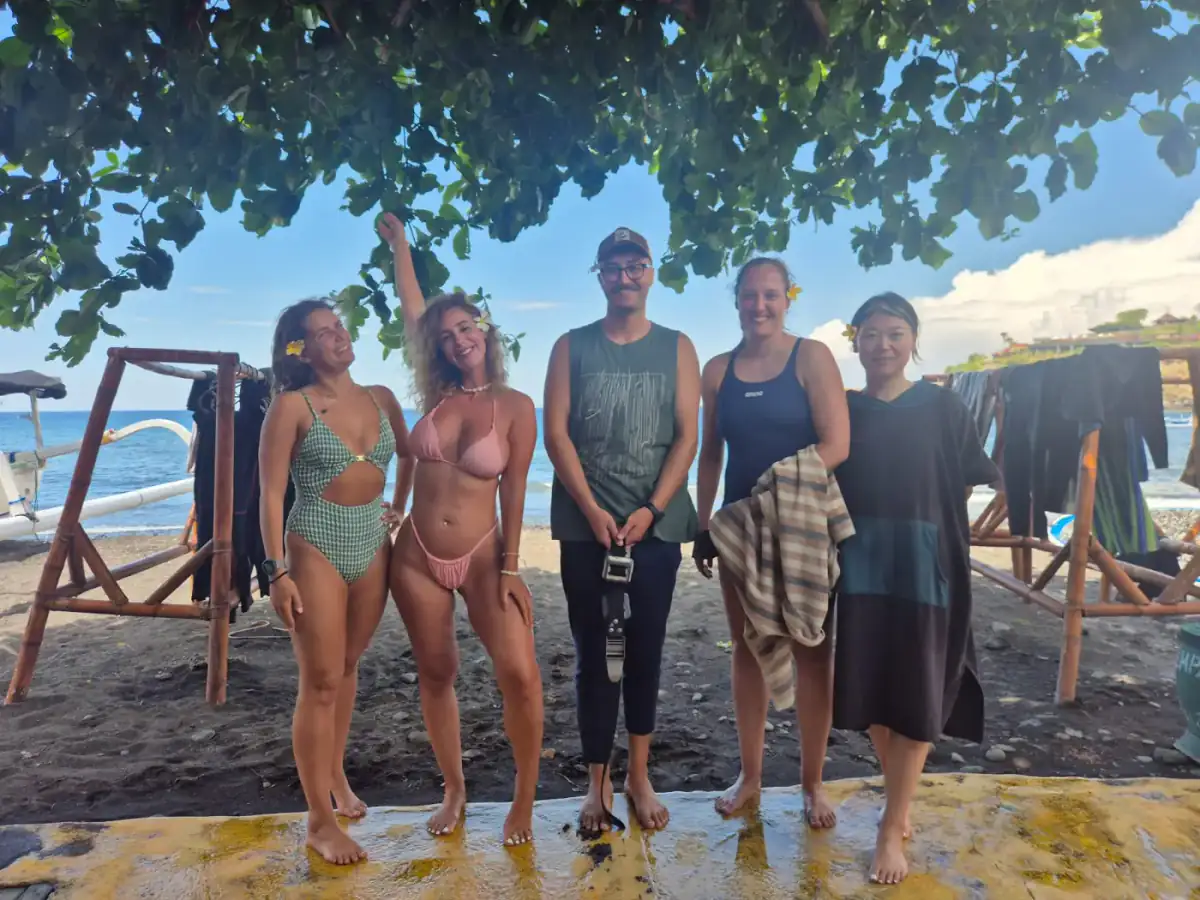
The trip you remember is rarely the busiest one
Ask someone about a holiday that really changed something in them. They rarely describe the itinerary with the most stops. More often it is one afternoon: the colour the water turned just before sunset, a conversation that went somewhere unplanned, the particular quiet when a boat engine cuts off far from shore.
So why does slow travel feel more meaningful? Part of the answer is attention. Calm, natural places ask less of the effortful kind of attention we use all day. And research on holidays shows that the rest we get from them is real, but fades fast. Fewer places and more time give a trip a better chance to land.
That is why our own retreats keep more empty time than people expect: long boat rides with nothing scheduled, mornings with no alarm, one island instead of four. People sometimes ask, gently, whether we are leaving something out. Our honest answer is that the space is the point.
Why a slower place asks less of your attention
There is real psychology here, not only a feeling. Attention Restoration Theory, developed by psychologists Rachel and Stephen Kaplan and set out as an integrative framework in Stephen Kaplan's 1995 paper in the Journal of Environmental Psychology, describes two kinds of attention. One is effortful and directed, the kind we use to push through a packed schedule or a busy street. The other is gentler and involuntary. The Kaplans called it "soft fascination": the attention you use watching clouds drift or waves roll in.
The theory says that places which hold attention softly, without demanding it, give directed attention a chance to recover from tiredness. A reef, a long stretch of open water, a slow sunset: nothing urgent to react to, so attention is free to settle. To be fair, the idea is not settled science. Reviews of the theory note that the "soft fascination" part has limited direct evidence, even though the wider idea that nature helps us recover is widely studied.
You may notice it in the quiet moments of a boat day, when a group floats between dives, half-watching the light change on the water. Nobody is doing anything, and that is often the part of the day people talk about afterwards. If that idea speaks to you, we go further in what a mindful ocean experience actually feels like.
What happens when you stop rushing between things?
Holidays do help with stress; that part is not really in question. A 2013 literature review in the Journal of Travel Research on the health and wellness benefits of travel found that several studies show positive effects on how healthy and well people feel. The same review flagged something worth being honest about: those benefits slowly fade after the trip, and there is little research showing effects on physical health.
The 2009 meta-analysis by de Bloom and colleagues, in the Journal of Occupational Health, says the same thing in numbers. Across seven studies, it found a small positive effect of vacation that faded once work started again. Interestingly, the authors also noted that what people actually do on holiday has hardly been studied, so its role is unclear. A later re-analysis with studies up to 2020 reached a similar conclusion: well-being goes up during holidays and comes back down quickly afterwards.
So here is our own reading, clearly labelled as a hypothesis and not a proven fact: how a trip is spent probably shapes what you bring home. A holiday spent sprinting between ten things to photograph may restore less than a few days somewhere quiet enough to really notice it. The research does not answer that question yet, either way. It is simply the idea behind how we build our retreats: fewer places, more time in each one.
Why simple moments tend to stick
We cannot tell you exactly how memory stores a moment on a boat compared with a moment in an airport queue. That is more complicated than any blog post can claim, and we are not memory scientists. What we can say is that slow travel does not create emotion. It removes some of the competition for your attention, so whatever you already feel, awe, calm, curiosity, has somewhere to land instead of being crowded out by logistics.
Practical calm helps with that more than people think. Knowing your phone is safe in a roll-top dry bag on a boat day, or that your things are sorted with a few items from a tropical travel kit list, means less low-level worry pulling at your attention.
This is also part of why our hosted retreats stay small. It is easier to be present for a place, and for each other, when nobody is being herded.
Slow travel and the ocean: the ethical layer
Slowness is not only kinder to us. It is usually kinder to the places and animals we visit. A rushed itinerary tends to push for "results": the turtle seen, the manta ticked off, the boat that goes a little closer because time is short. A slow one can accept a quiet day where nothing dramatic happens, which is exactly what wildlife sometimes needs from us.
There is also the honest cost of getting there. Flights are a large part of a trip's footprint, and slow travel does not erase that. What it can do is make each journey count for more: fewer, longer trips, more time with local guides, and money spent with people who live by the sea instead of spread thin across many quick stops.
Slowness as a way of paying attention
None of this is an argument against energetic travel, and we are not precious about it. Some days on our trips are full, and that is good too. The point is not that slow is morally better than fast. It is that unhurried time in a place tends to work with your attention rather than against it, and that seems to be a real, if modest, part of why certain trips stay with people.
If you have felt that difference yourself, the one good morning that outlasted a whole rushed week, you already know most of what this article is trying to say. We write a little more about why that pace lands in why being near the ocean feels calming, if you would like to go further.
Questions people ask
Why do slower trips often feel more meaningful?
One explanation comes from Attention Restoration Theory: calm, natural places hold attention gently, which gives our effortful attention a chance to recover. The theory is widely used, though parts of it still have limited direct evidence.
Does travel actually reduce stress?
Yes, a little. A 2013 review in the Journal of Travel Research and a 2009 meta-analysis both found positive effects of holidays on how people feel, and both found those effects fade after returning to normal life.
How long do the benefits of a holiday last?
Not long, on average. The 2009 meta-analysis found little or no effect left somewhere between about 12 days and a month after the holiday. Exactly when it disappears is not clear, because the studies did not measure often enough.
Is slow travel about doing less?
Not necessarily less. It is more about depth in fewer places than speed across many. A trip can be full and still be slow.
Is slow travel better for the environment?
It can help, for example by taking fewer, longer trips and spending money locally, but it does not cancel the footprint of flying. We would rather say that honestly than call any trip "green".
If this made you curious about meeting the ocean this way, you can explore our upcoming retreats.
Wildlife encounters are never guaranteed and never forced. Ocean Calling works only with vetted, ethical local operators, and every animal is free to approach, or not, entirely on its own terms.
Sources & further reading
- de Bloom et al. Effects of vacation from work on health and well-being: lots of fun, quickly gone. Journal of Occupational Health 51: 13-25. J-STAGE, 2009.
- We continue to recover through vacation: meta-analysis of vacation effects on well-being and its fade-out. TU Dresden research portal, accessed 2026.
- Health and wellness benefits of travel experiences: a literature review. Journal of Travel Research. MetaTOC (abstract listing), 2013.
- Kaplan, S. The restorative benefits of nature: toward an integrative framework. Journal of Environmental Psychology 15. University of Utah (course copy), 1995.
- Vacation fade-out: back to work with a thud?. Scientific American, Absolutely Maybe blog, accessed 2026.
Further reading on Ocean Calling: More from the journal · Wildlife & the law · See the retreats · Ocean Atlas
Find the retreat that fits you
Small groups of up to six guests, unhurried days and local experts. Tell us how you feel in the water and we will point you to the right trip.