
Whales in The Bahamas: Meet the Deep-Diving Species
The Bahamas is famous for bright water and sharks. But some of its most remarkable whale stories happen far below, where the sunlight has already given up.
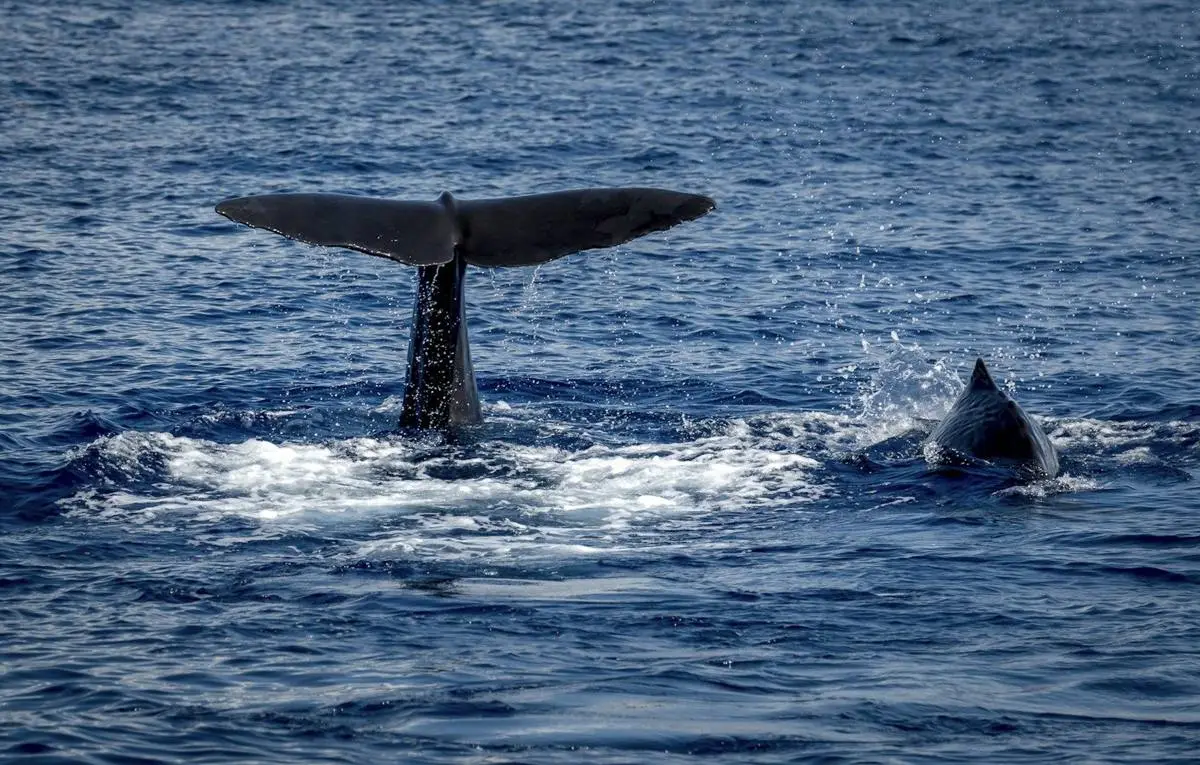
Stand on a boat over turquoise Bahamian water and it can look completely empty. It is not. The Bahamas Marine Mammal Research Organisation (BMMRO) says 27 marine mammal species have been recorded in Bahamian waters, many more than you will ever spot from the deck. Its work around Abaco and the edge of the Great Bahama Canyon uses acoustics, photo-identification and satellite tagging. These tools help researchers study animals that spend most of their lives below the surface.
Meet the deep divers
Sperm whales are the best-known giants of the deep. They are toothed whales that hunt squid at great depth, far below the layer a snorkeller can see. That is one reason listening and tagging can tell researchers more than surface sightings alone.
Beaked whales are even more mysterious. Several species have been recorded around the islands, including Blainville’s beaked whale and Cuvier’s beaked whale. They are hard to observe because they spend long periods diving and may surface quietly, only for short moments.
Short-finned pilot whales, dolphins and other cetaceans add to the mix. A calm sea does not mean an empty one.
What can a whale’s voice reveal?
Passive acoustic monitoring uses underwater microphones to record sounds without needing to see the animal. Calls can help researchers learn when a species is present and how its calling changes over time.
Sound adds to what photos and satellite tags show. But it is not a magic whale translator. Sound alone may not reveal who is calling, or what the call means.
BMMRO combines several methods because every tool has blind spots. Together, they build a fuller picture.
The Bahamas also sits beside a migration highway
Humpback whales travel between northern feeding areas and Caribbean breeding grounds. The Lucayan Archipelago is part of a wider region where humpbacks have been documented, including sightings of mothers and calves in the southern Bahamas. Nearby banks are used during the breeding season, but sightings change with place and time.
So “whales in The Bahamas” is not one season or one animal. It is a group of stories: deep divers in canyon waters, dolphins near the banks, and humpbacks moving through a larger Caribbean system.
How to meet the ocean without demanding a show
If you see a whale, keep your distance and follow local law and your guide’s instructions. Rules can change, so check locally. Do not follow a pod to force a closer view. The best research and the best wildlife encounters both depend on letting an animal carry on with its day. Wildlife encounters are unpredictable. Whale watching should always follow local regulations and experienced professional guidance.
A whale does not need to surface beside the boat to be part of the story. And if the water stays quiet? Listen. There may be much more happening below.
Questions people ask
How many marine mammal species have been recorded in The Bahamas?
BMMRO says 27 marine mammal species have been recorded in Bahamian waters.
Which beaked whales have been recorded there?
Several species have been recorded around the islands, including Blainville’s beaked whale and Cuvier’s beaked whale.
How do researchers study whales that stay deep?
BMMRO uses acoustics, photo-identification and satellite tagging, and combines them because every tool has blind spots.
Will I see a whale in The Bahamas?
Nobody can promise that. Sightings change with place and time, and many of these whales spend long periods diving.
Wildlife encounters are never guaranteed and never forced. Ocean Calling works only with vetted, ethical local operators, and every animal is free to approach, or not, entirely on its own terms.
Sources & further reading
- Bahamas Marine Mammal Research Organisation.
- BMMRO ongoing research.
- Marine Mammal Protected Areas Task Force, Lucayan Archipelago IMMA.
- Marine Mammal Protected Areas Task Force, North Atlantic humpback whale migratory corridor IMMA.
Further reading on Ocean Calling: Humpback whale · The Bahamas in the Ocean Atlas · Sperm whales are not humpbacks · How boats stress whales
Swim with humpback whales in Moʻorea: an ethical whale retreat
Whale encounter retreat · Moʻorea, French Polynesia
Time in the blue, on the whales’ terms. September 2027. If you love whales, this is our whale retreat: small group, slow pace, on the animals’ terms.