
Why Water Feels Regulating: Freediving and Neurodivergence
Why the sea can feel calming for neurodivergent travellers, what the science of pressure, breath and the dive reflex really says, and why it is never a treatment.
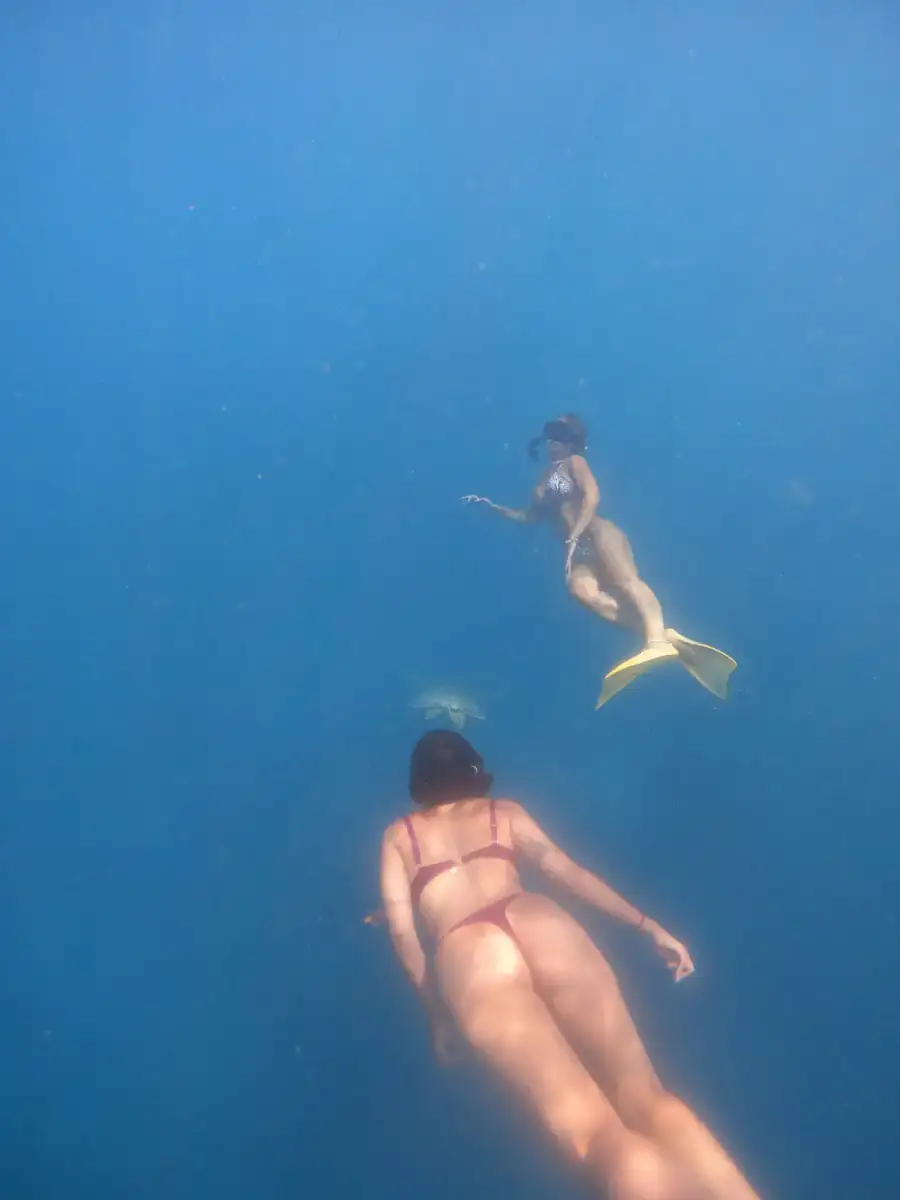
Many people notice it the moment they step into the sea. The noise of daily life seems to soften. Breathing changes. Attention settles. The body feels different. For some, this is simply relaxing. For others, especially people with a very sensitive or fast-moving nervous system, it can feel much deeper.
So why does water feel so regulating? Mostly because it changes three things at once. It softens what reaches the senses. It holds the body with steady, even pressure. And cool water on the face can trigger a reflex that slows the heart. For some neurodivergent people, and for freedivers in particular, that mix feels like relief. It is not a treatment, and it is not the same for everyone.
This matters a lot when we talk about neurodivergence. Autistic people, people with ADHD and others with sensory or attention differences often describe life on land as intense, broken up or tiring. Health authorities like the CDC list unusual reactions to sound, touch and other sensory input as one of the recognised features of autism. Many people with ADHD describe something similar, even though it is not a formal diagnostic criterion. Modern life asks the nervous system to handle constant stimulation, quick changes and endless small decisions. The ocean offers a very different setting. It slows things down, and for many people that shift feels regulating in a way that is hard to find anywhere else.
We want to be careful with this topic. Water is not a treatment and freediving is not therapy. Neurodivergence is not something that needs fixing in the first place. What follows is what honest research and lived experience suggest: for many people, water changes how the body and the senses work together, sometimes in ways that feel like real relief.
The ocean changes the sensory experience
One reason water feels calming is that it changes the sensory world almost at once. On land, the nervous system often has to process many competing inputs at the same time: traffic, voices, screens, bright lights, social expectations. In the water, many of those signals become softer. Sound changes. Vision narrows. Movement slows. The body is surrounded by one steady medium instead of many competing sensations.
For neurodivergent people, that matters. Differences in sensory processing can make ordinary places feel unusually demanding. Some people are more sensitive than most to sound, touch or light. Others look for stronger sensory input to feel grounded and present. Water can sometimes meet both needs at once. It softens the sharp edges of the outside world while still giving strong, steady feedback through pressure, movement and temperature.
This is one reason the ocean often feels less chaotic than life on shore. It does not remove every challenge, but it creates a different kind of sensory order. Instead of scattering attention, it can gently gather it.
Why the body often feels safer in water
The physical qualities of water play a real role here, and some of it is well understood. Buoyancy reduces the pull of gravity, so the body moves with less strain. Hydrostatic pressure, the even pressure of water against the skin, gives a whole-body sensation many people describe as grounding. People often compare it to a weighted blanket, only softer and moving with you.
That comparison needs some honesty. Research on deep-pressure tools like weighted blankets is still early. A 2020 systematic review in the American Journal of Occupational Therapy found only eight studies. It concluded that weighted blankets may be a reasonable tool to reduce anxiety, but the research is thin and does not support them for insomnia. A later meta-analysis also warned that the trials were few and small. That is not strong enough to call it a proven treatment. What water offers is related but different: the same general idea of steady, even pressure, spread over the whole body as it moves, instead of a fixed weight.
Cold or cool water on the face also triggers what physiologists call the mammalian dive reflex. Nerves in the face signal the heart, through the vagus nerve, to slow down. Sources disagree on how strong this is in humans and how cold the water has to be, but colder water tends to give a clearer response. It is one of the few concrete body mechanisms behind the calm many freedivers describe, though how strongly each person feels it varies. None of this means water "fixes" a nervous system. It means there is real, measurable biology behind why the body often settles in the sea, and it is worth naming that clearly instead of leaving it as a vague feeling.
When the senses are sensitive, small practical things can matter more than people expect. A snug, soft rash guard can feel more contained than loose clothes, and it also means less sunscreen on the skin. A low-volume mask that fits without pinching removes one annoying sensation before you even start. Fit and fabric are personal, so try things on before your trip if you can.
Does freediving help quiet mental noise?
Freediving adds another layer, because it asks for a very particular kind of attention. People often think of it as an extreme sport about depth. In practice, it is just as much a practice of softness and holding back. A good dive rarely starts with force. It starts with relaxation.
To freedive well, you have to listen closely to your breath, posture, equalisation, tension and timing, all at once, with little room for rushing or multitasking. That kind of focused, body-based attention can feel very regulating for someone whose thoughts are often pulled in several directions.
There is also separate research on physical activity in general. A 2021 meta-analysis in the International Journal of Behavioral Nutrition and Physical Activity found that exercise programmes improved executive functions in children and adolescents with ADHD. Regular sessions of moderate intensity seemed to matter more than the type of exercise. Newer reviews agree on the direction but still say the right dose is unclear. Freediving and swimming are, among other things, that kind of steady whole-body movement, held together by something interesting enough to keep attention there. We would not claim water is special in a way that exercise in general is not. But a slow, breath-led activity people actually want to keep doing has a real chance of holding attention longer than a treadmill.
Regulation is not the same as escape
This needs nuance. Ethical ocean travel should not present the ocean as a cure, and freediving should not be sold as therapy. Not every neurodivergent person finds water calming. Some feel uncomfortable with cold, salt, open space, new textures or the unpredictability of the sea. Others need slower introductions, more structure or more reassurance before they feel at ease.
There is a safety side too. A 2017 study by Guan and Li in the American Journal of Public Health, based on U.S. death records from 1999 to 2014, found that drowning made up almost half of injury deaths among children with autism. The authors recommended swimming lessons early in life. That is not a reason to keep anyone away from water. It is a reason to teach water skills properly and patiently. It is also why we never assume someone is comfortable in the water, and why we always work through certified, experienced local instructors who introduce the water at the pace of the person in front of them, not a schedule.
Ethical travel does not erase difficulty or make big promises. It respects difference, accepts that support looks different for different people, and trusts that meaningful moments happen when there is enough safety, patience and flexibility for each person to meet the ocean in their own way.
Why small groups make a difference
What happens around the water matters as much as the water itself. A beautiful place can still feel overwhelming if the experience is rushed, crowded or full of performance. For many neurodivergent travellers, the difference between a regulating trip and a draining one often comes down to pace, communication and group size.
Small groups give more space to settle in: less pressure to perform socially, less noise, more room for personal support. Instructions can be clearer, and questions are easier to ask. For solo travellers especially, this kind of structure can feel safe without taking away independence. That is why our hosted retreats stay small, six guests at most. Freediving itself happens on our ethical freediving trips in places like Coron and Amed, where trusted local schools teach in small groups and you book with them directly through Ocean Match.
Ethical ocean travel and respectful wildlife encounters
All of this connects naturally to responsible ocean travel and respectful wildlife encounters. A trip designed with care tends to be better for marine life and for people. Crowded boats, rushed schedules and intrusive wildlife practices may create excitement, but they do not always create real connection. And sightings are never guaranteed, however a trip is run.
Sustainable ocean travel invites a different rhythm: smaller groups, respectful distances from wildlife, local knowledge and some education along the way. That matters for every traveller, and it can be especially valuable for people looking for calm and clarity. When the pace is slower and attention more respectful, people often notice more, feel more present and learn something, instead of treating learning as an optional extra.
Building trust in the body through water
One of the most interesting things about freediving is that it asks body and mind to work together honestly. Pretending to be relaxed does not help, because the body shows the truth quickly. That can be humbling, and also rewarding. Over time, many people learn to trust their own inner signals more: noticing tension sooner, recognising when they are forcing something, and feeling the difference between discomfort and panic, between effort and strain.
For people who often feel out of step with fast-moving places, that kind of body awareness can feel quietly powerful. Water does not reward urgency. It rewards presence, patience and listening, mostly to your own body.
What the water can and cannot do
For many neurodivergent people, water offers something rare: a place where the body feels supported, the senses feel less scattered and attention becomes simpler. Some of that has real, still-growing science behind it: differences in sensory processing, the physiology of the dive reflex, the documented effect of exercise on attention. Freediving can deepen the experience by inviting stillness, breath awareness and a more trusting relationship with the body. None of this is a universal solution, and not everyone will relate to the ocean in the same way. But for many people, the regulating quality of water is real, and worth taking seriously instead of treating it as a nice metaphor.
That is one reason ethical ocean travel deserves a wider conversation: not only where we go, but how we go, and who gets to feel safe doing it. If you wonder whether this kind of trip could suit you or someone you travel with, our planning page answers many of the questions we hear before someone books. Our piece on ADHD, high sensitivity and the ocean goes further into sensory regulation.
If this made you curious to try it yourself, at your own pace, you can explore our retreats.
Questions people ask
What is ethical ocean travel?
Ethical ocean travel is a way of experiencing the sea and the coast that puts respect for wildlife, local communities and the environment first, together with education and low-impact choices. Instead of treating the ocean as a backdrop to consume, it builds a more respectful relationship with marine life and place.
Why can water feel regulating for neurodivergent people?
Water changes the sensory world in ways many people find calming: it softens sound, supports the body through buoyancy and gives steady pressure across the skin. Cool water on the face can also trigger the dive reflex, which slows the heart. For some neurodivergent people this eases sensory overload, but it is not universal and it is not a treatment.
How does freediving support calm and focus?
Freediving asks for slow breathing, body awareness and steady attention, which leaves little room for multitasking. Separately, a 2021 meta-analysis found that regular moderate exercise improved executive functions in children and adolescents with ADHD, and freediving is, among other things, a form of steady movement.
Is freediving suitable for every neurodivergent traveller?
Not always. Sensory preferences, comfort levels and support needs differ a lot. Research also shows a much higher drowning risk for autistic children, so patient teaching, clear communication and a properly certified instructor matter.
What makes an ocean retreat feel more supportive?
Small groups, calm communication, a slower pace, respectful wildlife practices and a thoughtful learning setting all help. That is good for everyone, and especially important for travellers who are sensitive to overstimulation or social tiredness.
How can travellers choose more responsible ocean experiences?
Look for operators who keep groups small, avoid intrusive wildlife encounters, work with certified local professionals and explain their environmental and safety practices clearly. Responsible operators usually value education as much as the activity, and take the time to do things properly.
Wildlife encounters are never guaranteed and never forced. Ocean Calling works only with vetted, ethical local operators, and every animal is free to approach, or not, entirely on its own terms.
Sources & further reading
- Centers for Disease Control and Prevention. Signs and symptoms of autism spectrum disorder.
- Guan J. & Li G., 2017. Injury mortality in individuals with autism. American Journal of Public Health 107(5) (Columbia Public Health summary).
- Eron K. et al., 2020. Weighted blanket use: a systematic review. American Journal of Occupational Therapy (PubMed).
- Liang X. et al., 2021. The impact of exercise interventions concerning executive functions of children and adolescents with attention-deficit/hyperactive disorder: a systematic review and meta-analysis. International Journal of Behavioral Nutrition and Physical Activity.
- ADHD Evidence, 2026. Meta-analysis finds long-term exercise associated with moderate improvements in executive functioning for children and adolescents with ADHD.
- Lake Forest College, Eukaryon. The mammalian dive response (student review article).
Further reading on Ocean Calling: More from the journal · Wildlife & the law · See the retreats · Ocean Atlas
Freediving certification in Bali: Amed, USAT Liberty wreck and Ubud
Freediving certification · Amed & Ubud, Bali, Indonesia
Ocean breath first, sacred water after. If this made you want to learn to freedive, this is our beginner-friendly course.