
ADHD, HSP and the Ocean: Why Water Can Feel Calming
Too much and not enough at the same time. For many ADHD and highly sensitive travellers, the sea is the first place where both feelings go quiet. Here is what science can explain, and what it cannot yet.
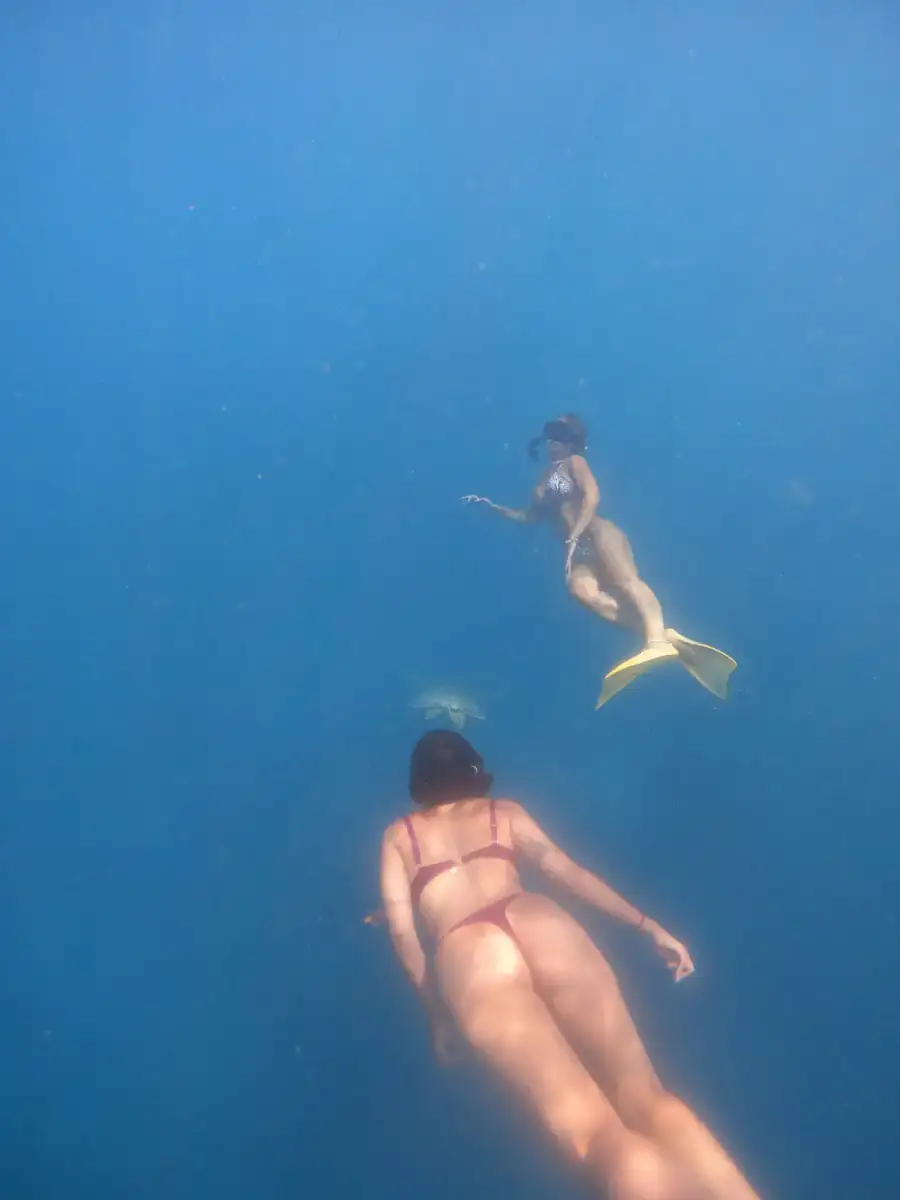
Living with both ADHD and high sensitivity can feel like carrying two engines under one hood. The ADHD side keeps reaching for something new and interesting. The highly sensitive side is quietly overwhelmed by all of it: bright light, background chatter, a mind that rarely settles. On land, this mix often feels like too much and not enough at the same time.
So can the ocean really help an ADHD or highly sensitive (HSP) traveller find calm? It can help some people, for clear physical reasons, but it is not a treatment. Interest is growing in so-called "Blue Mind" ideas, the study of how water affects us. For someone who is easily overstimulated but also easily bored, moving from land to water is more than a change of scenery. It changes how much the brain has to filter at once. That shift deserves to be taken seriously, with honest limits, and not waved away as "just relaxing."
The highly sensitive nervous system
High sensitivity, or Sensory Processing Sensitivity, is a personality trait, not a diagnosis. Researchers measure it with a short questionnaire called the Highly Sensitive Person scale, and the team behind one well-known brain study describes it as present in roughly one in five people. That study, by Acevedo and colleagues, was published in Brain and Behavior in 2014. It scanned 18 people while they looked at photos of their romantic partners and of strangers with happy, sad or neutral faces. People with higher sensitivity scores showed stronger activity in brain regions linked to awareness, empathy and planning a response. It is one piece of evidence that the trait has a measurable basis. It was also a small sample, and the full picture is still being filled in.
Add ADHD and you get a mind that wants real engagement but tires quickly of "shallow" stimulation: fluorescent lights, small talk, a dozen open tabs. Ordinary travel does not always help, because sightseeing tends to add more input instead of giving a tired nervous system room to recover. The ocean offers something narrower: one horizon, one sound, one temperature. Some people propose that a steady, low background sound supports focus instead of competing with it. I could not find good evidence for this that is specific to ocean sound, so please read it as a hypothesis. It does match something many people describe after time near the water: a busy mind going quiet.
The physiology of the reset: the dive reflex
Some of what people feel in water is physical, not only psychological. Go under and you are held by hydrostatic pressure, a soft, even pressure from every side. Occupational therapists use deep, steady pressure (the idea behind weighted blankets) to calm nervous systems that run hot. Water immersion has not been studied in exactly the same way, so this comparison is my own reading, not a proven effect. Still, many divers describe the feeling in similar words: held, not exposed. If that rings true for you, a snug rash guard also gives a light, even contact on the skin, and it keeps the sun off your back without extra sunscreen.
What is well established is the mammalian dive reflex. Medical references describe how cold water on the face stimulates receptors served by the trigeminal nerve, and the vagus nerve then slows the heart. The effect is strongest when the face is in the water and the breath is held, and it grows as the water gets colder. In adults it is usually mild and varies a lot from person to person. For a nervous system that spends much of its day on alert, that automatic, physical step away from high arousal can feel like a real reset, often before the mind has caught up.
Can diving help ADHD focus? Finding flow underwater
For many people with ADHD, the difficulty is not a lack of focus. It is steering the focus they have. Diving, on scuba or on a single breath, asks for one specific kind of attention: breathing, buoyancy and what is happening around you, all at once. Clear goals, instant feedback and something that truly matters are close to what psychologist Mihály Csíkszentmihályi called "flow", a state of deep absorption where self-consciousness fades into the background.
Dive medicine takes ADHD seriously, and the guidance is careful. A 2019 review in Diving and Hyperbaric Medicine looked at fitness to dive with ADHD and at the side effects of its medicines. Divers Alert Network (DAN) notes that the concentration demands of diving, such as buoyancy, gas monitoring and decompression, could be hard for a diver with untreated ADHD. The UK's Diving Diseases Research Centre advises against diving when symptoms are poorly controlled, and asks for extra caution if medication wears off between doses. The Dutch Society of Diving Medicine has a position statement on diving with ADHD, updated in December 2024. All of them say the same thing: fitness to dive is decided case by case, by a diving doctor. Diving is not a treatment, and anyone with ADHD, or taking medication for it, should talk to a dive physician before a course.
Gear that turns down the sensory noise
For sensitive people, small discomforts become loud. A mask that leaks, a strap that pulls hair, water in the snorkel: each one steals attention from the calm you came for. A well-fitting low-volume mask and snorkel is easier to clear and sits closer to the face, which helps many beginners relax. On a boat day, a roll-top dry bag keeps a phone, a towel and a snack dry, so there is one thing less to worry about. None of this is magic. It is just fewer small alarms.
Sensitivity as an asset: the ethical layer
It makes sense to me that a trait linked to awareness and responsiveness can also make someone a careful, attentive guest in the sea. The same sensitivity that picks up a change in someone's mood may also notice a nudibranch tucked into a crack, or a turtle that has had enough company. I do not see responsible wildlife encounters as a list of restrictions. They are a natural extension of the close attention sensitive people already pay.
It is also why we only work with vetted local operators who follow recognised low-impact practices, like those promoted by Green Fins. In practice, that means good buoyancy control, no touching or chasing marine life, and a respectful distance from anything we are lucky enough to see. Sightings are never guaranteed, and we say so from the start. And travel has a cost: the flight to a reef is often a big part of a trip's footprint, which is one more reason to go slowly, stay longer and choose fewer places. It is a way of being a guest in someone else's home, not a consumer of it.
Changing the environment, not the person
A lot of energy goes into trying to manage ADHD or fix sensitivity while staying on land. Sometimes the more useful move is to leave the mind alone and change the environment it has to work in. Water offers a simpler one: fewer competing signals, a physical reflex that calms the body on its own, and a task absorbing enough to hold a restless attention without asking it to behave differently.
On our small-group retreats the pace is slow enough to actually notice things, including yourself. Groups are a maximum of six guests, there is quiet time built in, and anyone may skip any activity without explaining why. For a sensitive person, permission to say no is often the most calming thing of all. You can read more in our guide to neurodivergent-friendly travel.
Questions people ask
Can diving help with ADHD focus?
Many people with ADHD describe diving as unusually absorbing, and its structure fits the idea of "flow." But it is not a treatment. Dive medicine bodies such as DAN and the Diving Diseases Research Centre say fitness to dive with ADHD should be assessed case by case by a diving doctor.
Is it safe to dive while taking ADHD medication?
It depends on the person. A 2019 review in Diving and Hyperbaric Medicine looked at ADHD medicines and diving, and the Diving Diseases Research Centre asks for extra caution if medication wears off between doses. Talk to a dive physician before you book a course.
What is a highly sensitive person (HSP)?
It is a personality trait called Sensory Processing Sensitivity, not a diagnosis. A 2014 brain-imaging study of 18 people found that higher sensitivity scores went with stronger activity in brain areas linked to awareness and empathy.
Why does cold water on the face feel calming?
Cold water on the face triggers the dive reflex: signals travel through the trigeminal nerve, and the vagus nerve slows the heart. In adults the effect is usually mild and varies between people.
How can I avoid harming marine life while diving?
Keep a respectful distance, never touch or chase anything, and take time to get your buoyancy right. Accidental contact, from a stray fin or a hand, is the kind of harm good buoyancy prevents.
If this made you curious about meeting the ocean this way, you can explore our upcoming retreats.
Wildlife encounters are never guaranteed and never forced. Ocean Calling works only with vetted, ethical local operators, and every animal is free to approach, or not, entirely on its own terms.
Sources & further reading
- Diving Diseases Research Centre (DDRC Healthcare). Fitness to dive: ADHD & autism.
- Dutch Society of Diving Medicine (NVD), 2024. Position statement: diving with ADHD (updated December 2024).
- Divers Alert Network, Alert Diver. Attention-Deficit/Hyperactivity Disorder and Diving.
- Querido, A.L. and van Hulst, R.A., 2019. Diving and attention deficit hyperactivity disorder. Diving and Hyperbaric Medicine 49(1): 41-47.
- Acevedo, B.P. et al., 2014. The highly sensitive brain: an fMRI study of sensory processing sensitivity and response to others' emotions. Brain and Behavior.
- StatPearls (NCBI Bookshelf). Physiology, Diving Reflex.
Further reading on Ocean Calling: More from the journal · Wildlife & the law · See the retreats · Ocean Atlas
Find the retreat that fits you
Small groups of up to six guests, unhurried days and local experts. Tell us how you feel in the water and we will point you to the right trip.