
Marine Protected Area Effectiveness: Why Some Parks Work
There is a sign at the harbour: marine protected area. You jump in full of hope, and find almost no big fish. How is that possible? The answer is less about the sign, and more about what happens in the water every day.
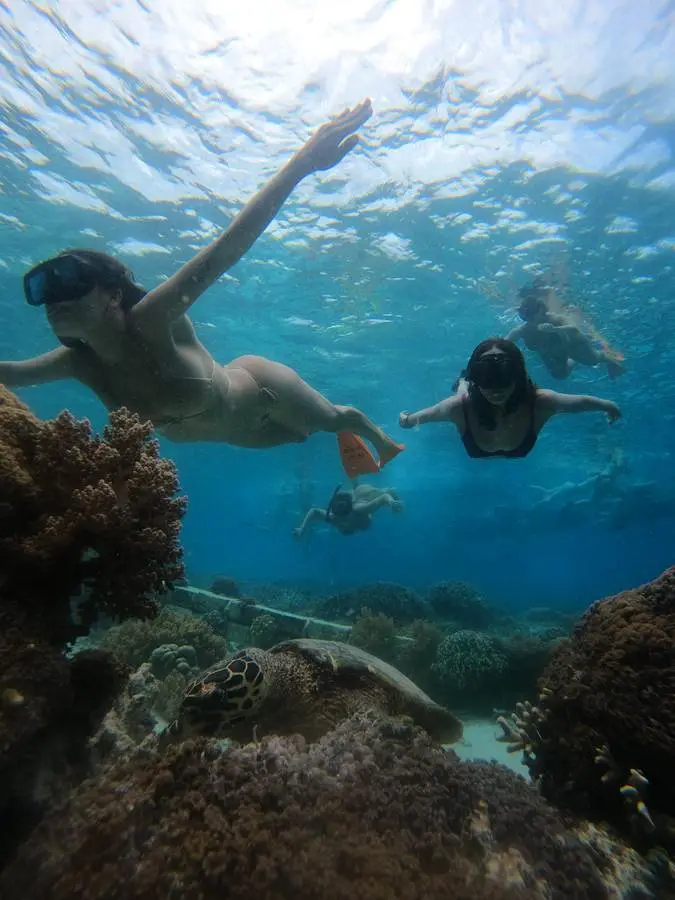
Why do marine protected areas work in some places and fail in others?
The short answer: marine protected area effectiveness depends far less on the label than on a few concrete things. Above all, no-take rules, enforcement, money, staff, time and local support. As of 2025, about 9.6% of the ocean was covered by marine protected areas, across more than 16,000 sites, according to reporting on the World Database on Protected Areas. But only around 3% of the ocean is fully or highly protected, according to the Marine Conservation Institute’s MPAtlas. On a map, they look like a victory: a patchwork of blue shapes where fishing is supposed to stop and reefs are supposed to recover. In practice, many of them barely work. Researchers have a blunt name for the weakest ones: “paper parks”, protected in name, unprotected in the water.
That gap between a name on a map and real protection is one of the more sobering findings in ocean conservation science, and it matters for anyone who cares where their diving or travel money goes. A protected-area sign at the harbour tells you almost nothing about what is happening below the surface. The difference between a thriving no-take zone and an empty label usually comes down to a small number of concrete, measurable factors, not good intentions.
The five features that separate real protection from paper protection
The most cited study on this question is a 2014 paper in Nature led by Graham Edgar, with Rick Stuart-Smith among the co-authors. The team surveyed reef life at sites inside and outside 87 marine protected areas across 40 countries. They found that conservation benefits, measured mainly as fish biomass, rose sharply, roughly exponentially, as five features added up. These are now often shortened to NEOLI:
- No-take: fishing is fully prohibited, not just restricted.
- Enforced: rules are actively policed, with real consequences for breaking them.
- Old: the area has existed for more than about ten years, giving nature time to recover.
- Large: it covers more than roughly 100 square kilometres.
- Isolated: it is separated from fished areas by deep water, sand or another natural barrier that limits movement in and out.
The uncomfortable finding was that most MPAs in the study, 59%, had only one or two of these features, and those areas could not be told apart, ecologically, from fished water. Protection on paper did very little for the fish. Only the parks with four or five features looked clearly different from their surroundings, and by a wide margin. Summaries of the study report that effective MPAs had about five times more large-fish biomass and fourteen times more shark biomass than fished areas. Only four of the 87 MPAs had all five features.
Money and people matter as much as the rulebook
A separate, larger analysis adds a useful twist. A 2017 study led by David Gill, also published in Nature, built a global database with management data for 433 MPAs and fish population data for 218 of them. It found that staff and budget were the strongest predictors of conservation impact. Overall, 71% of the MPAs had a positive effect on fish populations, but the effects varied a lot, and MPAs with enough staff showed ecological effects 2.9 times greater than those without. Enough capacity turned out to be rare. According to the press release from the Wildlife Conservation Society, only 9% of the MPAs reported adequate staff, and only 35% acceptable funding.
Read next to the NEOLI research, the message is layered rather than contradictory. The design of a park, its no-take status, size, age and isolation, sets the ceiling for what it could achieve. Staff, budget and daily enforcement decide whether it gets anywhere near that ceiling. A well-designed but unfunded MPA can still end up a paper park. A smaller, imperfect one with rangers on the water and a community behind it can do better than expected.
Why community support keeps showing up in the research
The third factor is harder to measure, but it appears again and again in case studies. Were the people who fish and live around a protected area truly involved in designing it, and do they see a direct benefit from it? Protected areas imposed from outside, with no other way to earn a living and no support from the community itself, tend to see constant rule-breaking. Illegal fishing simply continues, quietly, because nobody nearby has a reason to report it. Areas built with local fishers’ input, restrictions brought in step by step, and a visible link between protection and their own catch or tourism income tend to hold up far better over time. This pattern comes from many case studies rather than a single global number, so treat it as strong experience more than a precise law. Enforcement is cheaper and lasts longer when most people nearby already want the rule followed.
What this means when comparing countries
Put together, these findings explain why marine protected area effectiveness varies so much between countries that all claim ambitious ocean-protection numbers. A country can hit an impressive percentage of protected ocean on paper, a useful political headline, especially now that global commitments like the 30x30 goal in the 2022 Kunming-Montreal Global Biodiversity Framework push governments to protect more area. And it can still fund almost none of it for real enforcement. Another country with a smaller, quieter network of no-take zones, backed by trained rangers, patrol boats and fishing communities who helped plan it, can deliver far more recovering reef and fish per square kilometre.
For travellers, this is a helpful lens rather than a discouraging one. A marine protected area with visible rangers, a marked no-take zone that local boats respect, and a dive or snorkel operator who can explain the specific rules, not just say “it’s protected”, is a good sign of a park that is doing its job. It is also, unsurprisingly, usually the healthier reef to swim in.
The ethical layer: what a traveller can actually do
It is easy to feel small next to numbers like these. But visitors do influence protected areas, in both directions. Entry and conservation fees can pay for rangers. Guests who ask operators about the rules, who stay off the reef and never touch or feed anything, make enforcement easier. Guests who push guides for one more photo, or choose the cheapest boat that ignores the zoning, make it harder.
There are small, practical habits too. A long-sleeve rash guard means less sunscreen in the water over the reef, and if you do use sunscreen, a mineral sunscreen applied well before you swim is the common advice. A refillable bottle from a simple tropical travel kit means fewer plastic bottles on small islands with limited waste systems. None of this replaces a funded ranger on a patrol boat, and we should be honest that flying to a reef has its own footprint. But it is the part that is in our hands.
At Ocean Calling, this is part of why we work only with vetted local teams who know exactly which protections apply where we swim and dive. It is also why we treat protected-area status as a first question, not an automatic seal of approval, a theme we return to in our piece on why marine protected areas matter in the first place.
For one concrete example close to our hearts, we wrote about Moʻorea’s marine protected area and how its rules work in practice. If this made you curious about experiencing a well-managed reef yourself, you can explore our retreats.
What makes a marine protected area effective?
The 2014 Nature study by Edgar and colleagues found that benefits rise sharply when an MPA is no-take, enforced, older than about ten years, larger than about 100 km² and isolated. A 2017 Nature study by Gill and colleagues found that staff and budget were the strongest predictors of impact.
What is a paper park?
A protected area that exists on paper but is not managed or enforced in the water, so fishing and damage continue much as before.
How much of the ocean is protected?
About 9.6% of the ocean was covered by marine protected areas as of 2025, according to reporting on the World Database on Protected Areas, but only around 3% is fully or highly protected, according to MPAtlas.
Do most MPAs have enough staff and money?
No. In the 2017 Gill study, only 9% of MPAs reported adequate staff and only 35% acceptable funding, according to the Wildlife Conservation Society.
What is the 30x30 target?
A goal in the 2022 Kunming-Montreal Global Biodiversity Framework to conserve 30% of land and sea by 2030. The research above shows why the quality of protection matters as much as the percentage.
How can I tell if an MPA is working when I visit?
Look for visible rangers, marked no-take zones that local boats respect, and operators who can explain the specific rules. A healthy fish community, including large fish, is usually a good sign.
Wildlife encounters are never guaranteed and never forced. Ocean Calling works only with vetted, ethical local operators, and every animal is free to approach, or not, entirely on its own terms.
Sources & further reading
- Convention on Biological Diversity, 2022. Kunming-Montreal Global Biodiversity Framework, Target 3 (30x30).
- Edgar, G.J. et al., 2014. Global conservation outcomes depend on marine protected areas with five key features. Nature 506: 216-220.
- Gill, D.A. et al., 2017. Capacity shortfalls hinder the performance of marine protected areas globally. Nature 543: 665-669.
- Wildlife Conservation Society, 2017. Lack of Staffing, Funds Prevent Marine Protected Areas from Realizing Full Potential.
- Reef Resilience Network. Summary: Global Conservation Outcomes Depend on Marine Protected Areas With Five Key Features.
- Mongabay, 2026. Marine protected areas expanded in 2025 but still far from 30% goal.
- Marine Conservation Institute. MPAtlas: global MPA map and protection levels.
Further reading on Ocean Calling: More from the journal · Wildlife & the law · See the retreats · Ocean Atlas
Find the retreat that fits you
Small groups of up to six guests, unhurried days and local experts. Tell us how you feel in the water and we will point you to the right trip.