
French Polynesia’s Giant MPA: What It Means in Moʻorea
You are floating above a coral garden in Moʻorea when someone on the boat says French Polynesia now has the largest marine protected area in the world. It sounds wonderful, and it is. But for this reef, and for you in the water, the change is quieter than the headline: the giant MPA mostly limits fishing and mining offshore, while the lagoon and the whales follow their own local rules.
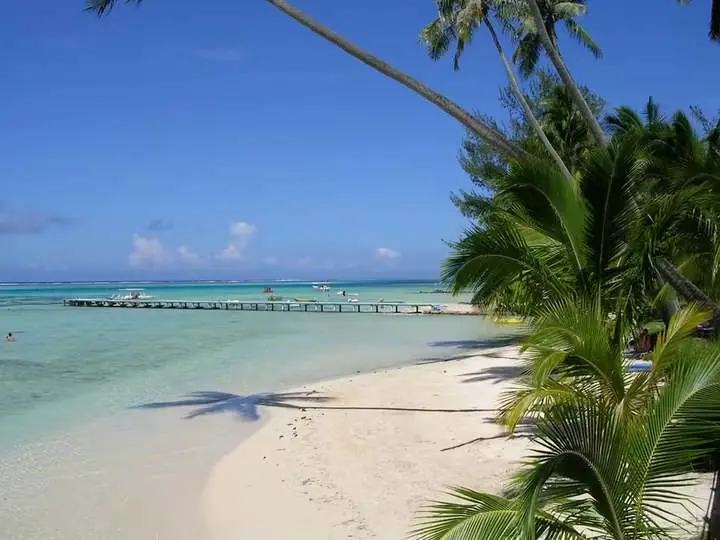
The ocean here is not protected by one big rule. It is protected in layers, a little like a house where each room has its own key. Once you see the layers, the news starts to make sense.
What is the French Polynesia marine protected area?
Its name is Tainui Atea. It started as a managed marine area and was designated a marine protected area at the UN Ocean Conference. It covers almost all of French Polynesia’s Exclusive Economic Zone, the ocean a country manages around its islands: close to 5 million km².
The UN Environment Programme’s World Conservation Monitoring Centre describes it as the world’s largest marine protected area.
Across all of it, two things are ruled out. The first is deep-sea mining. The second is drifting fish aggregating devices, the floating rafts industrial fleets use to gather tuna.
And the life inside is rich: 21 shark species, 176 coral species and 1,024 known fish species, along with migratory manta rays and seabirds.
Three levels of protection, not one
This is the part most headlines skip. "Protected" does not mean the same thing everywhere inside Tainui Atea.
Full protection is the strongest layer. At the launch, about 220,000 km² around the Society Islands and 680,000 km² around the Gambier Islands were fully protected. There, all extraction is prohibited, fishing and mining included.
Artisanal fishing zones are the second layer. They reach 15 nautical miles out from the Austral, Marquesas and Gambier islands, and 30 nautical miles from the Society Islands. Industrial fishing is banned there, and fishing is limited to traditional single pole-and-line methods from boats under 12 metres. Together these zones cover about 186,000 km².
The rest of the area is the third layer, where the two baseline bans apply.
Then, on World Ocean Day, about 520,000 km² more of fully protected water was announced. It includes 373,841 km² around the Austral Islands, 129,412 km² near the Marquesas and 16,083 km² of remote waters near the Western Society Islands. Once these protections are in place, about 30% of French Polynesia’s waters, around 1.4 million km², will be protected from all extractive activities.
I love how the announcement describes these new areas: an "extension of our traditional rāhui to offshore areas". A rāhui is the Polynesian practice of closing a place so it can rest and recover. So the idea is not new at all. It is old and wise, and now it simply reaches further out to sea.
So what changes in the Moʻorea lagoon?
Moʻorea belongs to the Society Islands. But the fully protected blocks are large offshore areas, and the new waters near the Western Society Islands are described as remote.
The reef and lagoon where most visitors swim are managed with a different tool: a local marine space management plan, known by its French initials, PGEM.
Researchers who studied it describe a plan that took ten years to design. The original scheme had eight permanent marine protected areas and two regulated fishing zones.
The results were honest rather than spectacular. The biomass of harvested fish, meaning the total weight of the fish people take, was "slightly higher on average inside MPAs", but the increase was weak compared with other studies. Some fishers felt they were not fully consulted and that the plan favoured tourism. A long revision later added fishing committees at district level.
For me this part matters, because it is so human. Protecting a lagoon where families live and fish is slow work, and it does not always go perfectly. The giant offshore designation and the coral garden in front of your guesthouse are simply looked after in different ways, by different people.
The whales were already protected
The humpback whales that arrive in the austral winter did not need the new MPA. French Polynesia’s environment code already creates a sanctuary for the protection of whales, and approach activities need an authorisation.
The Direction de l’environnement guide draws zones around each animal. Within 300 metres, only authorised boats may enter, and no more than three at a time. Within 100 metres, no boat may enter. In-water activities are only possible from authorised boats, with a maximum of seven people per boat including the guide, and authorisations are valid from 20 July to 20 November.
The same guide asks people never to place themselves between a mother and her calf.
Wildlife encounters are unpredictable. Whale watching and swimming should always follow local regulations and experienced professional guidance.
What a careful visitor can actually do
The French Polynesia marine protected area limits extraction, like fishing and mining. So the most useful thing a visitor can do is support the layers that touch daily life.
In the lagoon, ask your guide where the PGEM reserves are and follow the local rules there. Do not collect shells or coral. Choose snorkelling and diving operators who brief you before you get in the water. On long lagoon mornings I cover up with a long-sleeve rash guard, and I keep a mineral sunscreen for the parts that stay out.
Around whales, choose only authorised operators, respect the 100-metre boat zone and the limit of seven people in the water per authorised boat, and accept that the whale decides. These are the same local rules our small Moʻorea whale retreat follows.
If you would like to know the islands behind all these numbers, the French Polynesia page of our Ocean Atlas is a calm place to start.
Questions people ask
Is all of French Polynesia now a no-fishing zone?
No. Full protection covers about 900,000 km², with about 520,000 km² more announced. Near the islands, artisanal fishing zones allow traditional pole-and-line fishing from small boats, and industrial fishing is banned there.
Does the MPA add new rules for divers and snorkellers?
The announcements we read describe limits on extractive uses such as fishing and mining, not new rules for divers or snorkellers. In Moʻorea, the local lagoon plan and the whale rules are still the ones that shape your day in the water.
Can I still get in the water with whales in Moʻorea?
Only through authorised activities, within the season window, and with the limits set by the Direction de l’environnement, including the ban on boats entering within 100 metres. Encounters are never guaranteed, and mothers with calves are always given space.
Is Tainui Atea really the largest MPA in the world?
UNEP-WCMC describes it as the world’s largest marine protected area. The share that is fully protected is smaller, around 30% of the waters once the new areas are in place.
Wildlife encounters are never guaranteed and never forced. Ocean Calling works only with vetted, ethical local operators, and every animal is free to approach, or not, entirely on its own terms.
Sources & further reading
- Pew Bertarelli Ocean Legacy, 2026, French Polynesia Strengthens World’s Largest Network of Fully Protected Marine Areas.
- Pew Bertarelli Ocean Legacy, 2025, Pew Bertarelli Ocean Legacy Celebrates French Polynesia’s New Marine Protection Commitments.
- IUCN, 2025, Major breakthrough for marine conservation unveiled at the UN Ocean Conference.
- UNEP-WCMC, 2025, The world’s largest marine protected area has been established in French Polynesia.
- Tahiti Tourisme, Tainui Atea: The Largest Marine Protected Area in the World.
- Wencélius, J., Lauer, M. & Bambridge, T., 2022, Crafting the success and failure of decentralized marine management, Ambio.
- Direction de l’environnement de Polynésie française, 2025, Comment observer les mammifères marins en Polynésie française.
Further reading on Ocean Calling: What Moʻorea is teaching scientists about resilient reefs · How French Polynesia regulates whale tourism · Humpback whale in the Ocean Atlas
Swim with humpback whales in Moʻorea: an ethical whale retreat
Whale encounter retreat · Moʻorea, French Polynesia
Time in the blue, on the whales’ terms. This story is about French Polynesia, where we run our whale trip.
Explore in the Ocean Atlas
Places in this article
Animals in this article
