
Pufferfish and Coral Reefs: An Overlooked Story
Pufferfish almost never make the conservation headlines. Yet their borrowed toxin, their diet and the quiet decline of a few species say a lot about how a coral reef works.
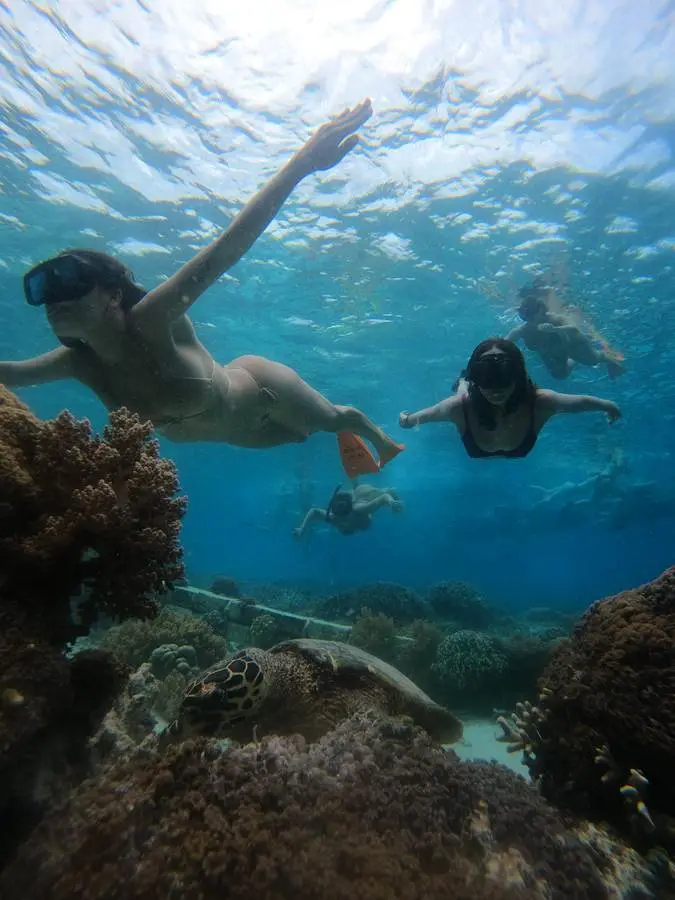
Pufferfish and coral reefs: an overlooked conservation story
Here is a small mystery for your next reef day. The pufferfish drifting past the coral carries one of the most famous toxins in the sea, and yet it did not make that toxin itself. Most divers photograph it once and swim on, but a global assessment found that some pufferfish species are in real trouble. So why do pufferfish matter for coral reef conservation? Because they are a quiet part of the reef food web, a few species are threatened, and almost nobody is watching them.
Reef conservation tends to have a fixed cast of stars: sharks, turtles, manta rays. Pufferfish rarely make that list. They are slow, round and a little comic to look at. But their story is truly underreported, and the research that does exist on this family of fish is worth a few minutes of your time.
A toxin that isn't really theirs
The first thing most people know about pufferfish is tetrodotoxin, the strong neurotoxin behind their scary reputation. It is also why Japan requires a strict licence to prepare fugu, the dish made from certain species. What fewer people know is that pufferfish do not seem to make the toxin themselves.
Research over several decades points to bacteria as the original producers. Scientists have isolated Vibrio strains from pufferfish intestines that produce tetrodotoxin in the lab, and other studies have found toxin-producing bacteria in several more groups. A review in the journal Marine Drugs concludes that the main route is a food chain that starts with marine bacteria and passes through small invertebrates up to the fish. The clearest evidence is almost funny. Pufferfish raised on toxin-free food, in tanks without toxic animals, are not toxic, and they become toxic when tetrodotoxin is added to their diet.
Scientists are honest that the details are not settled. Exactly how the toxin moves, is stored and leaves the fish's body is still being studied. But it is a lovely reminder that even a pufferfish's most famous trait is really a story about its relationship with the whole reef, not something it built alone.
Are pufferfish endangered? What the global data says
The most complete look at how marine pufferfish are doing worldwide is a 2018 paper by Emilie Stump, Gina Ralph, Mia Comeros-Raynal, Keiichi Matsuura and Kent Carpenter, published in Global Ecology and Conservation. The team assessed 151 marine puffer species against the IUCN Red List criteria, at a workshop held in Xiamen, China, in 2011.
Their results: about 77 percent of species were Least Concern, 15 percent were Data Deficient, which means there is simply not enough information to judge, and about 8 percent were threatened or Near Threatened. That 8 percent is small next to the numbers usually quoted for sharks or groupers, which is part of why pufferfish rarely appear in conservation news.
The 15 percent "Data Deficient" deserves a second look. The authors explain that confusion about the family's taxonomy, so not knowing exactly where one species ends and another begins, makes it hard to map where each one lives. In plain words: for about one in seven puffer species, we do not know enough to say whether they are fine.
Who is in trouble, and why
The study found two quite different groups that raise concern. Most of the threatened puffers are habitat specialists with small ranges, species tied to one short stretch of coast or reef. For them, the main pressure is habitat loss from climate change and coastal development, which shrinks the only home they have.
The second group is the genus Takifugu, the puffers behind the fugu trade. One species, Takifugu chinensis, was assessed as Critically Endangered, and four other Takifugu species as Near Threatened. These fish range widely, they are not specialists, but they are targeted by the international puffer trade. The authors found that the species of concern cluster along the coast of eastern Asia, from Japan to the South China Sea, with the most in the East China Sea, and they call for better fisheries management there.
You may read elsewhere that fugu catches in the region collapsed by some very large percentage over past decades. I could not confirm a specific figure from a source I trust, so I am not repeating one here. What the Red List assessment does show clearly is the direction: targeted fishing and shrinking habitat are the two pressures to watch.
A reef resident whose job is easy to overlook
Pufferfish are usually described as predators of hard-shelled invertebrates. Their strong, beak-like teeth crack prey that many other fish cannot. Some reef species are also reported to nibble on coral. I could not find a solid, recent source on how common that is or what it means for the balance of the reef, so please read it as an open question, not a fact.
What I can say honestly is that ecologists know much less about the role of pufferfish in reef food webs than about sharks, parrotfish or groupers. A reef that loses part of its puffers loses a link in the chain, and nobody has measured the ripples well. That is exactly the kind of quiet role that gets lost when all the attention goes to more charismatic animals.
The ethical layer: how to meet a pufferfish without harming it
None of this changes how to behave around a pufferfish. The guidance is the same as for any reef animal. On Ocean Calling retreats, pufferfish are never chased, touched, provoked or handled. A puffer inflates by gulping water to defend itself, and forcing that response for a photo stresses the animal and wastes energy it needs. Every encounter follows the briefing of vetted local dive professionals and the local marine park rules.
Good buoyancy and a calm, slow body matter more than any gear. A well-fitting low-volume mask and snorkel helps you stay relaxed and still at the surface, so you can watch instead of chase. And because sunscreen washes off in the water, many snorkellers choose a mineral sunscreen or simply cover up with a long-sleeved top. Our guide on how to snorkel without damaging coral goes through the basics in more detail.
It is also worth being honest about the travel itself. Flying to a reef has a real environmental cost, and watching a pufferfish does not cancel it out. What we can do is travel less often, stay longer, and choose operators who protect the places we visit.
Why this is worth noticing on a dive
So next time a puffer drifts past a reef wall, maybe look a little longer, before moving on to the next, more obviously dramatic sighting. Pufferfish conservation status changes a lot from species to species and region to region. A well-managed reef, where small invertebrates and the fish that eat them both have room to live, is a small, quiet sign that the wider ecosystem is working.
This kind of detail is why we spend time on the smaller, less obvious residents of a reef, not only the famous ones. We look at the bigger picture in our piece on why marine protected areas succeed or fail.
If noticing the quieter residents of a reef made you curious to experience it yourself, you can explore our upcoming retreats.
FAQ
Do pufferfish make their own poison?
The evidence suggests they do not. Tetrodotoxin seems to be made by marine bacteria, including Vibrio strains found in puffer intestines, and to reach the fish through its food. Puffers raised on toxin-free food are not toxic. The exact mechanisms are still being studied.
Are pufferfish endangered?
Most are not. A 2018 global assessment of 151 marine puffer species found about 77 percent Least Concern, 15 percent Data Deficient and about 8 percent threatened or Near Threatened. One fugu species, Takifugu chinensis, was assessed as Critically Endangered.
What threatens pufferfish most?
For small-range reef and coastal species, habitat loss from climate change and coastal development. For several Takifugu species, commercial fishing for the international puffer trade, especially around the East China Sea.
Is it safe to touch a pufferfish?
Please do not. Touching or provoking a puffer can make it inflate, which is a stress response, and handling any reef animal can harm it. Watch from a calm distance and follow your local guide's briefing.
Why is so little known about some pufferfish?
About 15 percent of the species assessed were Data Deficient. The study's authors point to unresolved taxonomy within the family, which makes it hard to know exact species ranges and therefore their status.
Wildlife encounters are never guaranteed and never forced. Ocean Calling works only with vetted, ethical local operators, and every animal is free to approach, or not, entirely on its own terms.
Sources & further reading
- Global conservation status of marine pufferfishes (Tetraodontiformes: Tetraodontidae), Stump E. et al., Global Ecology and Conservation 14: e00388, 2018 (James Cook University repository).
- Global conservation status of marine pufferfishes, abstract and full text, Old Dominion University Digital Commons, 2018.
- Review on the origin and accumulation of tetrodotoxin in pufferfish (food-chain hypothesis), PubMed Central, Marine Drugs, 2008.
- Production of tetrodotoxin by Vibrio strains isolated from pufferfish intestine, PubMed Central.
- Tetrodotoxin-producing bacteria: review of genera and evidence, PubMed Central, Marine Drugs, 2015.
Further reading on Ocean Calling: More from the journal · Wildlife & the law · See the retreats · Ocean Atlas
Find the retreat that fits you
Small groups of up to six guests, unhurried days and local experts. Tell us how you feel in the water and we will point you to the right trip.