
Reef-Safe Sunscreen Labels: The Ingredient Loopholes
You stand in a pharmacy before a beach trip and pick the bottle with a little coral and the words "reef safe" on the front. It feels like the right choice. But reef-safe sunscreen labels are not a regulated standard, so the front of the bottle can promise more than the back delivers. Here is what the loopholes hide, and how to read a bottle properly.
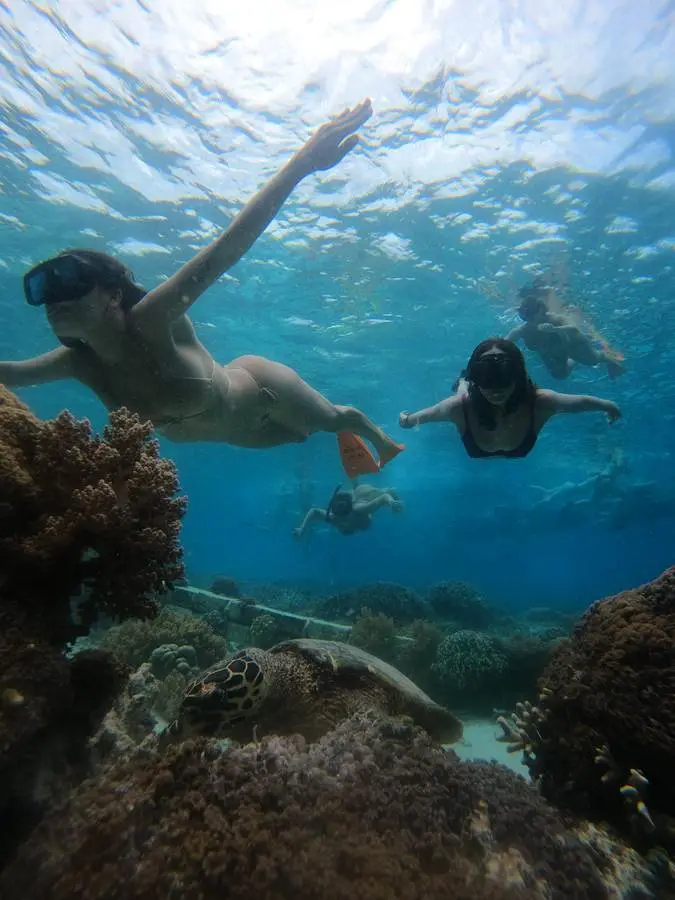
Sunscreen ingredients that still sneak past reef-safe labels
Can you trust a "reef safe" label? Not on its own. As far as we could find, the term has no legal definition, the bans that exist name only a few chemicals, and a bottle can be fully legal and still contain filters researchers worry about. The back label tells you much more than the front.
We have already written about what reef-safe sunscreen is and why greenwashing shows up so often in marine tourism. This page is narrower, and a little more annoying. Even when you know to look for "reef safe", the label does less work than you would hope. So let us go question by question.
Is "reef safe" a regulated term?
As far as I could find, no. In the United States there is no legal definition of "reef safe" or "reef friendly", and I found no agency that checks whether a product deserves the words. A brand can print them the way it prints "clean" or "natural": as a marketing choice, not a certified standard.
Dermatologists noticed this too. A research letter in the Journal of the American Academy of Dermatology, by Tsatalis, Burroway and colleagues, set out to evaluate sunscreens marketed as "reef safe", looking at their labels and at what they cost buyers. It was published in 2020 (volume 82, issue 4). I could not access the full text, so I will not quote its numbers. But the fact that it exists says a lot: the label was confusing enough that doctors studied it.
Which ingredients does research worry about?
The US National Ocean Service (part of NOAA) has listed sunscreen ingredients that may harm marine life once they wash off skin into the water. As reported by Dermatology Times in 2019, that list includes oxybenzone, benzophenone-1, benzophenone-8, OD-PABA, 4-methylbenzylidene camphor, 3-benzylidene camphor, nano-titanium dioxide and nano-zinc oxide. The organisms that may be affected go well beyond coral. Green algae, mussels, sea urchins, fish and dolphins are also named.
Some of the evidence is specific. A 2013 study by NOAA researchers and partners found that very low concentrations of benzophenone-2 can quickly kill juvenile corals. A 2016 paper in Archives of Environmental Contamination and Toxicology reported that oxybenzone (also called benzophenone-3) made young corals more likely to bleach, damaged their DNA and disrupted the growth of their skeletons.
Here is the honest complication. Other lists online also add octinoxate, octocrylene and avobenzone, and they do not all agree. Much of the evidence comes from laboratory tests, and how much of each chemical really reaches a reef depends on the place: how many swimmers, how much wastewater, how the water moves.
Why do the bans leave so much room?
Because they are narrow by design. Hawaii was the first US state to act. A 2018 law bans the sale of sunscreens containing oxybenzone or octinoxate without a prescription, in force since 2021. Hawaiian lawmakers then proposed adding avobenzone and octocrylene, with bill drafts from the 2021 session setting a start date of 1 January 2023. I could not confirm the final status of that addition, and one later version of the bill text even carries a far-future effective date. Please check the current Hawaii rule before you travel.
In Florida, the story went the other way. Key West passed a local ban on sunscreens with oxybenzone or octinoxate, due to start on 1 January 2021. But the state passed a law (SB 172) that stops cities and counties from regulating over-the-counter drugs and cosmetics, effective 1 July 2020, and that overrode the Key West ban before it began. Thailand, in 2021, announced a ban on reef-harming sunscreens in its national marine parks. Rules like these change, and different places name different chemicals, so check the current rule before you travel.
The bigger scientific picture is still open too. In 2022, the US National Academies of Sciences, Engineering, and Medicine reviewed 15 organic and two mineral sunscreen filters. Their report found there was not yet enough evidence to fully judge the environmental impact, and asked the US Environmental Protection Agency to carry out an ecological risk assessment, focusing on places with heavy recreational use or wastewater. I could not confirm whether that assessment has been finished.
Is mineral automatically the safer choice?
Mostly, with one catch: particle size. The National Ocean Service list names nano-titanium dioxide and nano-zinc oxide, not mineral filters in general. Particles called non-nano are larger. If a label does not say "non-nano", the particles may be small enough to be on the list of concern. The word "mineral" on the front does not tell you this. You have to read the ingredients, or the brand's own disclosure.
I also want to be fair. Sources do not fully agree on how safe non-nano minerals are for every marine organism. "Safer than the chemicals we know are a problem" is the honest description, not "harmless".
The ethical layer: the best sunscreen is the one you need less of
The quietest choice is to cover up. Clothing does not wash off into the water. A long-sleeve rash guard and leggings in the water, a hat and shade on the boat, and the midday hours spent out of the sun all mean you need much less product on your skin in the first place.
When you do use sunscreen, put it on well before you get in the water so it has time to set, and choose a lotion or stick instead of a spray, which is hard to aim on a windy boat. Some places ask for no sunscreen at all. For Kakaban's jellyfish lake in Indonesia, our page on why sunscreen is not allowed explains the local reasons.
At Ocean Calling we work with vetted local operators, our hosted retreats have six guests at most, and we never touch, chase or bait wildlife. We also try to be honest that the flight to a reef has a bigger environmental cost than any bottle. That does not make the bottle irrelevant, but it puts it in proportion.
What to check before you pack a bottle
Not the front label. The back one. First look for oxybenzone (benzophenone-3) and octinoxate, because these two have the most direct published evidence and are already banned in some places. Then look for the other names on the National Ocean Service list, like benzophenone-1, benzophenone-8, OD-PABA and the camphor filters. If you choose a mineral formula, check that it says "non-nano".
A short list of mineral options lives in our mineral sunscreen picks, but please read each ingredient list there with the same eyes, because the label rules are the same for everyone. Our reef-safe packing list for tropical ocean travel covers the rest of the bag.
None of this means becoming a chemist. It means treating "reef safe" the way you would treat "natural" on a food label: a claim worth a second look, not a guarantee. If this made you curious about experiencing the reef in a slower, gentler way, you can explore our retreats.
Questions people ask
Is "reef safe" a legal or certified term?
We found no legal definition in the United States and no agency that checks the claim. It is a marketing term, which is why a 2020 study in the Journal of the American Academy of Dermatology looked at products sold with it.
Which sunscreen ingredients should I avoid for the reef?
The ingredients named by the US National Ocean Service include oxybenzone, benzophenone-1, benzophenone-8, OD-PABA, 4-methylbenzylidene camphor, 3-benzylidene camphor, and nano forms of titanium dioxide and zinc oxide.
Does Hawaii ban reef-harming sunscreen?
Hawaii bans the sale of sunscreens with oxybenzone or octinoxate without a prescription, in force since 2021. Lawmakers proposed adding avobenzone and octocrylene, but we could not confirm the final status. Check the current rule before you travel.
Why didn't the Key West sunscreen ban take effect?
Florida passed SB 172, which stops local governments from regulating over-the-counter drugs and cosmetics. It took effect on 1 July 2020, before the Key West ban was due to start in 2021.
Is mineral sunscreen always reef safe?
Not automatically. The list of concern includes nano-titanium dioxide and nano-zinc oxide. Look for "non-nano" on the ingredient list. Covering up with clothing reduces how much sunscreen you need at all.
Is the science on sunscreen and coral settled?
No. A 2022 National Academies report found the evidence was not enough to fully judge the environmental impact and asked the US EPA for an ecological risk assessment.
Wildlife encounters are never guaranteed and never forced. Ocean Calling works only with vetted, ethical local operators, and every animal is free to approach, or not, entirely on its own terms.
Sources & further reading
- Hawaii State Legislature, 2021. SB132 SD2, relating to sunscreen (proposed avobenzone and octocrylene ban).
- LegiScan. Hawaii SB132, 2022 regular session, bill text.
- Happi, 2020. Florida lifts sunscreen bans.
- Florida Phoenix, 2020. Sunscreen battle pits Florida Republicans against Key West, Hawaii, FDA and members of Congress.
- Time Out Bangkok, 2021. Reef-harming sunscreens are now banned from all national marine parks.
- National Academies of Sciences, Engineering, and Medicine, 2022. Review of fate, exposure, and effects of sunscreens in aquatic environments.
- Practical Dermatology, 2022. National Academies call on EPA to study sunscreen effects on aquatic ecosystems.
- Marinet. Toxic chemicals in sunscreen creams cause major damage to coral reefs and ocean life (summary of the 2013 NOAA benzophenone-2 study and the 2016 oxybenzone study).
- Tsatalis, J., Burroway, B. et al., 2020. Evaluation of "reef safe" sunscreens: labeling and cost implications for consumers. Journal of the American Academy of Dermatology, 82(4).
- Dermatology Times, July 2019 (vol. 40, no. 7). Article on sunscreen and the environment, citing the US National Ocean Service list of ingredients.
Further reading on Ocean Calling: Reef-safe sunscreen guide · Greenwashing in marine tourism · More from the journal · Wildlife & the law · See the retreats · Ocean Atlas
Find the retreat that fits you
Small groups of up to six guests, unhurried days and local experts. Tell us how you feel in the water and we will point you to the right trip.