
Mauritius Sperm Whales: What a 2026 Assessment Found
Mauritius is one of the few places where sperm whales are not just passing through. Some of them seem to belong here. A new 2026 assessment shows a more complicated picture than one neat “resident population”, and it comes with a quiet warning.
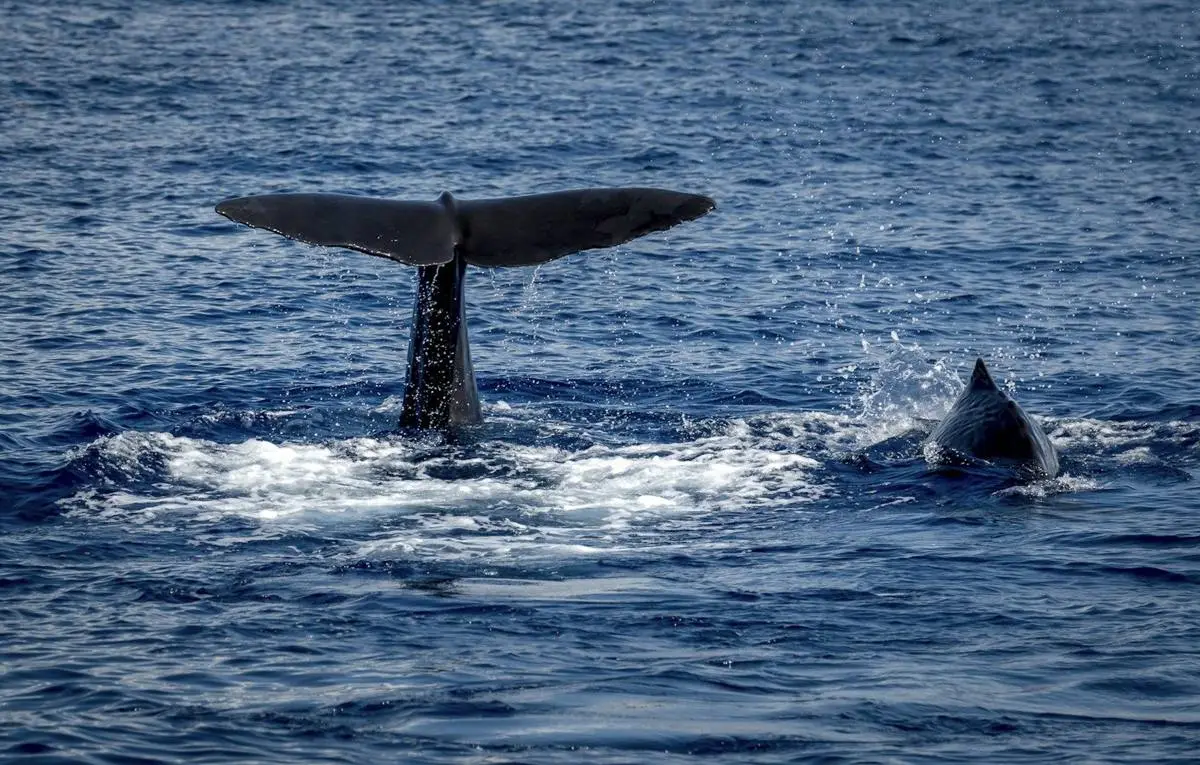
What did the 2026 assessment find? Several different kinds of sperm whale groups, and emerging signs of decline. The study combines research records collected between 2008 and 2024 in Mauritian and wider Mascarene waters. It identifies groups of females and young whales with different habitat patterns. Some seem nomadic, some are regional residents, and some are island specialists. The authors also raise conservation concerns, including emerging signs of decline.
What does “resident” mean for a sperm whale?
A resident animal is not tied to one reef. It can roam widely while still coming back to a particular island or region. Photo-identification lets researchers recognise individuals from their flukes and body marks, and then compare sightings over time.
Mauritian research has built a catalogue of sperm whales and their social units. The new assessment compares that history with observations from neighbouring Mascarene areas. This helps separate the animals that stay close to the islands from those that travel more widely.
Why does the new assessment matter?
A single whale sighting cannot tell us whether a population is stable. Long-term records can. They show how often individuals come back, whether social groups change, and whether the same animals are still found year after year.
According to its authors, this is the first population assessment of the resident subpopulation off Mauritius and the wider Mascarene region. It does not turn a concern into a final verdict. “Emerging signs” means the evidence calls for attention and ongoing monitoring. It does not mean the whales have vanished.
Researchers are continuing to add photo-identification data collected in 2025 and 2026. That next round matters. Population science is strongest when the record keeps growing.
Why Mauritian sperm whales are special
Sperm whales are the largest toothed whales. They dive deep to hunt squid and communicate with patterned sequences of clicks. They live in social groups that can last for many years.
The whales around Mauritius have even been studied for possible vocal clans and family relationships, which we explore in our article on their social lives.
What should a visitor do with this information?
Do not confuse “whales are seen here” with “a whale will be there when I arrive.” Wildlife is not an appointment. If you are planning an encounter, check the local rules, which can change. Choose a licensed operator. Avoid any activity that asks you to get in the water with whales. Wildlife encounters are unpredictable. Whale watching should always follow local regulations and experienced professional guidance.
The best reason to care about a resident whale population is a simple one. It lives in this ocean whether or not we are there to see it. Mauritius’ sperm whales are neighbours and ocean travellers. Learning who they are is one way to care about more than a sighting.
Questions people ask
What did the 2026 sperm whale assessment study?
It combines research records collected between 2008 and 2024 on sperm whales in Mauritian and wider Mascarene waters.
What movement patterns did it find?
It identifies groups of females and young whales with different habitat patterns. Some seem nomadic, some are regional residents, and some are island specialists.
Does “emerging signs of decline” mean the whales are disappearing?
No. It means the evidence calls for attention and ongoing monitoring. It is not a final verdict.
How do researchers recognise individual sperm whales?
They use photo-identification. They recognise individuals from their flukes and body marks, then compare sightings over time.
Wildlife encounters are never guaranteed and never forced. Ocean Calling works only with vetted, ethical local operators, and every animal is free to approach, or not, entirely on its own terms.
Sources & further reading
- Barteneva-Vitry et al. (2026), “Population Assessment of Sperm Whales in the Mascarene Region (Western Indian Ocean): Emerging Signs of Decline and Conservation Perspectives,” Marine Mammal Science
- IndoCet, “Sperm whale study in Mauritius waters” (monitoring update)
- Marine Megafauna Conservation Organisation
Further reading on Ocean Calling: Mauritius in the Ocean Atlas · Sperm whale · Whale conservation organisations · Sperm whales are not humpbacks
Swim with humpback whales in Moʻorea: an ethical whale retreat
Whale encounter retreat · Moʻorea, French Polynesia
Time in the blue, on the whales’ terms. September 2027. If you love whales, this is our whale retreat: small group, slow pace, on the animals’ terms.