
Sperm whale
Physeter macrocephalus
Sperm whales are the deep divers of the ocean, living in close family groups. With luck and patience, we may see one at the surface.
Vulnerable (IUCN, 2019) means it is at high risk of extinction in the wild.
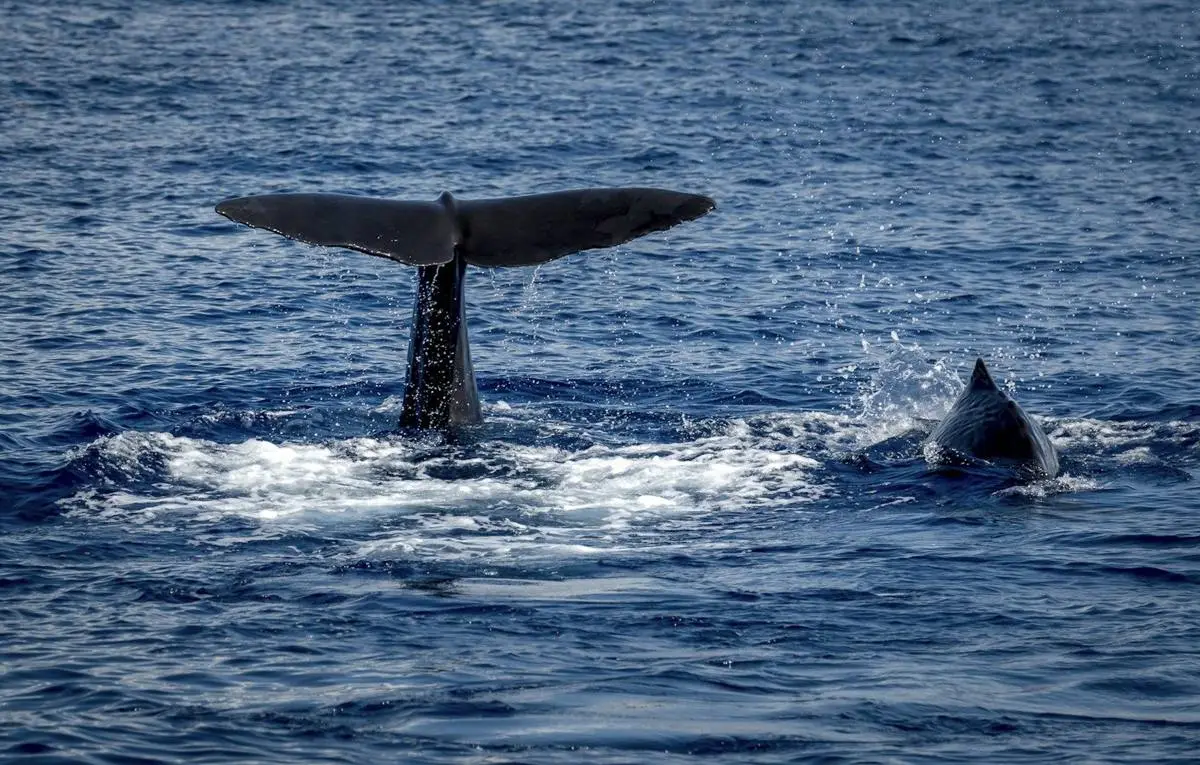
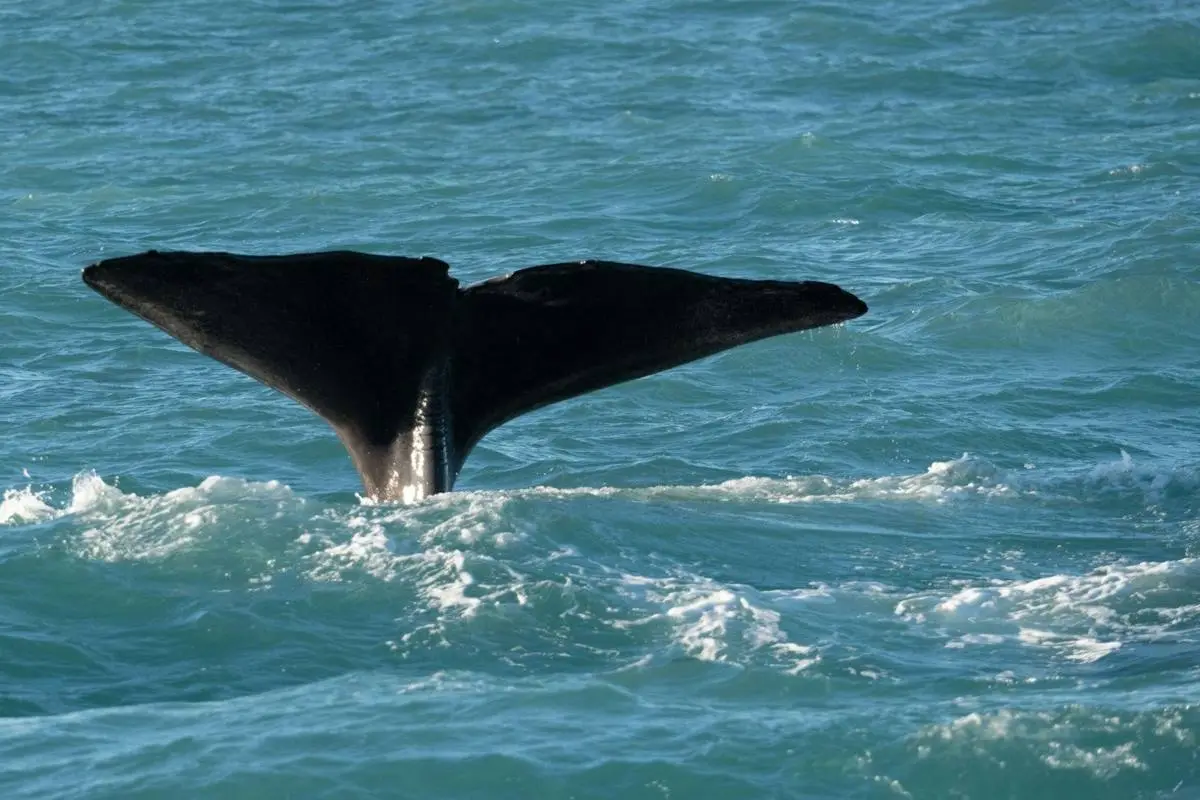


Photos show the species, not always the places on this page.
Length
Males about 15.8 m (52 ft); females about 12.2 m (40 ft)
Weight
Males about 41 tonnes (about 90,000 lb); females about 13.6 tonnes (about 30,000 lb)
Next to a person
An adult male is about 9 adults lying head to toe; a female about 7
What it eats
Mostly squid, plus sharks, skates and fish caught in deep water.
Around people
Calm, give space
How it lives
Sperm whales hunt on deep dives that often reach hundreds of metres, sometimes more than 1,000 m, and can last up to 45 minutes. Females and young live in close family groups, while young males leave and later roam more widely. Calves suckle by putting their lower jaw into a slit on the mother's body. Families talk with learned click patterns called codas, but what most codas mean is still unknown.
Where it goes
Adult males travel to cold, high-latitude waters to feed and come back to warm waters to breed, while females and young mostly stay in warmer seas all year. Some males make very long journeys, and photo matches have linked the same whale in places thousands of kilometres apart. In Timor-Leste, sperm whales are among the large whales that use the Wetar and Ombai straits in the October to December season.
Populations
Sperm whale social life differs strongly between males and females and between regions. The Mediterranean subpopulation is listed as Endangered. One of the world's few resident populations lives off Dominica's west coast, now protected inside a sperm whale reserve. In Timor-Leste they are confirmed in the Wetar and Ombai straits from October to December, and off Kaikōura, New Zealand, male sperm whales come close to the coast through much of the year.
Meet it respectfully
We watch from a boat and never swim with sperm whales unless the place has a legal permit system. We never crowd, touch, chase or block them, never separate mothers and calves, and we leave a group that dives, turns away or becomes restless. In Dominica, local law allows swimming only inside the Sperm Whale Reserve with a government permit, and no one may approach whales that are nursing, giving birth or disturbed. In the Azores and Madeira swimming with whales is forbidden, and Azores rules keep boats 100 m from whales with small calves. Local rules in Sri Lanka and Mauritius keep boats at least 100 m away and ban entering the water with whales, New Zealand requires boats to stay 50 m away and bans swimming with whales, and in French Mediterranean waters coming within 100 m of marine mammals is illegal. In US waters, NOAA guidance asks for at least 100 yards (91 m).
Fun fact
Tap the bulb to light it up.
Sperm whales sometimes take naps hanging upright in the water, for about 7% of their time on tags.
Clans living only 30 km apart barely mix their click 'dialects'.
The spermaceti organ in the head works as a lens for sound.
The blowhole sits on the left side of the head, so the blow angles forward and to the left.
Two male sperm whales tagged in Arctic Norway were followed all the way to warm breeding waters and back. Their trips lasted 175 and 180 days and covered more than 16,000 km each.
One male was photographed in Bleik canyon off Andøya, Norway, in September 2014 and again off Guadeloupe on 13 February 2023, at least about 7,800 km away.
When killer whales attack, sperm whales often form a 'marguerite': a circle at the surface with heads together and tails out. Off California, sperm whales left this circle to guide a pulled-away member back into it.
Source: Pitman et al., 2001, Marine Mammal Science, killer whale predation on sperm whales
When one small group of sperm whales was harassed by a killer whale, every sperm whale within at least 7 km charged towards it and joined a defensive formation.
Source: Pitman et al., 2001, Marine Mammal Science, killer whale predation on sperm whales
Southern Ocean sperm whales are estimated to release about 50 tonnes of iron a year in their faeces near the surface, feeding plankton and helping carry carbon into the deep sea.
Source: Lavery et al., 2010, Proceedings of the Royal Society B, iron defecation by sperm whales
Follow its journey
Choose a journey and watch it travel. Every line comes from satellite tracking or documented research, and the source is named.
StartEndJourney (the line joins documented areas; real paths vary)
Sperm whale in the Ocean Atlas
Places we have researched where this animal is recorded. It is never guaranteed, and some places are for watching from the boat only.
Travel with usComing soonTrusted referralExploringOn pause, story onlyEthics pass
Country colour: pink where we travel, blue where we are exploring or refer, grey for story only.
 Algeria
 American Samoa
 Angola
 Antarctica
 Argentina
 Australia
 The Bahamas
 Belgium
 Bermuda
 Brazil
 Brunei
 Cabo Verde
 Canada
 Caribbean Netherlands
 Chagos (British Indian Ocean Territory)
 Chile
Chile Colombia
 Comoros
 Cook Islands
 Costa Rica
 Curaçao
 Cyprus
 Democratic Republic of the Congo
 Denmark
 Dominica
 Dominican Republic
 Ecuador
 El Salvador
 Equatorial Guinea
 Falkland Islands
 Faroe Islands
 Fiji
Fiji France
 French Guiana
 French Polynesia
 Gabon
Gabon Germany
 Greece
 Greenland
 Grenada
 Guam
Guam Guinea-Bissau
 Haiti
Haiti Iceland
 India
India Indonesia
 Iran
Iran Ireland
 Israel
 Jamaica
 Japan
Japan Kenya
Kenya Kiribati
 Liberia
 Madagascar
 Malaysia
 Maldives
 Malta
Malta Marshall Islands
 Mauritania
 Mauritius
 Mayotte
 Mexico
 Micronesia (FSM)
 Mozambique
 Namibia
 Nauru
Nauru Netherlands
 New Caledonia
 New Zealand
 Niue
Niue Norfolk Island
 Northern Mariana Islands
 Norway
 Oman
Oman Pakistan
 Panama
 Papua New Guinea
 Peru
Peru Philippines
 Portugal
 Puerto Rico
 Réunion
 Russia
 Saint Barthélemy
 Saint Helena
 Saint Lucia
 Saint Martin
 Senegal
 Seychelles
 Solomon Islands
 Somalia
 South Africa
 Spain
Spain Sri Lanka
 Suriname
 Sweden
 Taiwan
 Tanzania
 Thailand
 Togo
Togo Tokelau
 Tonga
Tonga Türkiye
 Tuvalu
 United Kingdom
 United States
 Uruguay
 US Virgin Islands
 Vanuatu
 Vietnam
 Wallis and Futuna
 Western Sahara
 Yemen
YemenRead more about the sperm whale
Sources for this page
- NOAA Fisheries, 2026
- IWC, sperm whale
- Commonwealth of Dominica, Sperm Whale Reserve Act, 2025
- Timor-Leste Tourism, 2026
- Azores Regional Legislative Decree 9/99/A (FAOLEX)
- Mauritius, Tourism Authority (Dolphin and Whale Watching) Regulations 2012 (FAOLEX)
- IWC Whale Watching Handbook, New Zealand
- Préfecture maritime de la Méditerranée, protecting marine mammals
Facts checked 26 September 2026. Photos: Unsplash licence, or Creative Commons as shown on each photo.
Work in ocean travel?
We are always happy to hear from exceptional local operators, accommodation, conservation organisations and destination experts. If your work fits responsible, small-group ocean travel, we would love to learn more.
Partner with Ocean CallingShop with Ocean Calling
Visit the Ocean Calling storefront on Amazon.
As an Amazon Associate I earn from qualifying purchases. You are not only choosing products that respect the ocean, you are also helping us keep going: paying our local partners fairly and keeping our retreats ethical, sustainable and honestly priced for you. 💗