
When Whale and Wildlife Rules Are Unclear, We Wait
A missing paragraph in a government pdf is not a loophole to enjoy. It is a sign that the animals arrived before the paperwork. We do not build a retreat on that silence.
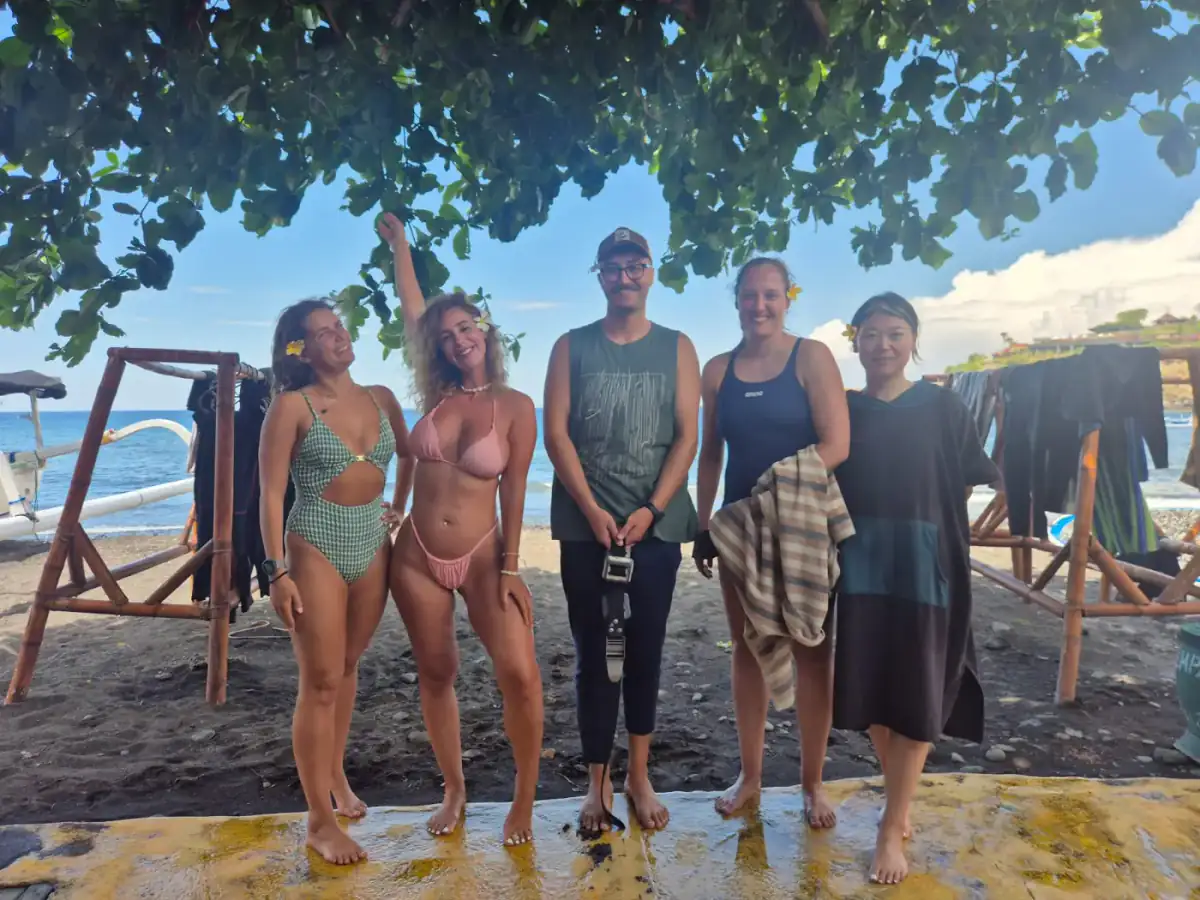
You scroll past a video of someone floating next to a whale in clear blue water. It looks calm and simple, and a small voice says: I want that. So what do we do when the wildlife rules in a place are still taking shape? We wait. We write about the place, we may watch from a boat, and we do not take deposits for an in-water encounter until a clear rule exists and we can show you why it is clear.
Travellers meet this gap all the time. A skipper says swimming is fine. A forum agrees. The ministry page is three years old and only talks about fishing. Meanwhile, a calf is trying to rest. We treat that gap as a stop sign.
Possible is not the same as allowed
A whale may be there, and a local boat may advertise a swim. Those two facts still do not tell us whether Ocean Calling should offer it. Biology tells us what is possible. Only a clear rule, a named permit holder and a safe way of working tell us what is allowed.
A video cannot tell us who holds permission for that activity, for which species, in which place and season, with how many people in the water, and under what conditions. So before we offer anything, we want to see it in writing: the current government rule, the permit for that exact activity, who enforces it, and which rules apply to the boat and which to people in the water. And we ask the local team a very human question: what will you do when the animal changes its behaviour? A post from another destination, or a licence for a different activity, cannot answer any of this.
What does a gap in the rules look like?
There are really three kinds of gap. The first is no rule at all: the animals are there and the law has not caught up. The second is a voluntary code, written by an association or a village, with no legal force. The third is the hardest to see: a rule exists, but sources disagree about what it says, or an operator reads it very generously.
Mauritius is a good example of the third kind. The legal reference I found is the Tourism Authority (Dolphin and Whale Watching) Regulations 2012. A summary says paid operators need a licence from the Tourism Authority, and that the rules cover how boats approach and prohibit entering within a set range of the animals. Operator listings all say swimming with whales is prohibited, while dolphin swimming has conditions such as no touching, no feeding and a limit on swimmers. In 2024, Radio Free Asia described a clampdown on whale-chasing there.
Some listings give extra figures, like a 200 metre distance or a morning-only window for dolphins. I could not confirm those against the regulation text, so I do not repeat them. When a rule is this blurry, we do not look for the generous reading. We say no, and we explain why in swimming with whales in Mauritius and why Ocean Calling does not offer whale swims there. Check the current rule before you travel.
The Cook Islands: rules still being written
The Cook Islands show the first kind of gap, and how it starts to close. Humpback whales visit in the southern winter, roughly from July to October. In 2022, the local environmental group Te Ipukarea Society wrote that, unlike some other Pacific countries, the Cook Islands had no laws or regulations to protect their whale visitors, and suggested following other Pacific nations.
Since then, things have started to move. In August 2025, RNZ reported that new guidelines for responsible whale watching and swimming were being developed, led by the Aitutaki Island Government with Cook Islands Tourism, the National Environment Service, the Ministry of Marine Resources, SPREP and local operators. Some related rules may already exist inside the Marine Resources, Marae Moana and Maritime Transport Acts. Later, Cook Islands News reported that Aitutaki had formed a first-response committee to set operational guidelines for whale watching and swimming, after activities there were halted.
There is a bigger idea too. In June 2025, at the United Nations Ocean Conference, the Prime Minister announced the intention to create Ra’ui To’ora, a Dynamic Ocean Protection Zone for whales. It would give seasonal protection to the endangered Oceania sub-population of humpback whales across more than 400,000 square kilometres of ocean. The government called it a proposal, with governance and implementation still under discussion. In 2025, Cook Islands Tourism also said that, to the best of its knowledge, there was not one formal local guideline for whale watching or swimming operations. The big picture and the rules on the water do not always arrive at the same time. This was the situation reported in 2025, and guidelines may have developed since.
A code is a hope, a law is a limit
Okinawa’s Kerama Islands show the second kind of gap. The Ministry of the Environment of Japan says the Zamami and Tokashiki whale watching associations put self-regulatory guidelines in place to protect humpback reproduction. These are association rules, set up by people who care. A village deputy mayor described a November 2025 agreement between the two associations as a step toward giving humpbacks a legal status under Japan’s Ecotourism Promotion Act, but I found no evidence that this is in force. Read more in Okinawa’s humpbacks: a code is not the same as a law.
What does research say about voluntary codes? Mostly case studies from single places, with no clean comparison against regulation, so I hold it lightly. The IWC Whale-watching Handbook says voluntary codes can work for a while, that competition between operators often wears them down, and that monitoring and enforcement are what plans most often lack. A 2006 thesis in Newfoundland found operators followed the voluntary code on only about a quarter of trips. In Johnstone Strait, in British Columbia, adherence to voluntary guidelines stayed fairly low. In Iceland, boats kept the recommended distance in Skjálfandi Bay, but encounters often lasted longer than the recommended 30 minutes.
None of this means codes are bad, or that people who follow them are careless. It means a hope needs someone to check it. That is why our sentence is short: a voluntary code is a hope, a law is a limit, and we sell limits.
Rules grow, and waiting is not the same as never
A rule can arrive. On the Great Barrier Reef, according to the Minke Whale Project, the dwarf minke whale swim industry wrote a voluntary code in 1999. In 2003 the Marine Park Authority capped it and gave permits to nine operators. The current code dates from 2008, and permits depend on following it and contributing to standard monitoring. I describe how it works in holding the rope on the reef.
Dominica shows a law arriving. The island is known for its sperm whales. On 14 October 2025, its parliament approved a bill to create a Sperm Whale Reserve along the western coast, reported at about 923 square kilometres in the Act’s schedule (earlier reports said 788). According to the government, the reserve will regulate whale watching, diving, recreational fishing, marine research and eco-tourism, and the bill prohibits unregulated swim-with-the-whale tours. A Sperm Whale Reserve Board will oversee it, with a Reserve Office, a Chief Whale Officer and rangers. This is a strong step for the whales, and it makes the practical rules for visitors matter even more. We look at the details in Dominica’s Sperm Whale Reserve: what the 2025 law changes.
So a place can move from wait to watch, or from watch to a careful swim, once the file exists. I would not want to guess when. And I would not want to announce a date I cannot defend.
What waiting looks like at Ocean Calling
Waiting does not mean staying silent. We can still write about the place, clearly labelled as information, not a trip, and we can list it in the Atlas as exploring. We do not put dates, deposits or a booking promise behind an in-water encounter there. If a guest asks, we say so in one sentence instead of hiding the uncertainty in brochure language.
Who decides? I do, using the destination research and the operator scorecard, not a viral clip. Before I say yes to a place I ask plain questions. Is there a written rule? Who enforces it? How many people go in at a time? What happens when the animal does not come?
That can feel frustrating when an experience looks so beautiful. We still believe it is the fair way to protect both our guests and the animals. Sometimes the most responsible choice is not to go in the water at all. Waiting is also the other side of what we do offer: our Moʻorea whale groups meet humpbacks under local rules, and we keep them small. Our other pieces on this are when whale tourism rules are still taking shape and Madeira’s rope dolphin observation.
The ethical layer: who pays for a gap
The animals pay first. A mother whale resting with her calf cannot ask a boat to stay back. Our short guide on why whale rules get stricter around mothers and calves explains why the youngest are the most exposed.
Local communities can get caught in the middle too. When one boat starts to offer a swim, others may feel pressure to follow, and the careful operators who waited can lose out. A waiting list is not a punishment for a place. It is our way of saying we would rather arrive late and still be able to look a local skipper in the eye.
Travel itself has a cost, and I do not forget it. A flight adds carbon, so a trip needs to be worth it.
What this means for you
If an advert is prouder of the word ethical than of its permit number, walk away. Read how we read those ads. Then pick a coast where the rule is boring and specific. Ask who issues the permit, what year the rule is from, and what happens if the animal does not show.
If you visit a place where whale rules are still being written, choose the most careful option. Watch from the boat. Keep a generous distance. Never let a boat drive at a whale or cut across its path, and give mothers and calves even more space. The whale decides how close the day becomes, not us. If the answer about permits is vague, or a swim is offered with no clear framework behind it, it is fine to say no. Our guide on how to choose an ethical whale swim operator has more questions to ask. Wildlife encounters are unpredictable. Whale watching and swimming should always follow local regulations and experienced professional guidance.
While you wait, there is plenty to enjoy. A low-volume mask and snorkel and a rash guard are simple tools for a reef day, and a roll-top dry bag keeps your phone and a warm layer dry on a small boat, so your hands are free and your eyes stay on the water. None of this makes a place ethical. Only the rule and the operator do that.
If this made you curious to experience the ocean with us, you can explore our small-group retreats, where the rule in each place is written down and nobody is asked to do more than they want.
Questions people ask
Is waiting the same as never?
No. A place can move from wait to watch, or from watch to a careful swim, once the file exists.
What do you do in the meantime?
Boat watching, reefs, freediving, good food, good sleep. The ocean is bigger than one product.
Who decides?
Rocío, using the destination research and the operator scorecard, not a viral clip.
Are voluntary codes always bad?
No. Some work for a while. The research I found is mostly single-site case studies, and it points to better results when monitoring and enforcement exist. A code without checks is a hope.
Is swimming with whales allowed in Mauritius?
Operator listings say it is prohibited, and the 2012 Tourism Authority regulations govern whale and dolphin watching there. Some listed details could not be confirmed, so we do not offer it. Check the current rule before you travel.
Can I swim with whales in the Cook Islands?
Guidelines for whale watching and swimming were reported as still being developed in 2025. Ocean Calling does not offer whale swims there while the framework is not clear.
Is swimming with sperm whales allowed in Dominica?
Dominica’s 2025 Sperm Whale Reserve bill prohibits unregulated swim-with-the-whale tours and will regulate whale watching. Check the current rules and permits for the exact activity before you book anything.
How can I tell if a rule is real?
Ask for the permit number, the issuing authority and the year of the rule. If you cannot find a written rule, or an operator reads it generously, treat it as a stop sign.
Wildlife encounters are never guaranteed and never forced. Ocean Calling works only with vetted, ethical local operators, and every animal is free to approach, or not, entirely on its own terms.
Sources & further reading
- Mauritius, Tourism Authority (Dolphin and Whale Watching) Regulations 2012, GN (summary on FAOLEX / UNEP LEAP)
- Radio Free Asia, 2024. Mauritius clamps down on social media whale-chasing craze
- Ministry of the Environment, Japan. Kerama Shoto National Park, efforts
- IWC Whale-watching Handbook, Monitoring and enforcement
- Corbelli, C., 2006. Thesis on whale-watching in Newfoundland, Memorial University of Newfoundland (voluntary code compliance)
- Being Whale Wise: the effectiveness of whale watching guidelines in Johnstone Strait, British Columbia (Duke University)
- The effectiveness and potential improvements of a voluntary code of conduct for whale-watching in Iceland (FAO AGRIS record)
- Minke Whale Project, Code of Practice and swim-with-whales endorsed operators
- Great Barrier Reef Marine Park Authority, 2008. Code of Practice for dwarf minke whale interactions
- RNZ, 2025. Cook Islands takes step toward responsible whale tourism with new guidelines in development.
- Te Ipukarea Society, 2022. Everything whale be alright.
- Office of the Prime Minister, Cook Islands, 2025. Cook Islands proposes world-first Dynamic Ocean Protection Zone for whales.
- Cook Islands News, 2026. Aitutaki forms committee to set guidelines for whale tourism.
- Office of the Prime Minister, Dominica, 2025. Dominica Parliament approves historic bill to establish world’s first Sperm Whale Reserve.
Further reading on Ocean Calling: Okinawa: a code is not a law · Mauritius whale swims · Japan in the Atlas
Find the retreat that fits you
Small groups of up to six guests, unhurried days and local experts. Tell us how you feel in the water and we will point you to the right trip.