
Mauritius Sperm Whales Have Social Lives, Not Just Flukes
A sperm whale lifts its tail and slips down into the deep. For us, it looks like a goodbye. For researchers in Mauritius, that tail is a name tag, and it has opened a door to a whole social world below the surface.
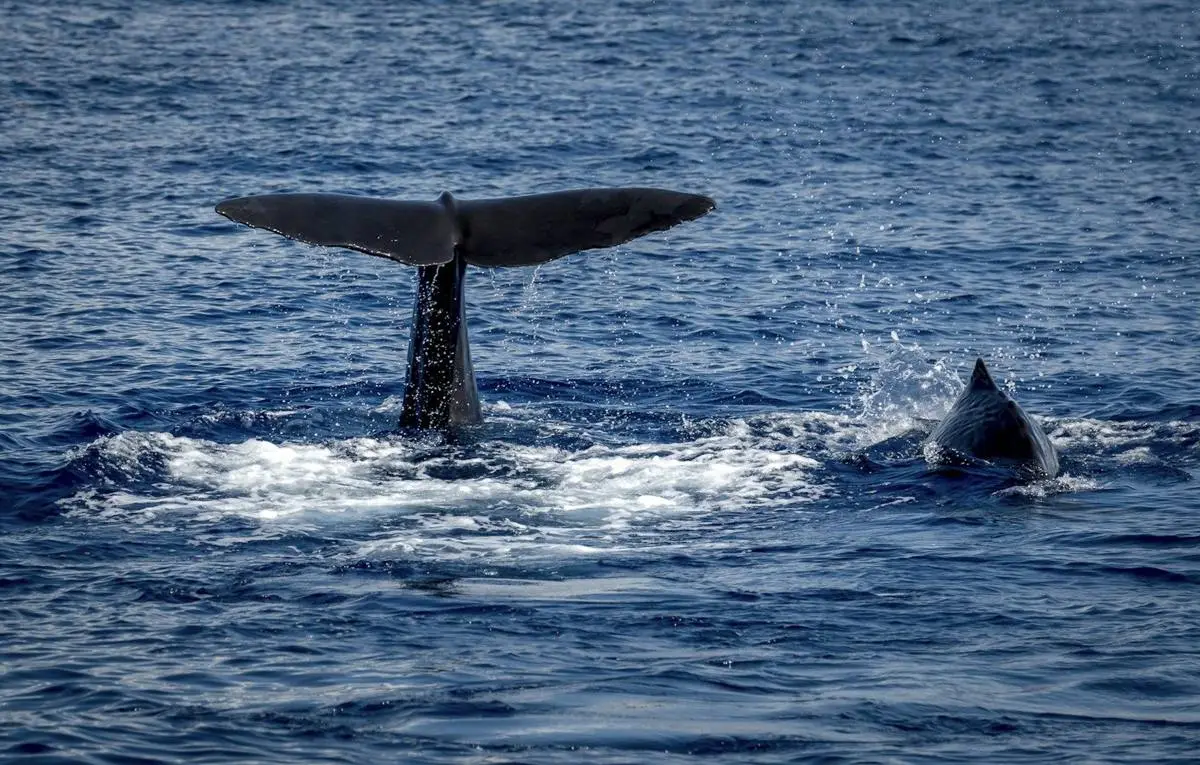
Do sperm whales in Mauritius live in families? Partly, yes. Researchers use the markings on a sperm whale’s tail to recognise individual whales, and in Mauritius those identities have helped show how the whales live together.
Long-term surveys around the island have photo-identified around one hundred sperm whales. Studies have combined photo-ID, underwater observations, sound recordings and genetic information. They found evidence of social units and possible vocal clans.
What is a sperm whale social unit?
Female and young sperm whales often travel in stable groups, and their relationships can last for years. Researchers recognise individuals by the patterns on their flukes and other marks.
One Mauritius study looked at a stable social group using photo-ID and genetic data. It found evidence consistent with a matrilineal group, which means a family network built around related females. It also pointed to a likely case of an unrelated female who had joined the unit.
Clicks with a cultural signature
Sperm whales communicate with patterned sequences of clicks called codas. Researchers compared the codas used by different Mauritian groups and suggested that more than one vocal clan may live in the area.
The authors asked for caution, because the samples were different sizes. That caution matters. Possible cultural patterns are exciting, but the recordings do not let us translate a whale conversation word for word.
We can say there are distinctive patterns worth studying. We should not claim to know what the whales are saying.
Why social science matters for conservation
A whale population is more than a number. It is individuals, relationships, movements and habitats. If certain social units use the same waters again and again, changes in boat traffic or habitat can affect the lives of whales that researchers already know by name.
The 2026 Mascarene assessment adds a wider view of the population. It includes island specialists, regional residents and more nomadic whales. That makes the story of “the Mauritius whales” richer than one fixed group. To learn more, see our sperm whale page and our list of whale conservation organisations.
The next time you see a fluke
A fluke photo may feel like a quick snapshot. But researchers can compare it with a catalogue and discover that the same whale was seen years before. That is how a short meeting becomes part of a much longer record.
If the whale does not show its tail, that is fine too. It is communicating, diving and living on its own terms. Wildlife encounters are unpredictable. Whale watching should always follow local regulations and experienced professional guidance. And if you meet a whale at sea, remember there may be a whole history of family, neighbours and sound beneath that one moment at the surface.
Questions people ask
How many sperm whales have been identified off Mauritius?
Long-term surveys around the island have photo-identified around one hundred sperm whales.
Are sperm whale groups always families?
Not only. One Mauritius study found evidence consistent with a matrilineal group, but also a likely unrelated female who had joined the unit.
Do scientists know what sperm whale clicks mean?
No. Researchers can describe distinctive coda patterns and suggest that more than one vocal clan may live in the area. The recordings do not allow a word-for-word translation.
Why use photos of tails?
The markings on the fluke help researchers recognise individual whales and compare new photos with a catalogue of earlier sightings.
Wildlife encounters are never guaranteed and never forced. Ocean Calling works only with vetted, ethical local operators, and every animal is free to approach, or not, entirely on its own terms.
Sources & further reading
- “Kin relationships in cultural species of the marine realm: case study of a matrilineal social group of sperm whales off Mauritius,” Royal Society Open Science.
- Huijser et al. (2020), “Vocal repertoires and insights into social structure of sperm whales in Mauritius,” Marine Mammal Science.
- 2026 Mascarene sperm whale population assessment, Marine Mammal Science.
Further reading on Ocean Calling: Mauritius in the Ocean Atlas · Sperm whale in the Ocean Atlas · Whale conservation organisations · Sperm whales are not humpbacks
Swim with humpback whales in Moʻorea: an ethical whale retreat
Whale encounter retreat · Moʻorea, French Polynesia
Time in the blue, on the whales’ terms. September 2027. If you love whales, this is our whale retreat: small group, slow pace, on the animals’ terms.