
Ethical Diving in Egypt's Red Sea: What It Looks Like Now
A reef newly protected in December 2025, corals that seem to remember an ancient heat, and the small choices that decide how we dive it today.
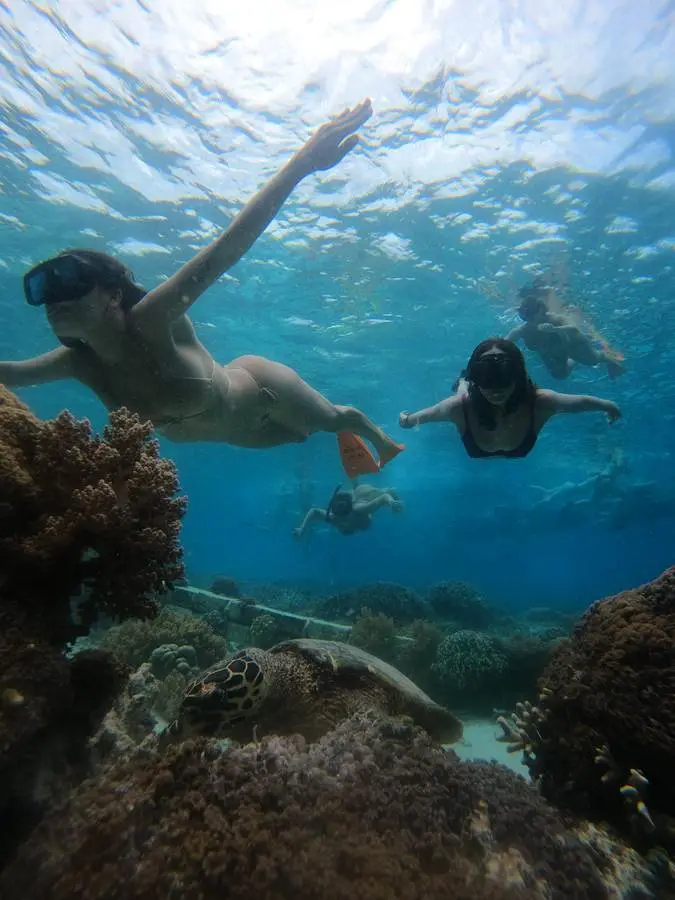
For many divers, Egypt's Red Sea feels like an old friend. Hurghada, Sharm el-Sheikh, the liveaboards out to the Brothers and Daedalus. Familiar, reliable, always there. So what has changed, and what does ethical diving in Egypt's Red Sea look like now?
Two things changed. In December 2025, Egypt placed its Great Fringing Reef under full legal protection. And scientists keep finding that the corals of the northern Red Sea handle heat unusually well. Ethical diving here today means choosing operators who work inside that new framework: moorings instead of anchors, respect for zoning, and no touching.
Is Egypt's Red Sea reef protected now?
Yes, on paper, and very recently. In early December 2025, Egypt's Cabinet approved the Great Fringing Reef as a protected area. This is the coral system that runs along much of the country's Red Sea coast. HEPCA (the Hurghada Environmental Protection and Conservation Association) announced the decision on 6 December 2025.
Egyptian Streets reported it as Prime Ministerial Decree No. 4419 of 2025, dated 4 December. The decree sets the reserve boundaries on official maps and asks the governors of the Red Sea and South Sinai to oversee management. HEPCA's chief scientist, quoted in that report, said the decree gives a legal framework under Egypt's 1983 law on nature protectorates.
Mission Blue, which named the reef a Hope Spot, reports that about half of it was already inside existing protected areas. The new step covers the rest. And the stakes are real: the Global Fund for Coral Reefs estimates that coral reef tourism here is worth about 7 billion US dollars a year. It also describes a UN-backed fund working out how to pay for the protection in practice.
This is all very new and still being put in place. Protection on paper and enforcement on the water are two different things, and the Global Fund for Coral Reefs itself says the next challenge is making the protection hold. So the honest takeaway for a diver is this. The legal framework for ethical diving in Egypt's Red Sea is better than before. Choosing operators who visibly work within it now supports a real, named conservation effort, not a vague sustainability claim. Check the current rules for any marine park you visit before you travel.
Why the northern Red Sea matters to coral science
The northern Red Sea keeps appearing in coral research because its corals seem unusually heat-tolerant. KAUST (King Abdullah University of Science and Technology) reports that Red Sea corals are thought to have gained high temperature tolerance around 7,000 years ago. To get in, they had to pass a thermal barrier of about 32 °C at the southern entrance to the sea. Corals that could not take the heat did not make it. The survivors are said to keep that "evolutionary memory". KAUST is careful to add that this is hard to confirm without consistent bleaching data.
Here is what has been measured. A 2017 study led by Eslam Osman found that corals in the northern Red Sea did not bleach during the 2015 to 2016 El Niño, even under high heat stress. Corals in the central Red Sea, by contrast, are close to their thermal limits. Researchers describe the northern safety margin in different ways: around 5 °C in one KAUST account, and 4 to 7 °C in Osman's later estimate. A 2022 paper by the same group also asks whether one bleaching threshold can apply to the whole sea. So the science is promising, but the numbers are still being refined.
Heat tolerance is good news. It is not immunity. Overfishing, pollution, coastal construction and tourism pressure still hurt a reef that can survive warmer water. Heat resistance may buy the northern Red Sea some time against climate change. It does not protect it from a careless fin kick, a dropped anchor or a hotel built on the shoreline.
What ethical diving looks like here, in practice
Beyond the big news, the habits that matter in the Red Sea are not exotic. They are the standard low-impact diving practices, used on every single dive.
Moorings, not anchors. An anchor dropped on coral breaks in seconds what took decades to grow. It is also one of the easiest kinds of reef damage to prevent. An operator that ties onto a mooring buoy, or anchors only on sand, makes a small choice every day that you can actually check. Our piece on what happens to a reef when anchors drop in the wrong spot explains why it matters so much.
No touching, standing or collecting. This is reef etiquette everywhere. In a narrow, enclosed sea it weighs even more, because a damaged patch of reef cannot easily be replenished from far away. Good buoyancy is the real skill here, and our guide on how to snorkel without damaging coral covers the basics we use everywhere.
Less cream in the water. The Egyptian sun is strong all year. A long-sleeved rash guard covers most of your skin, and a mineral sunscreen for the rest is the usual advice.
Samadai, or Dolphin House: wildlife tourism with real limits
The Red Sea already has a working example of regulated wildlife tourism. Samadai Reef, known as Dolphin House, near Marsa Alam, is a resting place for spinner dolphins. After heavy overuse, visits were suspended in 2003. From 2004 the site reopened as a special protected area with zoning, time limits, permits, approach guidelines and a daily cap on visitors, according to HEPCA and case studies collected by the International Whaling Commission.
HEPCA's booklet describes three zones. Zone A, the inner lagoon where the dolphins rest, is closed to people. Zone B is for swimmers and snorkellers only, with no speedboats. Zone C is for mooring and diving. The plan sets a maximum of 10 boats, 175 snorkellers and 100 divers, with snorkel-only boats from 10am to 2pm and diving boats from 9am to 3pm. A diving report adds that snorkellers in Zone B wear life vests and must not dive down or touch the dolphins. These figures come from the original plan and may have changed, so check the current rules with a licensed Marsa Alam operator before you go.
Whether or not you ever visit Samadai, the model teaches something. A wild dolphin population that many people want to see, protected by hard limits instead of good intentions. The dolphins may come close, or they may not appear at all, and that has to be fine.
Wildlife encounters are unpredictable. Snorkelling near dolphins should always follow local regulations and experienced professional guidance.
Who you dive with is the biggest choice
Supporting the people doing the work is the most concrete form of ethical diving here. HEPCA is one of the organisations that pushed for the new protection, and it runs a dedicated conservation project for the Great Fringing Reef. Choosing an operator that follows marine park rules, briefs you about distance from wildlife and uses moorings says more than any single habit in the water.
And the honest part. Flying to Egypt has a real carbon cost, and a reef economy this large brings its own pressure of boats and divers. Fewer, slower trips, small groups and longer stays in one place reduce that pressure a little. That is how we try to plan.
When to go. The Red Sea is dived all year thanks to warm water, though visibility and sea conditions change by site and month. Ask a current, licensed dive centre for seasonal advice, because rules and conditions are exactly the kind of details that go stale quickly. What stays the same is the framework above: moorings over anchors, respect for zoning like Samadai's, no touching, and a preference for operators who are part of the conservation effort, not simply diving on top of it.
Egypt's Red Sea has gone from "a reliable, well-known dive destination" to a newly protected reef system that matters to science. That is a different reason to choose it than a few years ago, and a different responsibility for anyone diving it now. Our Egypt Ocean Atlas page gathers more about the country. If this made you curious about the ocean trips we run, you can explore our retreats.
Questions people ask
Is Egypt's Red Sea reef protected now?
Yes. In December 2025, Egypt's Cabinet approved the Great Fringing Reef as a protected area. Reports name it Prime Ministerial Decree No. 4419 of 2025. It is still being put in place, so check the current rules before you travel.
Why are northern Red Sea corals heat-tolerant?
Researchers think the corals' ancestors passed through a very warm barrier at the sea's southern entrance thousands of years ago, so only heat-tolerant corals settled. Northern corals did not bleach in the 2015 to 2016 El Niño, but this does not protect them from local damage.
What are the rules at Samadai (Dolphin House)?
HEPCA's plan, in place since 2004, uses three zones, with the dolphins' resting lagoon closed to people, and caps visits at 10 boats, 175 snorkellers and 100 divers during set hours. Figures may have changed, so check with a licensed operator.
How do I choose an ethical dive operator in Egypt?
Look for operators that use mooring buoys, follow marine park zoning, brief you about not touching or chasing wildlife, keep groups small and say honestly that sightings are not guaranteed.
Is the Red Sea good for diving all year?
The water is warm all year and diving runs all year, but visibility and sea conditions vary by site and month. Ask a local licensed dive centre for current seasonal advice.
Wildlife encounters are never guaranteed and never forced. Ocean Calling works only with vetted, ethical local operators, and every animal is free to approach, or not, entirely on its own terms.
Sources & further reading
- HEPCA, 2025. Great Fringing Reef declaration.
- Egyptian Streets, 2025. Report on Prime Ministerial Decree No. 4419 of 2025 protecting the Great Fringing Reef.
- HEPCA. Samadai Dolphin House management booklet.
- International Whaling Commission, Whale Watching Handbook. Case study: Egypt, Samadai Reef.
- KAUST Discovery. Northern Red Sea reefs resist bleaching in warming seas.
- Eladawy, A., Osman, E.O. et al., 2022. Thermal refugia against coral bleaching throughout the northern Red Sea. Frontiers in Marine Science.
- Mission Blue. Egypt's Great Fringing Reef Hope Spot to receive full government protection.
- Global Fund for Coral Reefs. UN-backed fund is racing to pay for Egypt's newly protected coral reef.
- PANORAMA Solutions. Creating sustainable tourism at the Samadai Dolphin House in Egypt.
- HEPCA. The Great Fringing Reef of the Egyptian Red Sea (project page).
Further reading on Ocean Calling: Small-group ocean retreat in Egypt · What to pack for a Red Sea freediving trip · Red Sea vs Philippines diving · Egypt · More from the journal · See the retreats · Ocean Atlas
Find the retreat that fits you
Small groups of up to six guests, unhurried days and local experts. Tell us how you feel in the water and we will point you to the right trip.
Explore in the Ocean Atlas
Places in this article