
Anchor Damage on Coral Reefs: What Really Happens
Anchor damage on a coral reef takes seconds and can last for decades. The fix is simple: use a mooring buoy, or anchor on clear sand far from coral. Here is what the research says, and what to ask your boat crew.
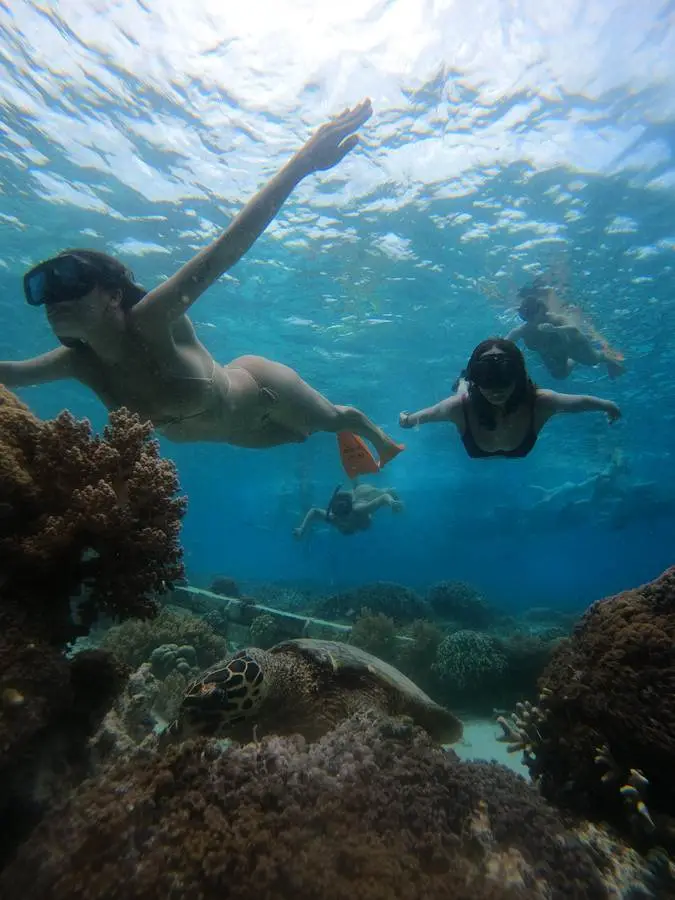
The sound nobody hears
Imagine a small boat arriving at a beautiful dive site. The skipper is friendly, the water is clear, and the anchor goes over the side with a soft splash. If it lands on sand, not much happens. If it lands on coral, something breaks, and nobody on deck hears it. Then the wind turns the boat, and the chain drags behind it across the reef.
That is anchor damage. It is one of the least dramatic kinds of reef damage, and one of the easiest to avoid. A small note on honesty first. The numbers below come from published studies and from NOAA’s own sanctuary pages. For one study I could only read the abstract, and I say so where it matters. If you want to quote these numbers, please read the originals.
Why coral cannot just shake it off
Most reef-building corals grow slowly, from millimetres to a few centimetres a year. The big, complex colonies that anchors usually hit are among the slowest to recover once they break.
In 2023, Mason, Bozec and Mumby from the University of Queensland tested this with computer simulations, published in Marine Pollution Bulletin. They modelled four coral assemblages, meaning four different mixes of coral types, and asked how much anchoring by small to medium recreational boats each one could take. The answer was between zero and about 3.1 anchor strikes per hectare per day, depending on the mix. In simple words: some reefs can take almost no anchoring before the damage grows faster than the recovery.
The same study also asked what protection is worth. According to the abstract, even partly reducing a very mild level of anchoring, about 1.17 strikes per hectare per day, gave median gains of 2.6 to 7.7 percent absolute coral cover under the low-emissions climate scenario (RCP2.6). The benefit changed over time and between climate models. So there is hope here, with a sober side: protecting a reef from anchors helps, and it helps most when the reef is not also pushed hard by heat. It is a model, not a real reef watched over time, so I read it as a direction, not a promise.
How long does anchor damage on a coral reef last?
Sometimes much longer than a human life. A 2025 study in Ecology and Evolution by DeCarlo and colleagues, titled “A Ship Grounding Over a Century Ago Left a Lasting Channel Among Corals”, looked at a reef in northeastern Brazil. Using several lines of evidence, including aerial images, the authors concluded that a ship grounding more than a hundred years ago left a semi-permanent sand channel through the corals. It has not really recovered. This is an extreme case, a whole ship and not one small anchor. But the lesson is clear: when the physical structure of a reef breaks, it does not simply grow back into the same shape.
Coral can settle again on a damaged surface over years to decades. What takes longer is the three-dimensional shape: the overhangs and cracks where fish and small creatures hide. So the loss is not only coral. It is homes. That is part of why fish communities change when the structure changes. If you are curious how fish behave around healthy, protected reefs, read why some fish approach divers and others never will.
What real reefs show
Models are useful, but it helps to look at real reefs too. A 2019 study in the British Virgin Islands, published in PeerJ, surveyed 25 reef sites. Boat anchoring explained a big part of the differences in seabed life between the sites. Researchers working on anchoring in the BVI also noted how little formal study the topic had received, which is one reason the numbers are still young.
There is good news from Australia too. Research from James Cook University in Keppel Bay, in the southern Great Barrier Reef, reported that no-anchoring areas reduced coral damage there, as part of a wider effort to help the reef stay resilient. Small rules, in the right places, can make a measurable difference.
The conservation layer: why mooring buoys work
The practical fix has existed for a long time, and it is not complicated. A fixed mooring buoy is anchored once, into sand or dead rock away from living coral. After that, any number of boats can tie up without another anchor touching the reef.
NOAA’s Florida Keys National Marine Sanctuary is a good example. Mooring buoys have been used in the Keys since 1981 as an alternative to anchoring, and the sanctuary keeps several hundred free buoys, first come, first served. Its rules prohibit anchoring on coral in shallow water where you can see the bottom. If no buoy is free, and you are outside a no-anchoring zone, you may anchor in sand. NOAA has also proposed stricter anchoring rules in parts of the sanctuary. Rules like these change, and they differ from place to place, so always check the current rule before you travel or take the helm.
Where there are no buoys, the safer choice is to anchor on clearly visible sand, well away from any coral, with enough rope or chain that the boat cannot swing across the reef edge when wind and current change. A live-boat system is even simpler: the boat stays with the divers and never anchors at all.
What this means for how a trip is planned
This is why choosing the operator matters more than it first seems. A crew that insists on buoys, anchors on sand, or runs a drop-and-pickup system is protecting the very reef you came to see, at almost no cost to your day. That is the kind of operator we look for, and we work only with vetted local operators who take this seriously. Our groups are never more than six.
You can help from the surface too. Look before you kick, keep your fins off the bottom, and never stand on coral. We explain more in how to snorkel without damaging coral and boat and anchor etiquette for snorkelers, and there is a real destination example in our Coron reef conservation visitor guide. A rash guard means you need less sunscreen in the water, and if you do use some, a mineral sunscreen is worth choosing with the ingredient list in your hand.
And the honest part: getting to a reef has its own footprint, from flights to boat fuel. I do not want to hide that. What we can do is travel less often and stay longer, choose small boats and operators with buoys, and not add harm once we are there. A low-volume mask and snorkel that fits well helps you stay relaxed and floating over the reef, not standing on it.
An anchor drop is one of the few kinds of reef damage that is completely preventable, with nothing lost for the visitor. Someone on the boat only has to choose the buoy or the sand over the coral. If this made you curious to see a reef like this yourself, you can explore our retreats.
Questions people ask
Does one anchor really damage a reef?
On sand, usually not much. On coral, an anchor and its chain can break colonies that grow only millimetres to a few centimetres a year, so recovery is slow. The 2023 Mason, Bozec and Mumby model suggests some reefs can take almost no anchoring.
Is there a safe number of anchor strikes?
The 2023 modelling study suggested a sustainable range between 0 and about 3.1 strikes per hectare per day for small to medium recreational boats, depending on the mix of corals. It models certain reef types, so see it as a guide, not a rule.
How long does anchor damage last?
It depends on the reef and on how big the damage is. Coral can settle again over years to decades, but a 2025 study of a reef in northeastern Brazil found that a ship grounding more than a hundred years ago left a sand channel that has not really recovered. That was a ship, not a small boat.
What is a mooring buoy?
A fixed buoy anchored once into sand or dead rock, so boats can tie up without dropping their own anchors on the reef. NOAA’s Florida Keys sanctuary has used them since 1981 and keeps several hundred for free public use.
What should I ask a dive or snorkel operator?
Whether they use mooring buoys, anchor only on sand, or run a live-boat system, and how they stop the boat swinging onto the reef. If they have no answer, that tells you something too.
Is anchoring on coral illegal?
In some places, yes. The Florida Keys National Marine Sanctuary, for example, prohibits anchoring on coral in shallow water where the bottom is visible. Rules differ by country and by marine park, so check the current rule before you travel.
Wildlife encounters are never guaranteed and never forced. Ocean Calling works only with vetted, ethical local operators, and every animal is free to approach, or not, entirely on its own terms.
Sources & further reading
- NOAA Office of National Marine Sanctuaries. Florida Keys National Marine Sanctuary buoy program.
- NOAA Office of National Marine Sanctuaries. Florida Keys National Marine Sanctuary: Sanctuary Preservation Areas.
- NOAA. NOAA releases proposal to restore protected Florida Keys habitats (Restoration Blueprint).
- Mason, R.A.B., Bozec, Y.-M. and Mumby, P.J., 2023. Setting sustainable limits on anchoring to improve the resilience of coral reefs. Marine Pollution Bulletin 189: 114721.
- DeCarlo, T.M. et al., 2025. A ship grounding over a century ago left a lasting channel among corals. Ecology and Evolution.
- 2019. Boat anchoring contributes substantially to coral reef degradation in the British Virgin Islands. PeerJ.
- James Cook University. No-anchoring areas reduce coral damage in an effort to build resilience in Keppel Bay, southern Great Barrier Reef.
Further reading on Ocean Calling: Boat and anchor etiquette for snorkelers · How to snorkel without damaging coral · Coron reef conservation visitor guide · Wildlife & the law · Ocean Atlas
Find the retreat that fits you
Small groups of up to six guests, unhurried days and local experts. Tell us how you feel in the water and we will point you to the right trip.