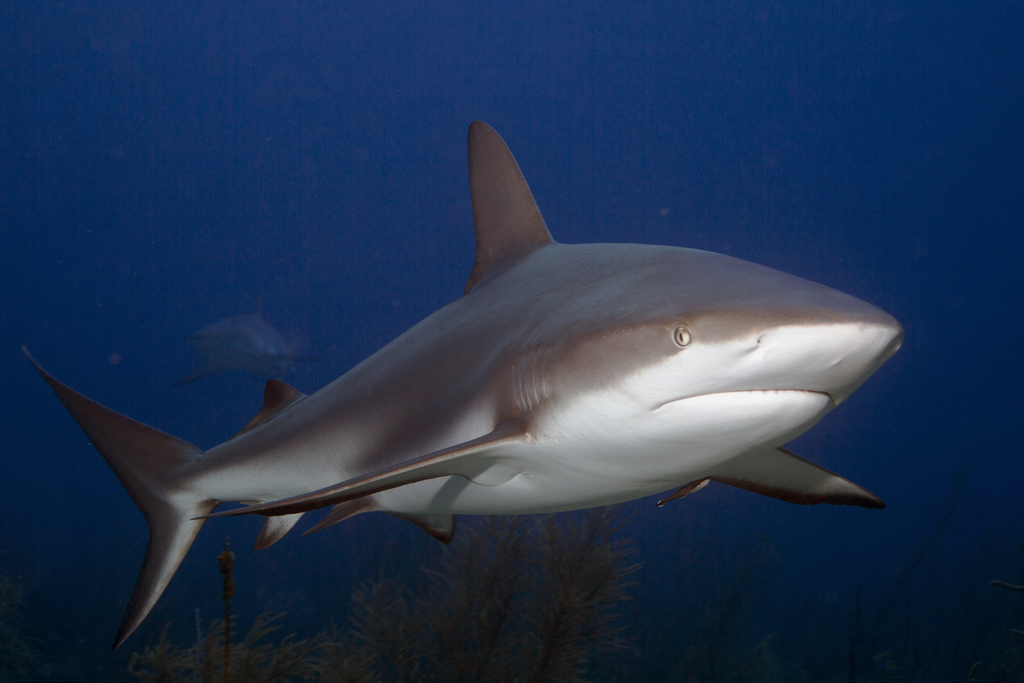
Birth-Alert Tag: A First for a Caribbean Reef Shark
Imagine waiting for a shark to send you a message. Not an email, not a photo. Only a signal from space that says three words: the babies are here.
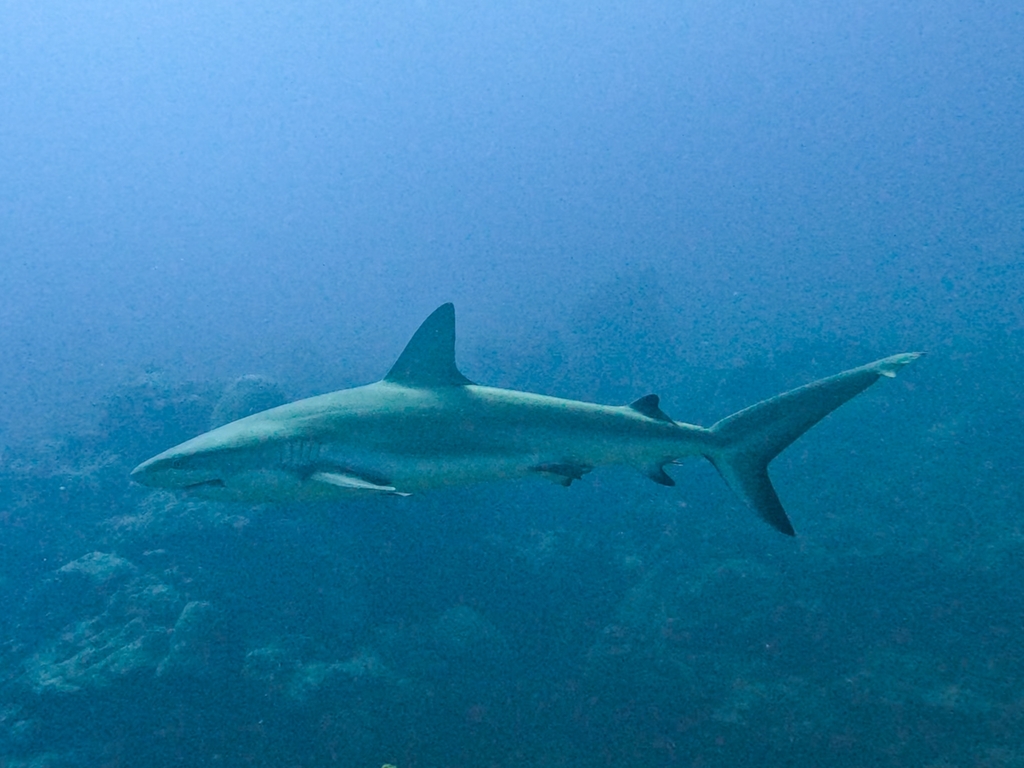
On 5 June 2026, in the Cayman Islands, a pregnant shark became the first Caribbean reef shark to carry a Birth-Alert Tag. The Cayman Islands Department of Environment (DoE) did the work together with Oregon State University, and it is the first time this kind of tag has been used in this species. The shark was a female of about two metres, and an ultrasound showed three very large pups.
I find this a very patient kind of science. Nobody needed the shark to do anything dramatic. The team looked at what the scan told them, and then asked a quiet question: where will she give birth?
A tag that waits
The Birth-Alert Tag was placed inside the mother’s uterus, next to the pups. It is described as a small satellite device that floats. During the pregnancy it stays inactive. When she gives birth, the tag comes out together with the pups, rises to the surface and sends the time and place of the birth by satellite.
The idea is simple, and I think it is quite beautiful. No boat has to follow the shark for weeks. The tag just waits, and the birth sends its own message. According to the DoE, this was the first time such a tag was used in a Caribbean reef shark. I should also say that, as I write this in October 2026, I have not found a published report of the birth itself, so I do not know the result. The DoE is the place to look for news.
What the team did in June 2026
The work did not start in June. Local press reported that the DoE Shark Research Team had been catching and examining male and female Caribbean reef sharks since April. On 5 June, the scan of this female showed three large pups, which told the team she was close to giving birth. That is why the tag went in at that moment, and not a few months earlier.
The mother also received a second tag, a satellite tag designed to come off the animal later and report. It records her movements and how she uses her habitat during the rest of the pregnancy and after the birth. Put the two tags together and you get a before and after: where she lived, where she gave birth, and where she went next.
Why do shark pupping grounds matter?
Pupping and nursery areas are the places where young sharks spend their first and most fragile time. In Cayman, the birthing season and the nursery areas of Caribbean reef sharks are still poorly understood, and the Department of Environment says that finding them could help identify habitat that needs protection. That is a careful claim, and I like it. A tag does not protect anything by itself. It gives people a map, and the map can lead to better decisions.
The work is part of a larger project. A research project funded by the UK’s Darwin Plus scheme, listed for 2026 to 2028 with a budget of about £619,000, combines these tags with satellite tracking, hormone analysis and citizen science to study how the species reproduces. I could not confirm every detail of that project from the pages I could read, so please take the funding figure as the one listed by the funder.
What we know about reef shark pregnancy, and what we do not
Three pups does not mean every mother has three. Published descriptions of the species usually give litters of about three to six pups, a pregnancy of roughly a year, and a two-year cycle, which means females may only reproduce every other year. The IUCN assessment of 2019, as quoted in a regional conservation document, gives litters of 3 to 6 pups and a size at birth of around 70 cm. A study of Caribbean reef sharks in the Bahamas, published in Frontiers in Marine Science, used hormones and ultrasound and pointed to the same two-year rhythm.
Sources do not agree on everything. The size at which females mature is different from source to source, and the maximum length of the species is disputed. I mention this on purpose. These are general figures for the species, not details about the Cayman shark, and they are exactly the kind of numbers that tagging projects like this one are trying to improve.
A small population, and a reason to be careful
The Department of Environment is reported to estimate that fewer than 200 resident Caribbean reef sharks live in Cayman waters. The species is listed as Endangered by the IUCN, with a decreasing population, according to the profile I checked, and its slow rhythm, with few pups and long pregnancies, is a big part of the reason. A species that reproduces slowly cannot easily replace the adults it loses.
This is the conservation lesson I take from the story. When adult females are rare, each one matters. And protecting a species is not only about the animals we see on a dive. It is also about the quiet places where they begin. Whether sanctuaries alone are enough is debated in the scientific literature, so I prefer to say that places for birth are one important piece, not the whole answer. If you would like to read more, our pieces on how tourism can protect sharks and on why sharks matter to the ecosystem go a little deeper.
What this means for the way we meet sharks
This is the side of sharks I wish more people knew: mothers, babies, nurseries and patient science. Once we know where sharks bring new life into the ocean, we have a much better chance of protecting those places, and a better reason to leave them alone.
When you meet reef sharks yourself, simple things help you stay calm and still: a low-volume mask and snorkel that fits well, so you are not fiddling with it, a rash guard for sun and a little warmth, and mineral sunscreen from our mineral picks, put on well before you get in. Then you let the sharks decide how close to come. We never chase, touch or feed them, and that is the same on every trip we plan.
Wildlife encounters are unpredictable. Diving or snorkelling with reef sharks should always follow local regulations and experienced professional guidance.
If this made you curious about experiencing the ocean yourself, you can explore our small-group retreats. If you are not sure where to start, our Ocean Match is a gentle place to begin.
Questions people ask
What is a Birth-Alert Tag?
It is a small satellite tag placed inside a pregnant shark’s uterus. It stays inactive during the pregnancy. When the shark gives birth, the tag comes out with the pups, floats to the surface and sends the time and place of the birth by satellite.
Who did this work, and when?
The Cayman Islands Department of Environment Shark Research Team, working with Oregon State University. The tag went into a pregnant Caribbean reef shark of about two metres on 5 June 2026.
Why do scientists want to know where sharks give birth?
Pupping and nursery areas are important and fragile habitats, and in Cayman they are poorly understood. If scientists know where they are, protection can be planned for the right places.
How many pups does a Caribbean reef shark have?
Reports usually give litters of about three to six pups after a pregnancy of roughly a year, and females may only reproduce every two years. These are general figures for the species, not details of this shark.
Has the shark given birth yet?
I have not found a published report of the birth. The tag is designed to report it by satellite when it happens. For news, please check the Cayman Islands Department of Environment.
Can I see Caribbean reef sharks responsibly?
Yes, in places where the rules are clear and operators are careful. Ask whether any food or bait is used, keep your distance, never touch an animal, and check the local rules before you travel. Encounters are never guaranteed.
Wildlife encounters are never guaranteed and never forced. Ocean Calling works only with vetted, ethical local operators, and every animal is free to approach, or not, entirely on its own terms.
Sources & further reading
- Cayman Islands Department of Environment, 2026. First Birth-Alert Tag deployed in a Caribbean reef shark by DoE Shark Research Team.
- Radio Cayman (Cayman Islands Government), 2026. First Birth-Alert Tag deployed in a Caribbean reef shark by DoE Shark Research Team.
- Oregon State University, College of Agricultural Sciences, 2026. First Birth-Alert Tag deployed in a Caribbean reef shark.
- Cayman Compass, 20 June 2026. First Birth-Alert Tag offers rare glimpse into Cayman shark birthing.
- Cayman Compass, 14 March 2026. New research aims to uncover the birthing sites of Cayman’s sharks.
- Darwin Plus (UK Government), project DPLUS225, 2026 to 2028.
- Frontiers in Marine Science, 2023. Brief research report on reproduction of Caribbean reef sharks in the Bahamas.
- UNEP Cartagena Convention SPAW, STAC10 information document on listing the Caribbean reef shark (quotes the IUCN 2019 assessment).
- Florida Museum of Natural History. Caribbean reef shark species profile.
Further reading on Ocean Calling: Caribbean reef shark in the Ocean Atlas · Cayman Islands in the Ocean Atlas · How tourism can protect sharks · Why sharks matter to the ecosystem
Find the retreat that fits you
Small groups of up to six guests, unhurried days and local experts. Tell us how you feel in the water and we will point you to the right trip.
Explore in the Ocean Atlas
Places in this article
Animals in this article