
Caribbean reef shark
Carcharhinus perezi
Caribbean reef sharks are classic wall and drop-off predators of the western Atlantic. Most stay faithful to a home reef, but some make surprising deep-water and inter-island journeys.
Endangered (IUCN, 2021) means it is at very high risk of extinction in the wild.
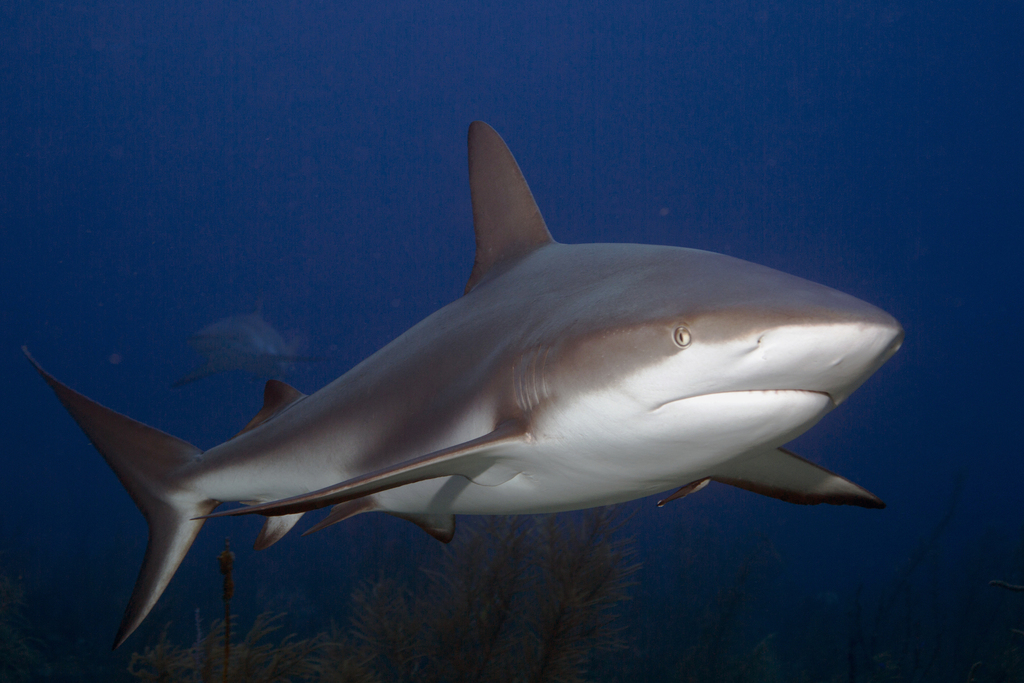
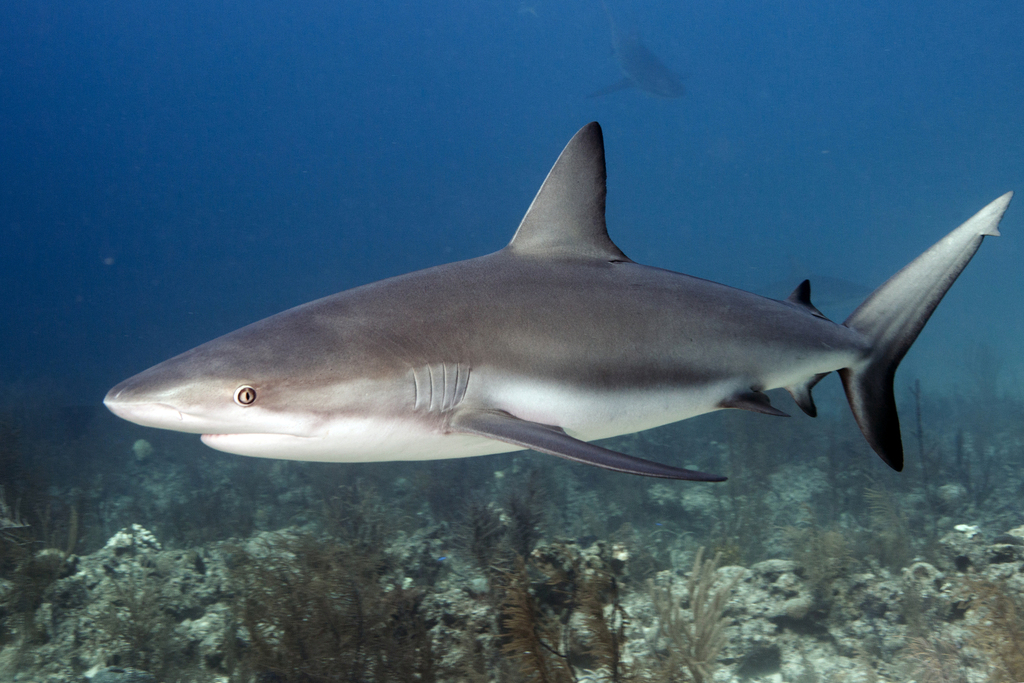
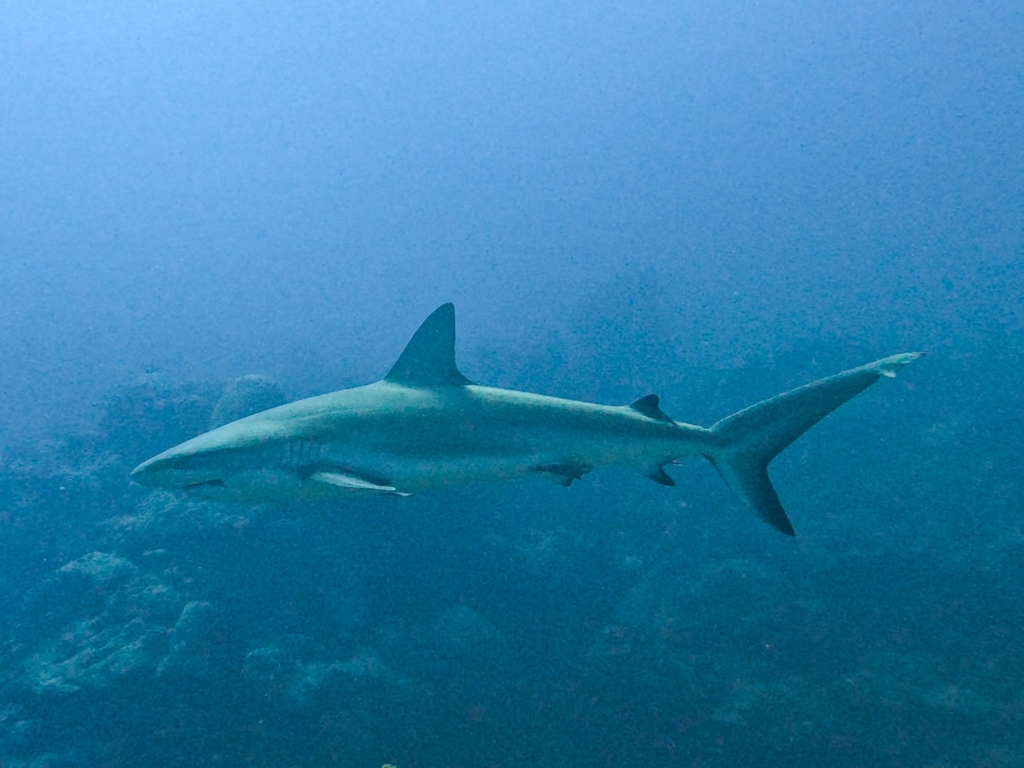
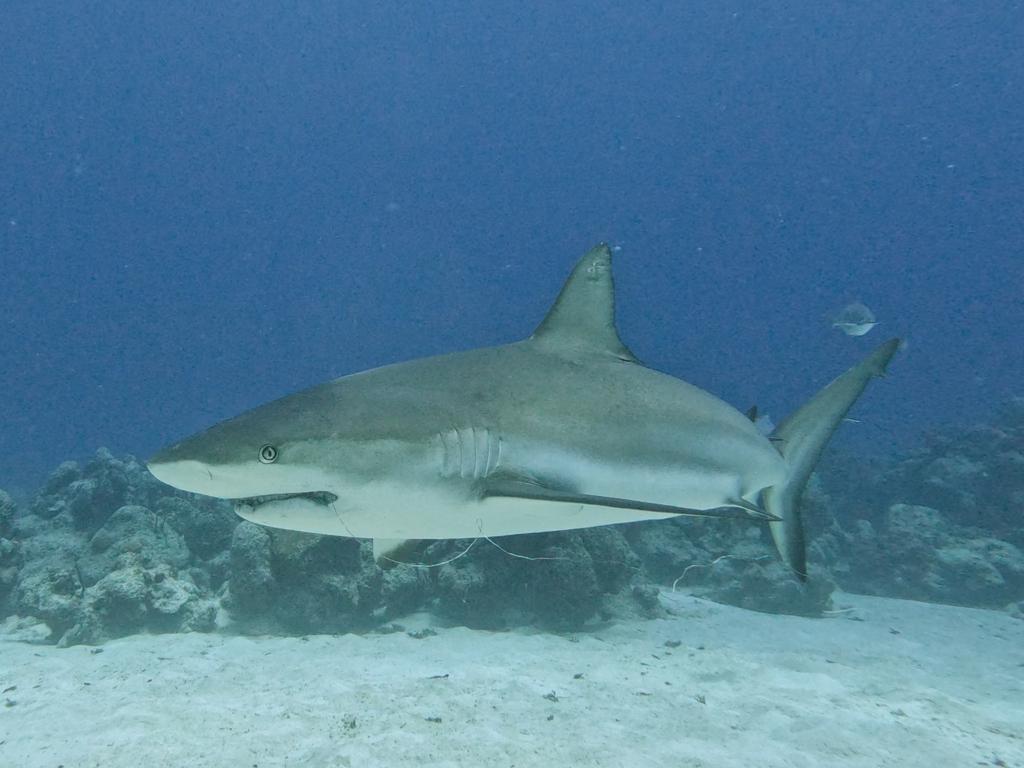
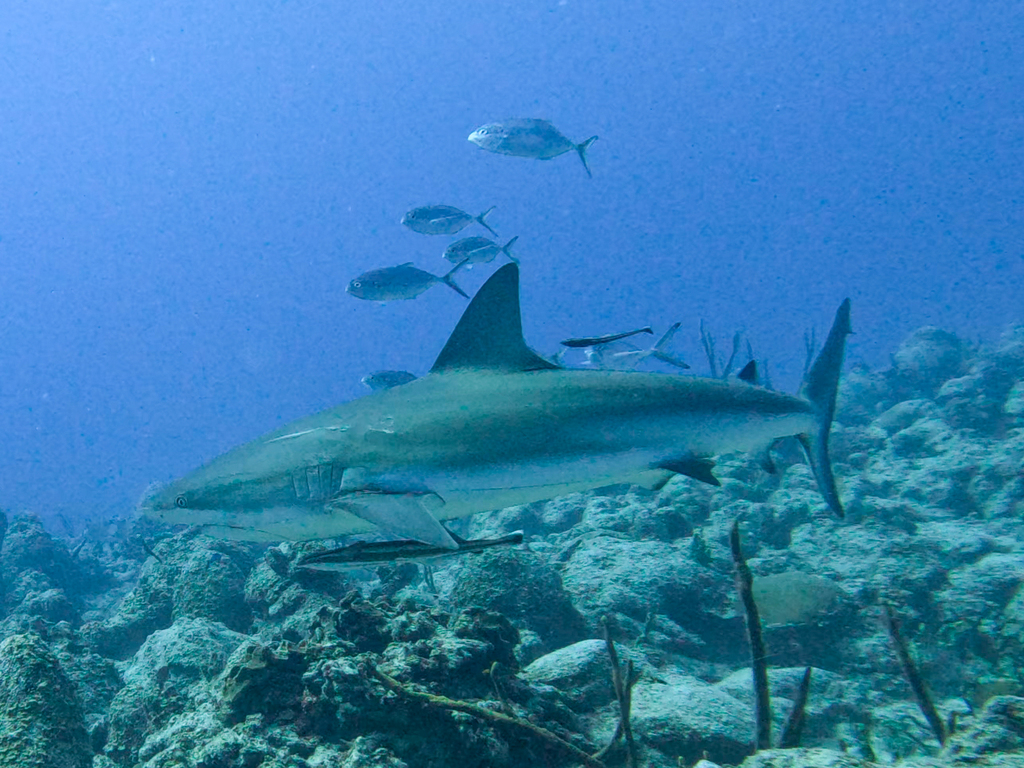
Photos show the species, not always the places on this page.
Length
Up to about 3 m (9.8 ft); mature at about 1.6 m (5.2 ft)
Weight
Up to about 70 kg (154 lb)
Next to a person
A large adult is longer than a tall person
What it eats
Mainly reef fish such as bigeyes, plus some squid, octopus and small rays and sharks.
Around people
Defensive if pressured
How it lives
The Caribbean reef shark lives on coral reefs and reef edges of the western Atlantic, mostly from 1 to 35 m deep. It hunts mainly reef fish and is sometimes seen resting still on the sand or in caves. Females give birth to live young, about 4 to 6 pups every other year after a pregnancy of about one year.
Where it goes
Most Caribbean reef sharks stay close to home, often along less than 20 km of coast. In the Cayman Islands, acoustic tags from 2009 to 2019 showed some sharks crossing 110 km of deep open water between Grand Cayman and Little Cayman, and one mature female moved 148 km, the longest distance recorded for the species.
Populations
It lives from North Carolina in the United States to Brazil, including the Gulf of Mexico and the Caribbean. There are no subspecies. Numbers have fallen in many places because of fishing, and it was listed as Endangered in 2021. Sharks are seen more often where fewer people fish and dive.
Meet it respectfully
Stay calm and low near the reef, keep the shark in view and give it room to pass. Never touch, feed, chase, surround or block a shark. We choose dives without bait or feeding, because food changes how many sharks gather and how they behave.
Fun fact
Tap the bulb to light it up.
In the Cayman Islands, some tagged sharks were detected for more than four years at the same reefs.
Some tagged sharks crossed about 110 km of deep open water between Grand Cayman and Little Cayman.
In the Cayman Islands, divers logged 24,442 dives in 2017 and 2018 and recorded 4,666 shark sightings. Caribbean reef sharks were among the most seen, more in places with strong currents and fewer people.
Source: Kohler et al., 2025, PLOS ONE, Sharklogger Network, Cayman Islands
One tagged female Caribbean reef shark in the Cayman Islands moved 148 km, the longest distance recorded for the species.
Source: Kohler et al., 2023, PLOS ONE, acoustically tagged Caribbean reef sharks in the Cayman Islands
Follow its journey
Watch it travel. Every line comes from satellite tracking or documented research, and the source is named.
StartEndJourney (the line joins documented areas; real paths vary)
Caribbean reef shark in the Ocean Atlas
Places we have researched where this animal is recorded. It is never guaranteed, and some places are for watching from the boat only.
Travel with usComing soonTrusted referralExploringOn pause, story onlyEthics pass
Country colour: pink where we travel, blue where we are exploring or refer, grey for story only.
 Antigua and Barbuda
 The Bahamas
 Belize
 Brazil
 British Virgin Islands
 Caribbean Netherlands
 Cayman Islands
 Colombia
 Curaçao
 Dominican Republic
 Honduras
 Jamaica
 Mexico
 Panama
 Puerto Rico
 Sint Maarten
 Turks and Caicos Islands
 United States
 US Virgin Islands
Sources for this page
- FishBase, Carcharhinus perezii summary
- Carlson et al., 2021, IUCN Red List assessment, Caribbean reef shark
- Kohler et al., 2023, PLOS ONE, acoustically tagged Caribbean reef sharks in the Cayman Islands
- Kohler et al., 2025, PLOS ONE, Sharklogger Network, Cayman Islands
- Leurs et al., 2025, Royal Society Open Science, reef sharks around Saba
- GBIF occurrence records by country, checked 26 Sep 2026
Facts checked 26 September 2026. Photos: Unsplash licence, or Creative Commons as shown on each photo.
Work in ocean travel?
We are always happy to hear from exceptional local operators, accommodation, conservation organisations and destination experts. If your work fits responsible, small-group ocean travel, we would love to learn more.
Partner with Ocean Calling