
Crystal Bay Carrying Capacity: Is Nusa Penida Too Busy?
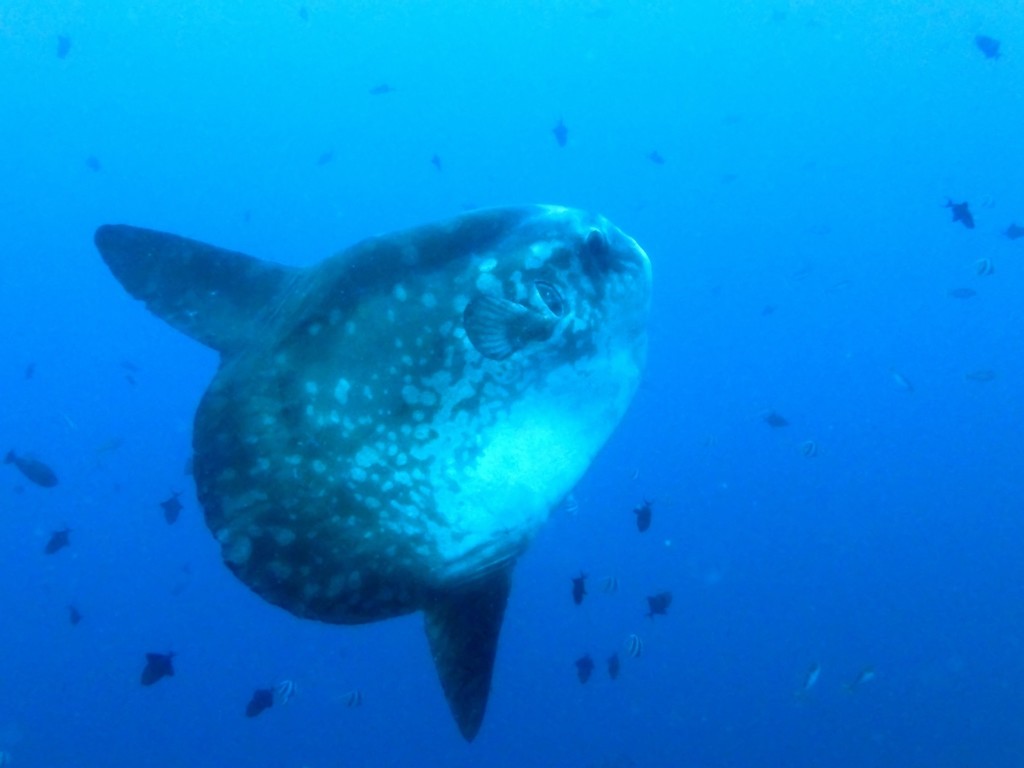
It is two in the afternoon at Crystal Bay. Boats line up along the beach, snorkellers float in groups, and somewhere below them a giant sunfish is trying to get cleaned. Researchers have now tried to measure how many people this little bay can really hold, and the answer is sobering.
In short
- A 2024 carrying-capacity study of Crystal Bay (Pantai Penida) estimated an effective capacity of about 5 divers, 1,401 snorkellers and 190 beach visitors a day, and concluded that current visitor numbers already go beyond what the site can sustain.
- These are model estimates built on assumptions, not a legal cap. Still, they point one way: fewer people at one time, better monitoring and daily patrols.
- For travellers the most useful choices are simple: avoid the midday rush, dive in small groups and follow the sunfish and manta code.
A small bay with a very big name
Is Crystal Bay too busy? According to one careful study, yes, and by a wide margin. This piece is for people who love the bay and want to visit it in a way that helps, not harms.
Crystal Bay, known locally as Pantai Penida, lies in the village of Sakti on the west coast of Nusa Penida, inside the Nusa Penida Marine Protected Area in Indonesia. It is a beach, a snorkelling spot, a sunset stop and one of the best-known places in Bali to dive with the giant sunfish. The customary village of Banjar Penida looks after the beach, and boats that bring snorkellers and divers pay a small levy to the village.
The same study describes about 70.95 ha of coral reef in the bay, with live coral cover of around 12.62% and 74 reef fish species recorded, citing the MPA’s own profile. The fish community is not especially abundant, the authors note, but the bay has the big animal divers dream about: the mola. Why those sunfish matter so much, and why some of them keep coming back, is the story of Crystal Bay's Mola Are Not Just Visiting the Reef.
How busy is busy?
When the Nusa Penida MPA was being designed, researchers described more than 200,000 tourists a year using about 20 dive spots around the islands. A decade later the scale had changed completely. Citing Klungkung’s tourism office, the Crystal Bay study reports 1,405,055 foreign visitors to Nusa Penida in 2023, up from 504,055 in 2022, plus 708,506 domestic visitors.
For Crystal Bay itself, the authors worked with a figure of 1,479,492 visits in 2023, or about 4,076 people a day. Because many package tours end their island day at the bay, they found it busiest between 13:00 and 15:00.
What does carrying capacity mean for a dive site?
Carrying capacity sounds like one magic number. It is really a series of filters. The researchers used a method developed by Cifuentes. It starts with physical capacity, meaning how many people can physically fit in the usable space over a day. Then it reduces that with correction factors such as weather, seasons and social comfort, to get real capacity. Finally it adjusts for how well the site is managed, to get effective capacity.
For diving, physical capacity came out at 14 people a day, falling to 8 after corrections and to 5 once management capacity was included. For snorkelling the effective figure was 1,401 people a day, and for beach recreation 190. Over a year that is about 1,815 divers, 508,563 snorkellers and 68,970 beach visitors. The social factor, meaning how crowded it feels underwater and how well guides can watch their divers, caused the biggest reductions. The authors concluded that current activity at the bay already exceeds the environment’s capacity.
It is fair to read these numbers with care. The diving figure rests on an assumed dive area of 3,000 m² and 1,000 m² of space per diver, and a different set of assumptions would give a different answer. The study is a planning tool, not a law, and we could not confirm any official daily limit for Crystal Bay. What does not depend on the exact number is the gap: single digits of divers in the model, thousands of visitors a day in real life.
What the researchers recommend
The study does not ask to close the bay. Its plan is practical: regular beach clean-ups, monitoring of the coral reef, bins, showers, changing rooms and clear signs, information about the MPA, English training for local workers, daily patrols, extra safety facilities, community outreach and, importantly, limits on the number of visitors. It also stresses strengthening awig-awig, the customary village rules that already shape how the beach is run.
Someone has to pay for all of this. A separate analysis of the MPA’s finances found that when support from non-governmental groups ended, governance weakened. It explored visitor entrance fees as a way to fund management, while warning that relying only on tourism money is a risk too. A protected area is not automatically a well-managed one. We look at that difference in what makes a marine protected area work.
Crowding underwater, not only on the sand
For sunfish and mantas, crowding is not only about how a photo looks. The code of conduct written by the Coral Triangle Center with the Indonesian government and the dive association Gahawisri asks divers to enter and exit at least 30 m from a manta cleaning station, keep 3 m from an animal being cleaned and 10 m when it is unsettled, and never block its escape route. With many groups on one small stretch of reef, those distances become hard to keep, however careful each diver is. The same thinking sits behind our piece on responsible manta diving in Nusa Penida.
How to visit Crystal Bay respectfully
Small choices really do add up here. Ask your operator to plan around the 13:00 to 15:00 peak the study describes, and be open to a different site if Crystal Bay is crowded or the current is wrong on the day. The study reports tidal currents of about 0.1 to 0.6 m per second in the bay, and conditions change with tide and season. Dive with a small group and a guide who explains the sunfish and manta code before you get in. Keep off the coral, pay the local levies without argument, and spend your money with village businesses, not only with boats that arrive and leave. Small groups are something we care about deeply for exactly this reason. For the boat ride over, a roll-top dry bag keeps phones and papers dry, and a long-sleeve rash guard means less sunscreen washing off into a bay that already receives thousands of swimmers a day.
Questions people ask
What does carrying capacity mean for a dive site?
It is an estimate of how many visitors a site can receive without lasting damage. The Crystal Bay study started from physical space, reduced it for factors such as weather and crowding, then adjusted for how well the site is managed, ending with an effective capacity of about 5 divers, 1,401 snorkellers and 190 beach visitors a day.
Is there a daily visitor limit at Crystal Bay?
We could not confirm an official daily limit from any government source. The 2024 study recommends limiting visits, and village rules already govern how the beach is used, so check with your operator for the current situation.
Is Crystal Bay suitable for beginners?
The study rated the bay as suitable for snorkelling and diving in its middle category (S2), not the top one. Currents vary with tide and season, so whether it suits a beginner is a decision for an experienced local guide on the day, not a yes or no in advance.
When is Crystal Bay least crowded?
The study found the bay busiest between 13:00 and 15:00, when many day tours arrive at the end of their route. Earlier sessions are usually calmer, though nothing is guaranteed in high season.
Do my fees actually help?
They can. Research on the Nusa Penida MPA explored entrance fees as a way to pay for management, patrols and monitoring, alongside other funding. Paying levies and choosing operators who respect the code is one of the simplest ways to support the place.
If you would like to see Nusa Penida in a quieter way, our Indonesia Ocean Atlas is a good place to begin.
If this made you curious about meeting the ocean this way, you can explore our upcoming retreats.
Wildlife encounters are never guaranteed and never forced. Ocean Calling works only with vetted, ethical local operators, and every animal is free to approach, or not, entirely on its own terms.
Sources & further reading
- Maydayanti, Pujaastawa and Adhika, 2024. Marine tourism development strategy based on suitability and carrying capacity analysis at Pantai Penida (Crystal Bay). ECOTROPHIC 18(2): 170-186.
- Ruchimat, Basuki and Welly, 2013. Nusa Penida Marine Protected Area (MPA) Bali, Indonesia: why need to be protected? Transylvanian Review of Systematical and Ecological Research 15.
- Pratama, 2024. Exploring the implementation potential of entrance fees as sustainable funding source for management of Nusa Penida Marine Protected Area. IOP Conference Series: Earth and Environmental Science 1410.
- Coral Triangle Center, Government of Indonesia and Gahawisri. Mola and manta code of conduct, as published by Bali.com.
- Coral Triangle Center. Nusa Penida MPA.
Further reading on Ocean Calling: More from the Journal · Ocean Atlas
Freediving certification in Bali: Amed, USAT Liberty wreck and Ubud
Freediving certification · Amed & Ubud, Bali, Indonesia
Ocean breath first, sacred water after. This story is about Indonesia, where we run our Bali trips.
Explore in the Ocean Atlas
Places in this article
Animals in this article
