
Ocean sunfish (mola)
Mola mola
The ocean sunfish, Mola mola, drifts through warm and temperate open oceans around the world, from the North Atlantic and the Mediterranean to California and Japan. A close cousin, the bump-head sunfish, is the one divers meet at reef cleaning stations in Bali.
Mola mola is Vulnerable (IUCN, assessed 2011, published 2015), mostly because so many are caught by accident in fishing nets. The bump-head sunfish has never been assessed.
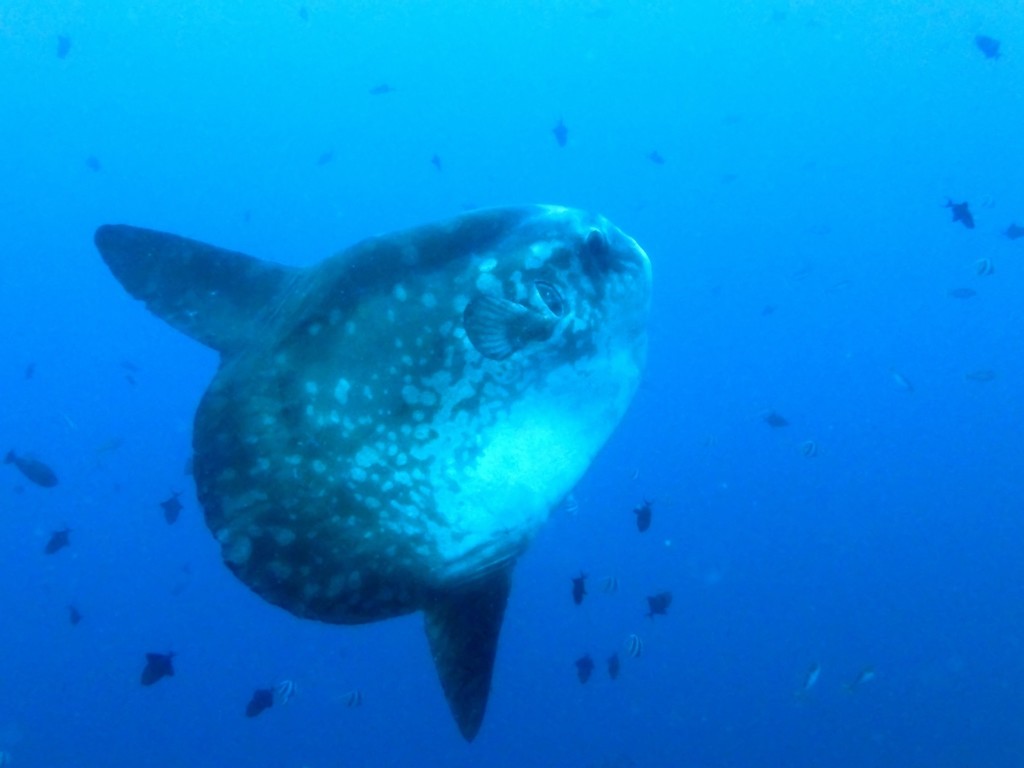
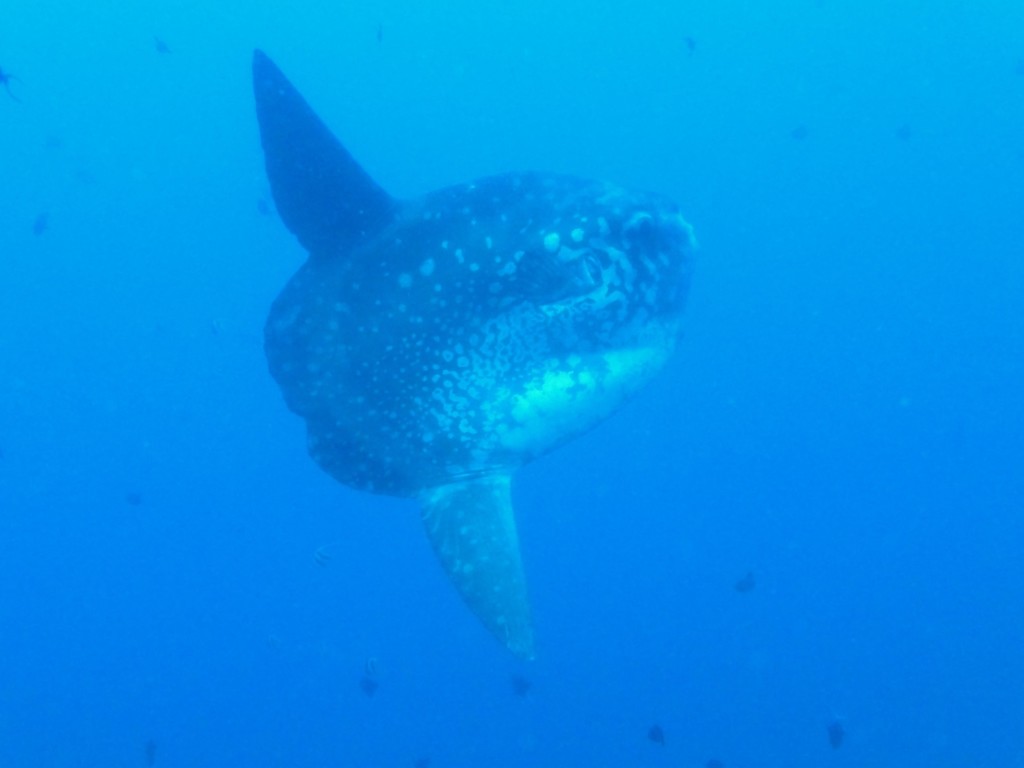
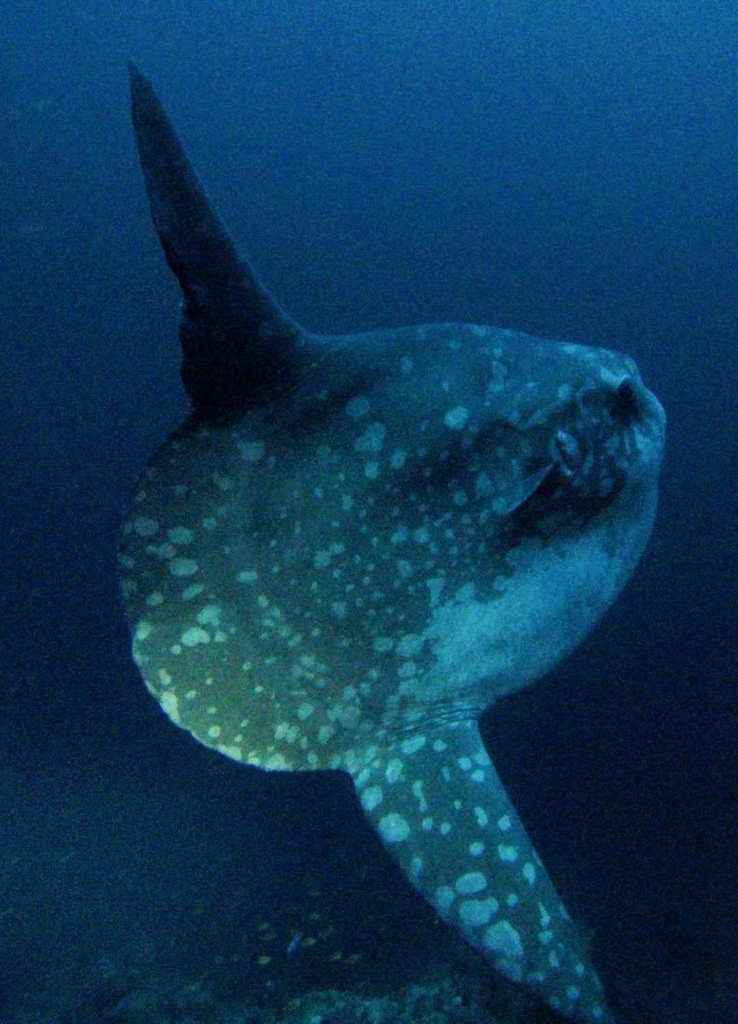
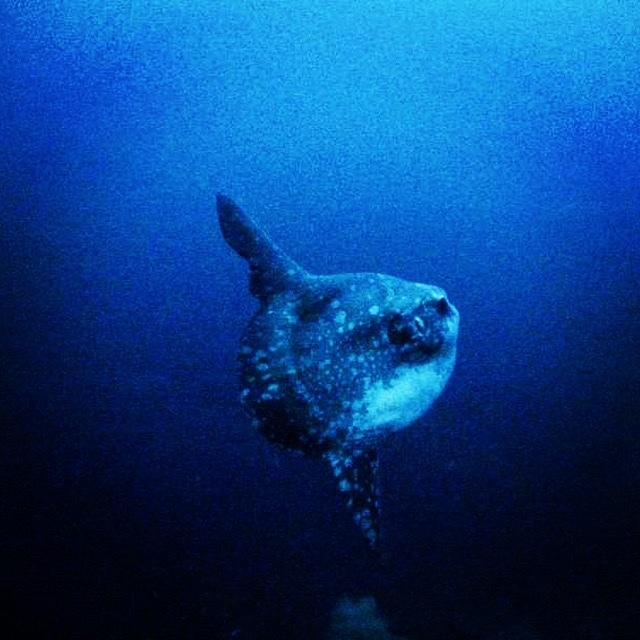
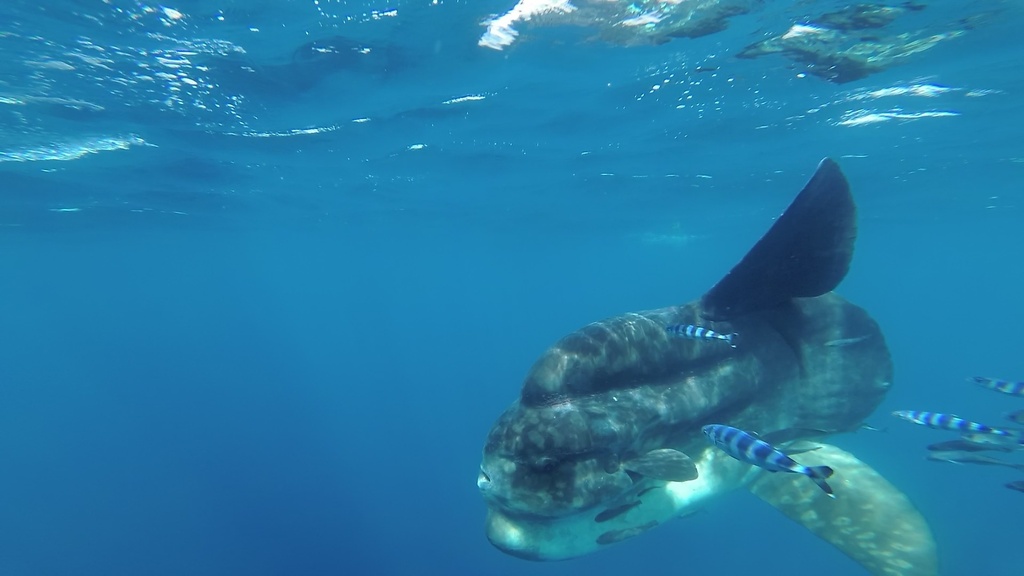
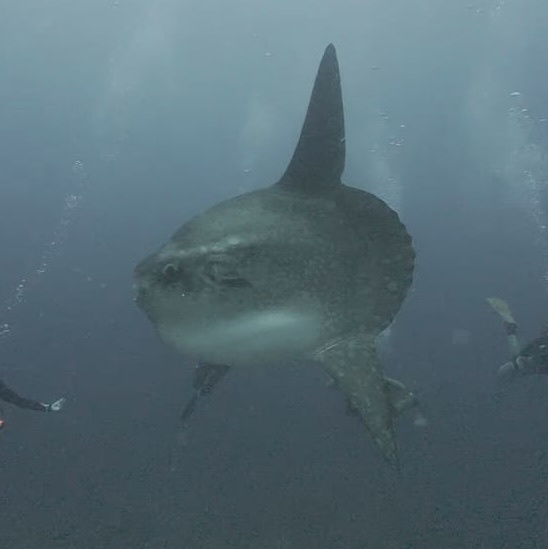
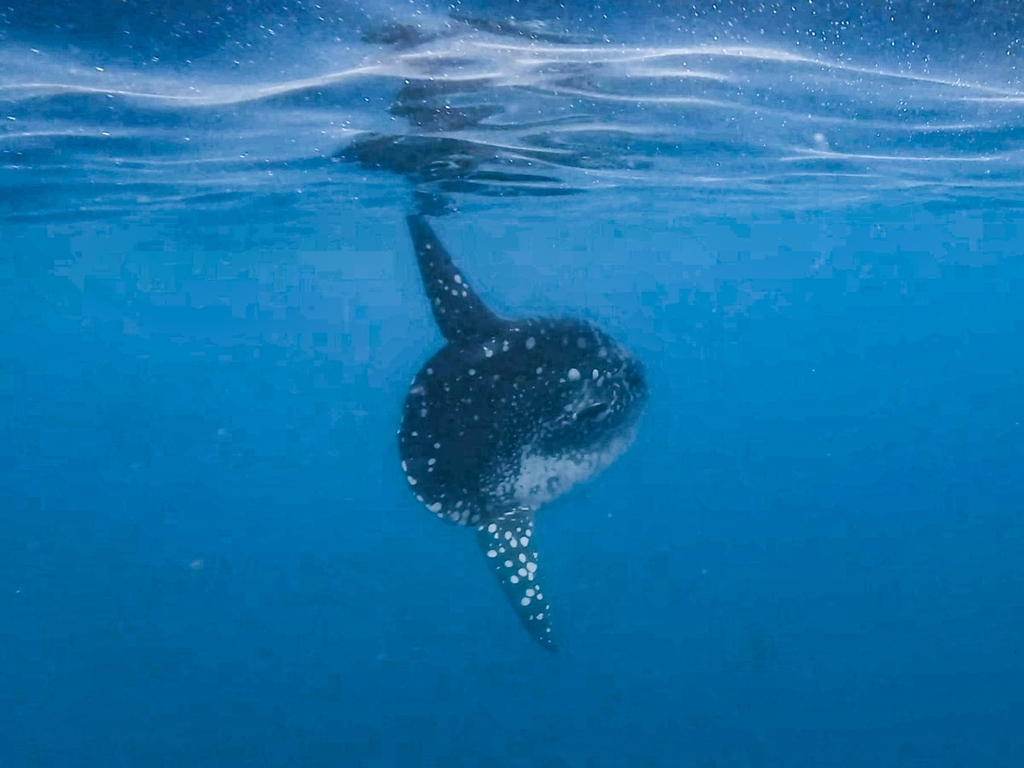
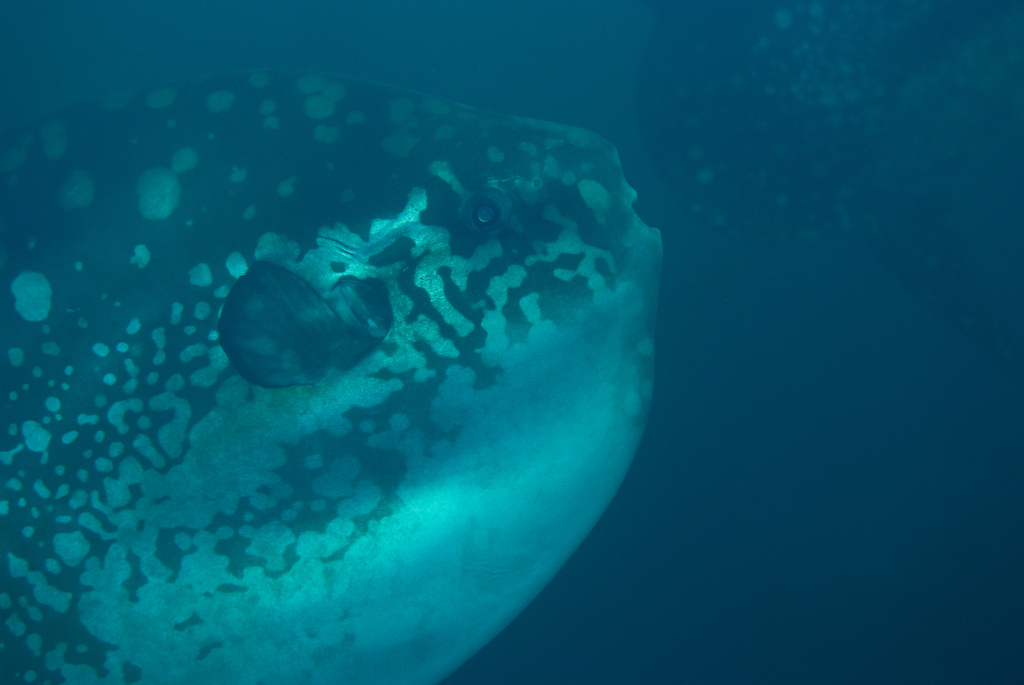
Photos show the species, not always the places on this page.
Length
Mola mola can reach about 3.3 m (10.9 ft). Sunfish seen by divers are usually much smaller, often about 1 to 2 m (3 to 7 ft)
Weight
Mola mola up to about 1.3 tonnes (about 2,870 lb) published. There is no reliable typical weight. The heaviest bony fish ever weighed was its cousin, a bump-head sunfish of 2,744 kg (6,050 lb), found in the Azores in 2021
Next to a person
Most sunfish that divers meet are about waist-to-chest height on an adult; the largest are nearly twice a person’s height
What it eats
Sunfish do not eat only jellyfish. A DNA study of Mola mola in the northeast Atlantic found 41 kinds of prey: crustaceans and small fish were important, and jelly-like animals were only about a sixth. Larger sunfish eat more jelly-like prey such as salps and siphonophores.
Around people
Calm, give space
How it lives
Mola mola dives deep to feed. Fish tracked off Japan dived to about 600 m, into water near 2°C, then rested at the surface between dives. That famous lying-on-the-side pose is often about warming up again, not only sunbathing. Sunfish have no true tail. They swim with their tall back and belly fins and steer with a rounded rudder called the clavus. A large female Mola mola was once estimated to carry about 300 million eggs, one of the highest numbers known for any animal with a backbone.
Where it goes
Sunfish are ocean travellers, but each fish writes its own route. In the northeast Atlantic, tagged Mola mola moved north in spring and summer and south in the cooler months, towards north-west Africa and the Mediterranean. In the northwest Atlantic, fish left northern waters in late summer and followed the continental shelf south. Off California, tagged fish moved between southern California and Baja California. Bump-head sunfish tagged off Taiwan swam north to Japan or south to Papua New Guinea and New Caledonia. These are single tracks, not a fixed yearly route.
Populations
Mola mola lives in tropical and temperate seas of every ocean, including the Mediterranean, the North Sea, the Sea of Japan and the Gulf of California. Scientists study it most around Portugal and Spain, Ireland, southern California and Baja California, and Japan. Its cousin, the bump-head sunfish, lives in Indonesia, Taiwan and Japan, Australia, New Zealand, the Galápagos and even the Azores. In Bali, the reef sunfish at Nusa Penida and Lembongan are almost all bump-head sunfish.
Meet it respectfully
Give a sunfish space and a clear path back to open water. Never touch, chase, surround or use flash. At reef cleaning stations, stay at the edge, never above it. At Nusa Penida, the local code asks divers to stay at least 3 m from a sunfish at a cleaning station, 10 m if it seems unsettled, and to enter and leave the water at least 30 m away.
Fun fact
Tap the bulb to light it up.
For years every sunfish was simply called “mola mola”. Scientists now know there are three giant Mola species: Mola mola, the bump-head sunfish and the hoodwinker sunfish, which was only described in 2017.
Lying on the side at the surface often seems to be about warming up after deep, cold dives, not just sunbathing.
Sunfish do not eat only jellyfish. DNA tests on Mola mola found more than 40 kinds of prey.
The heaviest bony fish ever weighed is a sunfish, but not Mola mola: it was its cousin, a bump-head sunfish of 2,744 kg, found in the North Atlantic.
Source: Gomes-Pereira et al., 2022, Journal of Fish Biology, heaviest bony fish
Sunfish have no true tail fin. Instead they steer with a rounded clavus, a name from the Latin word for rudder.
One giant sunfish tagged in the Galápagos dived to 1,112 m. It is the deepest dive ever recorded for any sunfish.
Source: Thys et al., 2017, Journal of Marine Biology, sunfish tracking in the Galápagos
A GPS-tagged common ocean sunfish (Mola mola) travelled in fast, straight stretches between short stopovers, and the stopovers seem to match places where it found food.
Source: Sims et al., 2009, PLoS ONE, long-term GPS tracking of ocean sunfish
Follow its journey
Choose a journey and watch it travel. Every line comes from satellite tracking or documented research, and the source is named.
StartEndJourney (the line joins documented areas; real paths vary)
Ocean sunfish (mola) in the Ocean Atlas
Places we have researched where this animal is recorded. It is never guaranteed, and some places are for watching from the boat only.
Travel with usComing soonTrusted referralExploringOn pause, story onlyEthics pass
Country colour: pink where we travel, blue where we are exploring or refer, grey for story only.
 Australia
 Belgium
 Canada
 Chile
 Denmark
 Ecuador
 France
 Germany
 Gibraltar
 Indonesia
 Ireland
 Italy
 Japan
 Mexico
 Monaco
 Morocco
 Namibia
 Netherlands
 New Caledonia
 New Zealand
 Norway
 Pakistan
 Papua New Guinea
 Portugal
 South Africa
 Spain
 Sweden
 United Kingdom
 United States
Sources for this page
- IUCN Red List: Mola mola, Vulnerable
- FishBase: Mola mola
- Sousa et al., 2016, Animal Biotelemetry, ocean sunfish movements in the northeast Atlantic
- Nyegaard et al., 2017, Zoological Journal of the Linnean Society, the hoodwinker sunfish
- Australian Museum: Ocean sunfish, Mola mola
- Thys et al., 2016
- Sawai et al., 2018
- FishBase
- Australian Museum
- Chang et al., 2021
- Thys et al., 2017
- Nyegaard et al., 2023
- Gomes-Pereira et al., 2022
- Potter, Galuardi & Howell, 2011, Marine Biology, horizontal movement of ocean sunfish in the northwest Atlantic
- Thys et al., 2015, Journal of Experimental Marine Biology and Ecology, ecology of the ocean sunfish in the southern California Current System
- Sims et al., 2009, PLoS ONE, long-term GPS tracking of ocean sunfish
- Nyegaard et al., 2018, Estuarine, Coastal and Shelf Science, sunfishes of the Southwest Pacific
- Sousa et al., 2016
Facts checked 28 September 2026. Photos: Unsplash licence, or Creative Commons as shown on each photo.
Work in ocean travel?
We are always happy to hear from exceptional local operators, accommodation, conservation organisations and destination experts. If your work fits responsible, small-group ocean travel, we would love to learn more.
Partner with Ocean Calling7-day freediving course in Coron, Palawan
CHF 1,480