
Do Sperm Whales Migrate Through Dominica or Live There?
Imagine a researcher off Dominica looking at a tail rising from the water and smiling, because she knows this whale. She has photographed that tail before, in other years. So is this whale passing through, or is she home?
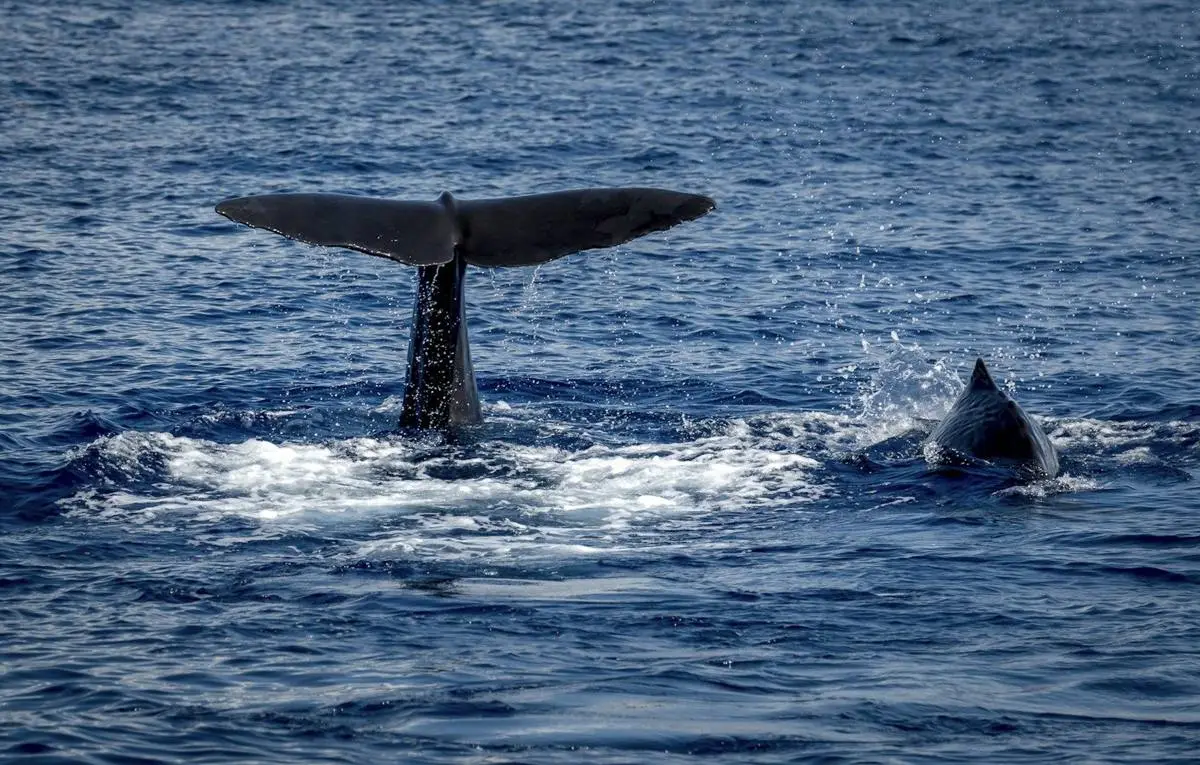
Do sperm whales migrate through Dominica, or do they live there? The careful answer is a bit of both: strong local ties, and real movement. Long-term research has documented a community of sperm whale social units using the waters off Dominica, with repeated sightings and high site fidelity, which means the same whales keep coming back to the same place. Some units also travel between islands in the eastern Caribbean.
I like this answer, because it does not squeeze a whale into one simple word. Let me explain both halves.
What “resident” means here
Researchers have studied sperm whales off Dominica since 2005. Over the years they have built up photo-identification, behaviour and sound records. Female and young whales form long-lasting social units, a little like families, and belong to vocal clans with their own patterns of clicks. Some individuals come back to the area year after year.
“Resident” does not mean each whale stays in one small bay every day of the year. It describes a community that uses an area again and again. The whales still dive, feed and move through a much larger ocean world around the island.
Do the whales travel between islands?
Yes. Studies across the eastern Caribbean have documented movement between islands. They also found that social units can show strong ties to one island. A 2025 Scientific Reports paper looked at how the social life of units relates to their presence in the Dominica study area.
This is a very different story from humpback whales, which travel thousands of kilometres between cold feeding grounds and warm breeding areas. Sperm whales may move across regions too. But the units off Dominica are mostly studied through their local presence and their trips from island to island, not through one neat yearly migration line.
Does a resident population mean you will see one?
No. The whales are wild, and their presence changes from day to day. They spend much of their lives deep underwater, where nobody on the surface can see them. Weather, sea state, feeding and social life all affect whether a boat meets a whale.
A place with a well-studied whale community can offer a meaningful chance to learn about the species. It cannot make an animal appear on a schedule.
Wildlife encounters are unpredictable. Whale watching should always follow local regulations and experienced professional guidance.
Why the difference matters
If we say every whale is “migrating through”, we miss the social story of a community that researchers have come to know over time. If we say “they live here” as if they never move, we miss their wider Caribbean connections.
Dominica’s sperm whales are not a parade passing a viewing point. They are a social community that uses a deep-water home and makes its own choices about where to go next. If you are drawn to Dominica’s whales, come for the learning too. They are neighbours with their own paths. Our sperm whale page tells you more about the species.
Questions people ask
Do sperm whales migrate through Dominica?
The careful answer is both movement and strong local ties. Researchers have documented a community of social units with repeated sightings and high site fidelity, and some units also move between islands in the eastern Caribbean.
What does “resident” mean for these whales?
It describes repeated use of an area by a community. It does not mean each whale stays in one small bay every day of the year.
Do the whales travel between islands?
Yes. Studies across the eastern Caribbean have documented movement between islands, while also finding that social units can show strong ties to one island.
Does a resident population guarantee a sighting?
No. The whales are wild, they spend much of their lives underwater, and weather, sea state, feeding and social activity all affect whether a boat meets one.
Wildlife encounters are never guaranteed and never forced. Ocean Calling works only with vetted, ethical local operators, and every animal is free to approach, or not, entirely on its own terms.
Sources & further reading
- Gero et al. (2025), “Predicting mesoscale movement of sperm whale units in the Caribbean based on social dynamics,” Scientific Reports.
- Vachon et al. (2024), “Abundance estimate of Eastern Caribbean sperm whales using large scale regional surveys,” Marine Mammal Science.
- Dominica Sperm Whale Project, research.
Further reading on Ocean Calling: Dominica in the Ocean Atlas · Sperm whale in the Ocean Atlas · Sperm whales in Dominica · Sperm whales are not humpbacks
Swim with humpback whales in Moʻorea: an ethical whale retreat
Whale encounter retreat · Moʻorea, French Polynesia
Time in the blue, on the whales’ terms. September 2027. If you love whales, this is our whale retreat: small group, slow pace, on the animals’ terms.