
Blue and Fin Whales Off Namibia: What a 2026 Study Found
Picture dunes running straight into a cold, grey sea. Somewhere offshore, the largest animal that has ever lived breathes out a tall column of mist. On Namibia's desert coast, blue whales are not a mirage.
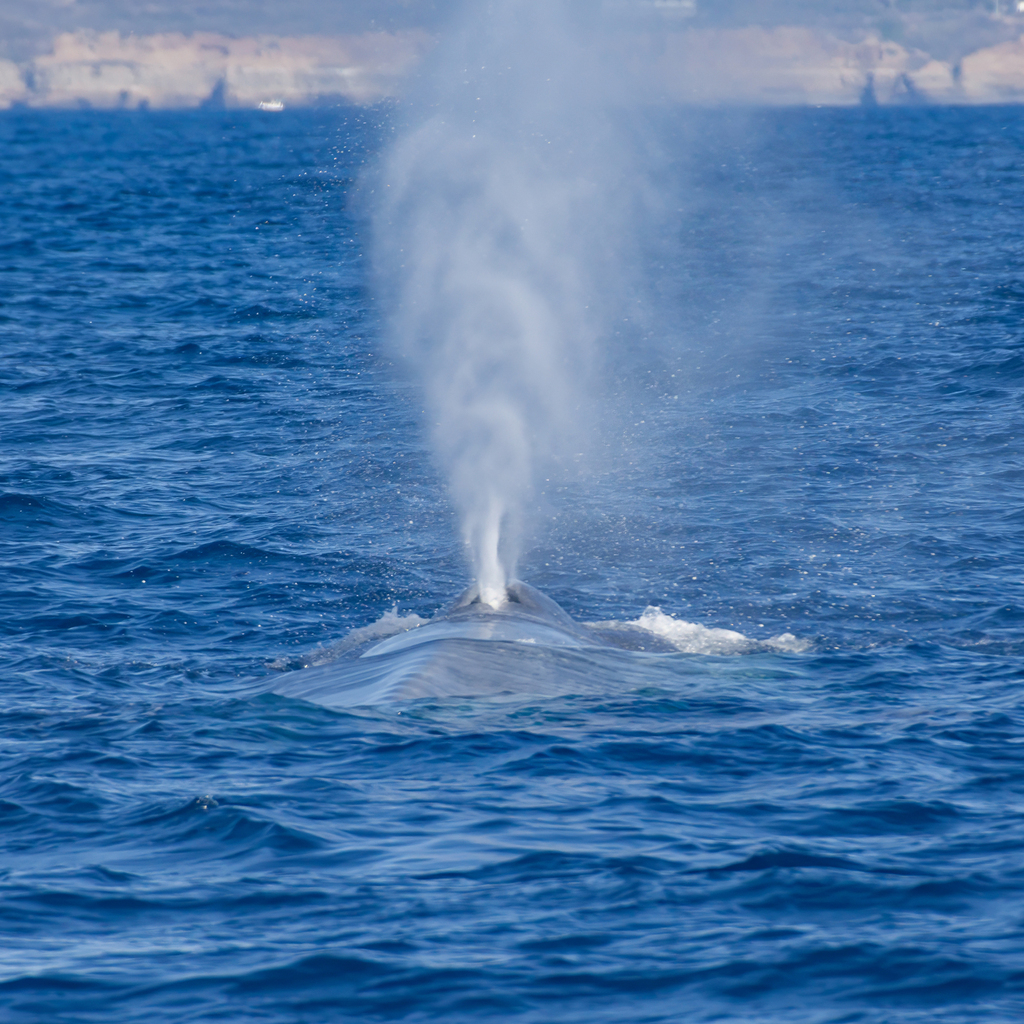
Are more blue and fin whales using the waters off Namibia? A 2026 regional study suggests there are more records of them in recent years. Researchers reviewed Antarctic blue whales and southern fin whales in the southeastern Atlantic, off Namibia and South Africa, bringing together verified sightings and strandings from 1964 to March 2025. They report that blue whale sightings in the Benguela ecosystem peaked between late spring and autumn, while fin whales seemed to be present all year.
Do more sightings mean the whales have recovered?
This is the key detail, and it is easy to skip. The study documents a recent rise in presence records, but sightings are not a population count. More whales could be using the region. Better reporting and more people watching can also change how many records researchers find. The authors describe it as possible evidence of recovery, not final proof.
The Benguela is a rich upwelling system along Namibia and South Africa, where cold water rises and feeds the sea. It is both a feeding area and a migration corridor. That gives the story its strange contrast: dunes above, giants moving through deep water below.
Why this is a migration story
Whales do not follow borders. These records connect the coastlines of two countries inside one ecological system. The paper helps fill gaps in seasonal information for animals that are hard to follow across such a huge, remote area.
For visitors, the message is simple. Namibia is not a tropical place for swimming with whales. It is a place to learn about marine wildlife from the shore, or from a boat with local expertise, and any viewing must follow the law and the operator's standards. We do not offer a retreat there. The next useful discovery may come from one careful sighting, added to a much longer record.
To read more, see the blue whale page in the Ocean Atlas, the Namibia page in the Ocean Atlas and our list of whale conservation organisations.
Questions people ask
What period does the study cover?
Verified sightings and strandings from 1964 to March 2025.
When are blue whales seen in the Benguela?
The authors report that blue whale sightings peaked between late spring and autumn. Fin whales seemed to be present all year.
Do more sightings prove the whales have recovered?
No. Sightings are not a population count, and better reporting can raise the number of records. The authors frame it as possible evidence of recovery.
Wildlife encounters are never guaranteed and never forced. Ocean Calling works only with vetted, ethical local operators, and every animal is free to approach, or not, entirely on its own terms.
Sources & further reading
- James et al., 2026. African Journal of Marine Science.
- University of Pretoria. Research summary on EurekAlert.
Further reading on Ocean Calling: Blue whale in the Ocean Atlas · Namibia in the Ocean Atlas · Whale conservation organisations
Swim with humpback whales in Moʻorea: an ethical whale retreat
Whale encounter retreat · Moʻorea, French Polynesia
Time in the blue, on the whales’ terms. September 2027. If you love whales, this is our whale retreat: small group, slow pace, on the animals’ terms.