
How Ocean Acidification Is Changing Coral Reefs
You float over a reef on a calm morning. The water is clear, the fish are busy, nothing looks wrong. And yet the water itself is not the same water your grandparents swam in. The sea absorbs our carbon dioxide, becomes slightly more acidic, and coral finds it harder to build the skeleton the whole reef stands on.
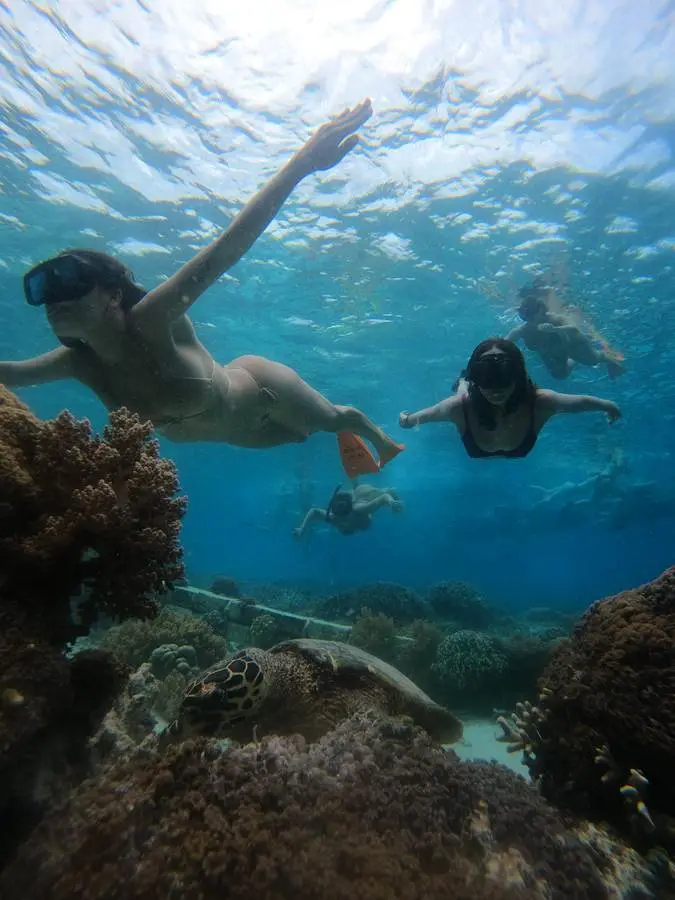
That is ocean acidification, and you cannot see it with a mask on. Most people who love the ocean know about coral bleaching. Far fewer know about acidification, even though the two are close relatives. Bleaching is loud: a reef turning white in a few weeks. Acidification is quiet: a slow chemical shift in every litre of seawater, everywhere, all the time.
So let us look at it calmly. What it is, what it does to coral and to the sand around it, how far it has gone, and what it honestly means for a traveller who wants to visit reefs without making things worse.
What ocean acidification actually is
The ocean takes up a large share of the carbon dioxide we release. NOAA says at least a quarter of the CO2 from burning coal, oil and gas dissolves into the ocean instead of staying in the air. In one way this is a gift, because without it the atmosphere would warm faster. But the price is paid in the chemistry of the water.
When CO2 dissolves in seawater, chemical reactions lower the pH and reduce the amount of carbonate ions. They also lower the “saturation state” of calcium carbonate minerals such as aragonite. Those carbonate ions are the raw material that corals, clams, oysters and many tiny plankton use to build shells and skeletons. Less raw material means more effort for the same result.
Since the start of the industrial era, the pH of surface ocean water has fallen by about 0.1 units, according to NOAA. That sounds tiny. But the pH scale is logarithmic, so this is roughly a 30 percent increase in acidity. NOAA also notes that, if emissions continue as usual, surface waters could be nearly 150 percent more acidic by the end of this century. Small numbers, big meaning.
One small but important note. “Acidification” does not mean the sea turns into an acid. Seawater is still slightly alkaline. It is moving toward the acidic side, and that direction is what matters to living things that build with carbonate.
How does ocean acidification affect coral reefs?
A coral reef is built by tiny animals, the coral polyps, that lay down a skeleton of calcium carbonate year after year. When carbonate is harder to get, growth tends to slow. Then the structure struggles to keep up with everything that breaks it down: storms, boring animals, grazing fish, disease.
The surprise for me was the sand. In 2018, a study in Science led by Bradley Eyre measured how reef sediments, the carbonate sand between the corals, respond to acidification at five reef sites around the world. They found that the dissolving of this sand was about ten times more sensitive to acidification than coral growth itself. They estimated that reef sediments globally would switch from building up to dissolving when the aragonite saturation of the water reaches about 2.92, which they expected around 2050. Some reefs already show net dissolving of their sediments.
The authors were careful too. They said it was unknown whether the whole reef would erode once the sediments become net dissolving, and the lead author suggested corals may keep growing and adding to reefs long after the sandy sediments start to dissolve. So this is not a countdown to a reef disappearing. It is a sign that the base of the reef, the material that fills the gaps and holds things together, is becoming more fragile.
How far has it gone?
In September 2025, the Potsdam Institute for Climate Impact Research published its Planetary Health Check 2025. It reported that seven of the nine “planetary boundaries”, the limits of a safe operating space for humanity, have now been crossed. For the first time, this included ocean acidification. The report links this mainly to fossil fuel burning, made worse by deforestation.
A separate study published in 2025, “Ocean Acidification: Another Planetary Boundary Crossed”, reached a similar conclusion. It estimated that by 2020 the suitable habitat for tropical and subtropical coral reefs had declined by about 43 percent compared with pre-industrial conditions. That is a model estimate based on water chemistry, not a count of dead reefs, and the authors themselves proposed a stricter boundary. I read it as a strong warning about direction, not as an exact measure of what you will see on your next snorkel.
Acidification and heat: a double load
It helps to be precise about what acidification does on its own. Most sudden, visible reef losses today come from marine heatwaves and mass coral bleaching, which we explain in how coral bleaching and recovery work. Acidification is more like a headwind. It rarely knocks a reef down by itself, but it makes recovery from every other blow slower, because the basic job of building skeleton is already harder.
Both problems come from the same source: carbon dioxide. Heat comes from CO2 in the air, acidification from CO2 in the water. That is a hard truth, and also a clear one. The long-term answer for reefs is lower emissions. Everything else, including everything we do as travellers, is about not adding extra stress to reefs that already carry a lot. If you want to see why some reefs cope better than others, our piece on coral reef resilience science goes into that.
What a traveller can and cannot do
Let me be honest. Nothing you do on a reef holiday will reverse ocean acidification. A mineral sunscreen will not change the pH of the ocean. Not touching coral will not bring carbonate ions back.
But it still matters, and here is why. A coral that grows more slowly because of acidification has less margin to repair a broken branch, a fin kick or a trampled edge. Local damage, the kind travellers can cause or avoid, is the stress we can actually remove. So the basics become more important, not less: keep fins off the bottom, never stand on coral, choose boats that use mooring buoys, and never touch or feed wildlife. We explain the practical side in how to snorkel without damaging coral.
A long-sleeved rash guard means you need less sunscreen in the water in the first place. When you do use some, a mineral sunscreen chosen with the ingredient list in hand is a reasonable step. And a low-volume mask and snorkel that fits well helps you relax and float, instead of standing up to fix a leak.
The honest part about travel
There is a contradiction here, and I do not want to hide it. Flying to a reef releases carbon dioxide, and carbon dioxide is exactly what drives both acidification and warming. Every reef trip has a cost to the thing we travel to see.
What we can do is travel less often and stay longer, choose operators who protect the reefs they work on, and keep our footprint small once we arrive. We think about this a lot, and we wrote more about it in how climate change is changing the ocean. It is not a perfect answer. It is an honest one.
How we think about it at Ocean Calling
On our retreats we keep groups to a maximum of six guests, work only with vetted local operators, and move slowly over the reef. Nobody touches coral, nobody chases animals, and every guest can skip any activity. We also like to talk about the science in the evening, in plain words, because understanding a reef changes how gently people move over it.
The ocean does not need visitors to solve acidification. It mostly needs us to cut emissions where we can, and not to make an already hard job harder when we are in the water. If this made you curious about experiencing it yourself, you can explore our retreats.
Questions people ask
What is ocean acidification in simple words?
The ocean absorbs carbon dioxide from the air. In seawater it starts reactions that lower the pH and reduce carbonate ions, the material corals and shellfish use to build skeletons and shells.
How much more acidic is the ocean today?
NOAA reports that surface ocean pH has fallen by about 0.1 units since the industrial era began. Because pH is logarithmic, that is roughly a 30 percent increase in acidity.
Will coral reefs dissolve?
A 2018 study in Science estimated that reef sediments could switch from net building to net dissolving around 2050, and some already do. The authors said it is unknown whether whole reefs will erode, and corals may keep growing long after the sand starts dissolving.
Is acidification worse than bleaching?
They are different. Bleaching from heatwaves causes most sudden, visible reef loss today. Acidification is slower and invisible, and it makes recovery harder. Both are driven by carbon dioxide.
Has ocean acidification crossed a planetary boundary?
Yes, according to the Potsdam Institute’s Planetary Health Check 2025, published in September 2025, which for the first time assessed the ocean acidification boundary as crossed.
Can I do anything as a traveller?
You cannot reverse acidification on holiday, but you can avoid adding local damage: do not touch or stand on coral, choose operators who use mooring buoys, and reduce sunscreen in the water. Cutting emissions where you can matters most in the long run.
Wildlife encounters are never guaranteed and never forced. Ocean Calling works only with vetted, ethical local operators, and every animal is free to approach, or not, entirely on its own terms.
Sources & further reading
- NOAA. Ocean acidification (education resource collection).
- Potsdam Institute for Climate Impact Research, 2025. Seven of nine planetary boundaries now breached: ocean acidification joins the danger zone (Planetary Health Check 2025).
- Stockholm Resilience Centre, 2025. Planetary Health Check 2025: seven of nine planetary boundaries now breached.
- 2025. Ocean acidification: another planetary boundary crossed. Peer-reviewed article, full text on PubMed Central.
- Eyre, B.D. et al., 2018. Coral reefs will transition to net dissolving before end of century. Science 359: 908-911.
- Reef Resilience Network. Summary: Coral reefs will transition to net dissolving before end of century.
- Science Feedback. Review: the oceans are currently acidifying; claims to the contrary contradict observations.
Further reading on Ocean Calling: More from the journal · Coral bleaching and recovery · Coral reef resilience · Climate change and the ocean · See the retreats · Ocean Atlas
Find the retreat that fits you
Small groups of up to six guests, unhurried days and local experts. Tell us how you feel in the water and we will point you to the right trip.