
Abbott's booby
Papasula abbotti
A white seabird that nests in one forest and spends most of its life far offshore. A glimpse overhead is a matter of luck, never a promise.
Endangered (IUCN, 2019) means it faces a very high risk of extinction in the wild. All known nesting is on one island.
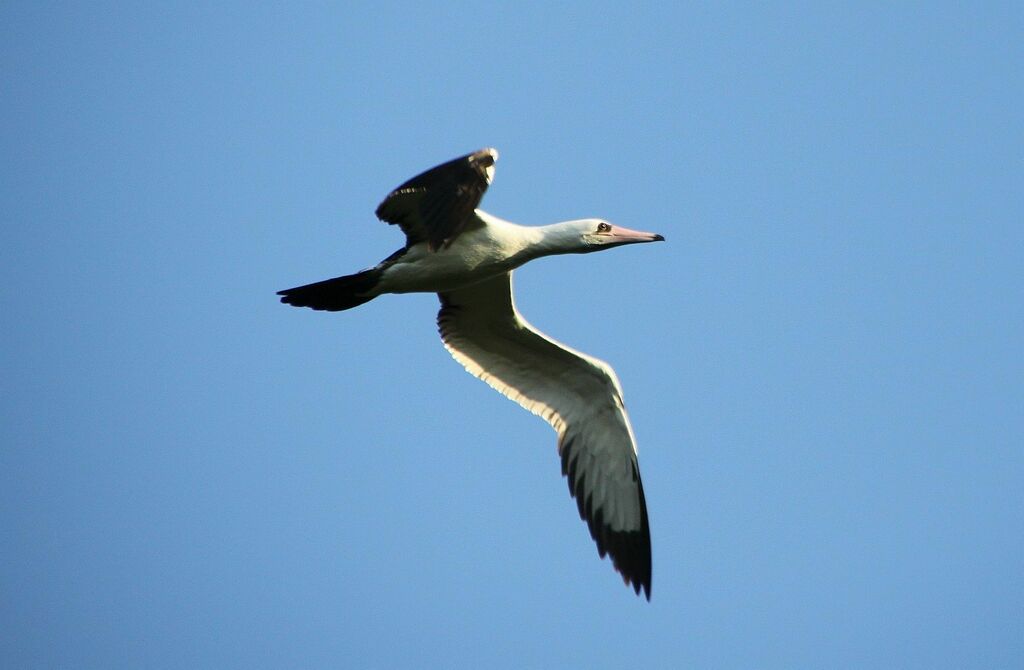
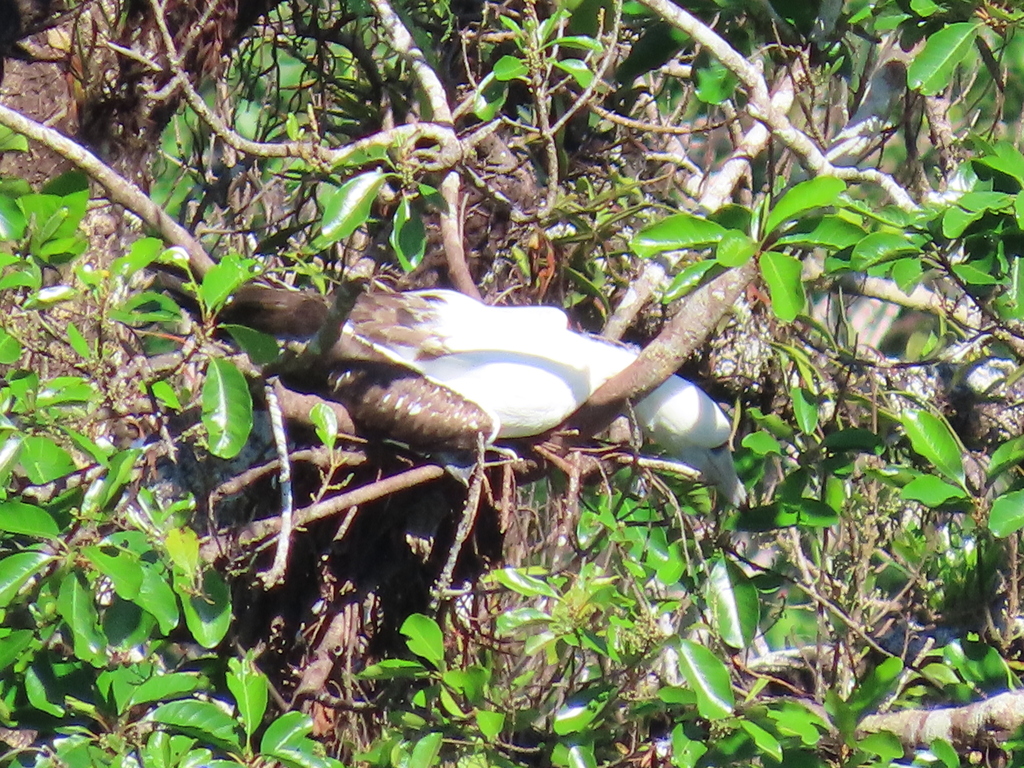
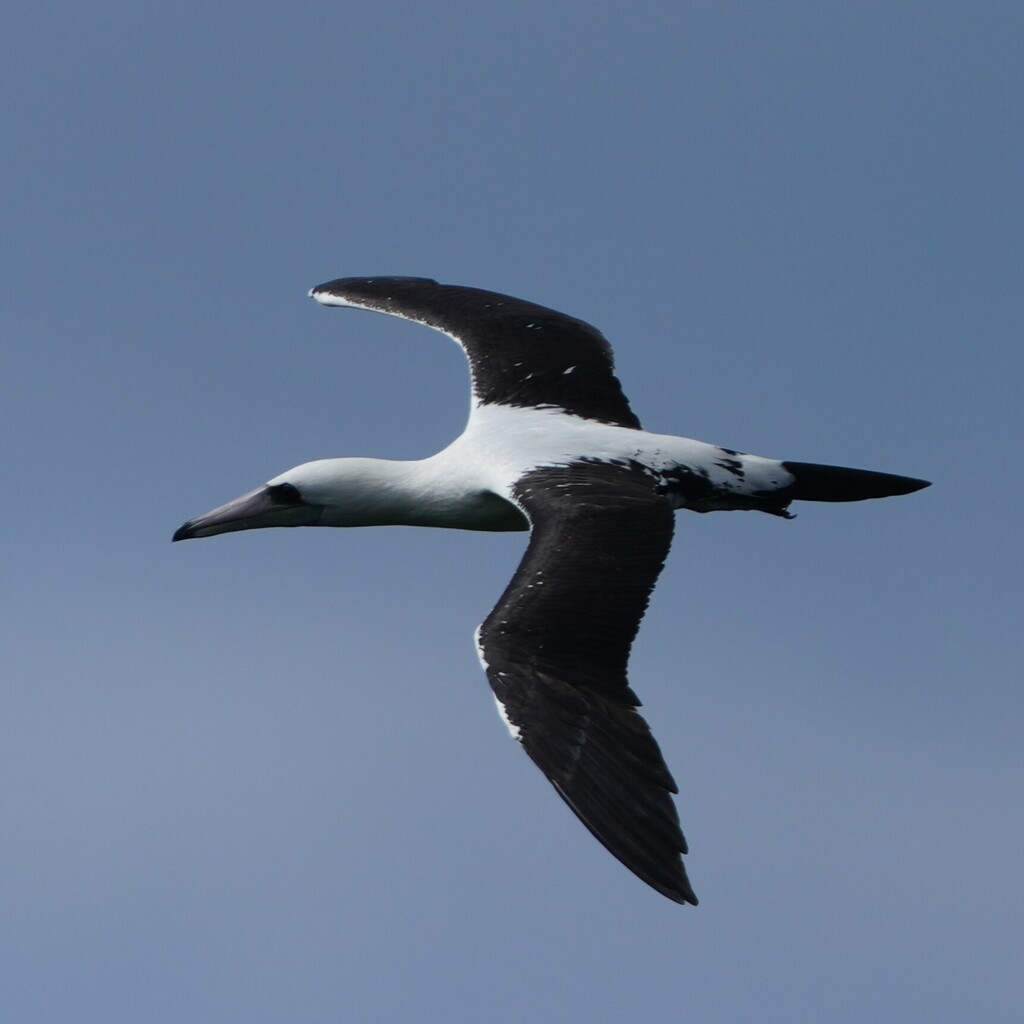
Photos show the species, not always the places on this page.
Length
About 80 cm (31 in) long, with a wingspan of about 190 to 210 cm (75 to 83 in) (Wikipedia; Planet of Birds)
Weight
About 1.5 kg (3.3 lb); one source gives 1.4 to 1.6 kg. These values come from secondary sources.
Next to a person
The wingspan of about 2 m is close to the height of a tall adult. The bird weighs about as much as a 1.5 litre bottle of water.
What it eats
Fish and squid, caught at sea. The bird spends most of its life over open ocean.
Around people
Quiet, keep distance
How it lives
Abbott's boobies nest high in tall rainforest trees on Christmas Island. They lay one egg, which is incubated for about 56 days. The chick takes about 170 days to fledge and then needs about another 200 days to become independent. The whole breeding cycle takes 15 to 18 months, so most pairs breed only once every two to three years. Young birds first breed at about 8 years, and the species can live up to about 40 years. Males have a pale grey bill and females a pink bill.
Where it goes
Christmas Island is the only place this seabird nests. It was once found across the Pacific and Indian Oceans, according to Parks Australia. The sources read here did not give detailed foraging routes, so they are left out.
We only draw a journey on the map when scientists have tracked it or clearly documented it. For this animal we have not found one yet.
Populations
Global: Endangered on the IUCN Red List, with a 2019 assessment by BirdLife International cited by Wikipedia. Estimates of the population differ by source. Parks Australia says the island supports about 3,000 breeding pairs, and Wikipedia reports a 2002 helicopter survey that counted 1,500 nest sites. One source gives about 9,000 individuals in 1991, declining. Phosphate mining destroyed about one third of nesting habitat between 1965 and 1987, and wind turbulence from clearings affects about 36 percent of the population. Yellow crazy ants and climate change are further risks. Wikipedia cites an estimate of a decline of more than 80 percent over the next three generations. The nesting areas are protected inside Christmas Island National Park, and the species is on CITES Appendix I.
Meet it respectfully
Look from a distance, quietly, using binoculars. Parks Australia suggests looking for nesting birds in tall trees, particularly in the Dales or along North-West Point Road, and for flights in the late afternoon. Do not enter the forest off the paths, walk toward nest trees, flush birds, or play recordings. Sightings depend on season and weather, and no one can promise one.
Fun fact
Tap the bulb to light it up.
Christmas Island is the only nesting place of this species on Earth.
A chick takes about 170 days to fledge, and the full breeding cycle runs 15 to 18 months.
Males have a pale grey bill and females a pink bill, both with black tips.
Abbott's booby in the Ocean Atlas
Places we have researched where this animal is recorded. It is never guaranteed, and some places are for watching from the boat only.
Travel with usComing soonTrusted referralExploringOn pause, story onlyEthics pass
Country colour: pink where we travel, blue where we are exploring or refer, grey for story only.
 Australia
 Christmas Island
 Indonesia
 Northern Mariana Islands
Sources for this page
- Wikipedia, Abbott's booby
- Parks Australia, Abbott's booby
- Oiseaux-Birds, Abbott's booby
- Planet of Birds, Abbott's booby
- GBIF Backbone Taxonomy, Papasula abbotti
- GBIF, IUCN Red List category record
Facts checked 5 October 2026. Photos: Unsplash licence, or Creative Commons as shown on each photo.
Work in ocean travel?
We are always happy to hear from exceptional local operators, accommodation, conservation organisations and destination experts. If your work fits responsible, small-group ocean travel, we would love to learn more.
Partner with Ocean CallingSwim with humpback whales in Moʻorea, September 2027
from CHF 4,500