
Aldabra giant tortoise
Aldabrachelys gigantea
A slow, heavy walk across the grass and a long look back. No sighting is a promise, but on islands where tortoises roam, they are often simply there.
Vulnerable (IUCN, version 2.3) means it is at high risk of extinction in the wild, because the only wild population is on one atoll and climate change is a threat.
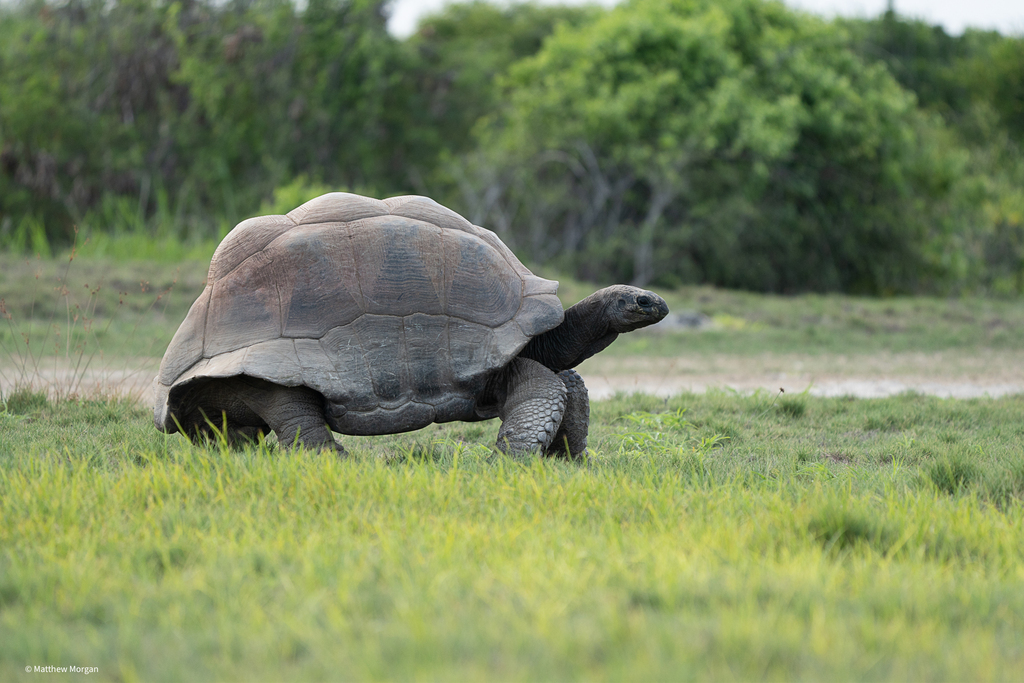
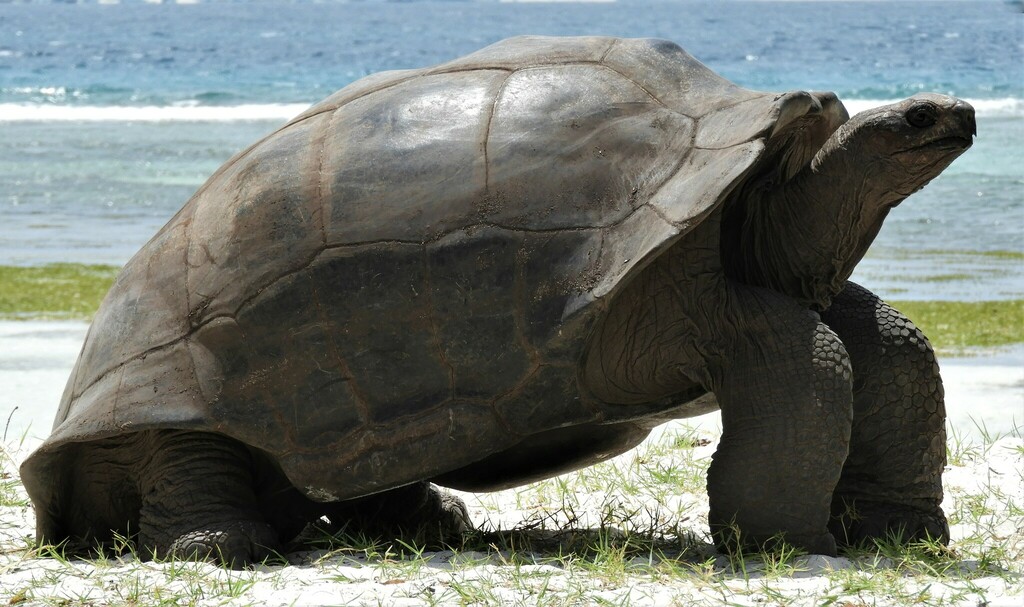
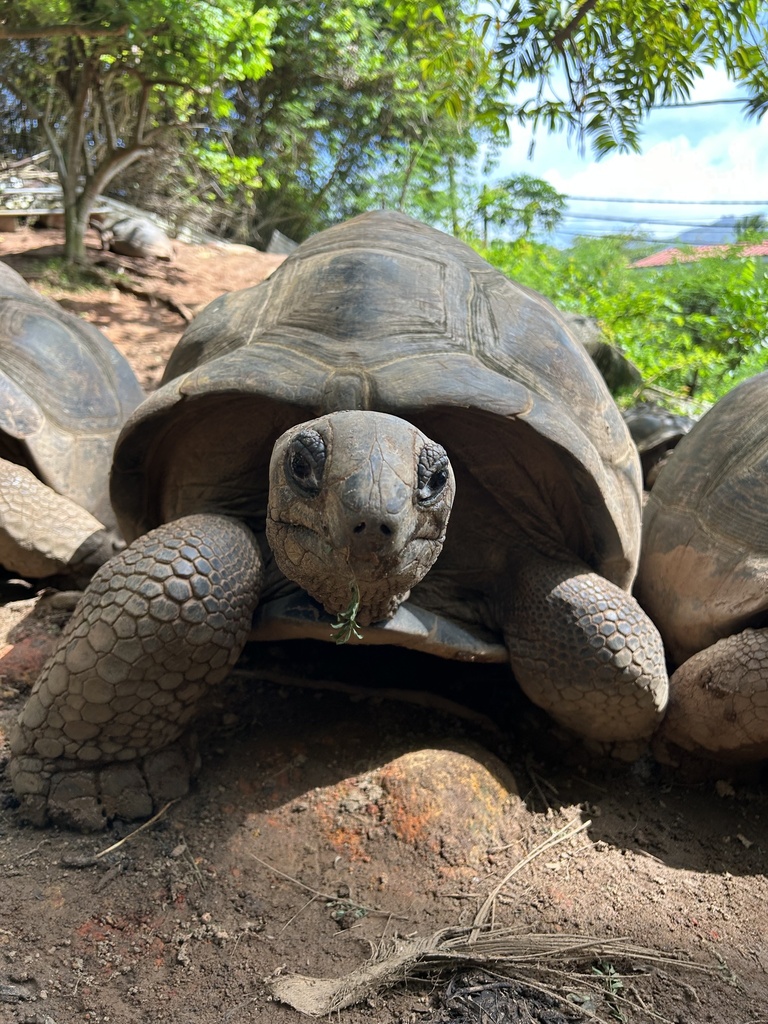
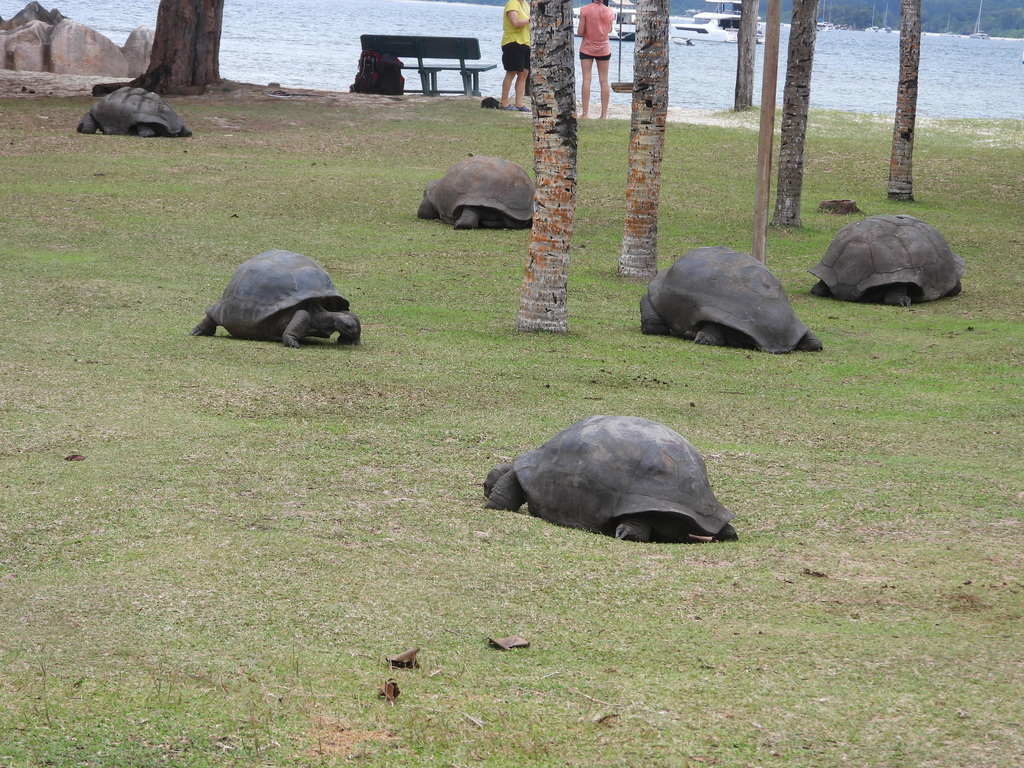
Photos show the species, not always the places on this page.
Length
Shell length on average about 122 cm (48 in) for males and about 91 cm (36 in) for females
Weight
Males about 250 kg (550 lb) on average and females about 159 kg (351 lb); animals in captivity are often lighter
Next to a person
A male shell is about two thirds as long as an adult person is tall, and the animal weighs as much as three or four adults
What it eats
Mostly plants: grasses, leaves, woody stems and fruit. On Aldabra they graze low, species-rich grassland known as tortoise turf. They also take small amounts of invertebrates and carrion, and have been seen hunting seabirds.
Around people
Slow, give space
How it lives
Sources differ on timing. One describes mating mostly in the north-west monsoon with nesting peaking in June to September and eggs taking two to five months to hatch; another lists breeding in February to May and July to September with about eight months of incubation. A female lays about 9 to 25 hard-shelled eggs, and fewer than half are usually fertile. Tortoises can live for well over a century, with some thought to be over 200 years old, but exact ages are hard to prove.
Where it goes
Aldabra giant tortoises do not migrate. They wander over their island to graze and find shade. On Curieuse, some tortoises stay near the ranger station and others roam freely across the island.
We only draw a journey on the map when scientists have tracked it or clearly documented it. For this animal we have not found one yet.
Populations
Vulnerable on the IUCN Red List (version 2.3), mainly because the only wild population lives on Aldabra Atoll in Seychelles and climate change is a threat. That population is over 100,000, the largest of any giant tortoise. Sailors hunted the species almost to extinction in the 19th century, with only a few thousand left around 1870, and it recovered to tens of thousands by the 1960s and has been stable since. Tortoises have been reintroduced to other islands, including Curieuse, Cousin and Frégate. About 250 were released on Curieuse in 1978, with 134 counted in 2019 and 111 in March 2023.
Meet it respectfully
Walk slowly and give tortoises space, and let them choose where to go. Never feed, ride, touch or block a tortoise, and do not pick up a young one. Stay on marked trails, because Curieuse is managed with visitor controls, trails and ranger monitoring. Follow your guide and the rangers.
Fun fact
Tap the bulb to light it up.
It is the only survivor of at least nine giant tortoise species that once lived on islands of the western Indian Ocean.
It acts as an ecosystem engineer, spreading seeds in its droppings and shaping the plants it grazes.
The Curieuse tortoises came from Aldabra, where about 250 animals were moved in 1978.
Aldabra giant tortoise in the Ocean Atlas
Places we have researched where this animal is recorded. It is never guaranteed, and some places are for watching from the boat only.
Travel with usComing soonTrusted referralExploringOn pause, story onlyEthics pass
Country colour: pink where we travel, blue where we are exploring or refer, grey for story only.
 Mauritius
 Réunion
 Seychelles
 Tanzania
Sources for this page
- Wikipedia, Aldabra giant tortoise, 2026
- Nature Seychelles, Aldabra giant tortoise, 2026
- Seychelles Parks and Gardens Authority, Curieuse tortoise census, 2023
- Molecular Ecology Resources, Aldabra giant tortoises genetic structure, 2022
- Wikipedia, Curieuse Island, 2026
- Deccan Chronicle, Curieuse giant tortoises, 2026
Facts checked 5 October 2026. Photos: Unsplash licence, or Creative Commons as shown on each photo.
Work in ocean travel?
We are always happy to hear from exceptional local operators, accommodation, conservation organisations and destination experts. If your work fits responsible, small-group ocean travel, we would love to learn more.
Partner with Ocean CallingSwim with humpback whales in Moʻorea, September 2027
from CHF 4,500