
Antarctic minke whale
Balaenoptera bonaerensis
In Antarctica's icy waters, a minke whale may surface near the ship, small for a whale, and easy to miss if you blink.
Near Threatened (IUCN, 2018) means it is close to becoming threatened.

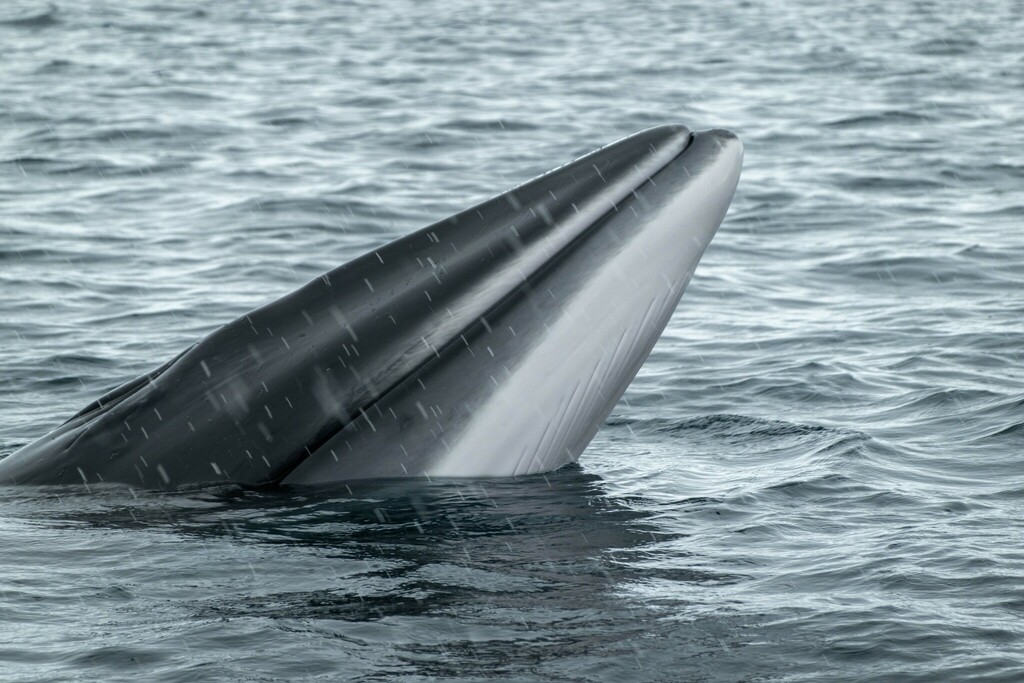
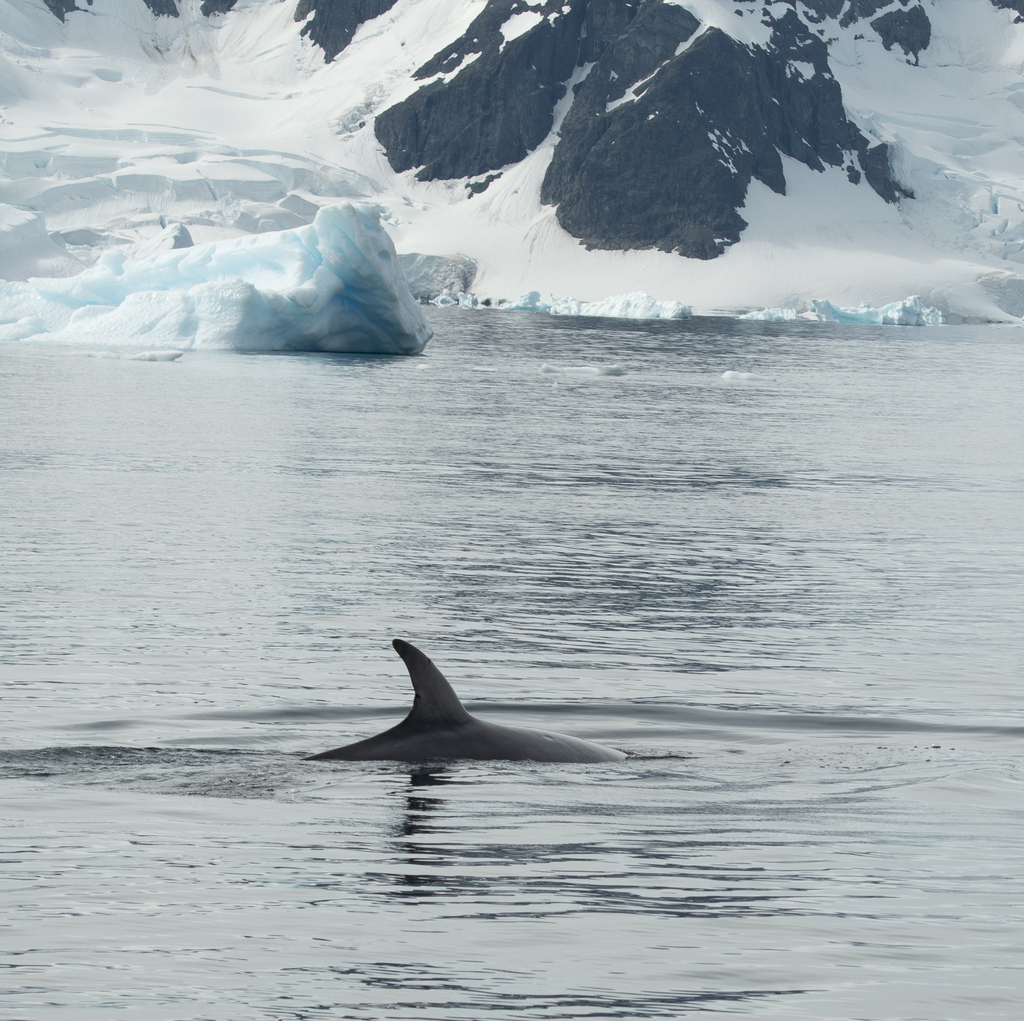
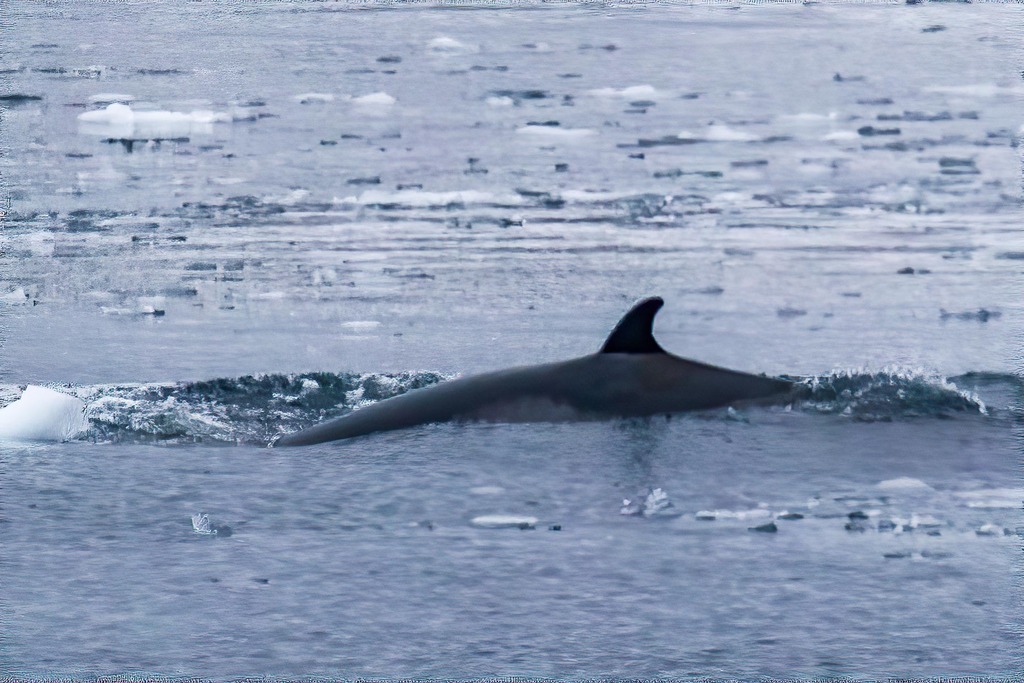
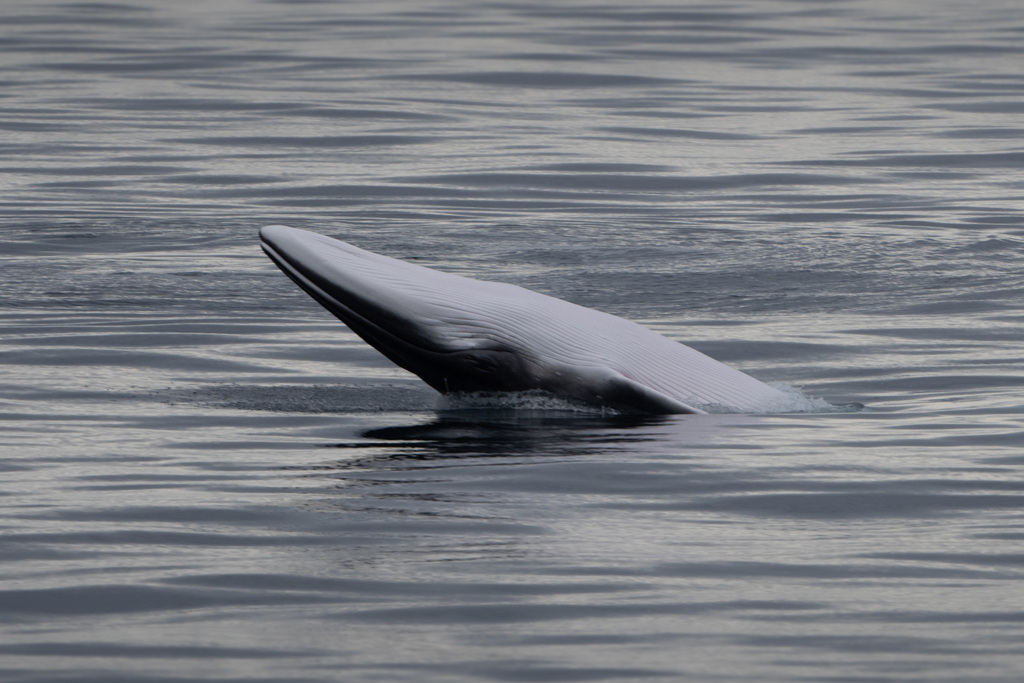
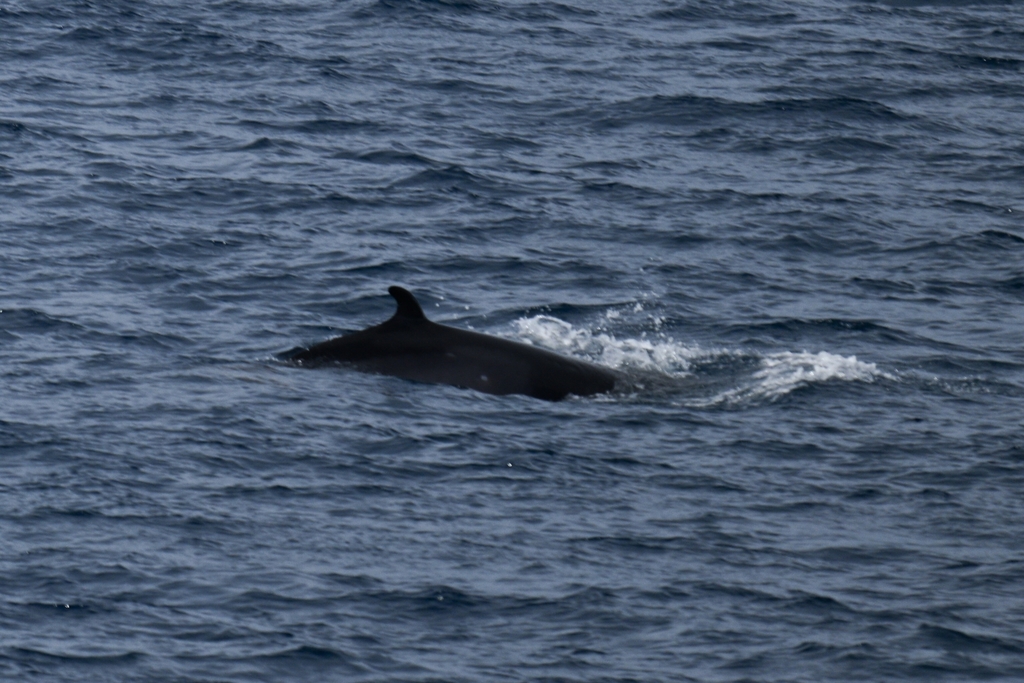
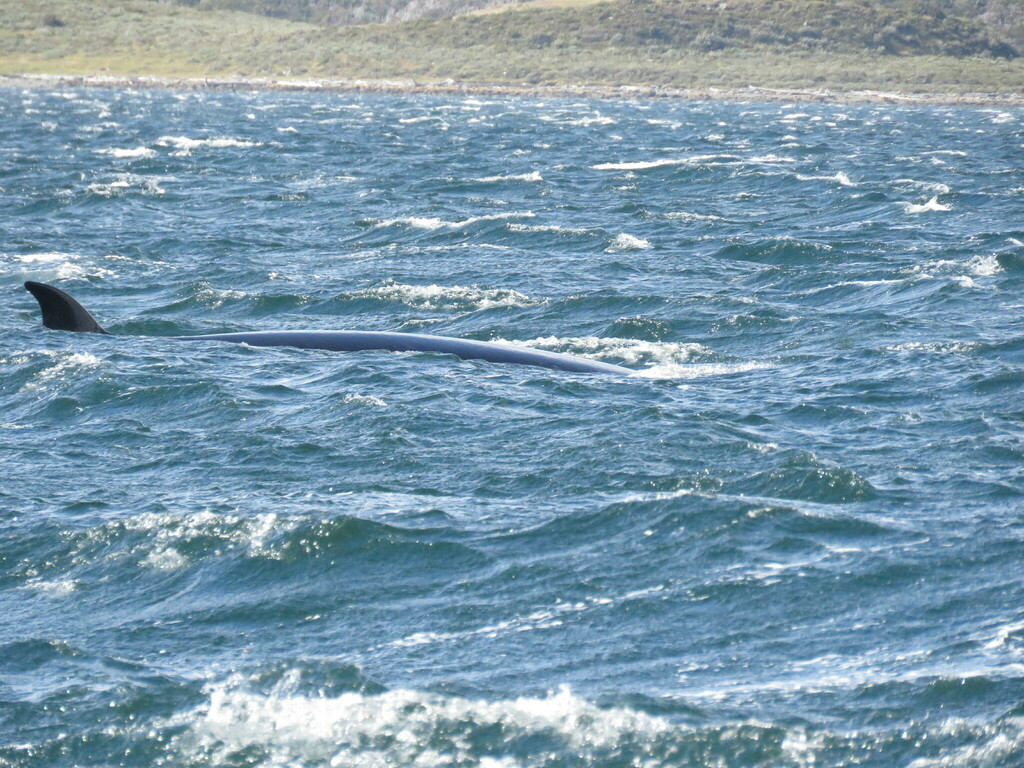
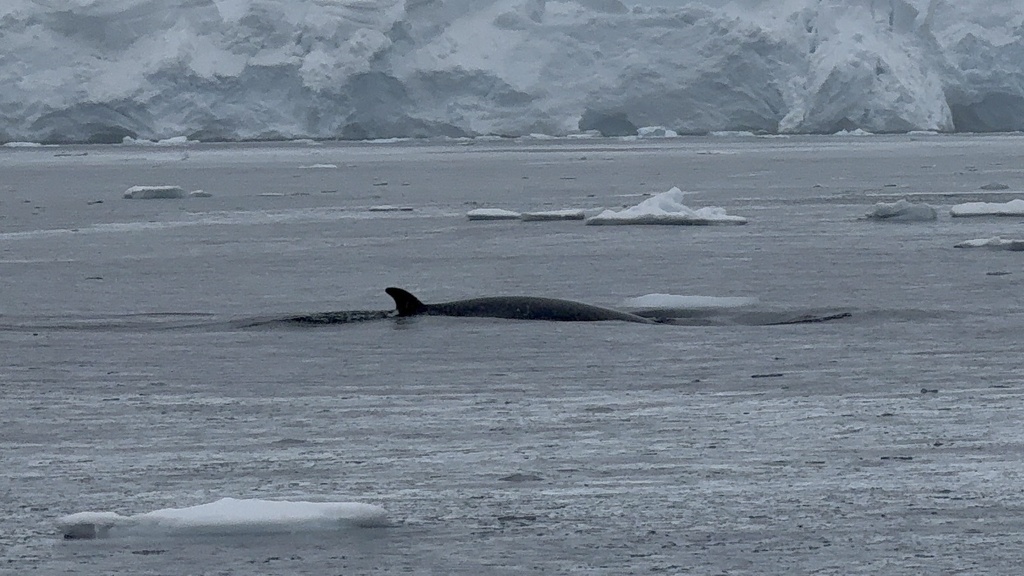
Photos show the species, not always the places on this page.
Length
Usually about 8.5 to 9 m (28 to 30 ft); females are generally larger
Weight
About 10 tonnes (22,000 lb)
Next to a person
About five adults lying head to toe, and as heavy as roughly 140 adults
What it eats
Almost only Antarctic krill while in Antarctic waters.
Around people
Calm, give space
How it lives
In the Antarctic, these minke whales feed almost entirely on krill and are most common near the edge of the pack ice, where they can feed under the ice and sometimes breathe through narrow cracks. They are often seen alone or in small groups, though larger groups can gather where krill is plentiful.
Where it goes
In summer they stay close to the Antarctic sea ice, south of about 60°S. Many are thought to migrate to warmer waters to breed, but their breeding grounds are still largely unknown.
We only draw a journey on the map when scientists have tracked it or clearly documented it. For this animal we have not found one yet.
Populations
A Southern Hemisphere species, separate from the common minke whale and larger than the dwarf minke. In summer it is closely tied to Antarctic sea ice south of about 60°S. Genetic studies recognise at least two Indo-Pacific Antarctic stocks.
Meet it respectfully
Leave the approach to the ship's crew. Vessels should slow down, never chase or cut across a whale's path, never crowd breathing holes in the ice and never block the whale's way to open water. Let the whale set the distance. We do not offer in-water encounters with this whale.
Fun fact
Tap the bulb to light it up.
In one study of tagged whales under the sea ice, Antarctic minkes lunged to feed up to about 102 times an hour, a very high rate.
It is a separate species from the common minke whale of the Northern Hemisphere and from the dwarf minke.
Antarctic minke whale in the Ocean Atlas
Places we have researched where this animal is recorded. It is never guaranteed, and some places are for watching from the boat only.
Travel with usComing soonTrusted referralExploringOn pause, story onlyEthics pass
Country colour: pink where we travel, blue where we are exploring or refer, grey for story only.
 Antarctica
 Argentina
 Australia
 Brazil
 Chile
Chile Togo
TogoSources for this page
- Australian Antarctic Program, 2026
- IUCN Red List, 2018
- IUCN SSC Cetacean Specialist Group
- IWC, Minke whale
- Friedlaender et al., 2014
Facts checked 26 September 2026. Photos: Unsplash licence, or Creative Commons as shown on each photo.
Work in ocean travel?
We are always happy to hear from exceptional local operators, accommodation, conservation organisations and destination experts. If your work fits responsible, small-group ocean travel, we would love to learn more.
Partner with Ocean CallingNot sure where to go? Get your Ocean Match
from CHF 19