
Beluga whale
Delphinapterus leucas
Belugas play, communicate and gather in Arctic waters. A close pass can feel personal, but we cannot know what an individual whale intends.
Least Concern (IUCN, 2017) means it is not at high risk of extinction worldwide today. The Cook Inlet population in Alaska is Critically Endangered.

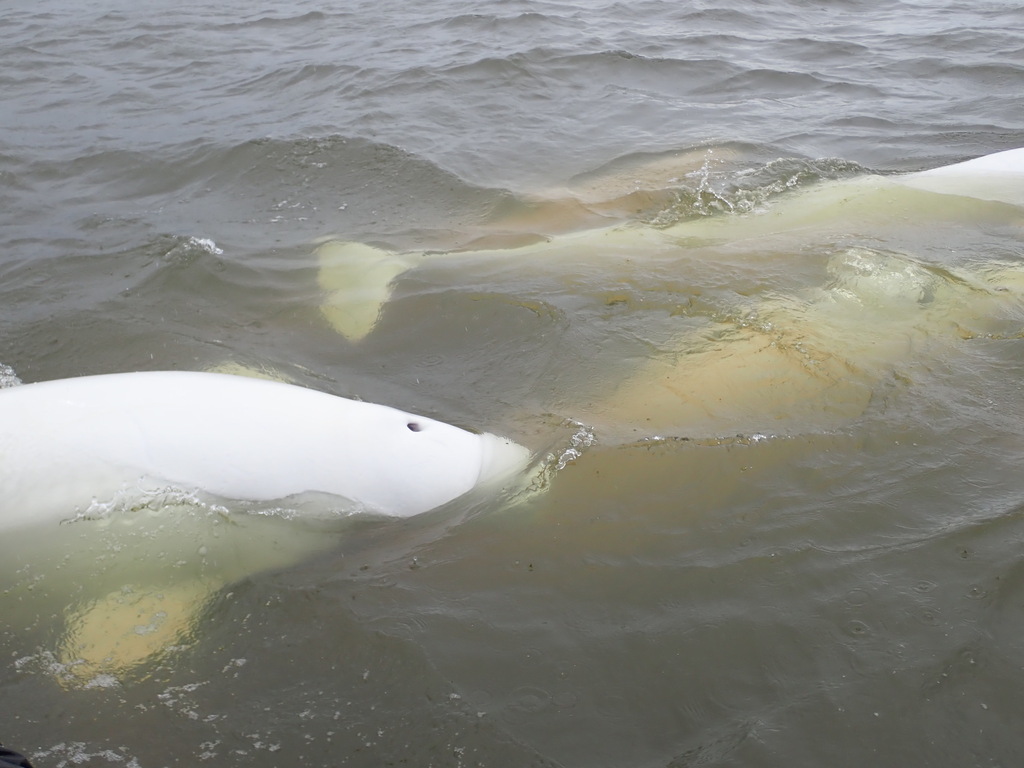
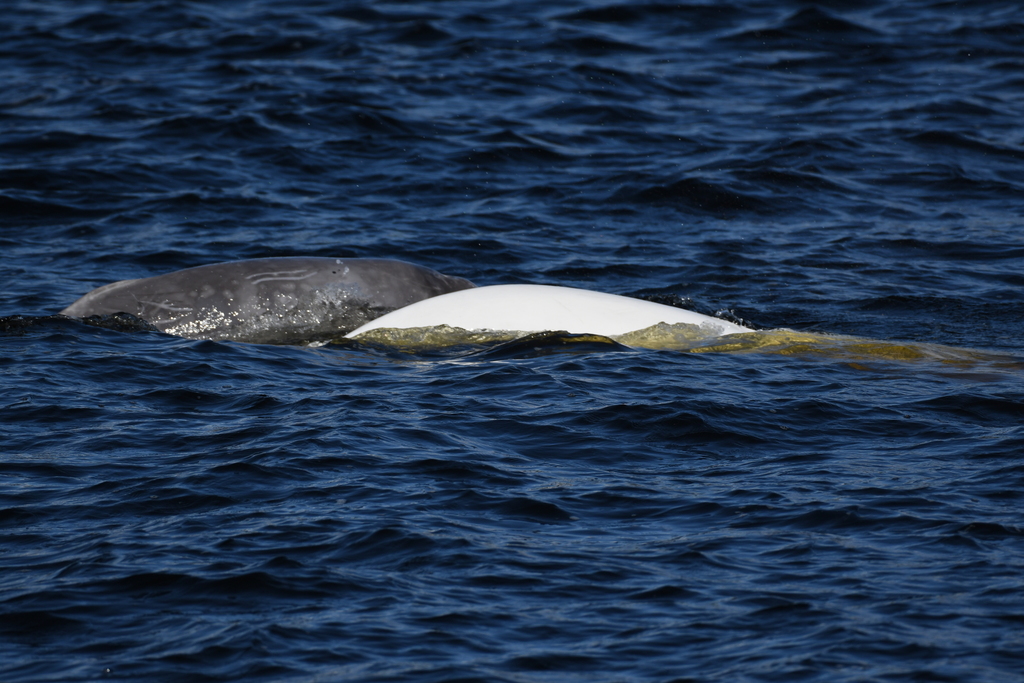
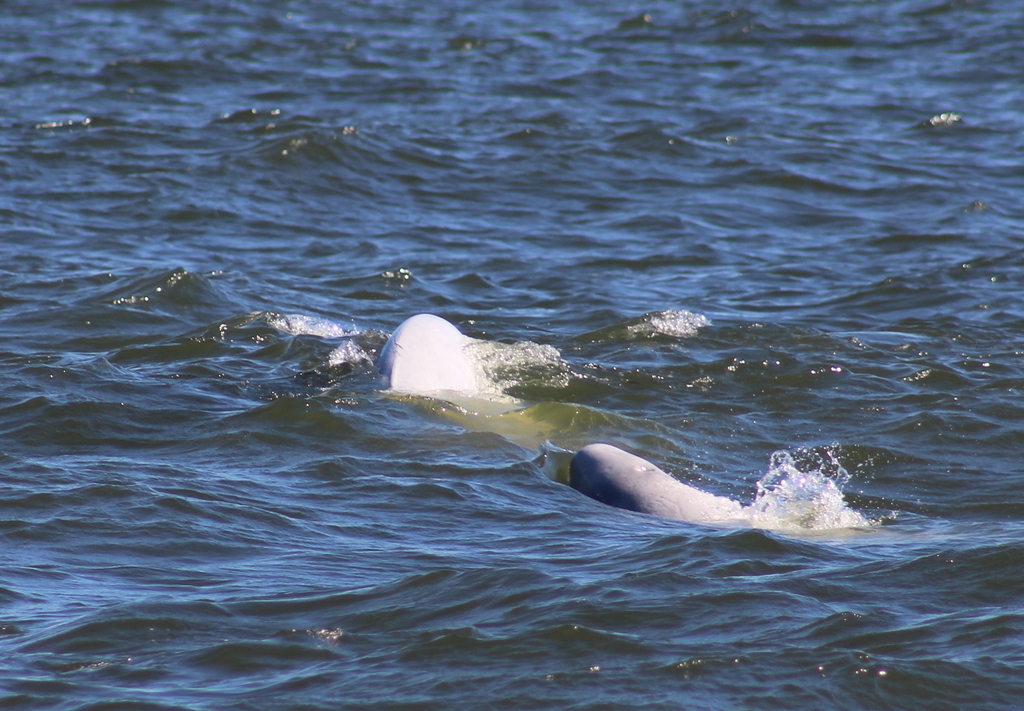
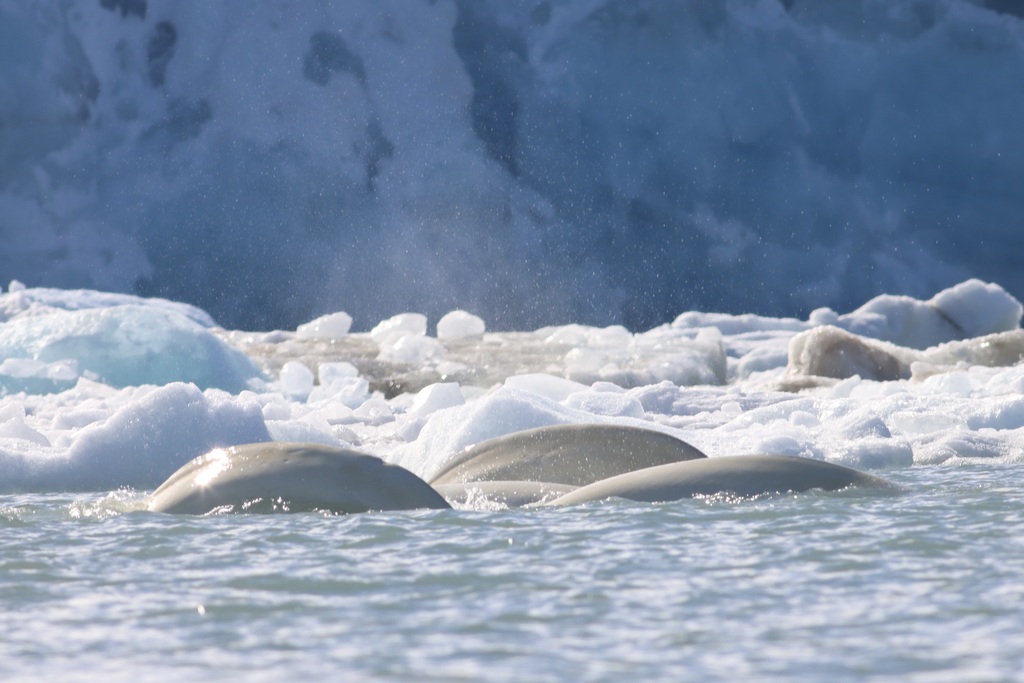
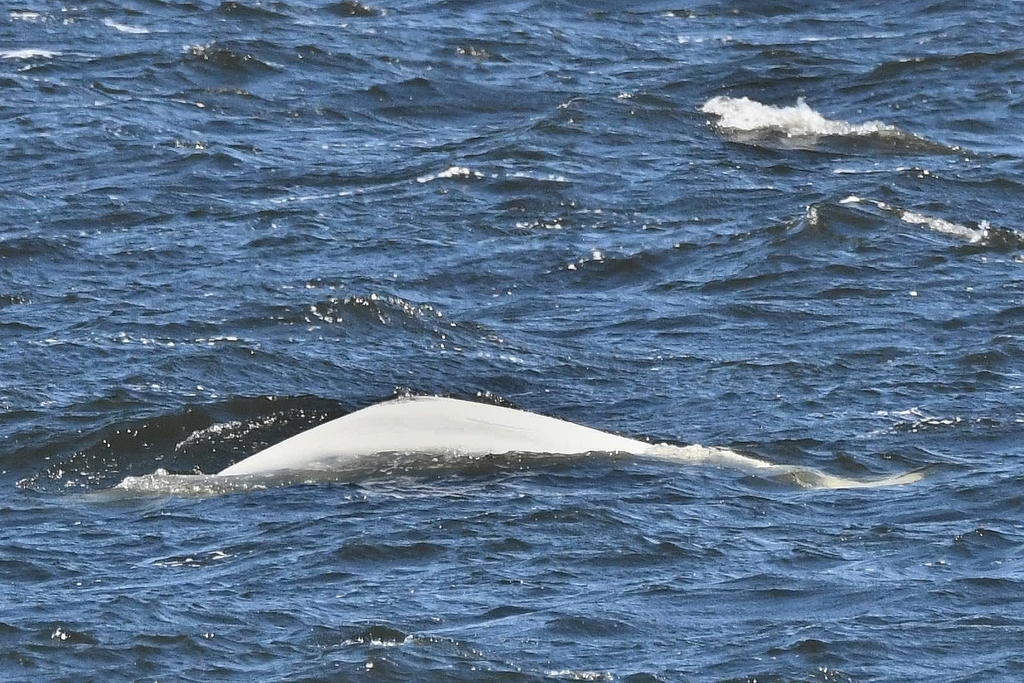
Photos show the species, not always the places on this page.
Length
Up to about 4.9 m (16 ft)
Weight
Average about 1,430 kg (3,150 lb)
Next to a person
Up to about 3 adults lying head to toe
What it eats
Many kinds of fish, such as salmon, cod, herring and smelt, plus squid, octopus, crabs, shrimp and clams. The menu changes with place and season.
Around people
Calm, give space
How it lives
Belugas are social and very vocal. They use clicks to find their way, and whistles, squeals and chirps to communicate, so people call them canaries of the sea. A group can be one or two whales or several hundred, and whales move between groups. Calves are born in summer in warmer water and nurse for at least two years. Researchers have described belugas playing with objects, water and each other.
Where it goes
Many belugas spend summer in shallow coastal waters and river estuaries and may move to deeper water in other seasons. Some populations travel far, for example from the Beaufort Sea to the Bering Sea. Others stay in one region: Cook Inlet belugas remain in their inlet, and St Lawrence belugas move only between summer and winter areas of the estuary and gulf.
Populations
The species is Least Concern, but populations are very different. In Canada, COSEWIC (2020) assessed Western Hudson Bay as Not at Risk, Eastern Hudson Bay as Threatened, and Cumberland Sound and Ungava Bay as Endangered. The endangered St Lawrence Estuary population was estimated at 1,530 to 2,180 belugas in 2022. In Alaska, the endangered Cook Inlet population has a best estimate of 331 whales.
Meet it respectfully
Never swim with, touch, feed or chase belugas, and never split a group or move toward calves. A whale that comes close is not an invitation to interact. In Canada, DFO counts swimming with or interacting with a marine mammal as disturbance. In the Saguenay and St Lawrence, local rules ask boats to keep at least 400 m and to move slowly away if belugas come near. Elsewhere, we follow the local DFO or NOAA distances. Sightings are never guaranteed.
Fun fact
Tap the bulb to light it up.
Belugas use clicks to find their way (echolocation) and many different calls to stay in touch with each other.
Some beluga populations come back to the same summer areas year after year, while others stay in one region.
In the Churchill River estuary in August 2020, researchers photographed 2,261 belugas. The whales stayed nearer to kayaks than expected, farther from paddleboards, and were neutral to motorboats and Zodiacs. This measures distance, not feelings.
Belugas are born dark grey. Their skin gets lighter with age and turns white as they become adults.
Source: NOAA Fisheries, 2026
Unlike many whales, belugas have neck bones that are not fused, so they can nod and turn their heads from side to side.
Source: NOAA Fisheries, 2026
A 2024 study of four Canadian populations found that one simple contact call sounds a little different from place to place. The St Lawrence and Beaufort Sea belugas, the farthest apart, differed the most.
In a small 2026 study of four belugas living at the New York Aquarium, two showed self-directed behaviour at a mirror and one checked a mark on its body. The authors see evidence for the capacity for self-recognition, but more whales need testing.
Source: Mildener et al., 2026, PLOS ONE
Follow its journey
Choose a journey and watch it travel. Every line comes from satellite tracking or documented research, and the source is named.
StartEndJourney (the line joins documented areas; real paths vary)
Beluga whale in the Ocean Atlas
Places we have researched where this animal is recorded. It is never guaranteed, and some places are for watching from the boat only.
Travel with usComing soonTrusted referralExploringOn pause, story onlyEthics pass
Country colour: pink where we travel, blue where we are exploring or refer, grey for story only.
 Canada
 Denmark
 Germany
 Greenland
 Netherlands
 Norway
 Russia
 Sweden
 United Kingdom
 United States
Read more about the beluga whale
Sources for this page
- NOAA Fisheries, 2026
- COSEWIC, 2020
- Lesage, Canada Water Agency, 2026
- Ausen et al., 2022
- Ham et al., 2023
- Fisheries and Oceans Canada, 2026
- Parks Canada, Saguenay-St Lawrence Marine Park
- IUCN SSC Cetacean Specialist Group
Facts checked 26 September 2026. Photos: Unsplash licence, or Creative Commons as shown on each photo.
Work in ocean travel?
We are always happy to hear from exceptional local operators, accommodation, conservation organisations and destination experts. If your work fits responsible, small-group ocean travel, we would love to learn more.
Partner with Ocean Calling