
Blacknose shark
Carcharhinus acronotus
A small, quick shark over sandy flats and reef rubble. No sighting is ever a promise.
Endangered (IUCN, 2021) means it is at very high risk of extinction in the wild. The listing is based on population decline (criterion A2bd), mainly from fishing.
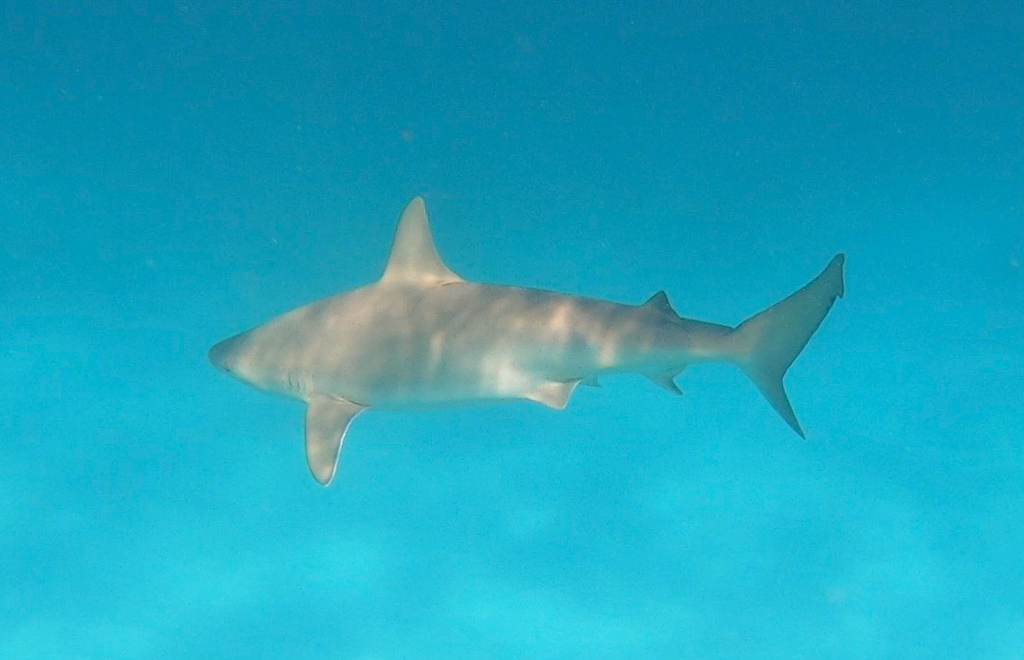
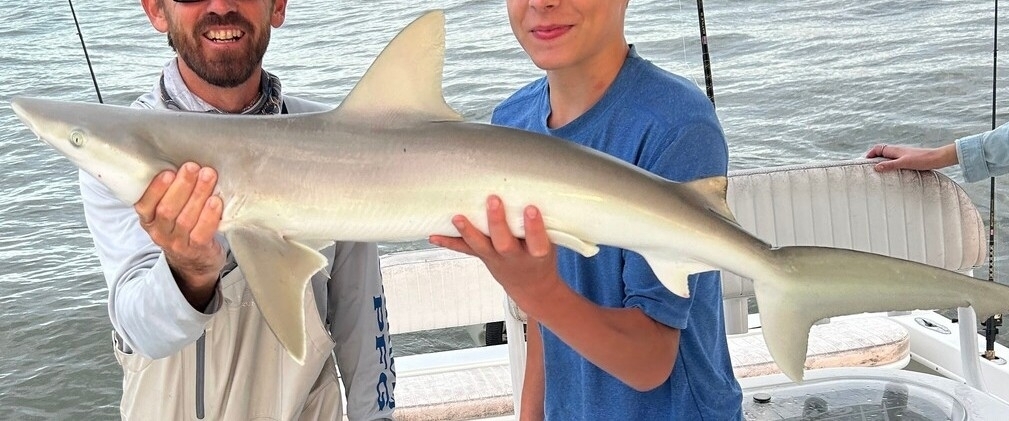
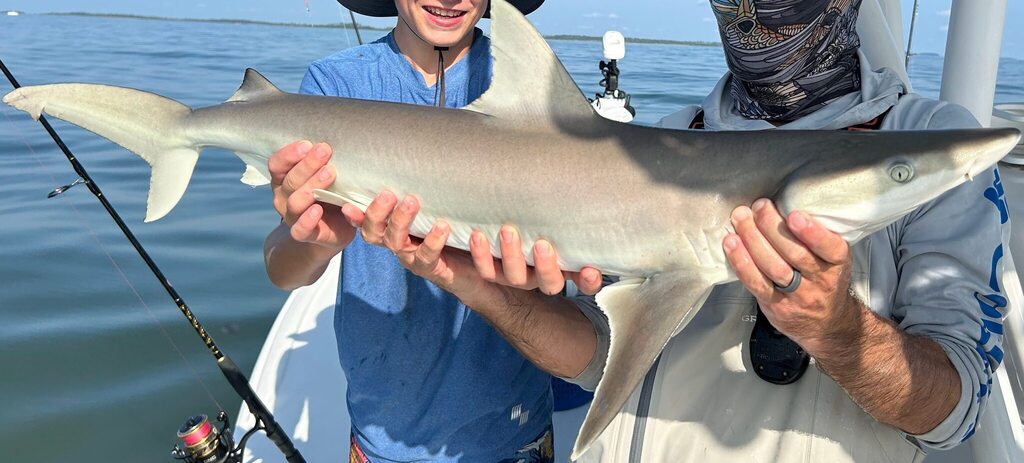
Photos show the species, not always the places on this page.
Length
Typically 1.3 to 1.4 m (4.3 to 4.6 ft). The maximum recorded is about 2.0 m (6.6 ft)
Weight
Typically about 7 to 11 kg (15 to 24 lb). The maximum published weight is 18.9 kg (42 lb)
Next to a person
A little shorter than an adult is tall, and about as heavy as a toddler
What it eats
Mostly small bony fish, including pinfish, croakers, porgies and anchovies, as well as octopus and other cephalopods. Blacknose sharks are quick swimmers, and may form schools that sometimes travel with schooling mullet or anchovies.
Around people
Calm, give space
How it lives
Blacknose sharks give birth to live young, nourished through a placenta. Litters are small, usually one to six pups (NOAA says up to eight) after a gestation of roughly 8 to 11 months, and pups are born in shallow nursery areas such as coastal bays and mangroves. Newborns are 38 to 50 cm (15 to 20 in) long. Sharks mature at about 4 to 7 years. Estimates of maximum age are about 16 to 20 years, and tag-recapture work suggests up to about 23 years. Their life history is slow, so populations recover slowly.
Where it goes
Blacknose sharks show a strong attachment to home areas: juveniles and adults have been recorded returning to the same local area year after year. Off the south-eastern United States they move north in summer and south, or possibly offshore, in winter, and a similar pattern occurs in the Gulf of Mexico. Young sharks stay in shallow water, while adults prefer deeper water, usually 18 to 64 m. I found no movement data for the Caribbean.
We only draw a journey on the map when scientists have tracked it or clearly documented it. For this animal we have not found one yet.
Populations
The blacknose shark lives in the western Atlantic from North Carolina to southern Brazil, including the Gulf of Mexico and the Caribbean. The IUCN lists it as Endangered (2021; assessed 2019, criterion A2bd). FishBase rates its resilience as low (population doubling time 4.5 to 14 years). In United States waters, NOAA says the Atlantic stock is overfished and subject to overfishing (2011 assessment), although a rebuilding plan is promoting growth, and the status of the Gulf stock is unknown. Jamaica lies within its Caribbean range, but I did not find a published count or a record specific to Jamaica.
Meet it respectfully
Watch quietly and let the shark choose the distance. Never chase, touch, feed or bait it. If a shark arches its back, lowers its pectoral fins and opens its jaws, it is warning you, so back away slowly and give it room. Follow your guide and local rules.
Fun fact
Tap the bulb to light it up.
It is named for the black blotch on the tip of its snout, which is most obvious in young sharks and may fade in older ones.
It was first described in 1860 by the Cuban naturalist Felipe Poey, from a male caught off Cuba.
It has never been implicated in an attack on people, but it has been seen giving a threat display, with an arched back, lowered pectoral fins and gaping jaws.
Blacknose shark in the Ocean Atlas
Places we have researched where this animal is recorded. It is never guaranteed, and some places are for watching from the boat only.
Travel with usComing soonTrusted referralExploringOn pause, story onlyEthics pass
Country colour: pink where we travel, blue where we are exploring or refer, grey for story only.
 The Bahamas
 Brazil
 Jamaica
 Mexico
 United States
 US Virgin Islands
Sources for this page
- FishBase, 2026
- IUCN Red List, 2021
- GBIF, IUCN Red List category record, 2026
- NOAA Fisheries, 2026
- Wikipedia, Blacknose shark, 2026
- Frazier et al., 2014, F1000Research
Facts checked 5 October 2026. Photos: Unsplash licence, or Creative Commons as shown on each photo.
Work in ocean travel?
We are always happy to hear from exceptional local operators, accommodation, conservation organisations and destination experts. If your work fits responsible, small-group ocean travel, we would love to learn more.
Partner with Ocean Calling