
Bowhead whale
Balaena mysticetus
The bowhead is the whale of the Arctic ice and may live for more than 200 years. Seeing one is a rare and quiet moment.
Least Concern (IUCN, 2018) means it is not at high risk of extinction worldwide today. The East Greenland, Svalbard and Barents Sea population is Endangered.
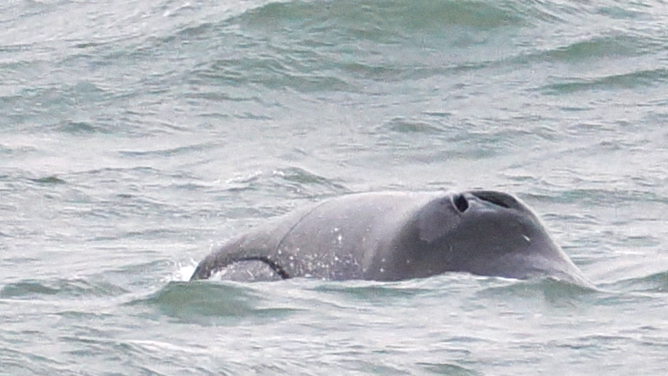
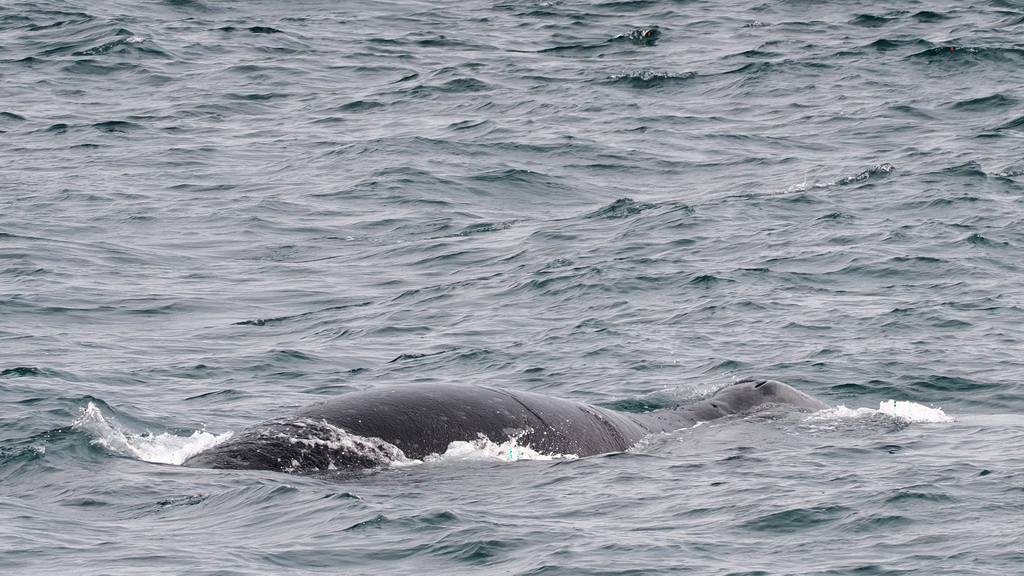
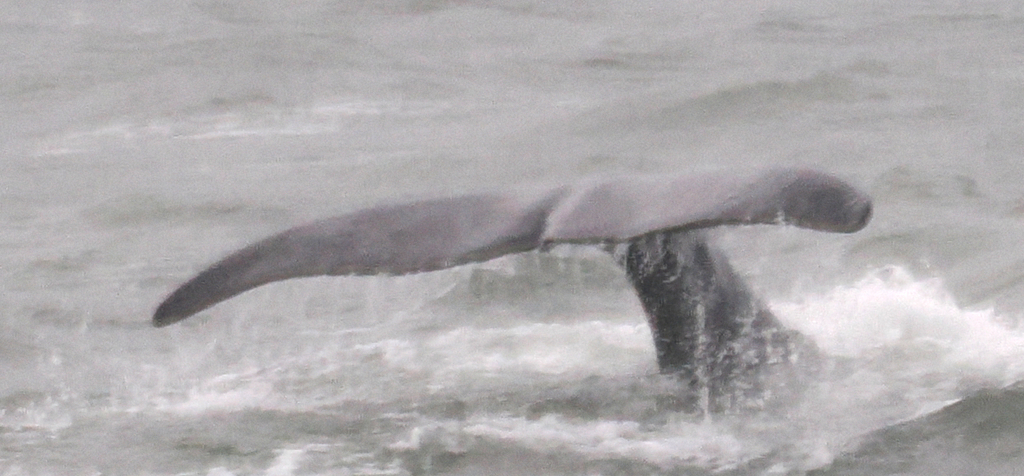
Photos show the species, not always the places on this page.
Length
Up to about 19 to 20 m (62 to 66 ft)
Weight
Usually 70 to 100 tonnes (77 to 110 US tons)
Next to a person
About ten times as long as a person
What it eats
Tiny animals such as copepods, krill and amphipods, filtered through very long baleen.
Around people
Calm, give space
How it lives
The bowhead lives all year in Arctic and subarctic waters near sea ice. It has no dorsal fin and a huge bow-shaped head, more than a third of its body, which it can use to break through ice. Females mature at about 25 years and have one calf every 3 to 4 years. It is the longest-living mammal known.
Where it goes
Bowheads follow the ice. In spring many gather in Disko Bay, West Greenland, to feed. Five whales tagged there in May 2001 crossed Baffin Bay in 9 to 10 days to the North Water near Lancaster Sound in Canada. In Alaska, the Western Arctic population winters in the Bering Sea and moves to the Beaufort Sea as the ice breaks up.
Populations
There are several populations, and they differ a lot. About 15,229 live in the Western Arctic (Bering, Chukchi and Beaufort Seas) and about 7,660 in Eastern Canada and West Greenland, and both are large or growing. The East Greenland, Svalbard and Barents Sea population and the Okhotsk Sea population are still much smaller and of higher concern. All were reduced by commercial whaling, and the global Least Concern status does not mean every population has recovered.
Meet it respectfully
Watch from a slow boat at a good distance and slow down near the ice edge. Never approach head-on, chase a whale or block its way to open water, and never crowd feeding whales or a mother with her calf. We watch from the boat only, and follow local rules and Inuit community guidance.
Fun fact
Tap the bulb to light it up.
Old stone harpoon tips found in living bowheads support the idea that they can live more than 200 years.
A bowhead's bow-shaped skull can break through sea ice about 20 cm thick.
Five bowheads tagged in Disko Bay, West Greenland, in May 2001 crossed Baffin Bay to Canada in only 9 to 10 days.
Source: Heide-Jørgensen et al., 2003, Arctic, bowhead whales from Greenland to Canada in ten days
The Western Arctic bowhead population has recovered to about 15,229 whales after whaling had reduced it to fewer than 3,000.
Source: NOAA Fisheries, Bowhead whale
Follow its journey
Watch it travel. Every line comes from satellite tracking or documented research, and the source is named.
StartEndJourney (the line joins documented areas; real paths vary)
Bowhead whale in the Ocean Atlas
Places we have researched where this animal is recorded. It is never guaranteed, and some places are for watching from the boat only.
Travel with usComing soonTrusted referralExploringOn pause, story onlyEthics pass
Country colour: pink where we travel, blue where we are exploring or refer, grey for story only.
 Canada
 Denmark
 Greenland
 Netherlands
 Norway
 Russia
 Sweden
 United States
Sources for this page
- NAMMCO, Bowhead whale
- NOAA Fisheries, Bowhead whale
- Heide-Jørgensen et al., 2003, Arctic, bowhead whales from Greenland to Canada in ten days
- IUCN SSC Cetacean Specialist Group, Red List status of cetaceans
- CMS COP14, review of cetaceans, bowhead whale
- GBIF occurrence records by country, checked 26 Sep 2026
Facts checked 26 September 2026. Photos: Unsplash licence, or Creative Commons as shown on each photo.
Work in ocean travel?
We are always happy to hear from exceptional local operators, accommodation, conservation organisations and destination experts. If your work fits responsible, small-group ocean travel, we would love to learn more.
Partner with Ocean Calling7-day freediving course in Coron, Palawan
CHF 1,480