
Chinese white dolphin
Sousa chinensis
A coastal dolphin of the Pearl River and nearby shores. Calves start dark grey. Many adults fade to pale pink or white.
Vulnerable (IUCN) means it faces a high risk of extinction in the wild.
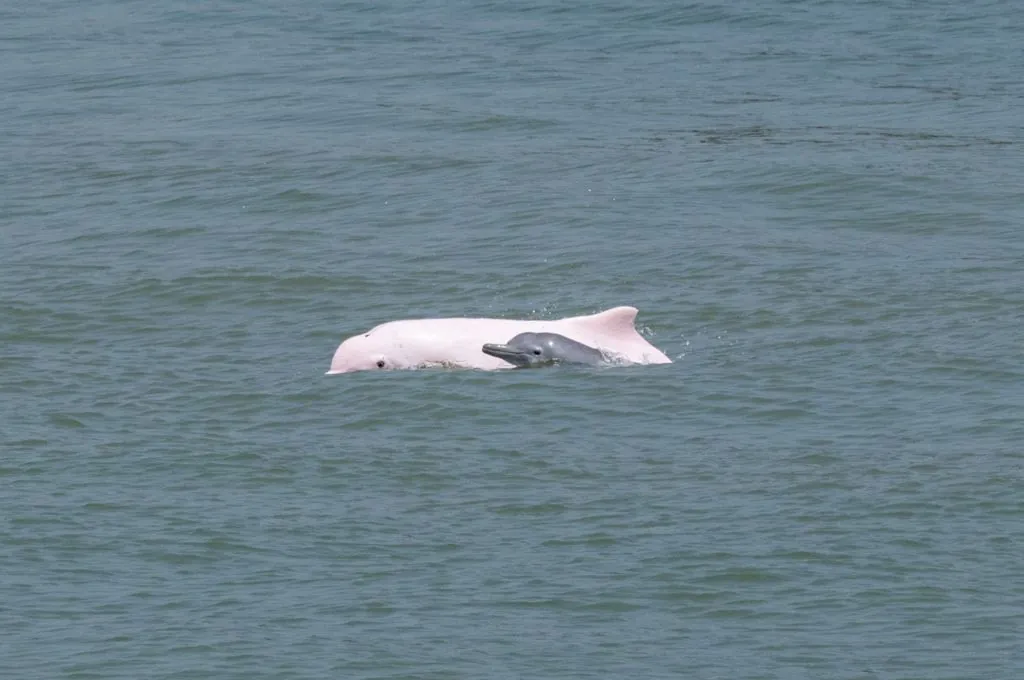
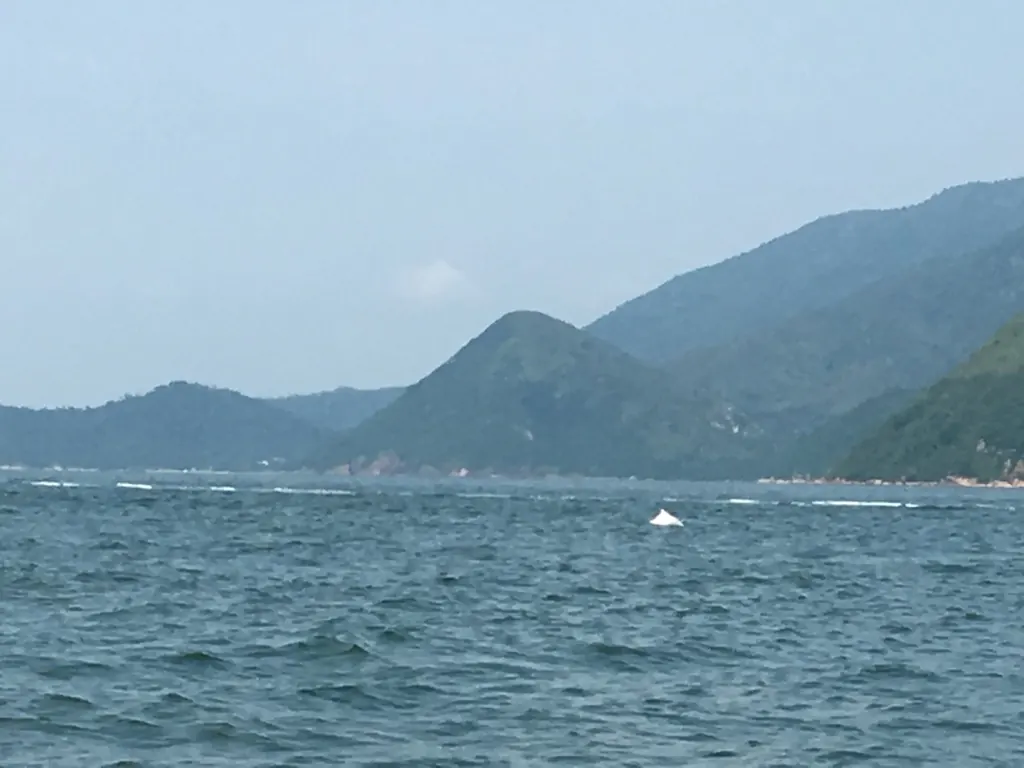
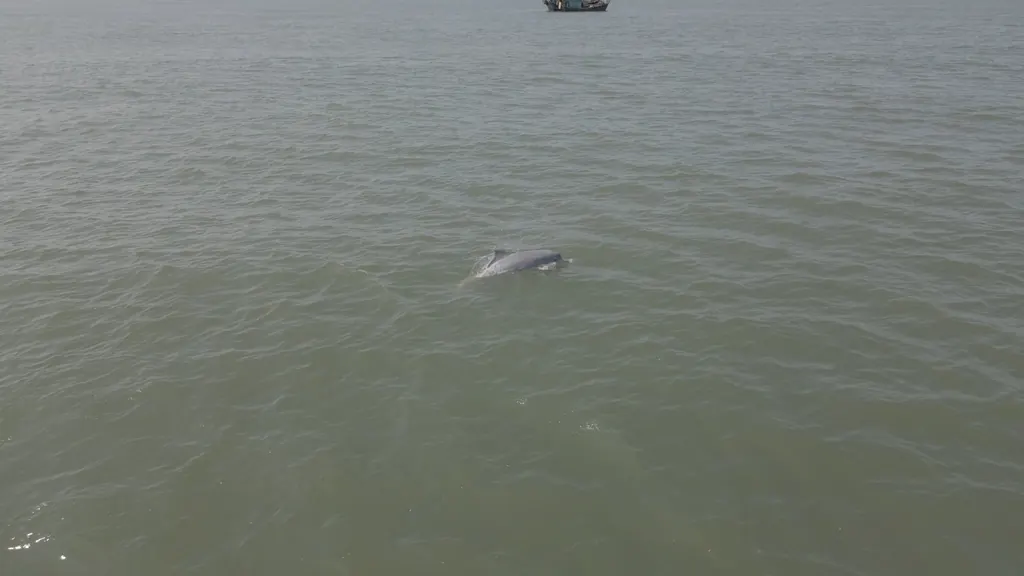
Photos show the species, not always the places on this page.
Length
Usually about 2 to 2.8 m (6.6 to 9.2 ft) as adults
Weight
Often around 150 to 230 kg (330 to 507 lb); large males can be heavier
Next to a person
About as long as one to one-and-a-half adults lying down
What it eats
Estuary and reef fish such as mullet and croakers, plus some squid and crustaceans
Around people
Calm, give space
How it lives
They live in shallow, often murky coastal water and river mouths, usually in small groups. Mothers stay close to calves. The Pearl River estuary holds one of the better-known populations, shared across Guangdong, Hong Kong and Macau waters.
Where it goes
They stay near the coast. Animals in the Pearl River estuary move between Hong Kong, Macau and Guangdong rather than crossing open ocean.
We only draw a journey on the map when scientists have tracked it or clearly documented it. For this animal we have not found one yet.
Populations
The species ranges along tropical and subtropical coasts of the western Pacific and eastern Indian Ocean. The Pearl River estuary population is one of the best studied. Numbers in several Chinese groups have been falling. The Taiwan west-coast form is treated as a separate subspecies by some authorities.
Meet it respectfully
This is a Vulnerable coastal species. Watch from a boat or the shore. Go slowly, keep your distance and never chase, surround or swim with them. Approach rules differ by place and some are still being written. Ocean Calling does not offer a Macau or Pearl River swim.
Fun fact
Tap the bulb to light it up.
The pink look of some adults is not a pigment. It comes from blood vessels near the skin, used to shed heat.
Newborns are dark grey and lighten as they grow.
A humpback dolphin is not a baby humpback whale. The name comes from the shape of the back and fin.
The pink colour of some Pearl River adults comes from extra blood near the skin, used to dump heat, not from a pink pigment.
Chinese white dolphin in the Ocean Atlas
Places we have researched where this animal is recorded. It is never guaranteed, and some places are for watching from the boat only.
Travel with usComing soonTrusted referralExploringOn pause, story onlyEthics pass
Country colour: pink where we travel, blue where we are exploring or refer, grey for story only.
 Australia
 Bangladesh
 Cambodia
 China
 Egypt
 Eritrea
 Hong Kong
 India
 Macau
 Malaysia
 Mayotte
 Myanmar
 Oman
 Singapore
 Taiwan
 Thailand
 Vietnam
Sources for this page
- IUCN Red List, Sousa chinensis
- Hong Kong Dolphin Conservation Society
- Macao Magazine, pink dolphins
- iNaturalist, Sousa chinensis
Facts checked 30 September 2026. Photos: Unsplash licence, or Creative Commons as shown on each photo.
Work in ocean travel?
We are always happy to hear from exceptional local operators, accommodation, conservation organisations and destination experts. If your work fits responsible, small-group ocean travel, we would love to learn more.
Partner with Ocean CallingNew: tiger sharks in Fuvahmulah, January or March 2027
from CHF 2,900