
Dusky shark
Carcharhinus obscurus
A long grey shape passing the edge of the shelf, on migrations that span ocean basins, and no sighting is ever a promise.
Endangered (IUCN, 2018) means it is at very high risk of extinction in the wild. It grows slowly, matures late and has small litters, so it cannot recover quickly from fishing.
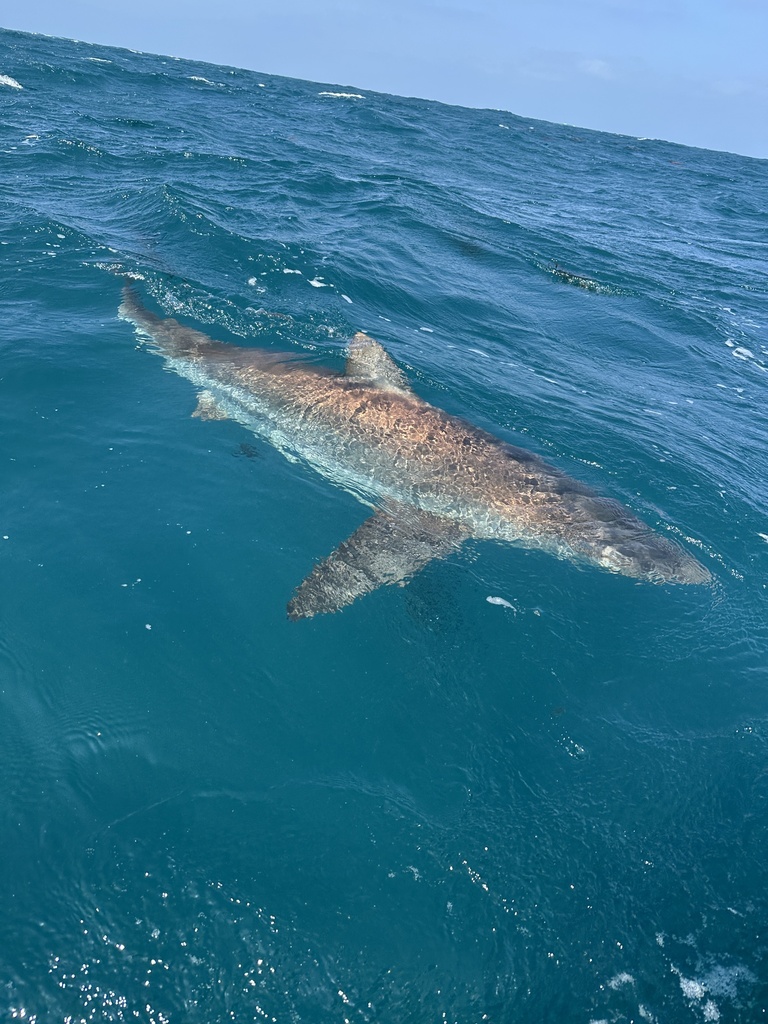
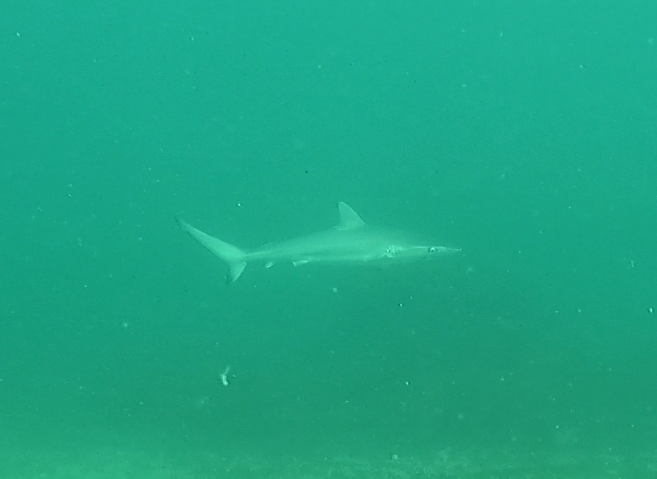
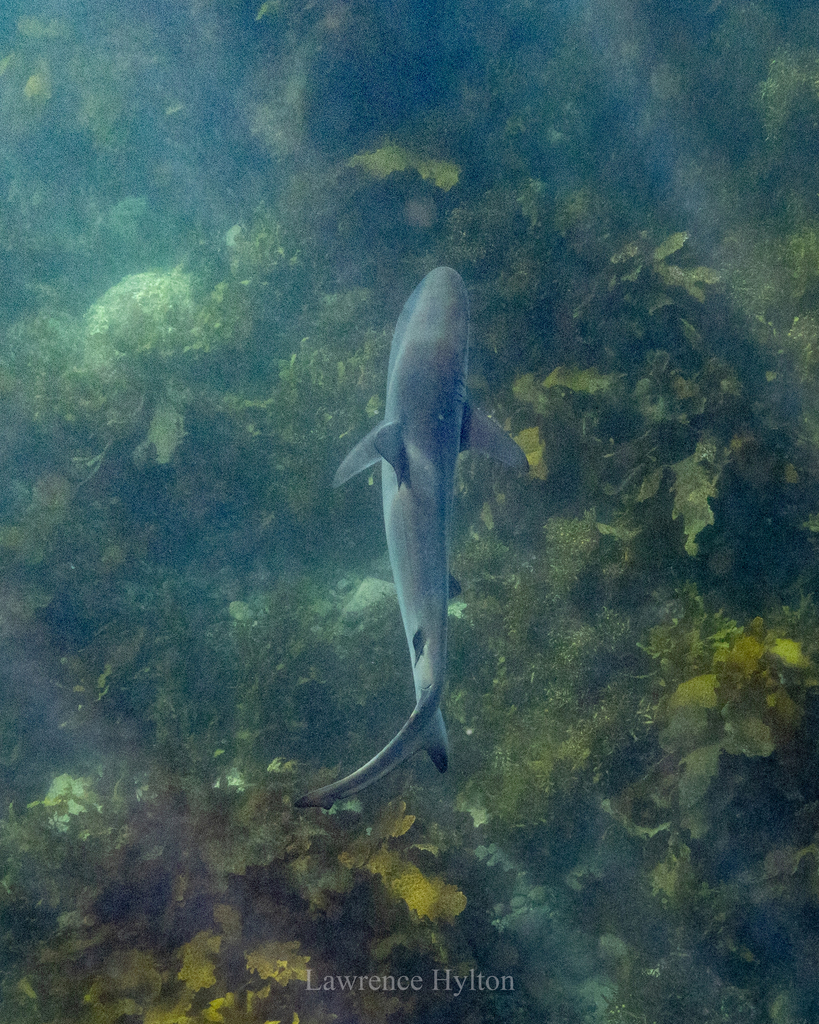
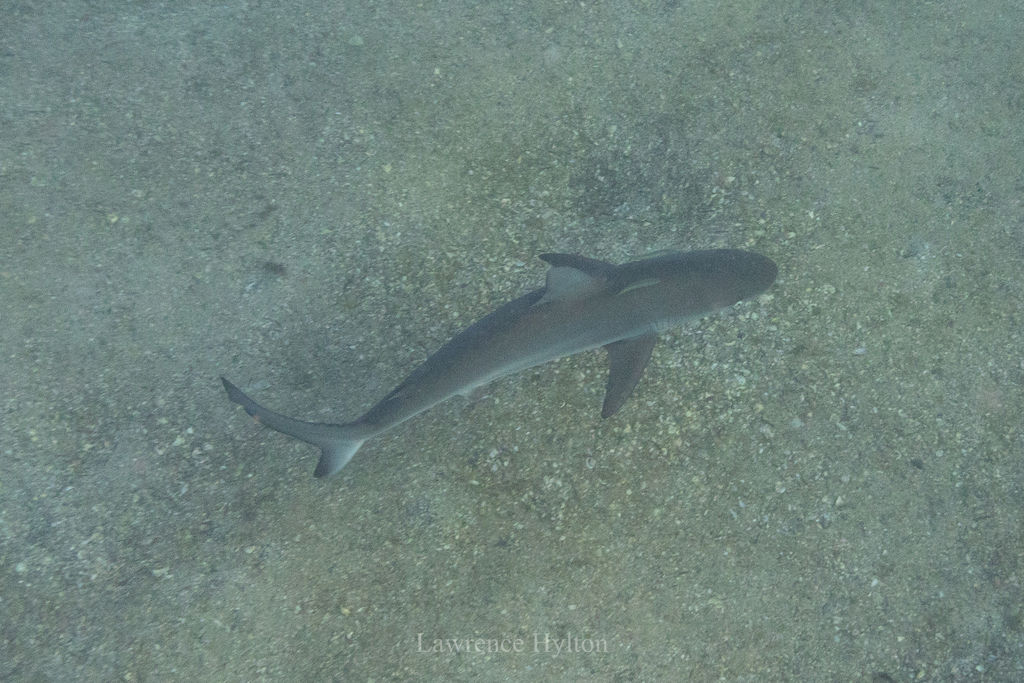
Photos show the species, not always the places on this page.
Length
Commonly about 3.2 m (10.5 ft). The maximum recorded is 4.2 m (13.8 ft) according to FishBase and Wikipedia, and the Florida Museum gives 3.6 to 4 m (11.8 to 13 ft). Females grow larger than males. Pups are 70 to 100 cm (28 to 39 in) at birth.
Weight
Commonly about 160 to 180 kg (350 to 400 lb). The maximum published weight is 346.5 kg (764 lb) in FishBase, and 372 kg (820 lb) in Wikipedia.
Next to a person
About as long as two adults lying head to toe, and as heavy as two or three adults.
What it eats
A wide range of bony fish and cartilaginous fish, including small sharks, skates and rays, plus squid, octopus and crustaceans. The bluefish is a major prey in the north-west Atlantic. Very rarely the largest sharks take marine mammals, mostly as carrion. It is an apex predator.
Around people
Calm, give space
How it lives
A large, slender shark of coastal and offshore waters, found from the surface to about 400 m. Adults are commonly at 200 to 400 m and young stay in shallower water. It is one of the slowest-growing and latest-maturing sharks, maturing at around 16 to 23 years. It is live-bearing, with a litter of 3 to 14 pups according to FishBase. Estimates of pregnancy range from about 16 to 24 months, and females breed only every two to three years. Nursery areas have been identified in shallow inshore waters off KwaZulu-Natal, South Africa, the east coast of the United States and south-western Australia. The oldest age reported is 40 years.
Where it goes
Dusky sharks are highly migratory and can cover thousands of kilometres in one migration. In the western Atlantic and eastern Pacific they move north in summer and south in winter. In South Africa and Australia they move north in the austral winter and spring and south in summer and autumn. They separate by size and sex, and females move into shallow inshore waters to give birth.
We only draw a journey on the map when scientists have tracked it or clearly documented it. For this animal we have not found one yet.
Populations
IUCN assessed the dusky shark as Endangered worldwide in 2018, and it is listed on CMS Appendix II since 2017. CMS reports declines from 62 percent up to 99 percent in the Atlantic and up to 75 percent in the Indo-Pacific. Off the eastern United States, numbers were estimated in 2006 at about 15 to 20 percent of their mid-1970s level, and the stock remained overfished in the 2011 assessment, despite landing bans. In Australia, numbers fell by more than 75 percent between the 1970s and 2004, and the stock is now managed and recovering. Some older pages still show the earlier Vulnerable listing.
Meet it respectfully
This is a large wild shark. Stay calm, keep your distance and let it pass. Never chase, surround, bait, chum, touch or feed it. Do not enter the water if your guide advises against it, and give mothers and young sharks extra room in shallow nursery areas. Every sighting is a privilege and never a promise.
Fun fact
Tap the bulb to light it up.
It does not mature until around 16 to 23 years of age, one of the latest of any shark.
It is often confused with the Galapagos shark, and the two species have hybridised in the past.
Females move into shallow inshore lagoons to give birth and leave soon afterwards.
Dusky shark in the Ocean Atlas
Places we have researched where this animal is recorded. It is never guaranteed, and some places are for watching from the boat only.
Travel with usComing soonTrusted referralExploringOn pause, story onlyEthics pass
Country colour: pink where we travel, blue where we are exploring or refer, grey for story only.
 Australia
 Brazil
 Faroe Islands
 Germany
 Indonesia
 Israel
 Japan
Japan Mexico
 Norfolk Island
 United Kingdom
 United States
Sources for this page
- FishBase, Carcharhinus obscurus, 2026
- Wikipedia, Dusky shark, 2026
- CMS, Dusky shark, 2026
- Florida Museum of Natural History, 2026
- GBIF, IUCN Red List category, 2026
Facts checked 5 October 2026. Photos: Unsplash licence, or Creative Commons as shown on each photo.
Work in ocean travel?
We are always happy to hear from exceptional local operators, accommodation, conservation organisations and destination experts. If your work fits responsible, small-group ocean travel, we would love to learn more.
Partner with Ocean CallingNew: mobula rays in La Ventana, May 2027
CHF 2,720