
Gervais' beaked whale
Mesoplodon europaeus
A shy, deep-diving whale that is rarely seen at the surface. No sighting is ever a promise.
Least Concern (IUCN, latest category listed by GBIF) means it is not currently thought to be at high risk, but it is rarely seen and no population count exists, so older sources list it as Data Deficient.

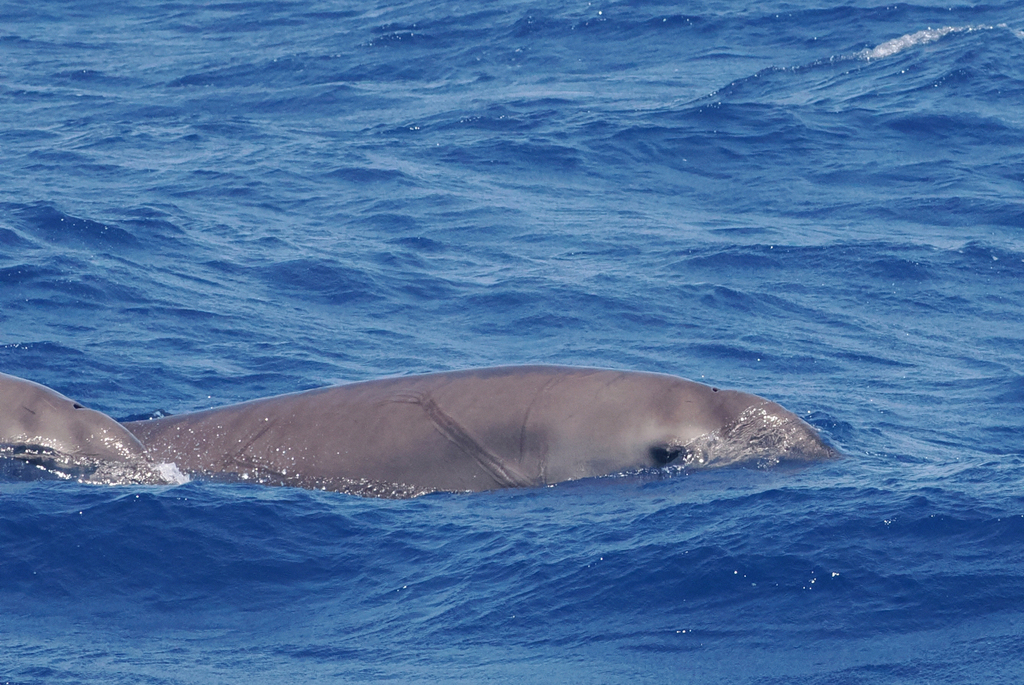
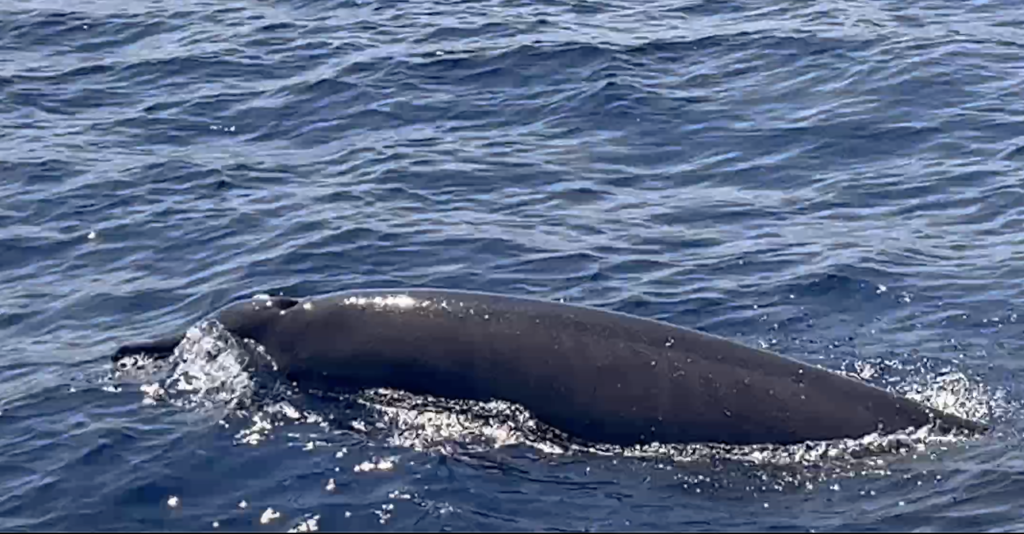
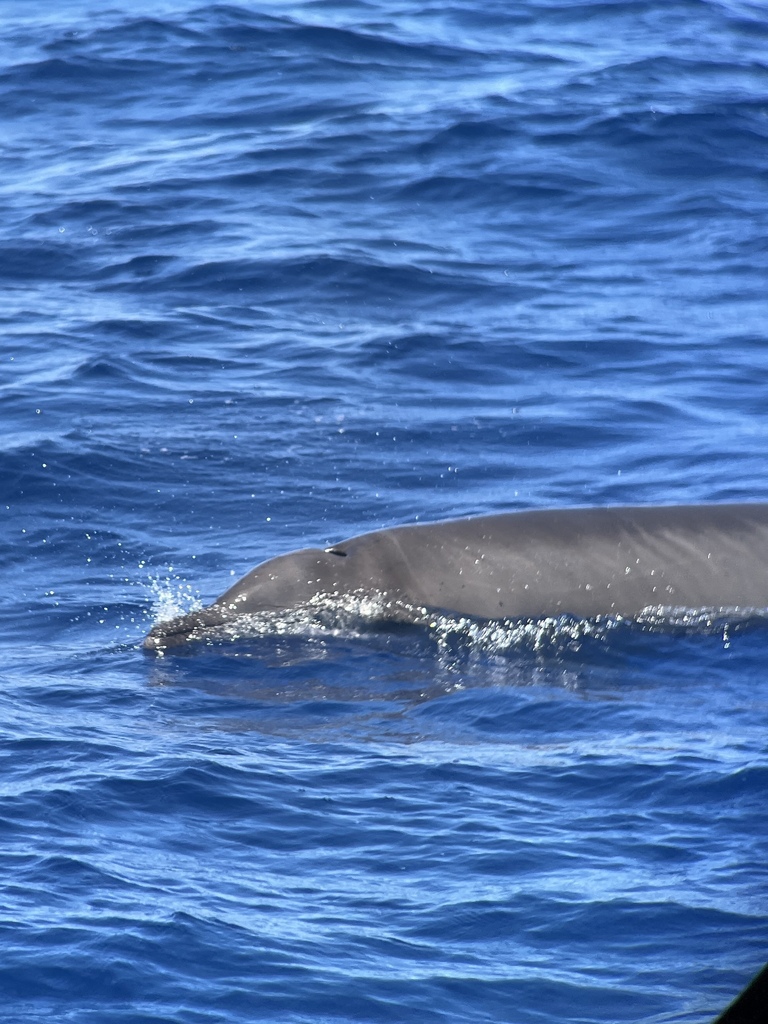
Photos show the species, not always the places on this page.
Length
Males about 4.5 m (15 ft); females at least 5.2 m (17 ft). Calves are thought to be about 2.1 m (6.9 ft) at birth
Weight
Probably more than 1,200 kg (2,600 lb); NOAA gives about 1,200 kg (2,640 lb)
Next to a person
About 2.5 to 3 times as long as a tall adult, and as heavy as about fifteen adults
What it eats
Squid and other cephalopods, deep-water fish such as viperfish and deep-sea shrimp, caught by suction in deep water.
Around people
Calm, give space
How it lives
It lives in deep tropical, subtropical and warm temperate waters of the Atlantic, and has been seen over depths greater than 1,500 m. Dives of about an hour have been observed. It tends to live in small groups or pairs. Females mature at about 4.5 m. Scars on males suggest they fight each other. It is known to live at least 27 years, and perhaps up to 48.
Where it goes
It is poorly known because it lives far offshore and dives deep. In the western Atlantic it has been recorded from New York to Trinidad. Around Curaçao, records come from animals found stranded on the coast, so they do not show where it lives day to day.
We only draw a journey on the map when scientists have tracked it or clearly documented it. For this animal we have not found one yet.
Populations
It is thought to be naturally rare, and no population estimate exists. It is listed as Least Concern by the IUCN (via GBIF), although older sources list it as Data Deficient. In the United States it is fully protected under the Marine Mammal Protection Act and is on CITES Appendix II. Threats include entanglement in fishing gear and ocean noise. It may be the most commonly seen Mesoplodon whale off the US Atlantic coast. Curaçao records, including a stranded Gervais' beaked whale, are cited in the Dutch Caribbean cetacean literature.
Meet it respectfully
Beaked whales surface briefly and are easily disturbed. Keep a calm, slow boat, stay well back and never chase, surround or try to approach one. Loud noise can disturb their communication and feeding, so keep engines steady and quiet. Never touch, feed or bait them. Ask your operator which local rules apply; none were checked for this card.
Fun fact
Tap the bulb to light it up.
It is the largest of the Mesoplodon beaked whales.
The male's two teeth stay close to the tip of the beak and are hardly noticeable.
Dives of about one hour have been recorded.
Gervais' beaked whale in the Ocean Atlas
Places we have researched where this animal is recorded. It is never guaranteed, and some places are for watching from the boat only.
Travel with usComing soonTrusted referralExploringOn pause, story onlyEthics pass
Country colour: pink where we travel, blue where we are exploring or refer, grey for story only.
 The Bahamas
 Cabo Verde
 Cuba
Cuba Curaçao
 Guadeloupe
 Martinique
 Portugal
 Spain
Spain United States
Sources for this page
- Wikipedia, Gervais' beaked whale
- NOAA Fisheries, Gervais' beaked whale
- Animal Diversity Web, Mesoplodon europaeus
- University of the West Indies, species sheet, 2012
- Marine Biodiversity Records, Dutch Caribbean cetacean paper
- GBIF, IUCN category
Facts checked 5 October 2026. Photos: Unsplash licence, or Creative Commons as shown on each photo.
Work in ocean travel?
We are always happy to hear from exceptional local operators, accommodation, conservation organisations and destination experts. If your work fits responsible, small-group ocean travel, we would love to learn more.
Partner with Ocean Calling