
Grey seal
Halichoerus grypus
Long-nosed grey seals haul out on North Atlantic rocks, beaches and ice. Watch quietly from a respectful distance that follows local rules. Sightings are never guaranteed.
Least Concern (IUCN, 2016) means it is not at high risk of extinction worldwide today.
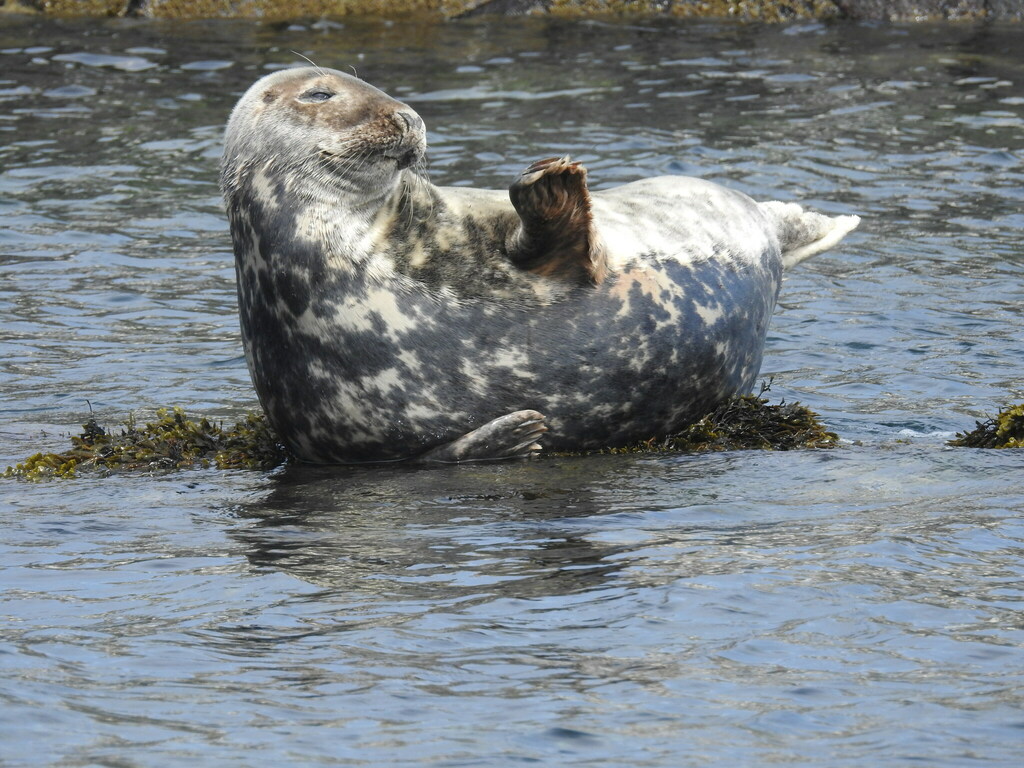
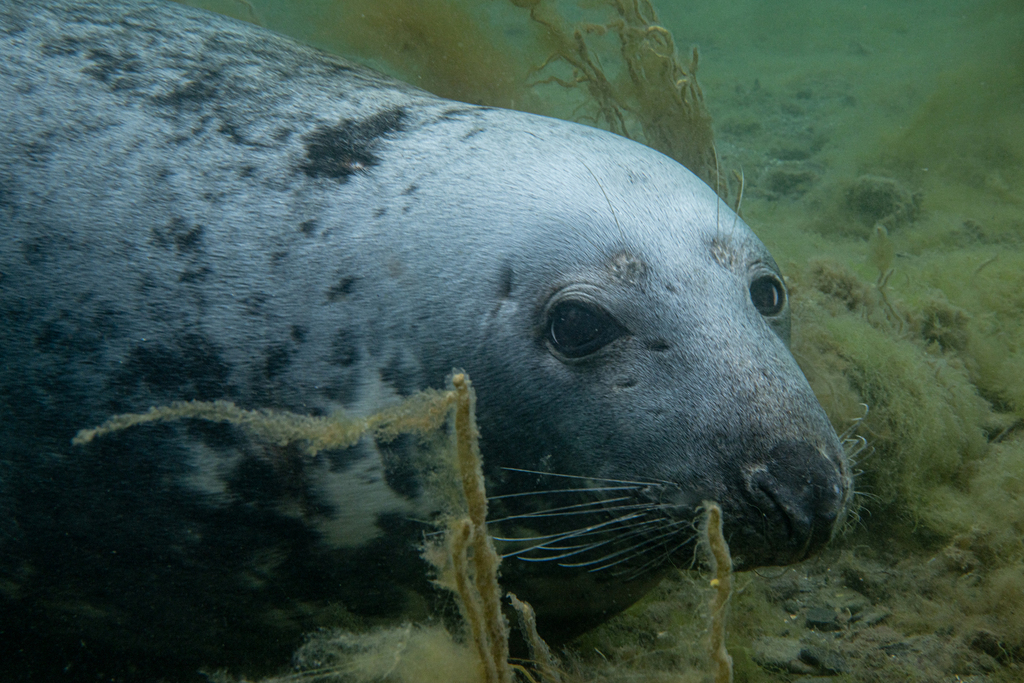
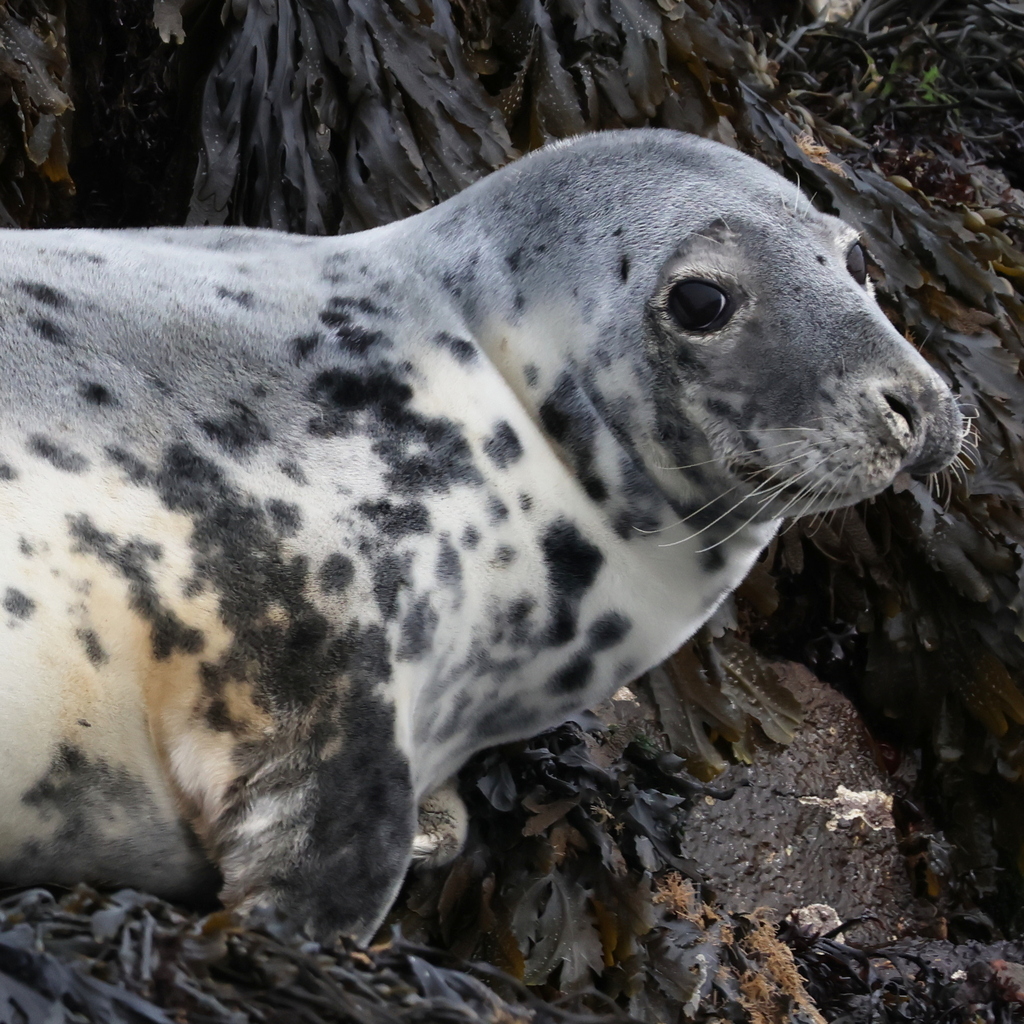
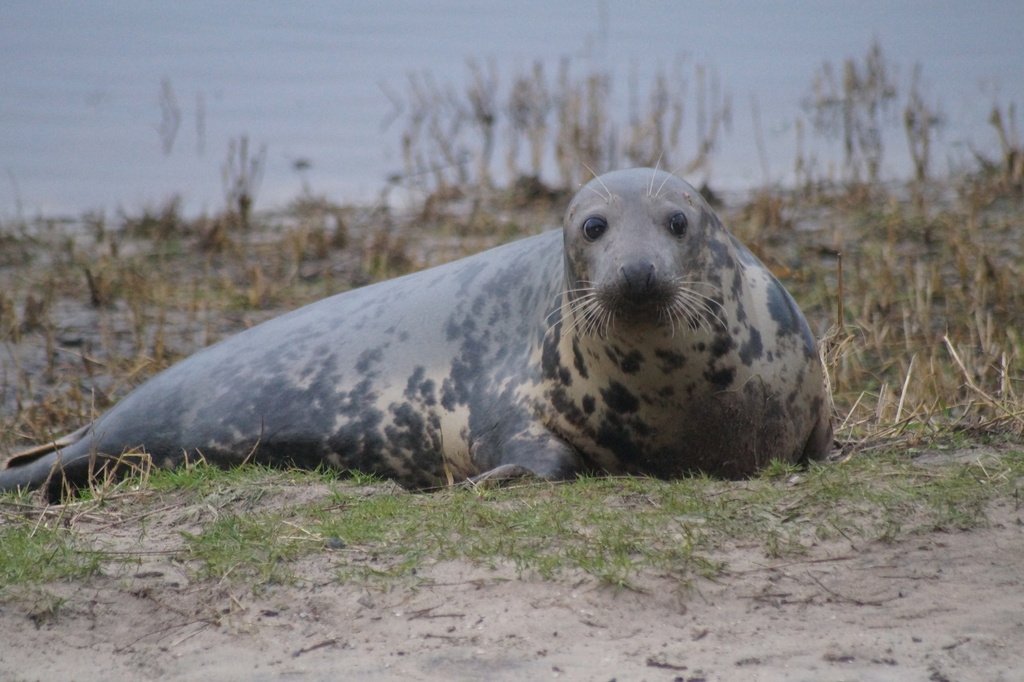
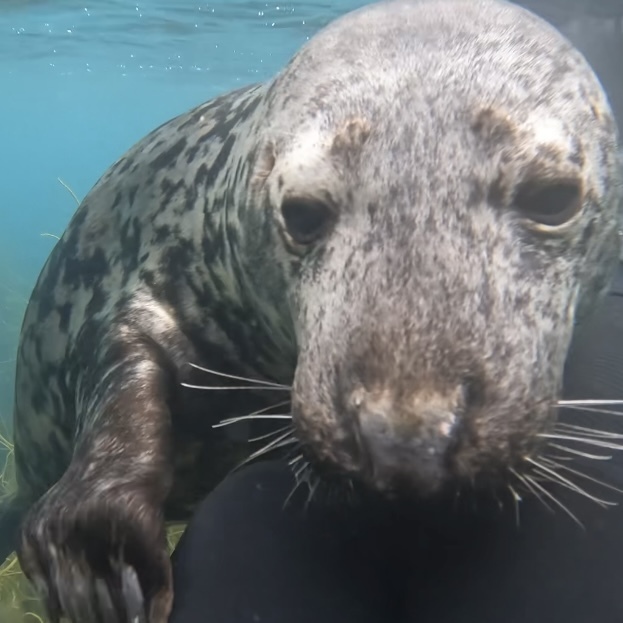
Photos show the species, not always the places on this page.
Length
Females about 2.3 m (7.5 ft); males up to about 3 m (10 ft)
Weight
Females about 250 kg (550 lb); males about 400 kg (880 lb)
Next to a person
A big male is longer than a tall adult and can weigh as much as several adults
What it eats
Fish such as sand eels, cod, whiting, haddock, hake, pollock and flatfish, plus squid, octopus and crustaceans, and now and then a seabird. They do not eat while breeding or moulting.
Around people
Potentially dangerous, respect
How it lives
Grey seals feed at sea and rest on rocks, beaches, sandbanks or ice. Females give birth to one white-coated pup a year and nurse it for about three weeks. Pupping is October to January in the northeast Atlantic, December to February in Canada and the United States, and January to March in the Baltic, often on ice.
Where it goes
Grey seals come back to the same colonies to breed and moult, but they travel widely between these times to feed. They are not long seasonal migrants like whales, and there is no fixed yearly route.
We only draw a journey on the map when scientists have tracked it or clearly documented it. For this animal we have not found one yet.
Populations
About 650,000 grey seals live across the North Atlantic, according to NAMMCO in 2023. Recent counts are about 366,400 in Canada (2021), 157,300 in the UK (2020), 42,000 in the Baltic (2021), 6,269 in Iceland (2017) and 3,850 in Norway (2018). Sable Island in Canada is the world's largest grey seal breeding colony. Scientists now treat Atlantic and Baltic grey seals as two separate subspecies.
Meet it respectfully
Local rules differ. In the United States, guidance asks people to stay at least 50 yards (about 46 m) from seals, and in Scotland boats are asked to stay about 150 m from haul-outs where possible. We watch quietly and keep much further from pups and breeding beaches in autumn and winter. If a seal lifts its head, moves or looks at you, you are too close. Never touch, feed or chase seals, and never come between a seal and the sea or between a mother and her pup.
Fun fact
Tap the bulb to light it up.
Pups are born with a soft white coat and nurse for only about two to three weeks.
Grey seals can eat 4 to 6 percent of their body weight in food each day.
The name Halichoerus grypus means roughly hook-nosed sea pig, after its long Roman nose.
Canada holds the largest number of grey seals, about 366,400 in 2021, many breeding on Sable Island.
Source: NAMMCO, Grey seal
Grey seal in the Ocean Atlas
Places we have researched where this animal is recorded. It is never guaranteed, and some places are for watching from the boat only.
Travel with usComing soonTrusted referralExploringOn pause, story onlyEthics pass
Country colour: pink where we travel, blue where we are exploring or refer, grey for story only.
 Canada
 Faroe Islands
 Finland
 France
 Iceland
 Ireland
 Norway
 Portugal
 Russia
 Spain
Spain Sweden
 United Kingdom
 United States
Sources for this page
- NAMMCO, Grey seal
- NOAA Fisheries, Gray seal
- GBIF occurrence records by country, checked 26 Sep 2026
- Society for Marine Mammalogy, Committee on Taxonomy, 2024, List of marine mammal species and subspecies
- NatureScot, Scottish Marine Wildlife Watching Code
- SMRU, SCOS 2022, UK seal management advice
- DFO, 2022, Stock assessment of Northwest Atlantic grey seals in Canada in 2021
Facts checked 26 September 2026. Photos: Unsplash licence, or Creative Commons as shown on each photo.
Work in ocean travel?
We are always happy to hear from exceptional local operators, accommodation, conservation organisations and destination experts. If your work fits responsible, small-group ocean travel, we would love to learn more.
Partner with Ocean Calling5-day freediving course in Bali
CHF 1,180