
Harp seal
Pagophilus groenlandicus
A silver seal with a dark harp-shaped mark, travelling with the ice. Harp seals come and go with the season, and no sighting is ever a promise.
Near Threatened (IUCN, assessed 2025) means it is close to qualifying for a threatened category, and sea ice loss is the main concern NAMMCO names for harp seals.
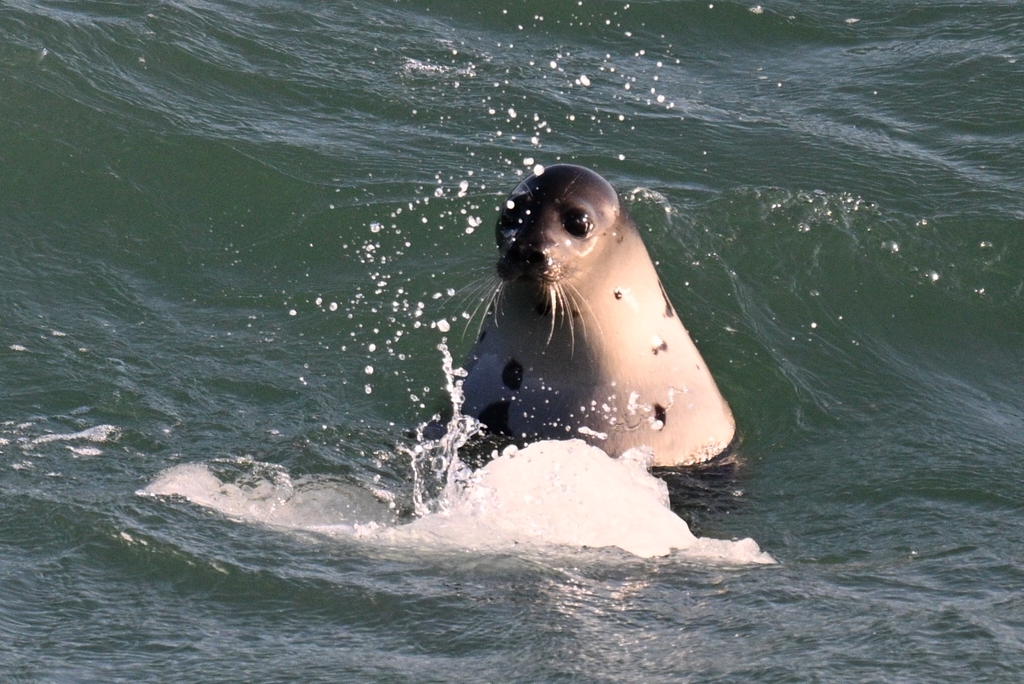
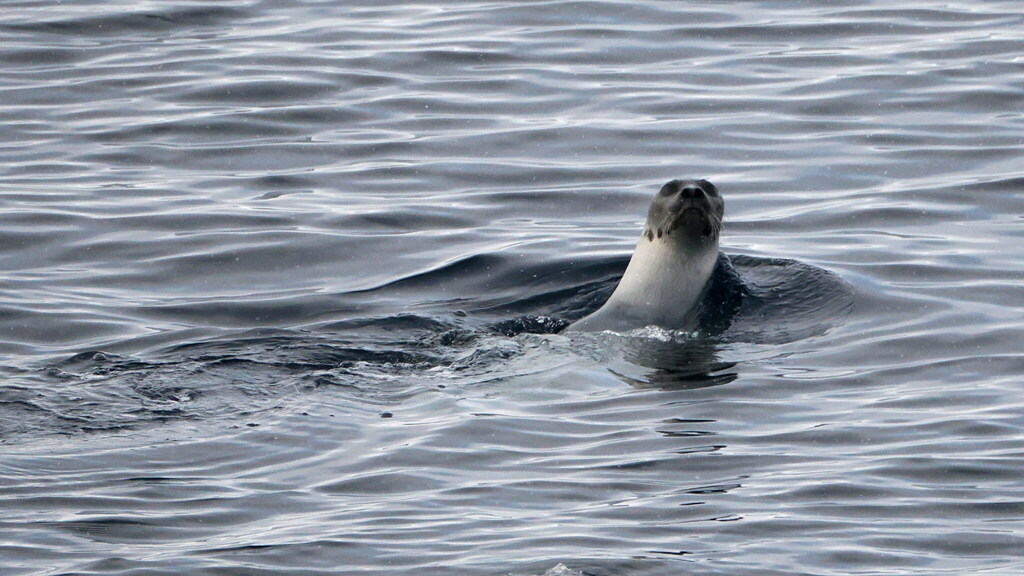
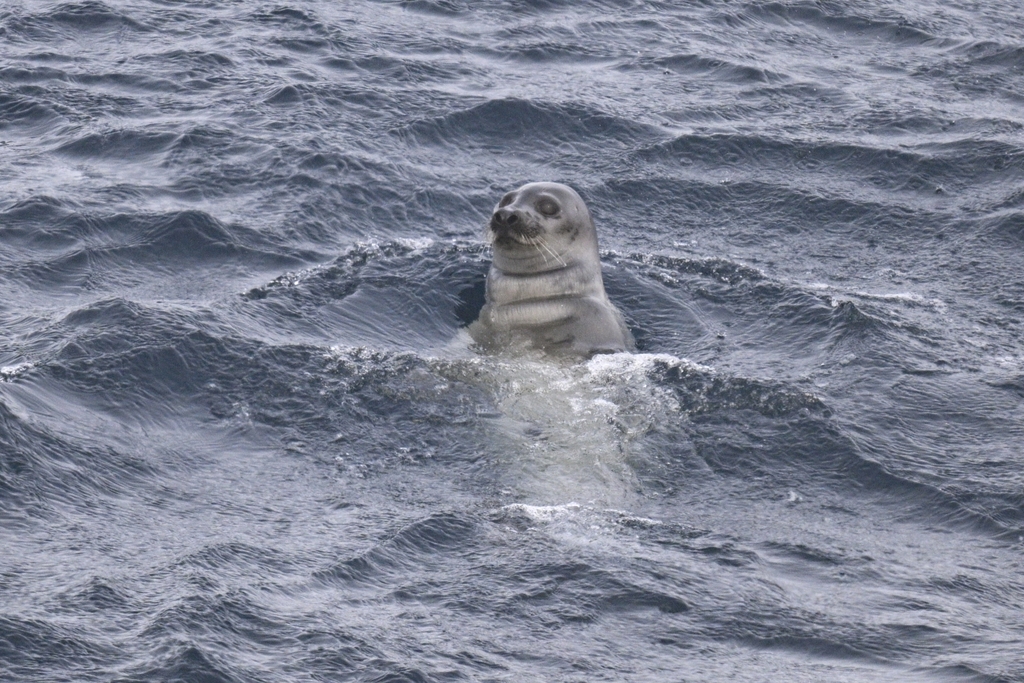
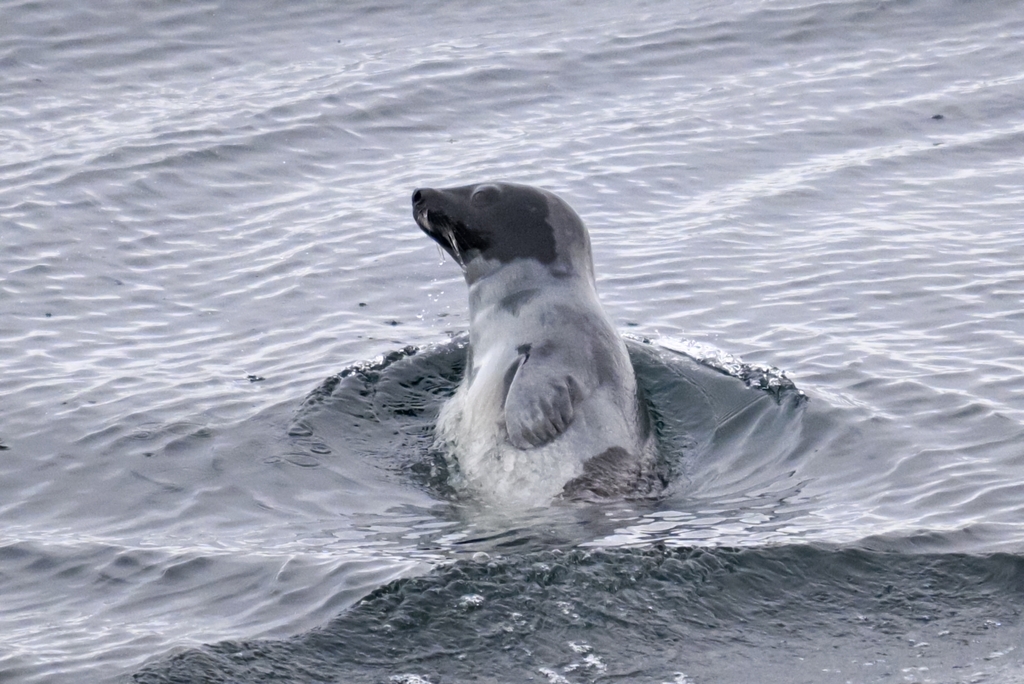
Photos show the species, not always the places on this page.
Length
About 1.5 to 1.9 m (4.9 to 6.2 ft); NAMMCO gives an average of 1.6 m (5.2 ft)
Weight
About 120 to 135 kg (260 to 300 lb) when mature. NAMMCO gives an average of about 130 kg (290 lb). Pups weigh about 11 kg (25 lb) at birth
Next to a person
About as long as an adult is tall, and about as heavy as two adults.
What it eats
Fish and invertebrates. NOAA lists more than 130 species. Common prey are capelin, Arctic cod and polar cod, and krill and amphipods matter in some areas. They dive to about 150 to 200 m for food.
Around people
Calm, give space
How it lives
Harp seals gather on pack ice from February to April to give birth, in very dense colonies. A female has one pup a year and nurses it for only about 10 to 12 days, losing up to about 3 kg a day while she fasts. The pup is born with a white coat that lasts the first 2 to 3 weeks until its first moult. Harp seals live about 20 to 35 years in the wild. Polar bears, killer whales and Greenland sharks eat them.
Where it goes
Harp seals are long-distance travellers. They breed on pack ice in late winter and spring, then move to northern feeding areas, and some seals of the northwest Atlantic population travel up to about 4,000 km (2,500 mi) to the northeast outside the breeding season. There are three separate populations, in the northwest Atlantic, the Greenland Sea and the Barents and White Seas. I did not read tracking data for the Greenland coast.
We only draw a journey on the map when scientists have tracked it or clearly documented it. For this animal we have not found one yet.
Populations
NAMMCO gives 2019 estimates of about 7.4 million in the northwest Atlantic, close to 427,000 in the Greenland Sea and about 1.5 million in the Barents and White Seas. The northwest Atlantic population has recovered from lows of about 1 million in the early 1970s but is below the estimated 12 million before hunting. In the Greenland Sea, pup production fell from 110,530 in 2007 to 89,590 in 2012 and 54,181 in 2018. NOAA protects the species under the US Marine Mammal Protection Act. The IUCN lists the species as Near Threatened (assessed 2025); older sources list it as Least Concern.
Meet it respectfully
Watch quietly from a distance and let the seals decide how close to come. Harp seal pups lie alone on the ice while their mothers feed, so never approach or handle a pup. Never chase, touch, feed or bait a seal. In US waters NOAA asks people to watch seals from at least 50 yards (about 46 m) and for no more than 30 minutes. I did not read the rules for Greenland, so follow your guide and local rules.
Fun fact
Tap the bulb to light it up.
Newborn pups, called whitecoats, are white for the first 2 to 3 weeks of life.
A mother nurses her pup for only about 12 days, then leaves it.
NOAA calls it the most abundant marine mammal in the North Atlantic, with about 7 million in the western stock.
Harp seal in the Ocean Atlas
Places we have researched where this animal is recorded. It is never guaranteed, and some places are for watching from the boat only.
Travel with usComing soonTrusted referralExploringOn pause, story onlyEthics pass
Country colour: pink where we travel, blue where we are exploring or refer, grey for story only.
 Canada
 Denmark
 France
 Germany
 Greenland
 Netherlands
 Norway
 Russia
 Sweden
 United States
Sources for this page
- NOAA Fisheries, Harp seal, 2026
- NAMMCO, Harp seal, 2026
- Animal Diversity Web, University of Michigan, Harp seal
- Wikipedia, Harp seal, 2026
- GBIF Backbone with IUCN Red List category, 2026
Facts checked 5 October 2026. Photos: Unsplash licence, or Creative Commons as shown on each photo.
Work in ocean travel?
We are always happy to hear from exceptional local operators, accommodation, conservation organisations and destination experts. If your work fits responsible, small-group ocean travel, we would love to learn more.
Partner with Ocean CallingNew: mobula rays in La Ventana, May 2027
CHF 2,720