
Humboldt penguin
Spheniscus humboldti
A small, upright penguin on a warm, dry coast. Humboldt penguins live where cold water meets desert rock, and no sighting is ever a promise.
Vulnerable (IUCN, 2020) means it is at high risk of extinction in the wild, and its numbers are still falling.
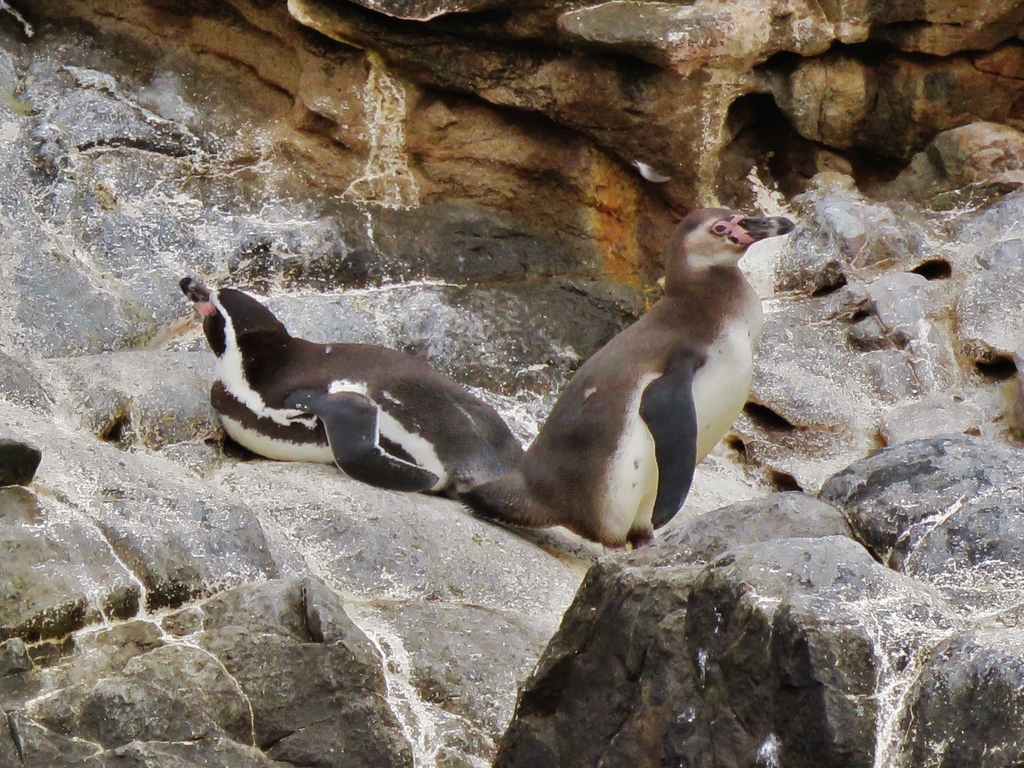
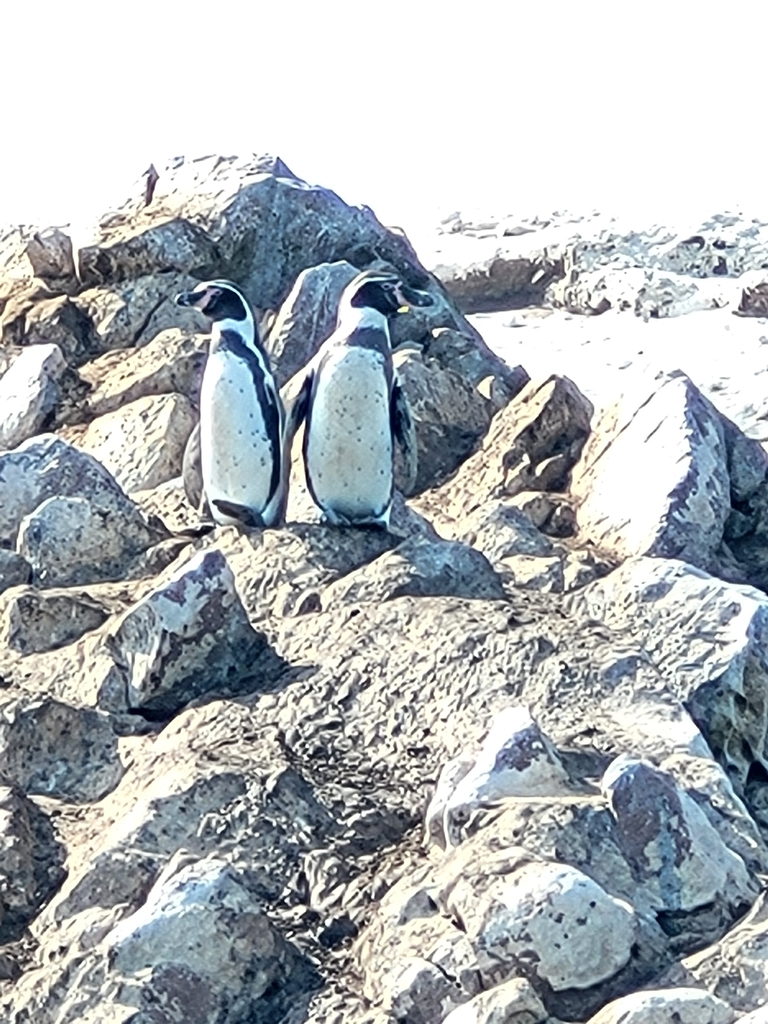
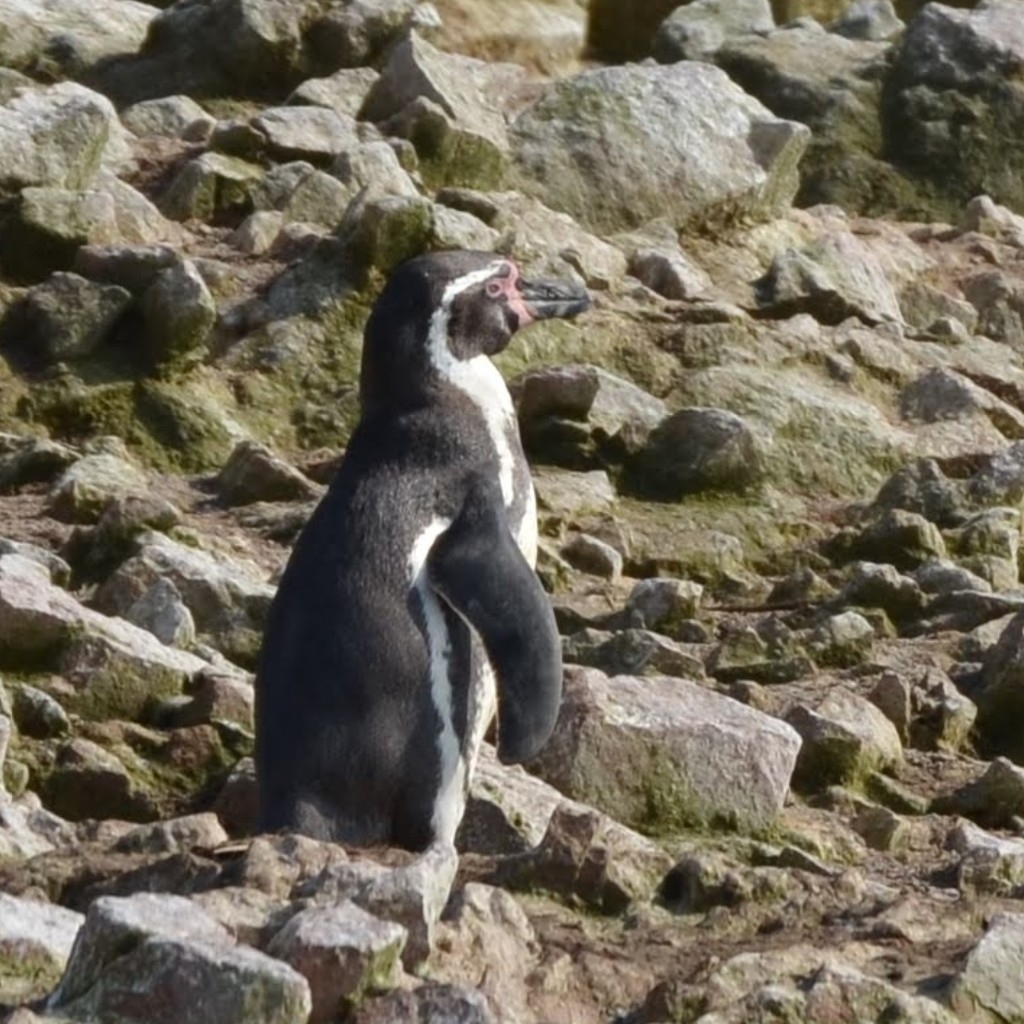
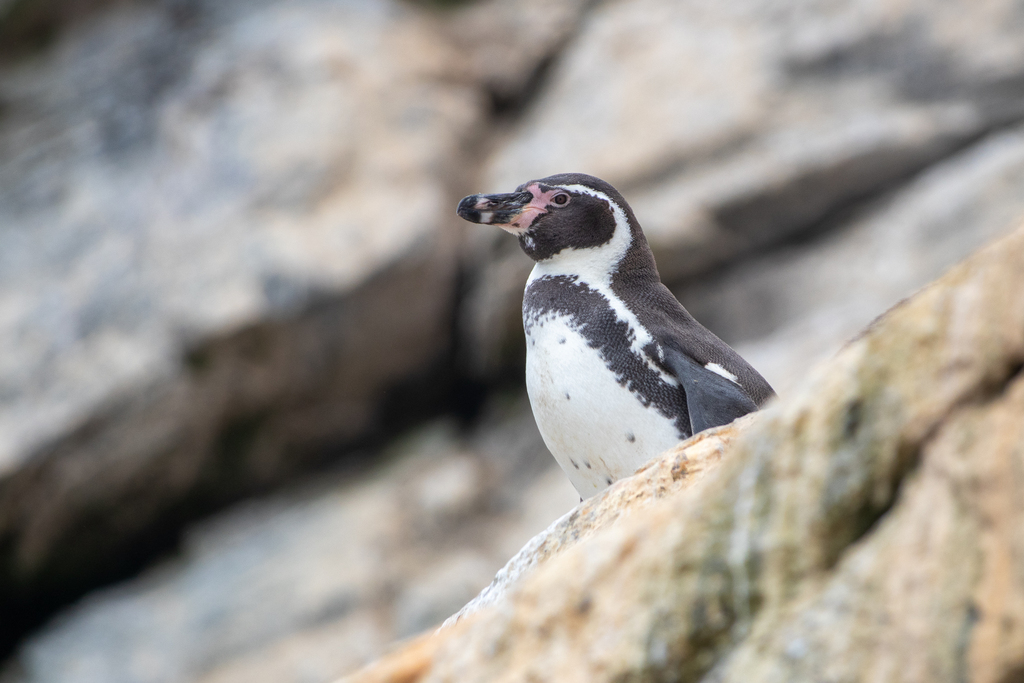
Photos show the species, not always the places on this page.
Length
About 56 to 70 cm (22 to 28 in) tall, depending on the source
Weight
Usually about 4 to 5 kg (8.8 to 11 lb); a wider range of 2.9 to 6 kg (6.4 to 13.2 lb) is given for the species
Next to a person
About as tall as a toddler of two or three, and about as heavy as a newborn baby plus a bit
What it eats
Schooling fish, mostly anchovy, silversides and herring, with some squid. Diet changes with place and season. In northern colonies garfish matter more. Birds in Peru forage close to their colonies, usually within about 30 km and mostly in the top 30 m of water.
Around people
Calm, give space
How it lives
Humboldt penguins nest in colonies on rocky islands and coasts, often in burrows dug in guano or in caves and crevices. Pairs lay two eggs, which take about 41 days to hatch. Chicks leave the nest at about 10 to 12 weeks. Breeding can happen through much of the year, with peaks around April and August to September. Adults moult once a year, around January, and stay on land without feeding for about two weeks. Wild lifespans are poorly known; the 15 to 20 years often quoted come from zoos.
Where it goes
Humboldt penguins do not migrate. Satellite tracking found that about 90 percent of locations came from within roughly 35 km of the breeding site. During strong El Niño events, birds have been tracked far offshore, up to about 895 km, looking for food.
We only draw a journey on the map when scientists have tracked it or clearly documented it. For this animal we have not found one yet.
Populations
Breeding is limited to the coasts of Peru and Chile. IUCN lists the species as Vulnerable (2020) with a declining trend. Counts differ between sources. One summary gives about 23,800 mature individuals (2020). A 2025 paper estimated about 36,982 birds across both countries and argued that the species should be treated as Endangered. The same paper estimated about 4,067 penguins caught in small-scale fishing nets across 39 ports in 2023, 2,624 of them in Peru. A 2024 paper puts the numbers at about 1 million in the 1850s and under 10,000 in 2019.
Meet it respectfully
Watch from a boat or a marked viewpoint and keep well back, because colonies react to people from about 150 m away. Never chase, touch, feed or bait the birds, and never block their path to the sea or step near burrows and nests. Unplanned tourism is listed as a threat to breeding, so choose guides who keep to set distances. I did not open a specific local rule for Peru, so follow what your guide and the reserve staff tell you.
Fun fact
Tap the bulb to light it up.
Humboldt penguins have bare pink skin on the face, from the eyes to the bill.
They have a salt gland that lets them drink seawater, and they can swim at about 27 km/h (17 mph).
Colonies are very sensitive to people. Studies report a stress response in birds when humans are as far as 150 m away.
Humboldt penguin in the Ocean Atlas
Places we have researched where this animal is recorded. It is never guaranteed, and some places are for watching from the boat only.
Travel with usComing soonTrusted referralExploringOn pause, story onlyEthics pass
Country colour: pink where we travel, blue where we are exploring or refer, grey for story only.
 Chile
Chile Ecuador
 Germany
 Peru
Peru Sweden
 United States
Sources for this page
- Wikipedia, Humboldt penguin, 2026
- Animal Diversity Web, University of Michigan, 2026
- GBIF, IUCN Red List category lookup, 2026
- bioRxiv, Humboldt penguin in El Ferrol Bay, Chimbote, 2024
- PMC, rapid assessment of Humboldt penguin bycatch in Peru and Chile, 2025
- Brookfield Zoo Chicago, 2026
- Discover Wildlife, 2026
- Mongabay, 2022 Repsol oil spill update, 2025
Facts checked 5 October 2026. Photos: Unsplash licence, or Creative Commons as shown on each photo.
Work in ocean travel?
We are always happy to hear from exceptional local operators, accommodation, conservation organisations and destination experts. If your work fits responsible, small-group ocean travel, we would love to learn more.
Partner with Ocean CallingNew: mobula rays in La Ventana, May 2027
CHF 2,720